
Growing lion’s mane comes down to one thing most guides bury: it is the gourmet species that punishes stale air harder than any other on my bench. Get the fresh-air exchange right and a single 5-pound block of Masters Mix will throw a pillow of white spines that eats most of a cutting board. Get it wrong and you grow a deformed cauliflower. This guide is the whole chain — agar to harvest — the way I actually run Hericium erinaceus in my grow room in Sweden.
I have fruited lion’s mane on supplemented sawdust, on Masters Mix, in 5-pound bags and in quart jars, and I have killed enough early blocks to green Trichoderma to know exactly where home growers lose this one. It is almost never the fruiting. It is the grain, the transfer, or the air. We will walk through every link, in order, so you can see your block coming and read it before it fails.
Lion’s Mane at a Glance: Why It Behaves Differently
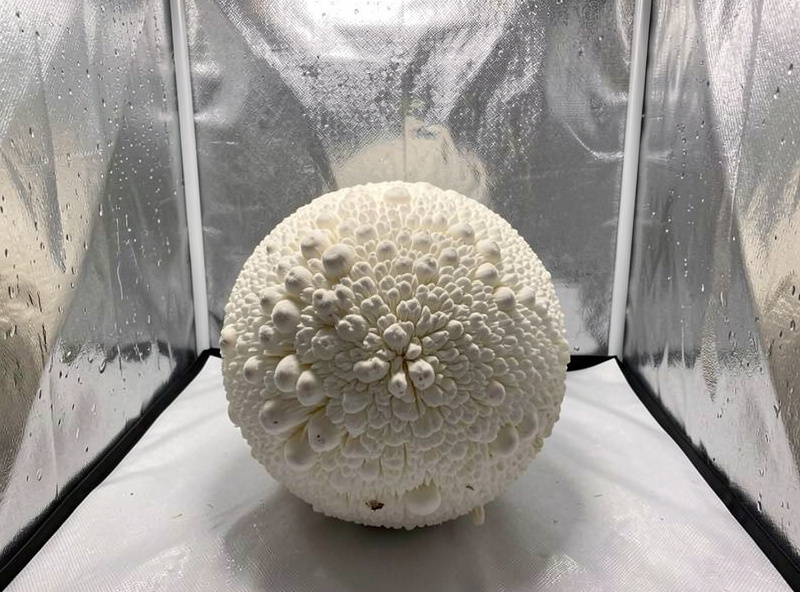
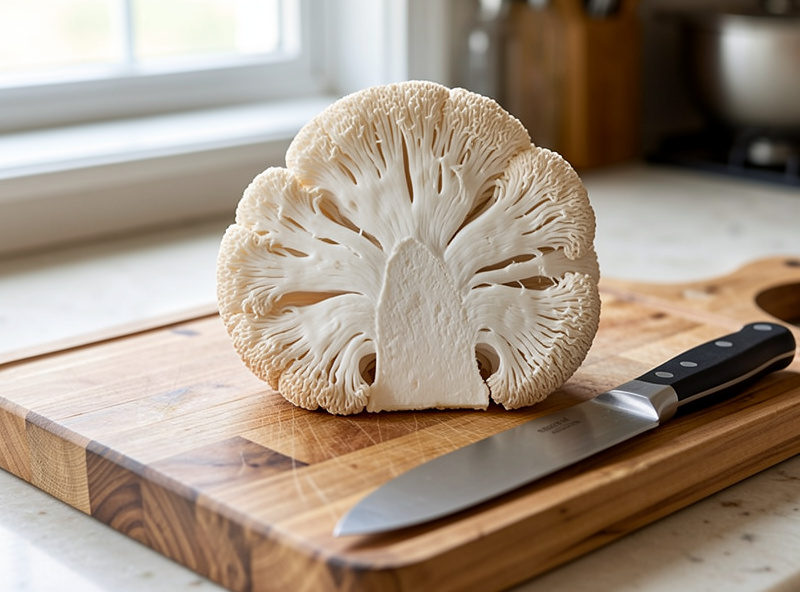
Lion’s mane is a tooth fungus, not a gilled or pored one. Instead of a cap it forms a single rounded mass that grows downward-hanging spines, and that single-body habit changes how you fruit it: it pins from one site, not scattered across the block, so you cut a slit and let it bull out of one opening. A healthy first flush off a 5-pound block runs 250–450 grams for me, with a smaller second flush after.
It earns its beginner-friendly reputation on the substrate side — it colonizes hardwood fast and isn’t fussy about exact temperature — but it is genuinely demanding on air. Lion’s mane reads carbon dioxide as “keep stretching,” so a block sitting in its own stale CO2 grows long coral-like branches with no spines instead of a tight toothed clump. If you have ever seen a photo of lion’s mane that looks like white antlers or a sea-fan, you are looking at a fresh-air-exchange failure, not a different species. That single fact drives half of what follows.
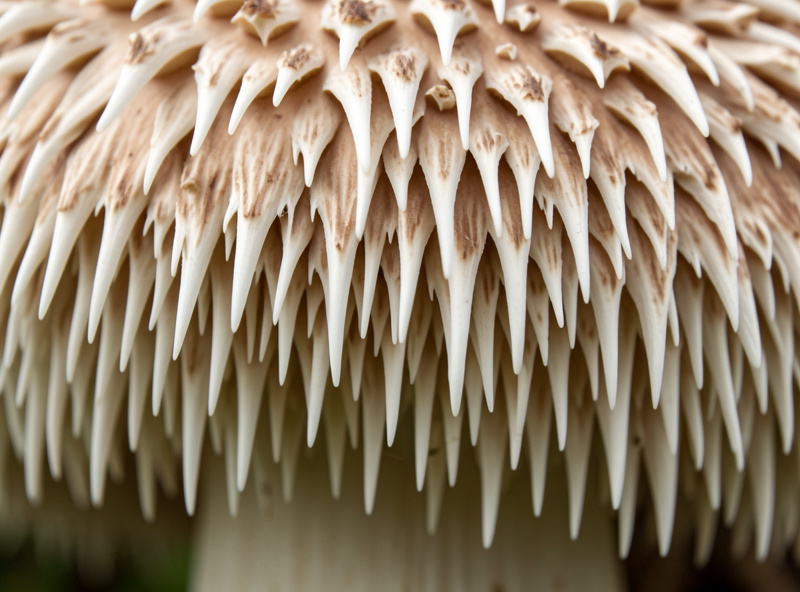
Compared with oyster — which I still say is the correct gateway species — lion’s mane is slower to fruit and more sensitive to a humidity crash during pinning. Compared with shiitake, it is far faster and does not need the long browning period a shiitake block demands. It sits in a comfortable middle: forgiving substrate, unforgiving air.
Where to Start: Kit, Pre-Made Spawn, or Full DIY?
You can enter lion’s mane at three points, and being honest about which one fits your time and gear saves a lot of frustration. The fastest is a ready-to-fruit block or grow kit — you skip the entire sterile chain and just manage the air and humidity, which is a clean way to learn fruiting before you learn sterile technique. The middle path is buying colonized grain spawn or a culture and mixing your own bulk blocks. The full DIY path is what I run: agar to harvest, where you control genetics and cost but own every contamination risk.
My honest advice for a first lion’s mane: if you have never fruited anything, start with a kit or a pre-colonized block so the only variable you’re learning is fresh-air exchange — the one thing this species is unforgiving about. Once you’ve taken a clean flush off a block, step back up the chain. I lay out that exact decision in grow kit vs DIY monotub, and if you’re weighing lion’s mane against other first species, easiest mushrooms to grow and the beginner’s complete first-year guide both put it in context. For planning your year around it, the month-by-month growing calendar is what I hand new growers.
The Substrate: Why Masters Mix Wins for Lion’s Mane
Lion’s mane is a hardwood lover, and the substrate I run for it is Masters Mix — a 50/50 blend of hardwood sawdust and soy hull pellets, hydrated to field capacity and sterilized in the pressure canner. That nitrogen bump from the soy hull is what pushes the dense, heavy flushes; plain hardwood sawdust fruits lion’s mane fine but yields noticeably lighter. If you want the exact formula and hydration, I break it down in the Masters Mix recipe, but the headline is a roughly 1:1 dry blend brought to about 60% moisture.
Field capacity is the number that matters more than any ratio. Squeeze a fistful of hydrated, mixed substrate hard: a few drops should bead out, not a stream. Too wet and you invite bacterial blotch and sour, anaerobic pockets; too dry and the block never fully myceliates. I check every batch with the field-capacity squeeze test before it ever goes in a bag, because you cannot fix moisture after sterilization.
Because supplemented substrate is a contamination magnet — that added nitrogen feeds mold as happily as it feeds mycelium — lion’s mane blocks must be sterilized, not pasteurized. There is no cooler-tek shortcut here the way there is with straw. A 5-pound Masters Mix block gets 2.5 hours at 15 PSI in my pressure canner, full stop. If you are running plain hardwood with no supplement you can sometimes get away with hot pasteurization, but the moment you add bran or soy hull you are in sterilization territory. The full reasoning for supplemented blocks lives in the supplemented sawdust guide, and the broader substrate logic in the substrate hub.
The Sterile Chain: From Culture to Colonized Block
Every lion’s mane block I fruit starts upstream of the block. The chain is agar → liquid culture or grain-to-grain → grain spawn → bulk block → fruiting, and the home grower almost always loses the batch on grain or at a transfer, not at the block. So I keep the front of the chain obsessively clean and treat the block itself as the easy part.
I clean up cultures on agar — MEA or LME plates poured under the flow hood — because a sectored, rhizomorphic lion’s mane culture off a plate behaves on grain in a way a tired syringe never will. If you have never poured plates, the agar plate guide walks the whole pour-and-transfer routine. From a clean plate I either run a wedge to liquid culture or jump straight to grain. For anyone starting from a syringe instead, the liquid culture vs spore syringe comparison explains why I almost always expand to LC first.
Grain is where blocks die. I sterilize rye or milo at 15 PSI for 90 minutes, shake to break clumps, and inoculate inside the still-air box for routine work or on the flow hood when I’m doing agar or a fussy transfer. Whether you need a flow hood at all is a real question with a real answer — I lay it out in SAB vs flow hood. Full grain sterilization times and the mistakes that waste a canner load are in the grain spawn guide, and the canner specifics in pressure cooker sterilization.
Colonization: Reading a Block Through the Bag
Once spawn is mixed into the bulk block, lion’s mane colonizes a 5-pound Masters Mix bag in about 14–21 days at 18–24°C, kept dark on a clean shelf. I run my colonization shelf on a heat mat and thermostat held around 21°C, and I leave it alone — opening to “check” is how you introduce contamination at the worst possible moment, when the block is most vulnerable.
What you want to see through the bag is solid, white, slightly fuzzy-to-rhizomorphic mycelium running edge to edge with no off-colors. Lion’s mane mycelium is bright white and often a little cottony; that is normal. What you do not want is any green (Trichoderma), grey-wispy fast growth that overruns the surface (cobweb mold), or wet sunken tan patches that smell sour (bacteria). If you are unsure whether what you are seeing is healthy, the healthy vs contaminated mycelium photo guide and the green mold ID guide are the two references I’d keep open. A block that’s fully white but not yet “consolidated” benefits from a few extra days to firm up before you cut it.
One lion’s mane quirk: it often starts trying to pin inside the bag before full colonization, throwing little white primordia at the filter patch or any micro-tear. Do not panic and do not cut early. Let the block consolidate, then introduce fruiting conditions deliberately so the flush comes where you want it.
Triggering Pins: The Fruiting Switch
Lion’s mane pins on a shift, not a single magic number. To flip a colonized block into fruiting I do three things together: drop the temperature a few degrees (into the 18–21°C band), spike humidity toward saturation, and — the one that actually matters for this species — flood the chamber with fresh air. I cut a single 2–3 inch slit or X in the bag and direct the block to fruit from that one opening, which gives you a cleaner, denser clump than letting it pin all over.
The general pinning logic — temperature drop, light cue, FAE, humidity — applies across species and is worth understanding in the round; I cover the universal version in triggering your first pins. For lion’s mane specifically, the make-or-break variable is air. The same block held at high humidity with poor FAE will sit and sulk, or pin and immediately start branching into antlers. Primordia should appear within 3–7 days of introducing fruiting conditions.
Dialing the Fruiting Environment
Here is the heart of growing lion’s mane: in fruiting it wants 85–95% relative humidity, 18–21°C, bright indirect light for several hours a day, and high fresh-air exchange. The FAE-versus-humidity tension is the whole game — you need a lot of air movement to keep CO2 down, but every air change also dries the surface, so you are constantly balancing the two. I run a ultrasonic humidifier on a humidistat in a Martha-style tent with a small circulation fan and scheduled fan-driven air exchanges, and I watch a calibrated hygrometer obsessively.
If your lion’s mane is growing long thin branches instead of a solid toothed body, that is your CO2 telling you the air is stale — more FAE, every time. If the spine tips are browning or the surface looks dried and cracked, you have over-corrected into too much dry air and not enough humidity. The detailed FAE/CO2 numbers are in FAE and CO2 for fruiting, and I’ve put the full species-specific environment walkthrough — including exactly how I stage the humidity down as the fruit matures — in the dedicated lion’s mane fruiting conditions guide. If you’re automating any of this, the grow room automation guide and fruiting chamber sensors cover the controllers I trust.
Block vs Jar: Choosing Your Format
You can fruit lion’s mane from a full 5-pound sawdust block or from a quart or wide-mouth jar of supplemented sawdust, and the choice shapes everything from yield to how often you’re cooking. Blocks give the big show-piece flushes and better economics per batch; jars are tidy, fit a small-space setup, and let you run several genetics or several stagger dates on one shelf. I run both, and I picked the trade-offs apart — including how the fruiting surface and FAE math change between the two — in lion’s mane block vs jar method. Either way the substrate and sterile chain above are identical; only the container and the fruiting geometry change.
| Factor | 5 lb Block (bag) | Quart Jar |
|---|---|---|
| Typical first flush | 250–450 g | 60–120 g |
| Fruiting site | One cut slit/X | Open jar mouth |
| Best for | Yield, kitchen volume | Small space, multiple strains |
| FAE demand | High (large mass) | High at the mouth |
| Contam risk | Lower per gram | Higher surface-to-volume |
| Reset for 2nd flush | Soak/rest the block | Often one-and-done |
Harvest Timing and Technique
Harvest lion’s mane when the spines have elongated to a quarter-inch or more but before they start turning yellow, pink, or fuzzy and before they begin dropping spores — overripe lion’s mane turns bitter and goes mushy fast. The window is shorter than people expect; I watch a maturing clump twice a day near the end. To harvest I cup the whole pillow, twist gently, and cut flush at the block with a clean knife so I don’t tear substrate up with it.
Timing reads slightly different on a jar versus a big block, and the “is it ready?” judgment is worth getting exactly right because it’s the difference between sweet crab-meat texture and a sour sponge. I walk through the visual cues, the twist-and-cut technique, and resetting the block for a second flush in harvesting lion’s mane correctly. The general flush-and-reset logic across species is in mushroom flushes and harvest.
Realistic Yields, Flushes, and Second Harvests
A well-run 5-pound Masters Mix block gives me a 250–450 gram first flush and a lighter second flush of maybe half that, for a biological efficiency that’s respectable but not record-setting — lion’s mane is a moderate yielder, not a monster like blue oyster. Anyone promising you a pound of dried lion’s mane off a single home block is selling something. The block-by-block reality, and how biological efficiency actually works, is in mushroom yield per block.
To pull a second flush, I harvest cleanly, let the block rest a day, then rehydrate it — a brief dunk or a few hours sitting in cool water under a weight — and put it back into fruiting conditions. Lion’s mane second flushes are less reliable than oyster’s; sometimes a block simply gives one good pillow and quits, especially a jar. Don’t fight a block that’s done. When it stops, the substrate still has life left for the garden — I break spent blocks into the compost or a wine cap bed, and the spent substrate guide covers six honest uses. The general reset-and-flush rhythm is in flushes and harvest. If you’re tallying whether all this beats buying lion’s mane at the market, I ran the numbers in homegrown mushrooms cost comparison.
After the Harvest: Preserving and Cooking
Lion’s mane holds an enormous amount of water, which matters both for drying and for cooking. If you’re storing it, the trick is to get that water out cleanly — I dehydrate at 50–55°C until the pieces are cracker-dry, and the full method (plus how I rehydrate it without it going slimy) is in drying and preserving lion’s mane. The general preservation logic — and when freezing beats drying — is in how to dry mushrooms for storage and how to freeze mushrooms.
In the kitchen, that same water content is why you dry-sear lion’s mane first to drive off moisture before you add fat — do it the other way and it steams into rubber. Done right it pulls apart in sweet, crab-like strands, which is the whole reason it’s worth growing for the table. My method walkthroughs and the recipes I actually cook are in the lion’s mane recipes guide. If you want a tool to buy before your first big flush, a basic dehydrator earns its place fast: food dehydrators on Amazon. As an Amazon Associate I earn from qualifying purchases.
Troubleshooting the Most Common Lion’s Mane Problems
Most lion’s mane failures fall into a short list: antler/coral growth from low FAE, pins that abort because the humidity swung or you opened the chamber and dried them out, browning spine tips from dry air, slow or stalled colonization from a cold shelf, and outright contamination from a grain or transfer slip. The good news is that lion’s mane signals what’s wrong visually, so once you learn the tells you can usually correct mid-flush.
I’ve put the full symptom-by-symptom diagnosis — what each deformity means and the specific fix — in lion’s mane growth troubleshooting. For contamination specifically, lean on the contamination hub, the bulk contamination triage guide, and the overlay and stroma reference for when a block goes leathery instead of pinning.
The Polymath Note: Clean Process Is Clean Process
The contamination discipline that protects a lion’s mane block is the same discipline that protects a sourdough starter, a koji tray, and a salami curing chamber — clean hands, clean air, controlled moisture, patience. Lion’s mane colonizing in the grow tent, sourdough rising in the kitchen, salami losing weight in the chamber, koji on the rice: four different fermentations of patience under one roof. If you treat your grain transfers with the same respect you’d give a starter you’ve kept for years, your blocks stop dying. That’s the whole secret, and it’s not really about mushrooms.
Frequently Asked Questions
How long does it take to grow lion’s mane from a colonized block?
From a fully colonized 5-pound Masters Mix block, expect pins within 3 to 7 days of introducing fruiting conditions and a harvestable first flush about 7 to 14 days after that. The slow part is upstream: grain spawn and the 14 to 21 day colonization, not the fruiting itself.
Why is my lion’s mane growing long branches instead of a solid clump?
That coral or antler shape is a fresh-air-exchange failure. Lion’s mane reads high carbon dioxide as a signal to keep stretching, so a block in stale air branches instead of forming spines. Increase fresh-air exchange in the chamber and the next flush forms a proper toothed body.
What substrate is best for growing lion’s mane?
Masters Mix, a 50/50 blend of hardwood sawdust and soy hull pellets hydrated to field capacity and pressure-sterilized, gives the heaviest flushes. Plain supplemented hardwood sawdust also fruits lion’s mane well but yields lighter. Because it is supplemented it must be sterilized, not pasteurized.
Do I need a pressure canner to grow lion’s mane?
For supplemented substrate and grain spawn, yes. The added nitrogen that drives lion’s mane yields also feeds mold, so blocks and grain must be sterilized at 15 PSI rather than pasteurized. A large stovetop pressure canner is the single most useful piece of gear for reliable lion’s mane.
When should I harvest lion’s mane?
Harvest when the spines reach about a quarter-inch or longer but before they turn yellow, pink, or fuzzy and before they start dropping spores. Overripe lion’s mane turns bitter and mushy. Twist the whole clump gently and cut it flush at the block with a clean knife.
Is lion’s mane a good mushroom for beginners?
It is beginner-friendly on substrate because it colonizes hardwood fast and tolerates a range of temperatures, but it is demanding on air. If you can supply strong fresh-air exchange during fruiting it is an excellent early species. Oyster is still the most forgiving gateway mushroom overall.