
A flush is a single wave of mushrooms from a substrate, and most tubs give two or three of them before they are spent. Harvesting at the right moment — just as the caps reach full size but before they drop spores — gives the best texture, shelf life, and yield, and sets the tub up to flush again. Pull too early and you lose weight; too late and the mushrooms toughen and the spore drop fouls the next flush.
Getting harvest timing and the between-flush reset right is what turns one tub into a steady supply rather than a single payoff. This guide covers when to pick each species, how to harvest without damaging the substrate, and how to rest and rehydrate a tub so it comes back for a strong second and third flush.
This article contains affiliate links. As an Amazon Associate I may earn from qualifying purchases, at no extra cost to you.
What a Flush Is
A flush is one synchronized wave of fruiting bodies that a colonized substrate produces, after which the mycelium rests and re-accumulates energy before the next wave. The first flush is almost always the largest because the substrate is at peak energy; each subsequent flush is smaller as the mycelium consumes the substrate’s reserves. Two to three flushes is the realistic expectation for a home tub, with the first delivering the bulk of the total yield.
Understanding flushes changes how you judge a grow. A common beginner worry — “my second flush was smaller, did I do something wrong?” — is usually just normal biology: the substrate has less to give each time. The total yield across all flushes, not the size of any single one, is the measure of a tub’s performance, a relationship explored in the yield per block guide and underlying the whole bulk growing approach.
When to Harvest Each Species
The general rule is to harvest just before or as the caps begin to flatten and the edges start to upturn, which is the point of best texture and longest shelf life and is just before heavy spore release. For oyster, that means picking when the cluster is full but the cap margins are still slightly curled down, not yet wavy and upturned. Waiting longer gives marginally more weight but tougher, spore-shedding mushrooms that spoil faster.
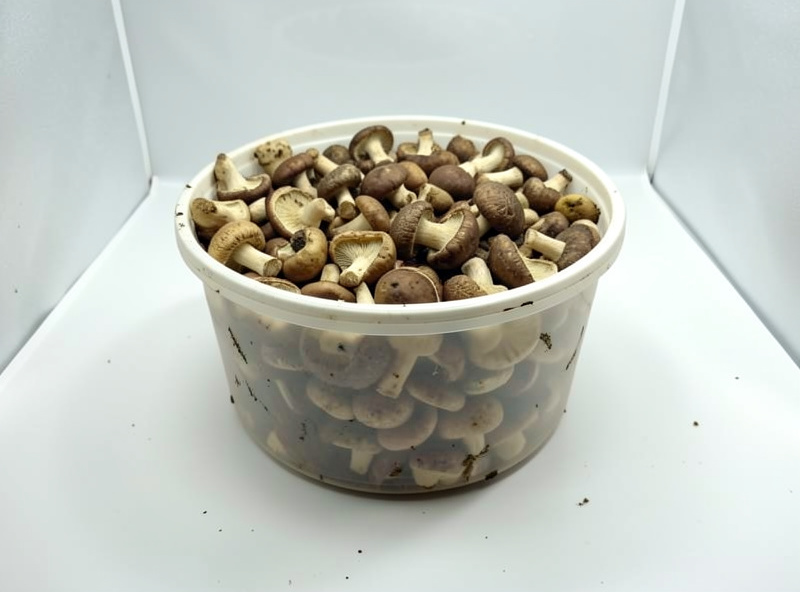
Lion’s mane is harvested when the spines are well developed but still white, before they yellow and turn bitter. King oyster is picked young for the prized thick stem. Shiitake comes off when the cap is 60–80% open with the edge still curled. The exact moment varies by species, but the principle is universal: catch them at maturity, before they over-ripen and start dropping spores, which both ages the mushroom and dusts the surface in spores that complicate the next flush.
How to Harvest Without Damaging the Tub
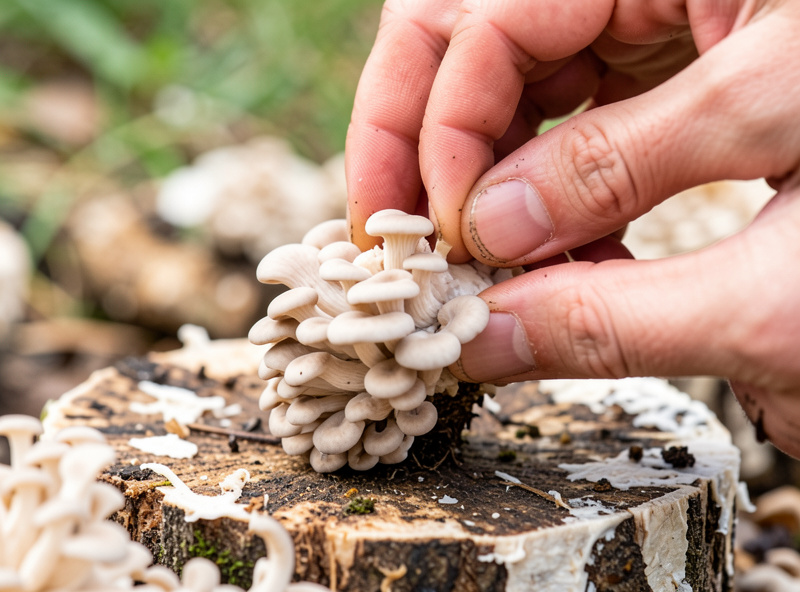
Harvest the whole cluster at once rather than picking individual mushrooms, and remove it by gripping at the base and twisting gently to release it from the substrate, rather than cutting and leaving a stump. A clean pull leaves less dead tissue behind for bacteria to colonize between flushes. For species or clusters that resist a clean pull, a clean cut right at the substrate surface works, but clear away any leftover stub afterward.
Work clean: handle the harvest with clean hands and a clean blade if you use one, since the surface you are working on has to fruit again. A simple mushroom harvesting knife with a curved blade and brush makes clean cuts and tidying easy. After harvesting, pick off every aborted pin and bit of leftover stem — rotting tissue is the single biggest contamination risk in the window between flushes.
| Species | Harvest Cue | If Left Too Long |
|---|---|---|
| Oyster | Caps full, margins not yet upturned | Wavy caps, heavy spore drop |
| Lion’s mane | Spines developed, still white | Yellowing, bitter |
| King oyster | Young, thick firm stem | Cap opens, stem softens |
| Shiitake | Cap 60–80% open, edge curled | Flat cap, spore release |
| Button (Agaricus) | Veil intact, before it tears | Veil opens, gills darken |
Resting and Resetting Between Flushes
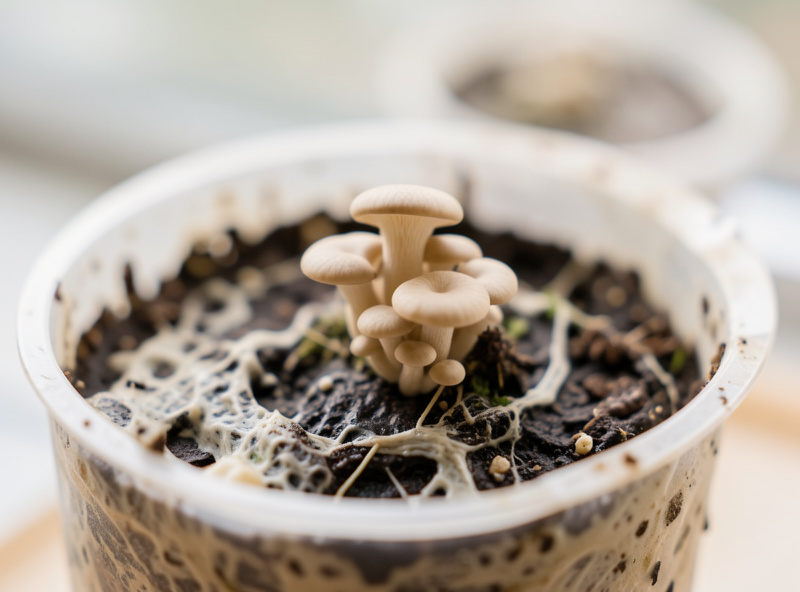
After a harvest, the tub needs to rest while the mycelium re-accumulates energy for the next flush — typically 7–14 days. Keep it in fruiting conditions: high humidity, fresh air, and light. Within a week or so a new set of pins usually appears. Rushing the tub or stripping its conditions between flushes only delays or weakens the next wave; patience produces a fuller second flush.
If the surface has dried, a light rehydration helps. Some growers do a “dunk” — submerging the block or tub in cool water for a few hours to restore moisture — while for a monotub a gentle misting of the surface is often enough. Do not waterlog it; a soaked tub between flushes sours rather than fruits. The field-capacity instinct from the moisture guide applies here as much as at the start. Maintaining the fresh-air exchange through the rest period keeps the surface healthy.
When to Retire a Tub
A tub is done when flushes shrink to almost nothing and contamination starts appearing in the tiring substrate. By the third flush most tubs are visibly spent — the surface mycelium looks thin and worn, yields are a fraction of the first flush, and green mold often begins creeping in as the substrate’s defenses fade. That is the natural point to harvest the last of it and reset the rotation with a fresh tub.
Do not try to squeeze a fourth or fifth flush from an exhausted, contaminating substrate — the diminishing returns are not worth the contamination risk to your grow space. Retire it cleanly. The spent substrate is not waste, though: it makes excellent garden compost or mulch, a second life covered in the spent substrate guide. Then start the next tub and keep the rotation going.
Related Guides
- Monotub and Bulk Growing: The Complete Guide
- Pinning Conditions: Triggering Your First Pins
- FAE and CO2 Control for Bulk Fruiting
- Spent Mushroom Substrate: 6 Uses for Old Blocks
- Mushroom Yield Per Block by Species
Frequently Asked Questions
How many flushes will a mushroom tub give?
Most home tubs give two or three flushes. The first is the largest, holding the bulk of the total yield, and each subsequent flush is smaller as the substrate’s energy reserves are consumed.
When should I harvest oyster mushrooms?
Harvest oyster when the cluster is full but the cap margins are still slightly curled down, not yet wavy and upturned. This gives the best texture and shelf life, just before heavy spore release.
Should I cut or twist mushrooms when harvesting?
Twist and pull the whole cluster at the base when you can; it leaves less dead tissue for bacteria than a cut stump. If a cut is needed, slice at the substrate surface and clear away the leftover stub.
How long between mushroom flushes?
A tub typically rests 7 to 14 days between flushes while the mycelium re-accumulates energy. Keep it in fruiting conditions and a new set of pins usually appears within a week or so.
Should I soak my tub between flushes?
Only if the surface has dried. A gentle misting is usually enough for a monotub; a longer dunk suits dried blocks. Never waterlog it, as a soaked tub between flushes sours instead of fruiting.
When should I throw out a spent tub?
Retire a tub when flushes shrink to almost nothing and green mold starts appearing, usually after the third flush. Do not chase more flushes from an exhausted substrate; compost it instead.