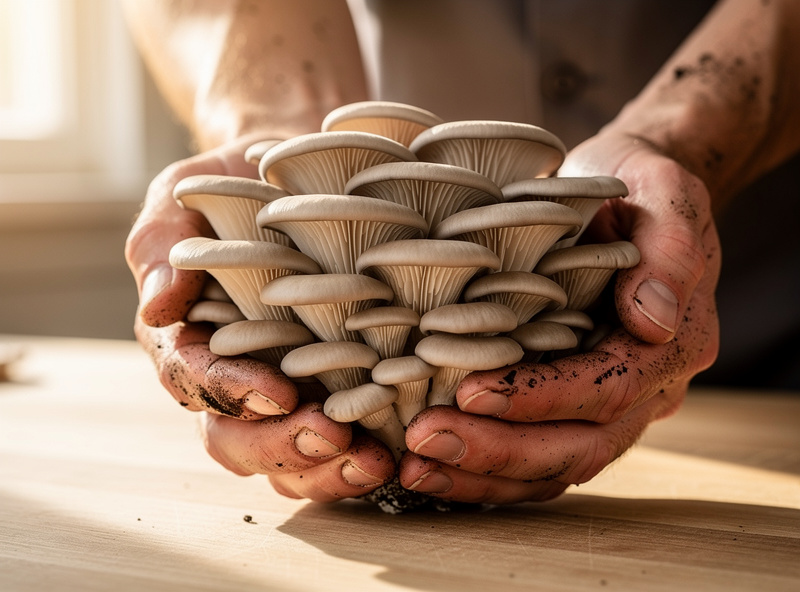
The easiest mushroom to grow at home is the pearl oyster: it colonises in 14-21 days, tolerates wide temperature and humidity swings, resists contamination, and yields 400-700 grams from a first kit. For beginners, the four other forgiving picks are lion’s mane, king oyster, wine cap, and shiitake — every one of them gourmet and edible, none requiring a sterile lab.
Ease in mushroom cultivation comes down to three things: how fast the species colonises (faster means contamination has less time to take hold), how much climate error it forgives, and how short the feedback loop is between your mistake and the visible result. I rank species by those three factors below, because picking the wrong first species is the most common reason beginners quit — a slow, fussy mushroom hides your mistakes for months, while a fast forgiving one tells you within two weeks whether you got it right.
Disclosure: MycoMansion is reader-supported. As an Amazon Associate I earn from qualifying purchases made through links in this article, at no extra cost to you. I only point to gear I actually use or would buy for my own grow.
Why Pearl Oyster Is the Undisputed Beginner Champion
Pearl oyster (Pleurotus ostreatus) is the easiest mushroom to grow because it is the most aggressive coloniser in home cultivation — it claims substrate so fast that mould rarely gets a foothold, and it fruits on almost anything from straw to coffee grounds to cardboard. A pearl oyster kit goes from purchase to first harvest in 10-18 days, and a DIY block runs 35-50 days from inoculation, with yields of 400-700 grams per kit or 1.5-2.5 kilograms per monotub.
The forgiveness is what makes it a beginner species. Oyster fruits comfortably anywhere from 18-24°C, shrugs off humidity dips that would abort a fussier mushroom, and re-flushes reliably for a second harvest at 60-70% of the first. It is also the cheapest species-substrate pairing in mycology because it thrives on pasteurised straw rather than sterilised supplemented sawdust. If you only ever grow one mushroom, this is the one — and you can even run it on garden waste and spent coffee grounds.
The Five Easiest Mushrooms, Ranked
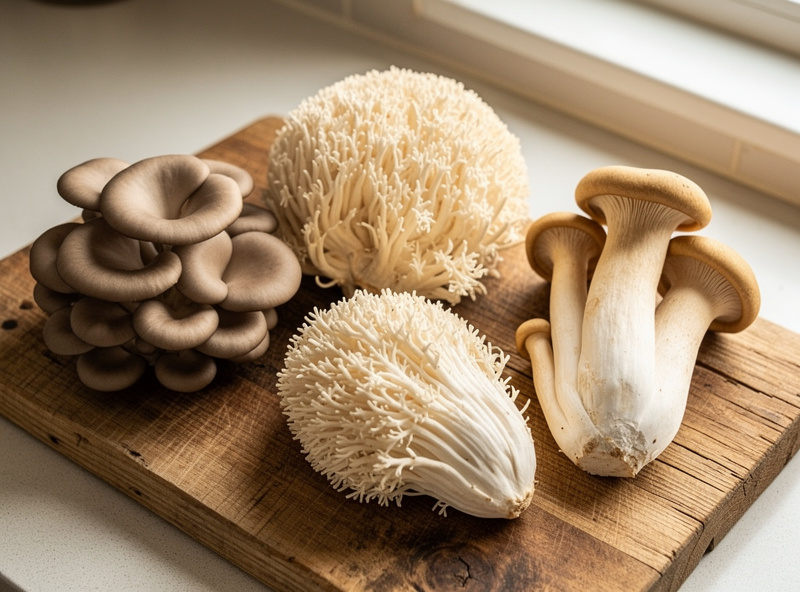
Below is my ranking of the five reasonable beginner species, ordered by overall ease. All five are gourmet or functional edibles you would actually want in your kitchen. The table compares the factors that decide your odds of a successful first harvest — colonisation speed, climate tolerance, and substrate fussiness.
| Species | Best Substrate | Inoc to Harvest | Climate Tolerance | Beginner Ease |
|---|---|---|---|---|
| Pearl oyster | Pasteurised straw / coir | 35-50 days | Very wide (18-24°C) | Easiest |
| King oyster | Supplemented sawdust | 40-55 days | Moderate (15-20°C fruiting) | Easy |
| Lion’s mane | Masters Mix sawdust | 45-60 days | Moderate (18-21°C) | Easy |
| Wine cap (outdoor) | Wood chips / straw bed | 4-8 months | Hardy, weather-driven | Easy but slow |
| Shiitake | Hardwood block / logs | 50-70 days | Needs cold shock to pin | Moderate |
Lion’s Mane: The Best Second Species
Lion’s mane (Hericium erinaceus) is the easiest functional mushroom for beginners and the species I recommend for run two. It colonises a touch slower than oyster — 45-60 days inoculation to harvest — but is equally forgiving of climate, and its shaggy white fruiting body is striking and obvious, so you always know exactly how it is developing. It wants supplemented hardwood sawdust (Masters Mix) rather than straw, which is the one upgrade in substrate complexity over oyster.
I keep lion’s mane on the bench year-round because it crab-cakes beautifully in the kitchen and the research literature continues to study its compounds with interest. As a grow, its main quirk is that it pins from the block face rather than the surface, so you fruit it through a single slit cut in the bag rather than opening a whole tub. The full substrate, temperature, and daily-care specifics are in the dedicated lion’s mane growing guide.
Wine Cap: The Easiest Outdoor Mushroom
Wine cap (Stropharia rugosoannulata, also called king stropharia) is the easiest outdoor mushroom because the garden does the climate control for you. You spread spawn into a bed of hardwood chips or straw, water it occasionally, and harvest 4-8 months later — no sterile technique, no tub, no humidity monitoring. The trade-off is patience: it is the slowest species here, but also the lowest-effort once established.
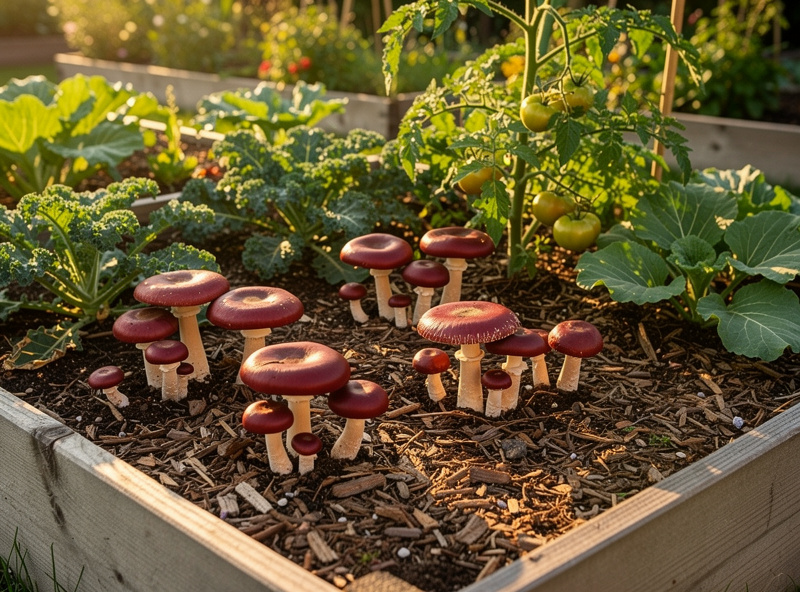
Wine cap is the ideal companion to indoor growing because it runs on a completely different timeline and uses zero indoor space — you set the bed up in spring and harvest through summer and autumn while your indoor monotubs cycle every six weeks. It also doubles as a soil builder, breaking wood chips into rich garden compost. The full build, from bed siting to spawn rate, is in the outdoor wine cap bed guide.
Species to Avoid on Your First Grow
Four species are technically growable but wrong for a first attempt: reishi (90-120 days, slow enough that mistakes hide for months), cordyceps (60-90 days and demands precise lab-grade conditions), maitake (cold-sensitive and temperamental), and any wild-collected culture (unknown, variable inoculum quality). The problem is never that these are “hard” in the moment — it is that their long timelines let a small early error compound silently before you ever see a symptom.
Start where the feedback loop is short. A pearl oyster block shows you healthy white mycelium within 14 days, so you learn fast and correct fast; a reishi block keeps your inoculation mistake invisible for two months. Build your sterile and fruiting instincts on the fast species first, then graduate to the slow functional mushrooms once you can run two clean monotubs back to back. The kit-versus-DIY starting choice for any of these is broken down in grow kit vs DIY monotub, and the whole first-year arc lives in the beginner guide.
Getting Started With Your First Species
For the absolute easiest start, buy a ready-to-fruit oyster kit and learn fruiting before you ever touch sterile work. When you move to growing from spawn, oyster on pasteurised straw remains the cheapest and most forgiving pairing, while lion’s mane and king oyster step you up to supplemented sawdust. Match the species to the substrate it actually wants — that single decision drives most of your success rate.
A first-grow shopping list is short: a gourmet oyster mushroom grow kit to learn fruiting, then a bag of sterilized grain spawn when you build your first monotub, or a lion’s mane grow kit if the functional angle is what drew you in. Pair any of them with the right substrate from the substrate guide, and learn to read the colonisation using the healthy-mycelium reference so you can spot trouble in week one rather than week four.
Frequently Asked Questions
What is the single easiest mushroom to grow at home?
Pearl oyster (Pleurotus ostreatus). It is the most aggressive coloniser in home cultivation, fruits on almost any substrate from straw to coffee grounds, tolerates 18-24 Celsius, and resists contamination. A kit harvests in 10-18 days; a DIY block yields 1.5-2.5 kilograms in 35-50 days.
What is the easiest mushroom to grow indoors for eating?
Pearl oyster for sheer ease, lion’s mane as the best second species. Both are gourmet edibles that forgive climate swings. Oyster runs on pasteurised straw; lion’s mane wants supplemented hardwood sawdust. King oyster is a third easy indoor pick on supplemented sawdust.
Which mushrooms should beginners avoid growing first?
Reishi (90-120 days), cordyceps (60-90 days and lab-fussy), maitake (cold-sensitive), and any wild-collected culture. These are not harder in the moment, but their long timelines let small early mistakes hide for months before symptoms appear. Start with fast species that give quick feedback.
What is the easiest mushroom to grow outdoors?
Wine cap (Stropharia rugosoannulata). You spread spawn into a hardwood-chip or straw bed, water occasionally, and harvest in 4-8 months with no sterile technique or indoor space. It is slow but the lowest-effort species and doubles as a garden soil builder.
How long does it take to grow oyster mushrooms from start to finish?
A pre-made oyster kit harvests in 10-18 days because it arrives pre-colonised. A DIY monotub takes 35-50 days: roughly 14-21 days colonisation at 20-24 Celsius, then 5-10 days to pin after fruiting cues, then a week to full size. A second flush follows about two weeks later.
Do I need a sterile lab to grow easy mushrooms at home?
No. Pearl oyster and wine cap need no lab. A kit requires only misting; an oyster monotub needs basic clean technique at the single inoculation step, not a flow hood. Sterile lab gear only becomes necessary for agar work and self-made grain spawn at the intermediate level.