
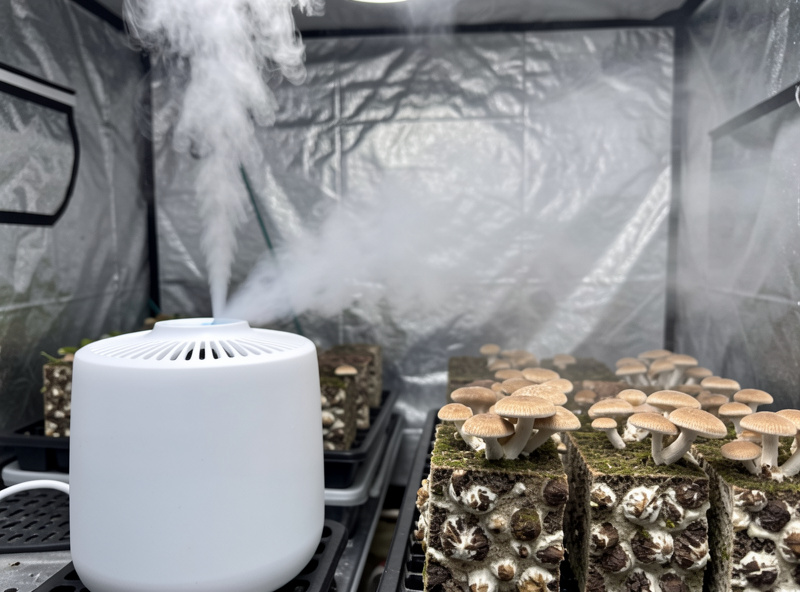
For a home mushroom fruiting chamber, an ultrasonic humidifier sized to push a cool fog into the chamber is the right tool — it atomizes water into a fine mist without adding heat, which is exactly what you want when you are trying to hold 85-95% humidity around delicate pins. After running ultrasonic units in both a Martha tent and a shotgun chamber for years, my hard-won lesson is that the humidifier is easy; the delivery and the water are what separate a clean flush from soaked, bacterially-blotched caps.
This guide is about the humidifier hardware: which type to buy, how to size and plumb it, and how to keep it from killing your grow with scale or standing water. For the automation side — humidistats, sensors, and climate control logic — I have a separate piece; read Smart Sensors for Mushroom Fruiting Chambers for the control system. This article assumes you want to choose and run the misting hardware itself. It sits under the complete home mushroom equipment guide.
Why Ultrasonic, Not Evaporative or Warm-Mist
An ultrasonic humidifier uses a vibrating piezoelectric disc to fling water off as a cool fog of micro-droplets — no heating element, no warm air. That matters for mushrooms because warm-mist humidifiers add heat that fights your temperature control and can cook a small chamber, while evaporative units (wick + fan) struggle to push humidity into the 90%+ range that fruiting wants. Ultrasonic hits high humidity fast and cold, which is the profile a fruiting chamber needs.
The micro-droplet fog also behaves well in a chamber: it hangs in the air and raises relative humidity rather than wetting surfaces immediately. The catch is that ultrasonic units atomize whatever is in the tank — including dissolved minerals — so water quality matters more than with other types, which I cover below. For the broader picture of why humidity vs air balance is the central fruiting tension, the grow tent setup guide ties it together.
| Humidifier Type | How It Works | Fit for Fruiting |
|---|---|---|
| Ultrasonic (cool mist) | Piezo disc atomizes water | Best — cold fog, hits 90%+ fast |
| Evaporative (wick + fan) | Air blown through wet wick | Weak — struggles past ~80% |
| Warm mist (steam) | Heats water to vapor | Poor — adds heat, risks cooking small chambers |
Sizing and Tank Capacity
Size the unit to your chamber volume and how long you want it to run unattended. A small tabletop ultrasonic with a 1-2 liter tank handles a Martha tent or a single tub, but it will need refilling daily or more during active fruiting. Larger reservoir units or ones plumbed to an external bucket run for days. I run a cool-mist ultrasonic humidifier with the biggest tank that fits my space, because the worst failure mode is the tank emptying overnight and humidity crashing while pins are forming. As an Amazon Associate I earn from qualifying purchases.
Output rate matters as much as tank size. The unit has to add moisture faster than the chamber loses it through fresh-air exchange — a leaky, well-ventilated chamber needs more output than a sealed one. If your humidity sags every time the FAE fan kicks on, the humidifier is undersized for your air-exchange rate. The fix is a higher-output unit, not running a small one constantly until it overheats.
Mist Delivery: Where the Fog Goes
How the fog enters the chamber decides whether you get even humidity or a wet zone and a dry zone. I never mist directly onto the blocks — droplets landing on substrate or caps invite bacterial blotch and waterlogging. Instead I duct or aim the fog into open chamber air and let a small circulation fan distribute it evenly. In a Martha tent I run the humidifier outside the tent and feed the mist in through a port; in a tub, a fogger inlet on one side with a fan opposite works.
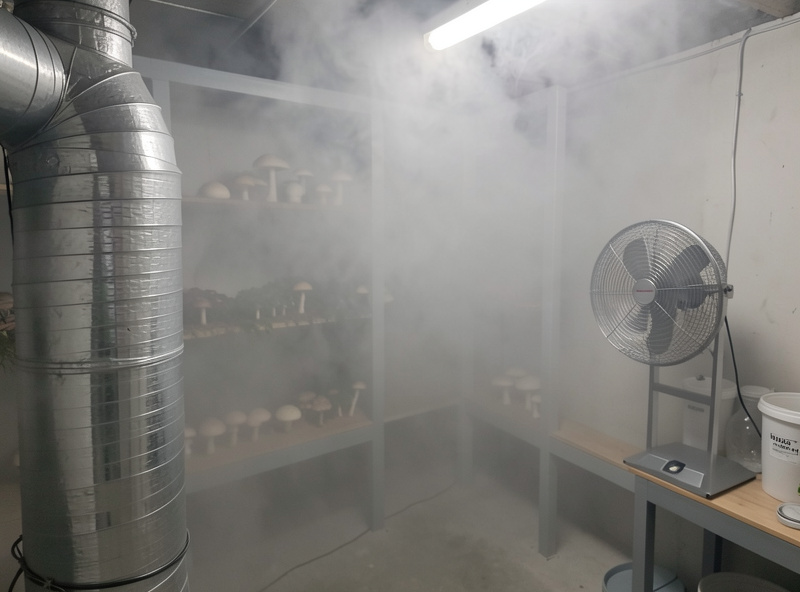
A buffer helps. A layer of moist perlite or a wet towel in the chamber base holds humidity between mist cycles, smoothing out the swings so the unit cycles less and the environment stays stable. The goal is a steady fog-bank ambiance, not pulses of soaking followed by drying. Pair the delivery with a calibrated reading — cheap built-in hygrometers lie, so I trust a separate accurate one, covered in the hygrometer guide.
Water Quality and Descaling
Because ultrasonic units atomize dissolved minerals, hard tap water produces a fine white dust that settles on everything — and inside a fruiting chamber that mineral film coats blocks and surfaces. I use distilled or filtered water to avoid it, and that also slows scale buildup on the piezo disc. Mineral scale on the disc is the number-one cause of an ultrasonic unit slowly losing output until it quits.
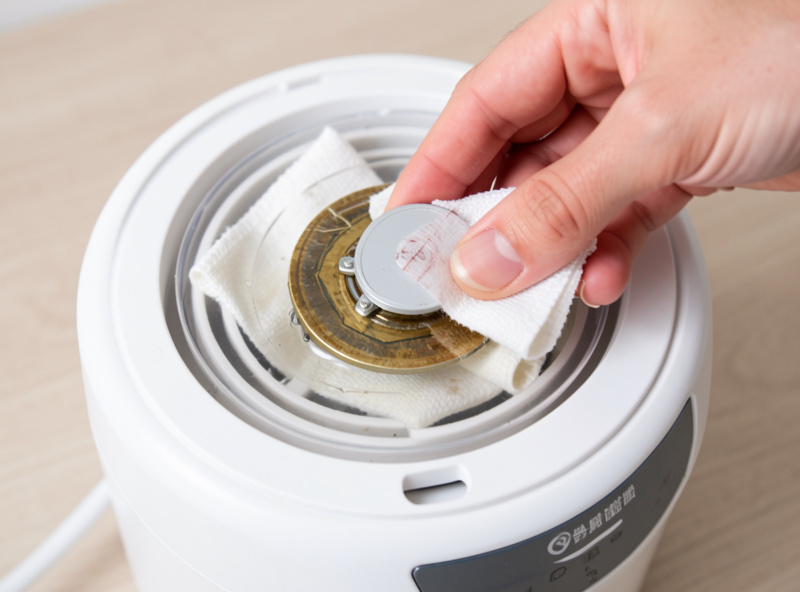
Descale on a schedule: I rinse the tank and wipe the disc regularly, and periodically clean the disc with a mild vinegar solution to dissolve scale, then rinse thoroughly so no residue carries into the chamber. A unit run on distilled water and descaled monthly lasts; one run on hard water and never cleaned chokes out in a season. Treat the humidifier like the working instrument it is, not a fill-and-forget appliance.
Keeping the Humidifier From Becoming a Contamination Source
A humidifier holds standing water in a warm, humid grow space — a perfect spot for bacteria and biofilm if you ignore it. Stagnant tank water can aerosolize microbes straight into your clean chamber, so I empty and refill the tank rather than topping it off, and I never let water sit stale between grows. The same contamination discipline that runs my grain jars and the curing chamber applies to the humidifier reservoir: clean water in, no biofilm allowed.
Between grows I drain it fully, wipe it dry, and store it empty — a reservoir left wet grows a slimy film that you then mist into your next batch. It is an easily-overlooked vector precisely because the humidifier sits outside the visible grow and gets forgotten. Build the tank rinse into your routine and the humidifier stays an asset instead of quietly seeding contamination. For the control logic that ties humidifier, fan, and sensors together, the smart sensors guide is the companion piece.
Frequently Asked Questions
What kind of humidifier is best for a mushroom fruiting chamber?
An ultrasonic cool-mist humidifier is best. It atomizes water into a cold fog without adding heat and reaches the 90 percent plus humidity that fruiting needs. Evaporative units struggle past about 80 percent, and warm-mist steam units add heat that can cook a small chamber.
Should I mist directly onto my mushroom blocks?
No. Droplets landing on substrate or caps invite bacterial blotch and waterlogging. Aim or duct the fog into open chamber air and let a small circulation fan distribute it evenly. A layer of moist perlite in the base buffers humidity between mist cycles for a steadier environment.
Why does my ultrasonic humidifier leave white dust?
Ultrasonic units atomize dissolved minerals along with the water, so hard tap water produces a fine white mineral dust that coats surfaces and blocks. Use distilled or filtered water to avoid it. That also slows scale buildup on the vibrating disc, which is what eventually kills output.
How do I keep my humidifier from causing contamination?
Empty and refill the tank rather than topping it off, never let water sit stale between grows, and drain and dry the unit fully when storing it. Stagnant tank water grows biofilm that can aerosolize microbes into your clean chamber, so treat the reservoir as a contamination vector.
How big a humidifier do I need for a Martha tent?
A small ultrasonic unit with a 1 to 2 liter tank can humidify a Martha tent or single tub, but expect daily refills during active fruiting. Output rate matters as much as tank size: the unit must add moisture faster than the chamber loses it through fresh-air exchange.
Can I use tap water in my mushroom humidifier?
You can, but distilled or filtered water is better. Tap water leaves mineral dust on everything and accelerates scale on the piezo disc, slowly reducing output. If you must use tap water, descale the disc with a mild vinegar solution regularly and rinse it thoroughly before refilling.