
Homegrown gourmet mushrooms cost roughly $2-4 per pound once your gear is paid off, against $12-25 per pound for fresh gourmet species at the store. A DIY monotub breaks even on its reusable equipment within two to three runs; a single grow kit, by contrast, costs about the same per pound as simply buying mushrooms.
I do not sell my mushrooms — I grow them to eat — so the only economics that matter to me are grocery savings, and I have tracked them closely enough to give you honest numbers rather than the inflated “save hundreds” claims you see online. The truth is more interesting: growing your own can genuinely beat store prices, but only on the right path, and the gourmet species worth growing are also the ones that are expensive to buy, which is exactly what makes the math work. This guide breaks down the real cost per pound of homegrown versus store-bought, the break-even point on equipment, and the hidden costs most comparisons ignore. Everything here covers edible gourmet cultivation only — the kind that actually saves you money at the till.
Disclosure: MycoMansion is reader-supported. As an Amazon Associate I earn from qualifying purchases made through links in this article, at no extra cost to you. I only point to gear I actually use or would buy for my own grow.
What Homegrown Mushrooms Actually Cost
The cost of homegrown mushrooms splits into two parts: one-time reusable gear (a tote, drill bits, a hygrometer) and per-run consumables (substrate and spawn). Once the gear is paid off, your ongoing cost is only the consumables, which for a DIY monotub work out to roughly $2-4 per pound of fresh gourmet mushrooms.
This two-part structure is the key to the whole comparison. On your first run, the gear cost is folded in and your per-pound number looks unimpressive. But because the tote, tools, and chamber last for dozens of runs, every subsequent grow only costs you a few dollars of substrate and spawn. That is why a yield-tracking habit matters: the more pounds you push through the same reusable gear, the lower your lifetime cost per pound falls. The realistic yields those costs are spread across are detailed in the mushroom yield per block chart, and the kit-versus-DIY decision that sets your starting cost is in grow kit vs DIY monotub.
Homegrown vs Store: The Cost-Per-Pound Chart
Fresh gourmet mushrooms — oyster, lion’s mane, king oyster — run $12-25 per pound at grocery stores and farmers markets, with specialty species at the high end. Homegrown costs range from kit-level parity down to a few dollars per pound for an established DIY grower. The chart below lays out each path against the store baseline.
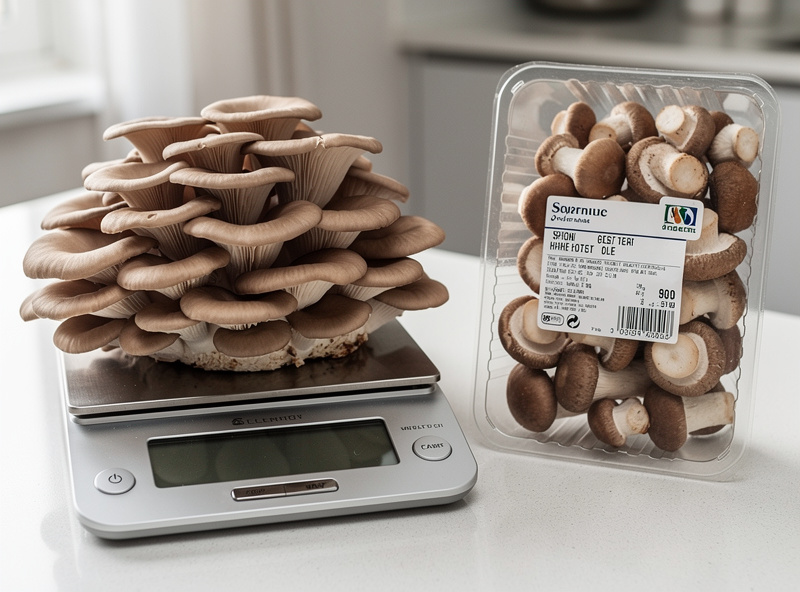
| Source | Upfront cost | Yield | Cost per pound | vs store |
|---|---|---|---|---|
| Store-bought gourmet | None | As needed | $12-25 | Baseline |
| Grow kit | $25-45 | 1-1.5 lb | $20-40 | No savings |
| DIY monotub (run 1) | $60-90 | 3.3-5.5 lb | $14-20 | Modest saving |
| DIY monotub (run 3+) | ~$20 consumables | 3.3-5.5 lb | $2-4 | 5-10x cheaper |
| Shiitake log (lifetime) | $15-25 per log | 4-8 lb over years | $3-6 | Much cheaper |
The Break-Even Math on Gear
A DIY monotub setup costs $60-90 the first time, of which roughly $40-50 is reusable gear and $20-30 is consumables. Since a single run yields 3.3-5.5 pounds worth $40-110 at store prices, the reusable gear typically pays for itself within two to three runs — after which every harvest is nearly pure savings.
Here is the break-even in plain terms. Run one produces, say, 4 pounds of oyster that would cost you $60-80 at the store, but you spent $75 on a first monotub, so you have roughly broken even on day one while keeping all the gear. Run two costs only $20 in substrate and spawn for another 4 pounds — that is a clean $40-60 saved. By run three the reusable equipment is fully amortised and your cost per pound has collapsed to the consumables-only level. The faster you cycle blocks through that paid-off gear, the better the return, which is why I keep a rolling stock of two to three blocks rather than growing one at a time. The substrate choices that keep consumable costs low are compared in the substrate guide.
Why Grow Kits Don’t Save Money
A grow kit costs $25-45 and yields only 1-1.5 pounds of mushrooms, which works out to $20-40 per pound — roughly the same as buying fresh gourmet mushrooms outright. Kits are a brilliant way to learn fruiting, but they are not a money-saving tool, because the vendor’s labour and packaging are baked into the price.
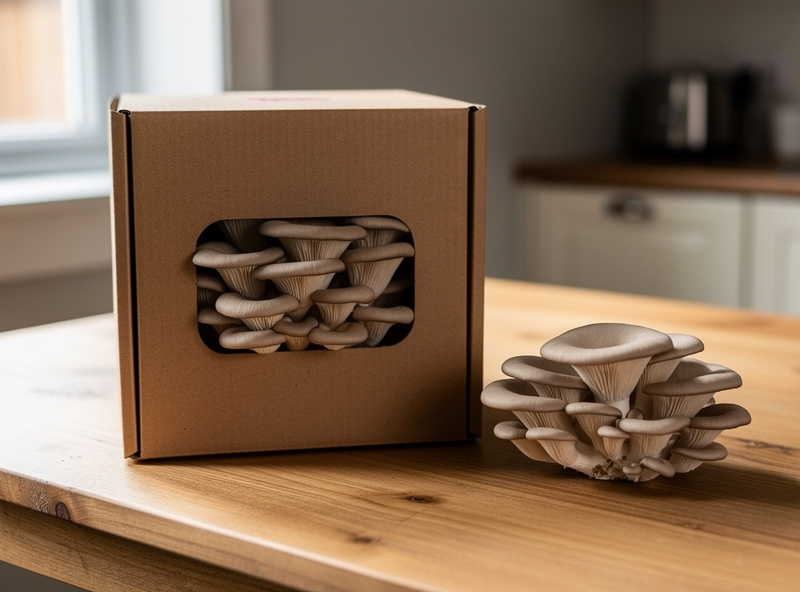
This surprises people, but it makes sense once you see where the cost lives. A kit is a fully colonised block — the vendor did the sterilising, the inoculation under a flow hood, and the colonisation, then shipped you a heavy, perishable item. You are paying for all of that convenience and the shipping, and you only get one block’s worth of mushrooms for it. The value of a kit is the near-zero contamination risk and the fruiting education, not the grocery savings. Treat your first kit as tuition, not as a way to beat store prices, and move to a DIY monotub for run two once you can recognise healthy fruiting. The full beginner progression that justifies starting with a kit anyway is in the complete beginner’s guide.
Where DIY Pulls Ahead
DIY cultivation wins on cost because the expensive parts are reusable and the cheap parts are what you buy each run. A clear tote, drill, and hygrometer are one-time purchases; substrate and spawn cost only a few dollars per block. Buying grain spawn in bulk and using inexpensive straw or coir pushes the per-pound cost down to $2-4.
The lever that matters most is substrate cost, and it is almost free. Pasteurised straw, hydrated coir, and even spent coffee grounds make excellent oyster substrate for a dollar or two per block, and a bag of grain spawn can be expanded grain-to-grain to inoculate several blocks from one purchase. I keep my consumable cost low by buying spawn in bulk and using a coir-vermiculite-gypsum mix that costs a few dollars a tub. The reusable gear list is short and cheap: a food-safe clear storage tote as the chamber, bulk grain spawn to inoculate, and a gram kitchen scale to track yield so you actually know your cost per pound. The species and substrate pairings that maximise yield per dollar are in easiest mushrooms to grow.
The Hidden Costs People Forget
Honest cost comparisons must include three things beginners ignore: electricity for sterilising and humidifying, the dollar value of contaminated blocks that fail, and your time. None are large for a home grower, but a first-run contamination loss or a pressure cooker running for hours does add real cost that the headline “$2 per pound” number leaves out.
Electricity is minor — a humidifier and occasional pasteurisation add a few dollars a month at most — but contamination losses are the real hidden tax, especially early on. A first-time DIY grower who loses a block to green mould has effectively doubled the cost of the mushrooms they do harvest, which is another argument for learning on a low-risk kit first. Time is the cost only you can price: a monotub needs about 90 minutes of active work spread over its run, so if you value your time highly, the savings shrink. For me the time is part of the hobby’s enjoyment rather than a cost, but an honest comparison names it. The contamination losses that most inflate real-world cost are catalogued in the contamination guide.
Is Growing Your Own Worth It?
Financially, growing your own gourmet mushrooms is worth it if you commit past the first run — an established DIY grower pays $2-4 per pound for mushrooms that cost $12-25 at the store, a five-to-ten-fold saving. For a one-time kit grower, the value is the experience and freshness, not the money.
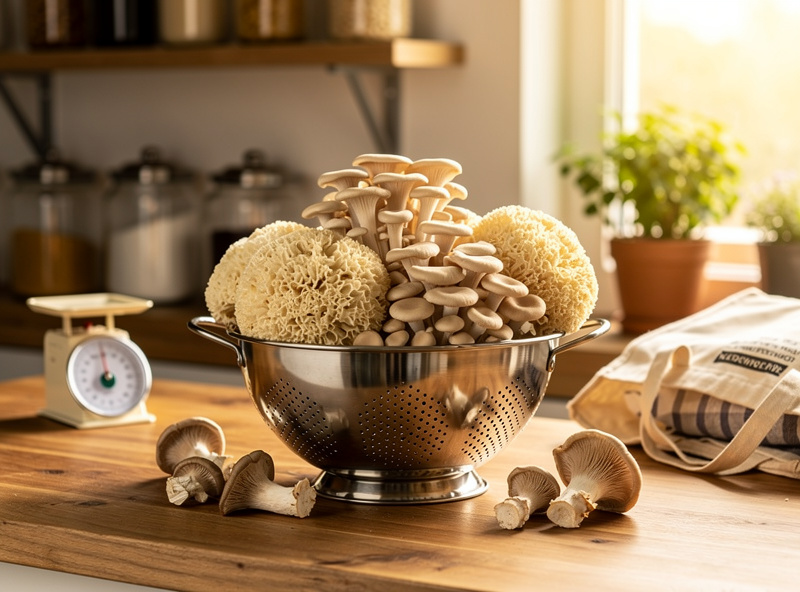
My honest verdict is that the savings are real but secondary. The bigger payoffs are freshness — mushrooms harvested an hour before cooking versus days-old store stock — and access to species like lion’s mane and unusual oyster strains that are expensive or impossible to find locally. The grocery savings are a genuine bonus that grows as your gear pays off and your technique sharpens, but if you only ever run one kit you should do it for the experience, not the economics. Commit to a few DIY monotub cycles, keep your substrate cheap, and the cost per pound falls to a level no shop can match — at which point you are eating premium gourmet mushrooms for the price of commodity buttons.
Frequently Asked Questions
Is it cheaper to grow your own mushrooms?
Yes, if you grow DIY past the first run. An established home grower pays about 2-4 dollars per pound for gourmet mushrooms that cost 12-25 dollars at the store. A single grow kit, however, costs roughly the same per pound as simply buying mushrooms.
How much do homegrown mushrooms cost per pound?
A DIY monotub costs 14-20 dollars per pound on the first run, dropping to 2-4 dollars per pound by the third run once the reusable gear is paid off. A grow kit costs 20-40 dollars per pound. Store-bought gourmet mushrooms run 12-25 dollars per pound.
How long until a mushroom setup pays for itself?
A DIY monotub setup costs 60-90 dollars, of which 40-50 dollars is reusable gear. Since one run yields 3.3-5.5 pounds worth 40-110 dollars at store prices, the gear typically pays for itself within two to three runs, after which harvests are nearly pure savings.
Why don’t grow kits save money?
A kit costs 25-45 dollars and yields only 1-1.5 pounds, about 20-40 dollars per pound, roughly store price. You are paying for the vendor’s sterilising, inoculation, and shipping of a heavy perishable block. A kit’s value is the low contamination risk and fruiting education, not grocery savings.
What hidden costs should I include in a mushroom cost comparison?
Include electricity for sterilising and humidifying (a few dollars a month), the dollar value of contaminated blocks that fail, and your time (about 90 minutes per monotub run). A first-run contamination loss can double the effective cost of the mushrooms you do harvest.
Which mushrooms are most worth growing to save money?
Gourmet species you would otherwise buy expensively: oyster, lion’s mane, and king oyster, which run 12-25 dollars per pound at the store. Skip commodity button and cremini mushrooms, which cost only a few dollars per pound to buy and are not worth the home effort.