
Indoor gourmet cultivation runs year-round because you control the climate, so any month is a fine month to start a monotub. Outdoor growing is seasonal: inoculate hardwood logs in late winter to early spring, start wine-cap beds once the soil warms in spring, and harvest most outdoor flushes in autumn. A first-year calendar simply blends both tracks.
The question I get most from new growers is not “how” but “when” — when do I start, when do logs go out, when will I actually harvest? After years of running both an indoor grow shelf and an outdoor wine-cap bed in the garden, I have settled into a calendar that keeps fresh gourmet mushrooms coming nearly every week of the year. This guide lays out that first-year calendar month by month, separates the indoor cycle (which ignores the seasons entirely) from the outdoor cycle (which is ruled by them), and shows you how to shift the dates for your own climate zone. Everything here is strictly edible gourmet and functional cultivation — the only kind I grow.
Disclosure: MycoMansion is reader-supported. As an Amazon Associate I earn from qualifying purchases made through links in this article, at no extra cost to you. I only point to gear I actually use or would buy for my own grow.
Why Indoor Is Year-Round and Outdoor Is Seasonal
Indoor cultivation runs in any month because a monotub or fruiting tent creates its own climate — room temperature and chamber humidity are independent of what the weather is doing outside. Outdoor cultivation, by contrast, is locked to temperature and rainfall, so logs, beds, and stumps follow the seasons exactly the way a vegetable garden does.
This split is the single most useful idea for planning your year. Your indoor shelf is your steady engine: start a block whenever you want a harvest in five to seven weeks, regardless of season. Your outdoor projects are your investments: you do the work in spring, wait through the colonisation months, and collect the payoff in autumn and the following year. Most beginners run indoor only for the first few months to build skills, then add an outdoor project once the timing lines up. The full skills progression behind this calendar is in the complete beginner’s guide, and the seasonal outdoor side is detailed in the outdoor growing guide.
The First-Year Month-by-Month Calendar
The calendar below assumes a Northern Hemisphere temperate climate and a start in January, but the logic holds for any zone once you shift the outdoor rows to your own season. Indoor tasks repeat on a rolling five-to-seven-week cycle; outdoor tasks happen once, in their window, and pay off months later.
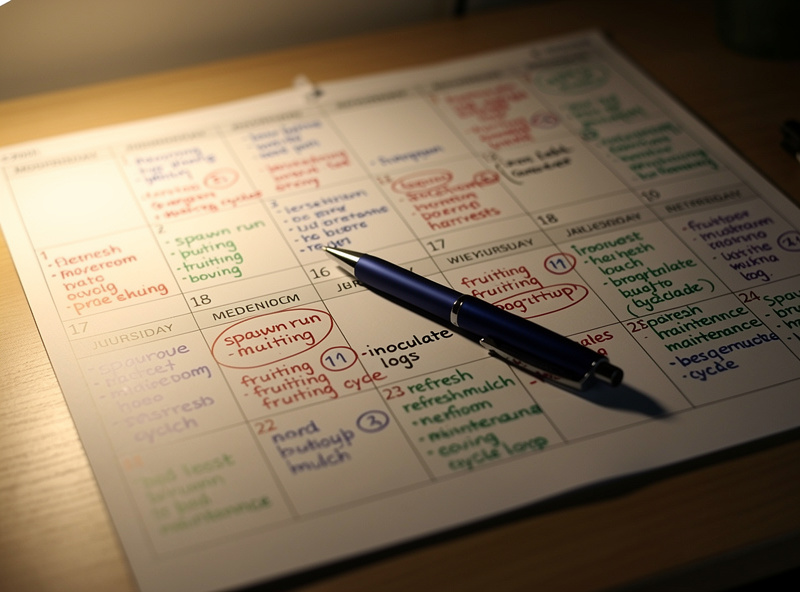
| Month | Indoor task | Outdoor task | Notes |
|---|---|---|---|
| Jan | Start first oyster monotub | Cut hardwood logs (dormant) | Logs rest 2-6 weeks before inoculation |
| Feb | Fruit + harvest block 1 | Inoculate logs with plug spawn | Late-winter inoculation, before bud break |
| Mar | Start block 2 (lion’s mane) | Continue log inoculation | Stack and shade logs to colonise |
| Apr | Fruit + harvest block 2 | Build wine-cap bed when soil workable | Spring is the main outdoor build window |
| May | Start block 3 (king oyster) | Water beds; keep logs shaded/moist | Outdoor mycelium running underground |
| Jun | Rolling indoor blocks | Maintain moisture in beds and logs | Heat means more frequent watering |
| Jul | Rolling indoor blocks | Watch wine-cap bed for early flush | First bed flush possible in warm wet spells |
| Aug | Rolling indoor blocks | Harvest wine-cap flushes | Late-summer rain triggers outdoor pins |
| Sep | Start cool-season indoor blocks | Soak logs to trigger fruiting | Autumn is peak outdoor harvest |
| Oct | Fruit + harvest indoor blocks | Harvest log and bed flushes | Force-fruit logs by cold-water soak |
| Nov | Rolling indoor blocks | Mulch beds; rest logs for winter | Outdoor cultures go dormant |
| Dec | Indoor blocks; plan year two | Review yields; order spawn | Quiet month; assess and restock |
Indoor Cultivation: The Same Cycle Any Month
An indoor block follows the same five-to-seven-week cycle no matter the season: inoculate, colonise for 14-21 days at 20-24°C, trigger fruiting, then harvest two flushes over the following two to three weeks. Because you supply the warmth and humidity, January and July are identical from the mycelium’s point of view.
This climate-independence is what lets you plan indoor harvests like clockwork. I keep a rolling stock of two to three blocks at staggered stages so that as one finishes its second flush, the next is already pinning — fresh oyster or lion’s mane on the shelf almost every week of the year. The only seasonal adjustment indoors is humidity: winter heating dries the room, so an open chamber needs the humidifier running more often, while summer often holds humidity for free. The full block-by-block mechanics and the realistic harvest weights you can expect are in the easiest mushrooms to grow guide and the mushroom life cycle explained.
Outdoor Seasonal Timing: Logs, Beds, and Zones
Outdoor timing follows two firm rules: inoculate hardwood logs in late winter to early spring (after the tree is dormant but before leaves emerge), and build wine-cap beds once spring soil is workable and warming. Both then colonise through summer and fruit in autumn, with logs often waiting until their second year to produce.
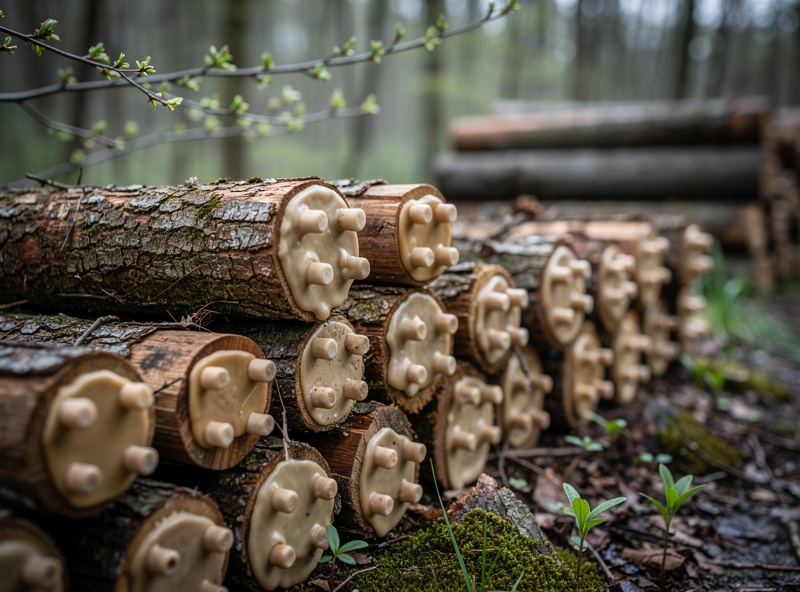
The reason late-winter log inoculation works is sap and competition: dormant-season wood is full of stored carbohydrates the mushroom mycelium will live on, and inoculating before leaf-out gives your spawn a head start on the wild fungi that wake up in spring. Cut logs while the tree is dormant, let them rest two to six weeks so the tree’s own anti-fungal defences fade, then drill, insert plug spawn, and seal with wax. Wine-cap beds are more forgiving — any time from spring through early summer works, as long as the wood-chip bed stays moist. The exact dormant-season windows and how they shift by climate are in when to inoculate mushroom logs, and the full bed build is in the outdoor wine-cap bed guide.
Spring: The Busy Outdoor Season
Spring is the heaviest outdoor workload of the year: finish any remaining log inoculation before bud break, build new wine-cap beds as soon as the soil can be worked, and keep last year’s logs shaded and moist as they colonise. Indoors, spring is business as usual — keep the rolling blocks running.
If you do only one outdoor project in year one, make it a spring wine-cap bed, because it is the lowest-effort outdoor crop and the fastest to produce — often a first flush the same late summer. I build mine in April once the frost is reliably gone, layer hardwood chips with wine-cap spawn, soak it, and then mostly leave it alone but for watering in dry spells. Logs are the slower investment: the ones I inoculate in February rarely fruit until the following autumn, so spring log work is patience banked for next year. This front-loaded spring effort is exactly why the outdoor track rewards planning the whole year in advance rather than improvising.
Autumn and Winter: Harvest and Reset
Autumn is the outdoor payoff season: cool nights and rain trigger natural flushes from beds and logs, and you can force-fruit shiitake logs by soaking them in cold water for 24 hours. Winter shifts everything indoors — outdoor cultures go dormant under mulch while your monotub shelf keeps producing as if the seasons did not exist.
In autumn I soak my most colonised shiitake logs in a cold-water bath to shock them into fruiting, then watch for pins over the next week — a reliable trick that lets you schedule outdoor harvests instead of waiting on the weather. Once hard frost arrives, I mulch the wine-cap bed to insulate the mycelium and let the logs rest, and the grow operation contracts to the indoor shelf for the winter. December is my planning month: tally the year’s yields, decide which species earned their space, and order spawn for the late-winter log inoculation that starts the cycle over. The kit-or-DIY choice that shapes your next indoor year is broken down in grow kit vs DIY monotub.
Building Your Own Calendar by Climate Zone
To adapt this calendar to your zone, anchor the outdoor tasks to two local dates: your last hard frost (which gates wine-cap bed building) and your dormant season (which gates log cutting and inoculation). Indoor tasks need no adjustment at all — they run on room temperature, which you already control year-round.
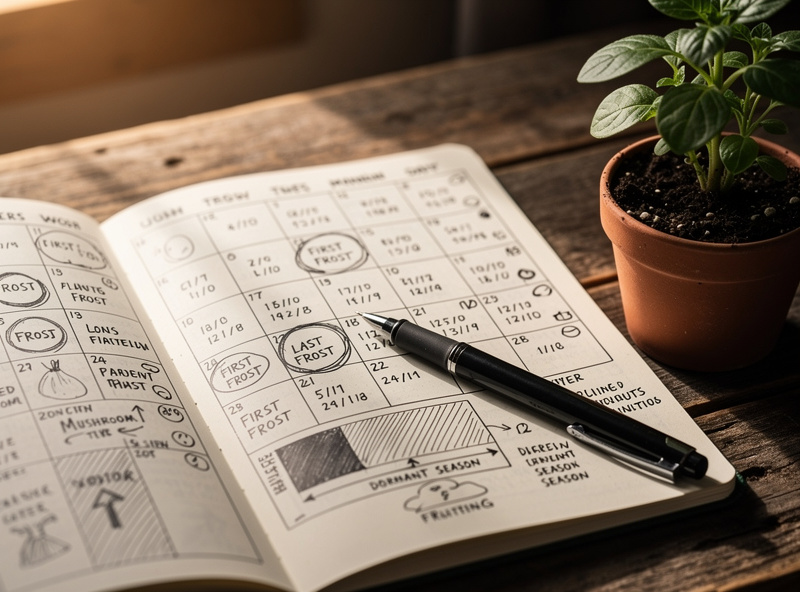
In a warm climate, the whole outdoor calendar compresses and shifts earlier — log inoculation might happen in December or January, and beds can go in weeks sooner. In a cold northern zone like mine, log work waits until February or March and the outdoor harvest window is shorter, which makes the year-round indoor shelf even more valuable for steady supply. The principle is the same everywhere: indoor for reliable weekly mushrooms, outdoor for seasonal abundance and the satisfaction of a garden crop. For setting up new outdoor projects, pre-inoculated plug spawn dowels make log inoculation straightforward, and bulk grain spawn keeps the indoor blocks rolling. A simple clear storage tote is all the indoor chamber a year of monotub harvests needs.
Frequently Asked Questions
When is the best time to start growing mushrooms?
Indoors, any month works because you control the climate, so a monotub started in winter behaves the same as one started in summer. Outdoors, the season matters: inoculate logs in late winter to early spring, and build wine-cap beds once spring soil is workable and warming.
Can you grow mushrooms indoors year-round?
Yes. An indoor block follows the same five-to-seven-week cycle in any month, because a monotub or fruiting tent supplies its own room-temperature climate and humidity. The only seasonal tweak is running a humidifier more often in winter when indoor heating dries the air.
When should I inoculate mushroom logs?
Inoculate hardwood logs in late winter to early spring, after the tree is dormant but before leaves emerge. Cut the logs during dormancy, rest them two to six weeks so the tree’s antifungal defences fade, then drill, insert plug spawn, and seal with wax.
When do outdoor mushrooms fruit?
Most outdoor cultures fruit in autumn, when cool nights and rain trigger flushes from logs and wine-cap beds. Wine-cap beds can also flush in late summer after warm wet spells, and shiitake logs can be force-fruited any time by soaking them in cold water for 24 hours.
How long does it take to get mushrooms from a log?
Hardwood logs usually take a full season to colonise and often do not fruit until the autumn of their second year. Inoculate in late winter, let them run through summer in shade, and expect the first reliable flush around 12 to 18 months after inoculation.
How do I adjust a mushroom calendar for my climate?
Anchor the outdoor tasks to two local dates: your last hard frost, which gates wine-cap bed building, and your dormant season, which gates log cutting and inoculation. Indoor tasks need no adjustment because they run on room temperature you control year-round.