
Bulk substrate is pasteurized rather than sterilized, which gives it a thinner microbial defense than a fully sterile fruiting block — so contamination in a tub is a question of when, not if, unless your process is clean. The good news is that bulk contamination is almost always introduced at spawning, not during fruiting, which means a heavy spawn rate and clean technique prevent the overwhelming majority of it. The rest is knowing how to spot trouble early and decide what to toss versus what to harvest around.
This guide covers the contaminants that actually kill tubs — green Trichoderma, cobweb mold, and bacterial wet spot — how to tell them apart from healthy mycelium, and the triage calls that save a flush or stop a problem spreading to your other grows. The principles build on the broader contamination guide but focus on the specific realities of pasteurized bulk in a tub.
This article contains affiliate links. As an Amazon Associate I may earn from qualifying purchases, at no extra cost to you.
Why Bulk Tubs Contaminate
Bulk substrate carries a low background of competing microbes by design — pasteurization knocks them back without eliminating them, leaving a competitive floor that helps the colonizing spawn but also means any introduced contaminant has living company. The colonizing mycelium has to claim the substrate before a contaminant establishes, which is why spawn rate and clean handling at spawning matter more than anything you do later.
The critical insight is timing: the vast majority of bulk contamination enters at the spawning step, from weak or already-contaminated grain, dirty hands, an unclean mixing surface, or airborne spores landing on open substrate. Once a tub is fully colonized, the dense mycelial mat is its own defense, and fruiting-stage contamination is comparatively rare. Fix the spawning step — clean grain, a generous spawn-to-bulk ratio, clean work — and most contamination problems disappear.
Green Mold (Trichoderma)
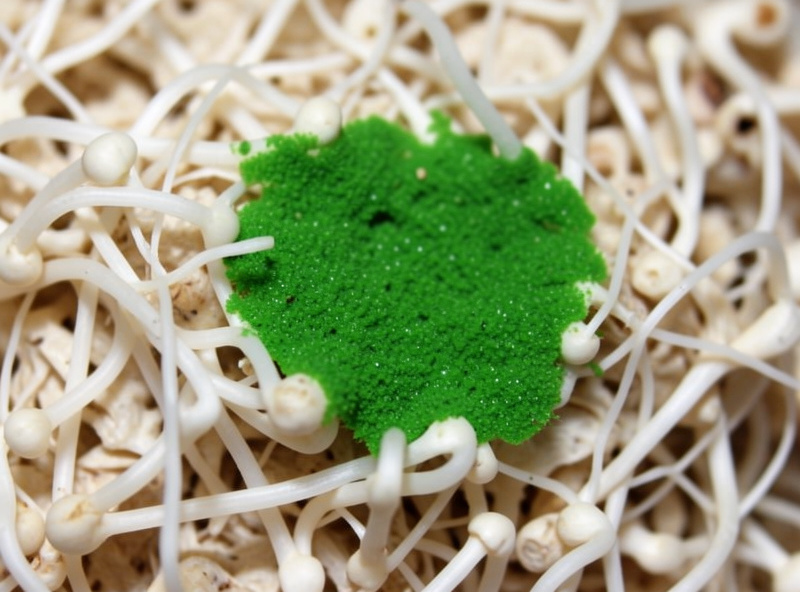
Green Trichoderma is the most common and most dangerous bulk contaminant: it starts as white fuzzy patches indistinguishable from young mycelium, then turns a vivid forest green as it sporulates. By the time it is green it is aggressive and spreading, and a tub with established Trichoderma is usually a loss. The danger is the spores — disturbing a sporulating patch releases millions into your grow space, threatening every other tub.
Catching it early is everything. Any patch that looks slightly off-white, grayish, or develops a defined circular edge against the surrounding mycelium deserves suspicion. Telling early Trichoderma from healthy growth is a skill the green mold ID guide covers in photo detail, and the broader question of what healthy mycelium looks like is the baseline you measure against. If green appears, do not open the tub indoors — bag and remove it carefully to avoid spreading spores.
Cobweb Mold
Cobweb mold is a fast-growing gray, wispy fungus that looks like fine spiderweb stretched over the substrate surface, distinct from the dense, defined growth of healthy mycelium. It grows alarmingly fast — visibly spreading over hours rather than days — but unlike Trichoderma it is relatively superficial and sometimes treatable if caught immediately. The classic test is its texture: cobweb is loose and gray and collapses when misted, where healthy mycelium is white and dense.
For a small cobweb patch caught early, some growers spot-treat by misting the area with hydrogen peroxide or 70% isopropyl and improving fresh-air exchange, since cobweb thrives in stagnant, humid air. Improving airflow often stops it. The detailed visual distinction between cobweb and mycelium is in the cobweb mold guide. If it has spread widely, treat the tub as a loss rather than risk it taking hold permanently.
Bacterial Wet Spot and Blotch
Bacterial contamination shows as slimy, wet, often foul-smelling patches — a sour or rotting odor is the giveaway, since healthy mycelium smells fresh and mushroomy. In bulk it usually traces to over-hydration: waterlogged substrate goes anaerobic in its lower layers and sours, or a too-wet surface develops bacterial blotch on the mushrooms themselves. The sour-smell test is the fastest diagnostic in the whole contamination toolkit.
Prevention is moisture control: hydrate bulk to field capacity and no wetter, and avoid pooling water in the bottom of the tub. The full picture of bacterial wet spot, including how it appears in grain and jars upstream, is in the bacterial contamination guide. A surface bacterial blotch can sometimes be managed by reducing surface moisture and increasing fresh air, but souring deep in the substrate is usually terminal for that tub.
| Contaminant | Appearance | Smell | Action |
|---|---|---|---|
| Trichoderma | White then vivid green patches | Coconut/musty | Bag and remove; usually a loss |
| Cobweb mold | Wispy gray webbing | Faint/none | Treat early or discard |
| Bacterial wet spot | Slimy, wet, discolored | Sour/rotten | Usually a loss; control moisture |
| Healthy mycelium | Dense, white, rhizomorphic | Fresh, mushroomy | None — this is what you want |
Toss, Harvest Around, or Treat?
The triage call depends on the contaminant and how far it has spread. Green Trichoderma that has sporulated is almost always a toss — bag the tub and remove it from your space before the spores spread. A small, freshly spotted cobweb patch is worth a treatment attempt with peroxide and better airflow. Bacterial souring deep in the substrate is terminal, but a minor surface blotch with the substrate otherwise healthy can sometimes be managed by reducing moisture.
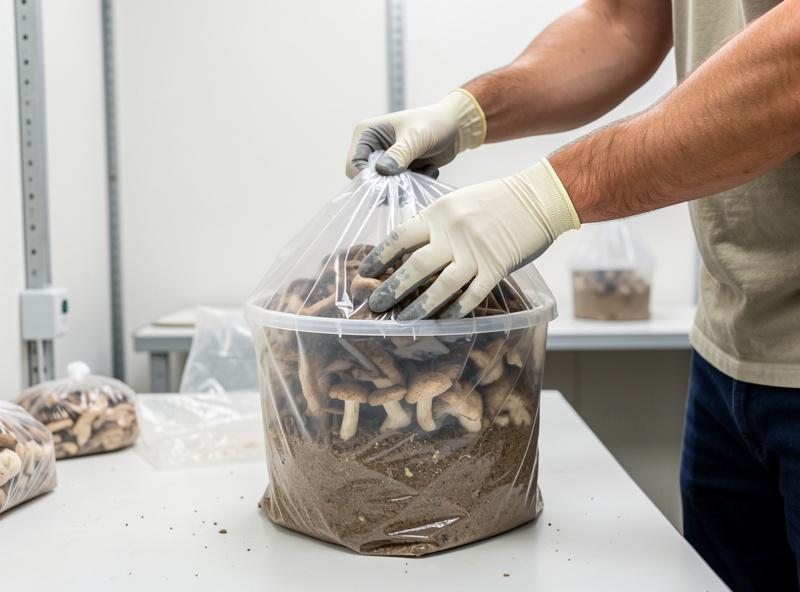
If a tub has thrown a healthy first flush and then shows minor contamination, you can sometimes harvest the clean mushrooms and then retire the tub rather than risk a contaminated second flush. The rule that keeps your whole grow safe: when in doubt, remove it. One sporulating tub left in place to “see if it recovers” can seed contamination across every other grow in the room. Protecting the clean tubs is worth losing one questionable one.
Preventing Bulk Contamination
Prevention beats triage every time, and it all happens at or before spawning. Use fully colonized, clean grain spawn — contaminated grain is the number-one source of tub failures. Spawn at a generous ratio so the mycelium colonizes fast and defends the substrate. Hydrate bulk to field capacity, not wetter, and pasteurize it properly. Work on a clean, wiped-down surface with clean hands, and keep the lid closed during colonization so airborne spores cannot land on open substrate.
The same clean-process discipline that protects a salami curing chamber or a sourdough starter protects a tub — clean hands, clean surfaces, and not opening things more than you must. A bottle of 70% isopropyl alcohol for wiping surfaces and a box of nitrile gloves are the two cheapest insurance policies in bulk growing. Get the spawning step clean and the rest of the tub grow mostly takes care of itself.
Related Guides
- Monotub and Bulk Growing: The Complete Guide
- Mushroom Contamination: The Complete Guide
- Green Mold in Mushroom Grows: Trichoderma ID
- Cobweb Mold vs Mycelium
- Bulk Substrate Prep for Monotubs
- Spawn-to-Bulk Ratio: Getting the Mix Right
Frequently Asked Questions
Why does bulk substrate contaminate more than blocks?
Bulk is pasteurized, not sterilized, so it has a thinner microbial defense than a fully sterile block. A heavy spawn rate and clean spawning compensate, letting the mycelium claim the substrate before contaminants establish.
How do I tell Trichoderma from healthy mycelium?
Healthy mycelium is dense and white; Trichoderma starts as off-white or grayish patches with a defined circular edge, then turns vivid green as it sporulates. By the green stage it is aggressive and usually a loss.
Can I save a tub with cobweb mold?
Sometimes, if caught early. A small fresh cobweb patch can be spot-treated with hydrogen peroxide or 70% isopropyl and more fresh air, since cobweb thrives in stagnant air. Widespread cobweb means discard the tub.
What does bacterial contamination smell like?
Sour or rotting, the opposite of healthy mycelium’s fresh mushroomy smell. Bacterial wet spot in bulk usually comes from over-hydration; control moisture to field capacity and avoid pooling water to prevent it.
When should I throw out a contaminated tub?
When green Trichoderma has sporulated or bacterial souring has gone deep into the substrate, bag and remove the tub. One sporulating tub can seed contamination across every other grow, so when in doubt, remove it.
How do I prevent contamination in bulk tubs?
Use clean fully colonized grain, spawn at a generous ratio, hydrate bulk to field capacity, pasteurize properly, work on clean wiped surfaces with clean hands, and keep the lid closed during colonization.