
A steady weekly rotation of gourmet mushrooms fits in about 20 to 30 square feet of floor space — a corner of a spare room, a section of garage, or a large closet. The constraint is never floor area once you stack vertically; it is keeping three jobs — clean work, colonization, and fruiting — physically separated so they do not poison each other.
My grow room is a shared workspace in Sweden, wedged between the ferment bench and the salami curing chamber, and it is not big. What makes it produce oyster every week is not size — it is layout. I laid my first room out wrong, put the colonization jars three feet from an open fruiting tent, and spent a season fighting green mold I had basically invited in. This guide is the floor plan I wish I’d started with. It is the on-the-ground version of the space section in scaling up a home mushroom grow to a steady rotation.
How Much Space Do You Really Need for a Steady Rotation?
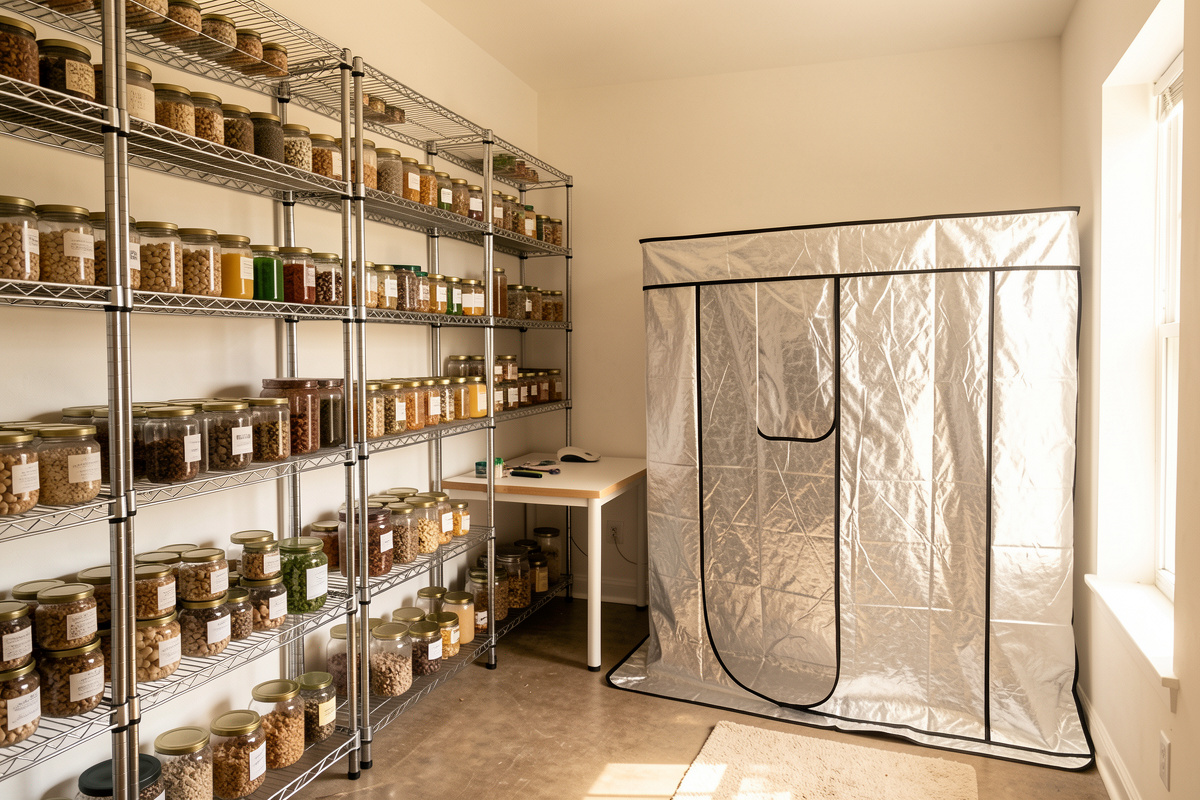
A rotation of 12 to 20 active blocks needs roughly 20 to 30 square feet of floor, but only because you build upward. A single 48-inch-wide wire shelving unit gives you four or five levels in about 4 square feet of footprint, so one wall of shelving holds a week’s worth of colonizing jars and fruiting blocks stacked vertically.
Think in cubic feet, not square feet. My main shelving unit is 48 inches wide, 18 inches deep, and 72 inches tall — that is 4 square feet of floor holding five shelves, each of which takes a tray of a dozen colonizing jars or four to six fruiting blocks. Two of those units plus a corner fruiting tent is the whole footprint of a steady rotation. If you are working with even less — a studio apartment, a single closet — the same vertical logic scales down hard, and the tight-quarters version is covered in the apartment mushroom growing setup. The number that actually limits you is not floor space but how many blocks you can keep clean, which is a contamination question, not a real-estate one.
What Are the Three Zones Every Grow Room Needs?
Every functional grow room has three zones: a clean transfer zone for working with grain and cultures, a warm dark colonization zone, and a humid fruiting zone. Keeping them separated — ideally with the clean zone upstream of airflow and the fruiting zone downstream — is the single cheapest contamination control you will ever set up, and it costs nothing but a floor plan.
The logic is about spore and moisture flow. The fruiting zone is warm, wet, and full of maturing mushrooms actively releasing spores and inviting mold; the clean zone is where you crack open sterile grain jars that must not catch any of that. Put them next to each other with shared air and you are transferring contamination for free. In my room the clean transfer table sits by the door where fresh air enters, the colonization shelf is in the middle in the dark, and the fruiting tent is in the far corner where humid air and spores drift away from everything upstream. Penn State Extension’s mushroom program, which has studied commercial facility design for decades, treats this airflow-direction principle as fundamental — you can read their background material at Penn State Extension. The zones do not need walls; they need distance and airflow awareness.
Where Should the Colonization Shelf Go?
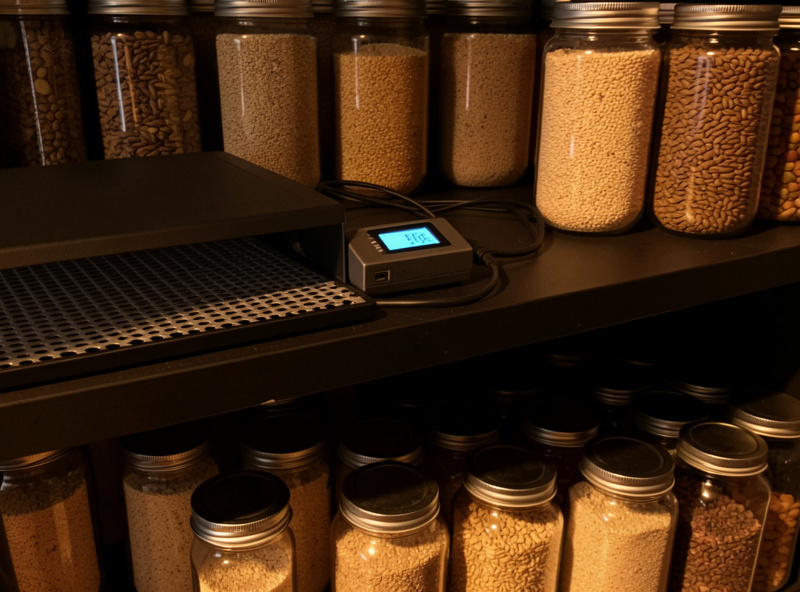
The colonization shelf belongs in the darkest, most temperature-stable spot in the room — away from windows, away from the humid fruiting zone, and off the cold floor. Colonizing grain and blocks want a steady 21 to 24°C (70 to 75°F) in the dark, and stability matters more than the exact number; swings stall colonization and invite trouble.
I run my colonization shelf on a heat mat under a thermostat probe, kept dead-stable and dark, and it is the quietest, most boring corner of the room — which is exactly right. Colonizing mycelium does not want light, does not want fresh air exchange, and does not want you opening the jars to look; every peek is a contamination risk and a temperature swing. The heat-mat-and-thermostat setup that holds temperature within a degree is detailed in heat mats and thermostats for incubation, and the full enclosed-chamber build is in a DIY incubation chamber. Site this zone against an interior wall if you can — interior walls hold temperature far better than an exterior wall that swings with the weather, which in a Swedish winter is the difference between stable colonization and a stalled shelf.
How Do You Fit a Fruiting Chamber Into a Small Room?
A fruiting chamber fits a small room as a tent or a tub in the corner farthest from your clean zone. A Martha-style grow tent gives you the most fruiting capacity per square foot — several shelves of blocks in about 6 square feet of floor — while a shotgun tub or converted greenhouse works for smaller batches. The corner placement keeps humid, spore-heavy air downstream of everything else.
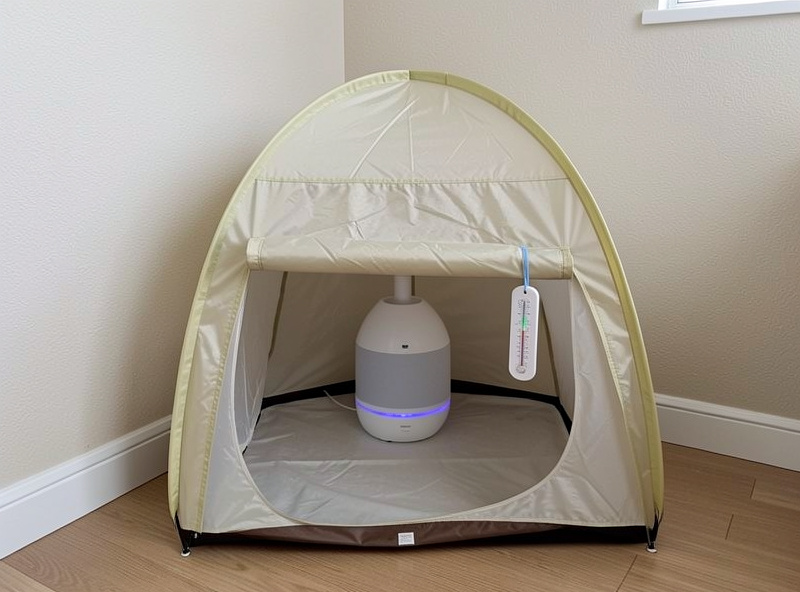
My fruiting happens in a Martha-style grow tent with an ultrasonic humidifier on a humidistat holding 85 to 95% relative humidity, a small circulation fan, and a hygrometer I watch obsessively. The tent lives in the far corner because that is where I want the wet, spore-rich air to stay. For smaller runs a shotgun fruiting chamber takes up almost no room, and the full range of chamber builds is in the DIY fruiting chamber build plans. Whatever you build, get a reliable hygrometer first — humidity you cannot measure is humidity you cannot control, and the picks are in the best hygrometer guide. The sound of the humidifier ticking on and off against the humidistat becomes the heartbeat of the room; when it goes quiet too long, something is wrong.
How Should You Lay Out Shelving by Room Size?
Shelving layout scales in recognizable tiers, and the right configuration depends on how much wall you have, not how much floor. Below is how the same rotation lays out across three realistic small-space footprints, from a single closet to a dedicated corner of a room.
| Space | Floor footprint | Shelving | Fruiting | Realistic rotation |
|---|---|---|---|---|
| Large closet | ~6–8 sq ft | One 4-shelf unit | Shotgun tub on bottom shelf | 4–6 blocks |
| Room corner | ~12–16 sq ft | One 5-shelf unit + tent | Small grow tent | 8–14 blocks |
| Half a spare room | ~20–30 sq ft | Two 5-shelf units + tent | Martha tent | 15–20 blocks |
| Garage bay | ~30–40 sq ft | Two units + work table | Martha + shotgun | 20–30 blocks |
| Dedicated room | 40+ sq ft | Three units + tent | Two tents | 30+ blocks |
Notice that the jump in capacity comes from adding vertical shelving and a second fruiting chamber, not from spreading out across the floor. Leave a 24 to 30 inch aisle in front of any shelf you need to work at — narrower than that and you cannot get a fruiting block in and out without knocking neighbors, which is how blocks get bumped, bruised, and contaminated.
How Do You Keep Zones From Contaminating Each Other?
You keep zones from cross-contaminating by controlling airflow direction and putting distance between wet and clean. Fresh air should enter near your clean transfer zone and exhaust near the fruiting zone, so the airflow always runs clean-to-dirty and never carries fruiting-zone spores back over open grain jars.
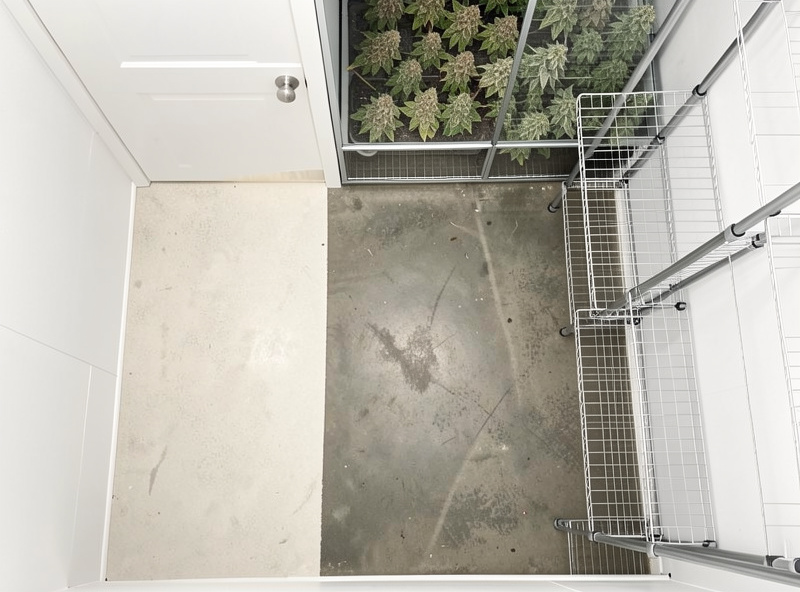
This is the lesson my first room taught me the expensive way. I had the still-air box on a table with the fruiting tent unzipped three feet away, and every time I opened a grain jar I was working in air full of oyster spores and whatever mold was riding along. My contamination rate on grain transfers was brutal until I moved the clean work to the opposite side of the room and only opened the tent after transfers were done and sealed. Do your sterile transfers in a still air box or flow hood sited upstream, run any air circulation from clean toward fruiting, and never open a fruiting tent and a grain jar in the same hour if you can help it. The American Mushroom Institute, the U.S. grower trade body, publishes grower resources on facility hygiene at americanmushroom.org. Distance is free contamination insurance — use it.
What Shelving and Storage Actually Works?
Steel wire shelving is the correct backbone for a grow room: it is cheap, adjustable, holds weight, does not trap moisture, and wipes down clean. Avoid solid-shelf wood units, which soak up humidity and grow their own mold, and avoid anything you cannot sanitize with a wipe of isopropyl.
My whole room runs on adjustable steel wire shelving because the open wire lets air move, sheds spilled substrate, and takes a 70% isopropyl wipe without soaking. Adjustable feet or casters matter more than they sound — being able to roll a unit out to clean behind it keeps the room honest. If you are outfitting a room, a couple of sturdy adjustable steel wire shelving units and a wipe-clean work surface are the two purchases that shape everything else. Keep a dedicated spray bottle of isopropyl on the clean table and a roll of micropore tape within reach; the layout only works if the clean habits are built into where things sit.
As an Amazon Associate I earn from qualifying purchases.
What I’d Do Laying Out a Room Today
If I were laying out a small grow room from scratch today, I would start by drawing the three zones on paper before buying a single shelf. Clean transfer by the door where fresh air enters; colonization in the dark middle against an interior wall on a heat mat; fruiting in the far corner where the humid air drifts away from everything else. Get that airflow direction right and half your contamination problems never happen.
Then build up, not out — two wire units and a corner tent hold a genuine weekly rotation in the footprint of a small bathroom. Leave real aisle space, keep the isopropyl within arm’s reach of the clean table, and never let a grain jar and a fruiting tent breathe the same air at the same time. The room is not a place you store mushrooms; it is a machine for keeping clean and dirty apart, and the floor plan is the first and cheapest tool you have.
How much space do you need to grow mushrooms for a steady rotation?
About 20 to 30 square feet of floor space holds a weekly rotation of 12 to 20 blocks once you stack vertically on wire shelving. A single closet can run 4 to 6 blocks, and a room corner with one shelving unit and a small tent runs 8 to 14. Vertical space matters far more than floor area.
What are the three zones a mushroom grow room needs?
A clean transfer zone for working with grain and cultures, a warm dark colonization zone held at 21 to 24 degrees Celsius, and a humid fruiting zone at 85 to 95 percent humidity. Keeping them separated with the clean zone upstream of airflow is the cheapest contamination control available.
Where should the colonization shelf go in a grow room?
In the darkest, most temperature-stable spot, against an interior wall and away from windows and the humid fruiting zone. Colonizing grain and blocks want a steady 21 to 24 degrees Celsius in the dark, and interior walls hold temperature far better than exterior walls that swing with the weather.
Can you grow mushrooms in a small apartment or closet?
Yes. A large closet with one four-shelf wire unit and a shotgun tub runs a small rotation of 4 to 6 blocks. The same three-zone logic scales down; the limit is how many blocks you can keep clean in shared air, not the floor area itself.
What shelving is best for a mushroom grow room?
Adjustable steel wire shelving. It is cheap, holds weight, lets air move, sheds spilled substrate, and wipes clean with isopropyl. Avoid solid wood shelving, which soaks up humidity and grows its own mold, and anything you cannot sanitize.