
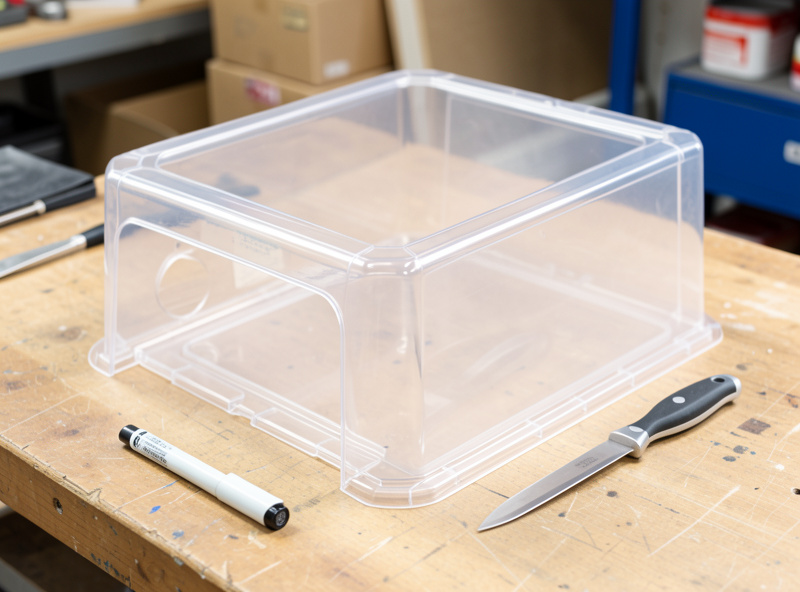
A still air box is a clear tote with two arm holes, and it is the single best $20 you will spend in mushroom cultivation. It works by killing air movement: with no breeze, contaminant spores settle out and your open jars and plates stay clean. You can build one in twenty minutes with a tote, a marker, and a knife, and it will save more grows than any other piece of gear you own.
Most failed home grows die at a transfer — the moment a jar or plate is open to the room — not in the fruiting chamber. A still air box (SAB) is the cheapest, fastest fix for that, and unlike a flow hood it needs no fan, no filter, and no power. This is how I build and run mine, and why it handles the great majority of my transfer work.
What a Still Air Box Does
A still air box is a sealed, transparent container you work inside through two arm holes, creating a pocket of motionless air around your work. Contaminant spores and bacteria ride on air currents; remove the currents and, given a minute of stillness, those particles drift down and settle out of the working zone instead of landing in your open culture. That is the entire principle — no filtration, just the absence of moving air.
It is the first sterile-work station in any home lab, and for routine jobs it is all you need. In the full DIY lab build sequence, the SAB comes before everything else, because protecting transfers is what protects the whole chain downstream. When you eventually outgrow it, the next build is a laminar flow hood — but that is a scale-up purchase, not a starting point.
Why Still Air Beats a Breeze
Working on an open bench fails because the air is always moving — every door, vent, and your own breath carries spores across your work. A still air box removes that variable entirely: seal the box, let it settle for a minute, and the air inside is calm enough that nothing is being actively delivered onto your culture. It is a humbler approach than a flow hood, which actively blows filtered air across the work, but for a few jars it is just as effective and a fraction of the cost.
The trade-off is volume. Still air works for short jobs in a small sealed space; the moment you are pouring a stack of agar plates or opening many grain jars in one session, the box gets crowded and your arms keep stirring the air. That is the line where a flow hood earns its place, which I broke down in still air box vs flow hood. For liquid culture injections, grain-to-grain transfers, and small agar work, the SAB wins on simplicity.
Choosing the Tote
Pick a clear or translucent tote of around 50–70 liters with a tight-fitting lid — big enough to fit your jars and both hands, small enough that the air volume stays manageable. Clarity matters: you need to see what your hands are doing, so a transparent box beats an opaque one. A deeper box also helps, because it keeps your work well below the arm holes where the last traces of outside air sit.
Avoid totes with heavy ribbing or textured interiors — smooth walls wipe down cleanly with isopropyl, while ribs trap residue and spores. I run a plain clear tote that lives on a shelf and gets wiped before and after every session. The same wipeable-surface logic runs through every clean build I make, from the fruiting chamber to the clean-room sanitizers I keep on the bench.
Cutting the Arm Holes
Cut two arm holes on one long side, spaced about shoulder-width apart and positioned low so your hands reach the bottom of the box comfortably. Trace around a small plate or jar lid — roughly 5–6 inches across — to mark two circles, then cut them with a sharp knife or a rotary tool. Place them low and far enough apart that you can work with both hands without your forearms sealing the holes.
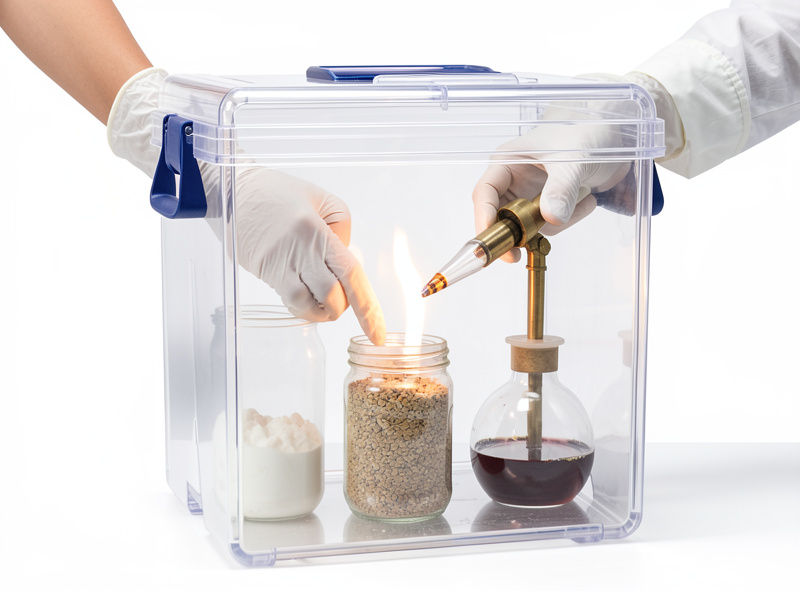
Two refinements I have settled on. Cut the holes slightly smaller than your arms so the gap seals around them when you are working — a snug fit keeps outside air from washing in around your forearms. And smooth the cut edges so they do not scratch you over a long session. Some growers add foam pipe-insulation gaskets around the rims for comfort and a better seal; that is optional, but it does make a difference on longer agar sessions.
Setting It Up: The Clean Ritual
The box only works if you run it clean: wipe the inside walls, the lid, and everything going in with 70% isopropyl, load your tools, seal it, and let it sit one to two minutes before you start. That rest is what lets the disturbed air settle — skip it and you are working in the very currents you built the box to remove. Spray the inside, place your jars, alcohol lamp, scalpel, and culture, close the lid, wait, then put your arms in slowly.
Slow, deliberate movements are the other half of it. Fast hands stir the air back into motion and defeat the stillness, so I work like the air is fragile — because in there it is. Keep a flame going for tool and lip sterilization where the job calls for it, open each jar for the shortest possible moment, and re-wipe gloves between steps. These are the same habits that protect every microbial project in my house, the clean-process discipline I bring from the curing chamber and the sourdough bench to the substrate.
What You Can and Can’t Do in a SAB
A still air box comfortably handles liquid culture injections, grain-to-grain transfers, spawning grain to bulk, and small agar plate work — the bread-and-butter of home cultivation. Those are short, contained jobs where a calm pocket of air is plenty. I do the large majority of my transfer work in the SAB and only reach for the flow hood when the job is bigger than the box.
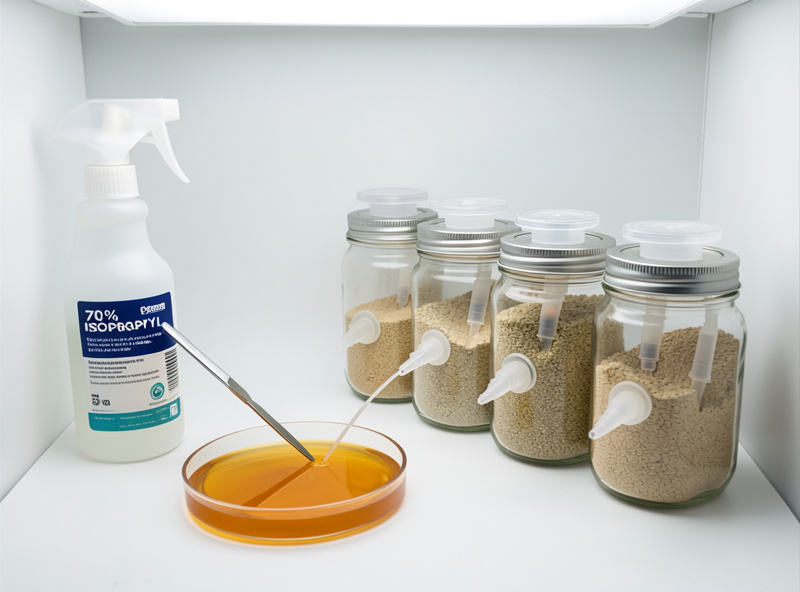
Where the SAB struggles is volume and duration: pouring many agar plates, long isolation sessions, or any job where the box stays open and busy for a long stretch. The more your arms move and the longer the box is in use, the more outside air mixes in. For serious agar plate work and strain isolation, moving filtered air is genuinely better. For grain spawn and culture work at home scale, the box is the right tool — see also how I sterilize grain spawn before it ever reaches the box.
Common Mistakes That Undo the Box
The mistakes that ruin a SAB are all about reintroducing air movement: not letting the box settle, moving too fast, cutting the holes too large, or working in a draughty room with a fan or open window nearby. Any of those puts currents back into the box. The fix for all of them is the same — calm room, settled air, slow hands, snug holes.
The other common error is treating the box as a substitute for clean habits rather than a support for them. The SAB does not sterilize anything; it just keeps the air still while your isopropyl, flame, and short open-times do the actual contamination control. Run those habits hard and a $20 tote will keep your cloning and transfers clean for years. When you do see contamination creep in, learning to read healthy versus contaminated growth tells you whether your technique is slipping.
Frequently Asked Questions
How does a still air box work?
A still air box is a sealed clear tote you work in through two arm holes. With no air movement inside, contaminant spores settle out of the working zone instead of landing on your open jars and plates. There is no filter, just the absence of moving air, so let it settle a minute before you start.
What size tote should I use for a still air box?
Use a clear or translucent tote of about 50 to 70 liters with a tight lid, big enough for your jars and both hands but small enough that the air volume stays calm. Choose smooth walls over ribbed ones so it wipes clean with isopropyl, and a deeper box keeps work below the arm holes.
How big should the arm holes be in a still air box?
Cut two holes about 5 to 6 inches across, shoulder-width apart and low on one long side. Make them slightly smaller than your arms so the gap seals around your forearms while you work, which keeps outside air from washing in. Smooth the edges so they do not scratch.
Is a still air box as good as a flow hood?
For routine home work, yes. A still air box handles liquid culture injections, grain-to-grain transfers, spawning to bulk, and small agar work just as cleanly as a flow hood at a fraction of the cost. A flow hood only pulls ahead for pouring many plates or long sessions where moving filtered air matters.