
You can grow gourmet mushrooms in a studio apartment with a single monotub or shotgun fruiting chamber on a shelf. Oyster, lion’s mane, and king oyster all fruit at normal room temperature in under one square metre, and the only real challenges — humidity, airflow, and contamination — are solved with a few inexpensive tools and a tidy routine.
I grow most of my gourmet mushrooms indoors in a Swedish flat, not a barn, so apartment cultivation is the version of this hobby I know best. The whole grow lives on a single wire shelf next to the kitchen, produces enough oyster and lion’s mane to actually cook with every week, and never smells like anything worse than damp forest floor for a few minutes a day. This guide is the small-space setup I would build again from scratch: the right chamber for the square footage you have, how to hold humidity in dry indoor air, how to manage smell and fresh air without bothering your neighbours, and how to keep a lived-in home from contaminating your blocks. Everything here is strictly edible gourmet cultivation — the only kind I grow.
Disclosure: MycoMansion is reader-supported. As an Amazon Associate I earn from qualifying purchases made through links in this article, at no extra cost to you. I only point to gear I actually use or would buy for my own grow.
Can You Really Grow Mushrooms in an Apartment?
Yes — a single fruiting chamber needs about half a square metre of floor or shelf space, indirect light, and a room that sits between 18 and 24°C, which describes almost every apartment. Gourmet mushrooms do not need a greenhouse, a basement, or a dedicated room; a corner of a kitchen, a closet, or a bookshelf is enough to produce real harvests.
The reason apartments work so well is that the conditions gourmet mushrooms want are the conditions humans already keep indoors. Oyster and lion’s mane fruit happily at the same room temperature you live at, want the same indirect daylight your rooms already get, and ask only for higher local humidity inside their chamber — not in the whole room. You are not climate-controlling your flat; you are climate-controlling a plastic box the size of a storage tote. That distinction is what makes the hobby genuinely apartment-friendly rather than a compromise. The full first-year arc, scaled for a home grower, is in the complete beginner’s guide.
The Best Setup for Small Spaces: Monotub vs Shotgun Chamber
For most apartments, a monotub is the best first chamber: it is a single sealed tote that holds its own humidity, takes up the footprint of a storage box, and needs almost no daily attention. A shotgun fruiting chamber (a tub drilled with many small holes, sitting on a perlite bed) gives better fresh air but demands more frequent misting and a slightly larger footprint.
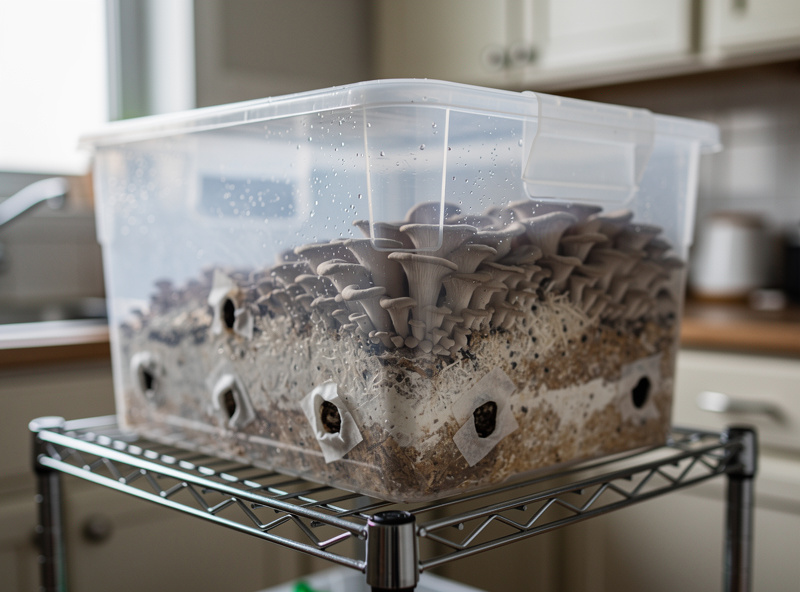
The choice comes down to how much daily fiddling you want and how much room you have. A monotub is the lowest-effort option and the one I steer apartment beginners toward, because its sealed lid does the humidity work for you. A shotgun chamber rewards attention with denser fresh-air exchange, which oyster in particular loves, but it dries faster and wants misting two or three times a day. The table below compares the four small-space options I have actually run on the same shelf.
| Chamber | Footprint | Humidity method | Daily effort | Best for | Approx. cost |
|---|---|---|---|---|---|
| Monotub | Storage-tote sized | Sealed lid holds moisture | Low (mist 0-1x) | Beginners, low effort | $15-25 |
| Shotgun FC | Slightly larger | Perlite bed + misting | High (mist 2-3x) | Hands-on growers | $20-30 |
| Mini Martha tent | Bookshelf footprint | Ultrasonic humidifier | Medium (auto-misted) | Multiple blocks | $60-120 |
| Small grow tent | Closet corner | Humidifier + fan | Medium | Scaling up species | $80-150 |
| Open block + bag | Minimal | Humidity tent bag | Medium-high | One kit at a time | $0-10 |
Managing Humidity in a Dry Apartment
Gourmet mushrooms fruit best at 85-95% humidity, while a heated apartment in winter can drop to 30-40% — so the entire job is holding moisture inside the chamber, not the room. A sealed monotub does this passively; for open chambers, an ultrasonic humidifier on a timer or a perlite bed plus daily misting brings the local humidity up to target.
Dry indoor heating is the single biggest apartment-specific obstacle, and it is entirely solvable. In a monotub, the sealed lid traps the moisture evaporating from the substrate, so the box self-regulates near field-capacity humidity with little input from you. In an open chamber I run a small ultrasonic humidifier on a cheap repeat-cycle timer, and I keep a digital hygrometer inside the chamber — not on the wall — so I am reading the air the mushrooms actually breathe. Watching that number is how you learn your specific flat: south-facing rooms in summer hold humidity easily, while a radiator-heated room in January needs the humidifier running far more often. Dialling this in is covered species-by-species in the equipment setup guide, and hygrometer placement and accuracy are in choosing a hygrometer.
Controlling Smell and Fresh Air
Mushroom chambers need daily fresh-air exchange because fruiting bodies exhale CO2, and stale high-CO2 air produces thin, leggy mushrooms. The good news for apartment growers is that a healthy gourmet grow smells only faintly earthy — like damp woods — for the few minutes a day you fan it; a strong or sour smell is a contamination warning, not normal.
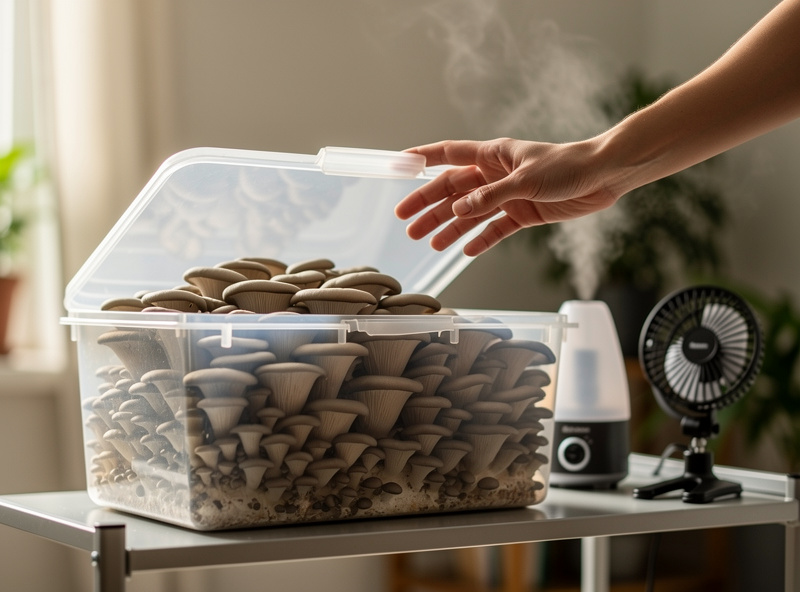
Fresh-air exchange in a small space is simple: open the chamber and fan it by hand two or three times a day, or run a small clip fan on a timer for a minute at a time. That is enough to clear CO2 without crashing humidity. The smell question is the one apartment dwellers worry about most, and honestly it is overstated for gourmet species — pearl oyster and lion’s mane produce a mild fresh-mushroom aroma, nothing that travels down a hallway. If you ever notice a sharp, sour, or ammonia-like smell, that is bacterial blotch or wet spot talking, and the block should come out before it spreads. A faint forest smell is the grow working correctly.
Contamination Control in a Lived-In Home
The biggest contamination risk in an apartment is airborne mould and bacteria from cooking, plants, and foot traffic, all of which compete with your mycelium. The defence is to keep colonising and fruiting chambers away from the kitchen counter and rubbish bin, work clean when opening blocks, and never fruit in the same airspace where you prepare food or compost.
A home is a busier airspace than a lab, but apartment contamination is very manageable with a few habits. I keep the grow shelf away from the kitchen, where flour dust, fermenting jars, and food scraps throw spores and bacteria into the air — the same clean-process discipline that protects my sourdough starter and curing chamber protects the mushroom blocks. Wipe surfaces with 70% isopropyl before opening a block, wash your hands, and avoid handling blocks right after cooking or taking out the rubbish. Buying fully colonised blocks or pre-made grain spawn removes the highest-risk steps entirely, leaving only the forgiving fruiting stage in your apartment air. The full identification-and-triage playbook for when something does go wrong is in the contamination guide.
Best Species for Apartment Growing
Pearl oyster is the best apartment species: it fruits fast at room temperature, tolerates the humidity swings of indoor heating, resists contamination, and yields generously in a small chamber. Lion’s mane is the second pick for indoor growers, and king oyster suits those wanting a meatier harvest — all three thrive in the same monotub on the same shelf.
Apartment conditions reward forgiving species, and oyster is the most forgiving of all. It pins reliably at 18-22°C, shrugs off the occasional humidity dip when your heating kicks on, and produces the highest yield per chamber of any beginner species. Lion’s mane is nearly as easy indoors and adds a different texture to the kitchen, while king oyster gives you thick stems for searing. I would skip shiitake and reishi for a first apartment grow — both want longer timelines and tighter conditions than a busy flat comfortably provides. The full ranking of forgiving indoor species is in easiest mushrooms to grow, and the kit-versus-DIY decision that shapes your first apartment chamber is in grow kit vs DIY monotub.
Building a Realistic Apartment Grow Shelf
A complete apartment grow shelf costs under $60 to start: a clear storage tote for the monotub, a digital hygrometer, a spray bottle, and a colonised block or grain spawn. That single shelf produces a rolling supply of fresh gourmet mushrooms in roughly half a square metre, with everything reusable except the substrate.
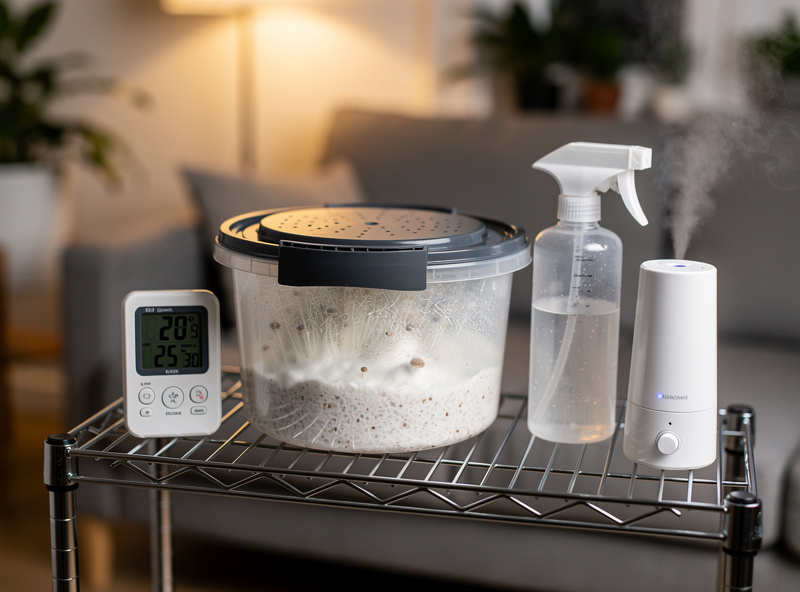
My apartment shelf is deliberately minimal. The chamber is a food-safe clear storage tote — any 35-60 litre clear box works as a monotub. A digital hygrometer sits inside the chamber so I read the air the mushrooms breathe, and if your flat runs very dry in winter a small ultrasonic humidifier on a timer keeps an open chamber on target. Start with one tote and one species, get a full harvest, then add a second tote on a staggered schedule so something is always fruiting. That rolling two-to-three-tote rhythm is the sweet spot for apartment cultivation — steady kitchen mushrooms without taking over the flat.
Frequently Asked Questions
Can you grow mushrooms in a small apartment?
Yes. A single fruiting chamber needs about half a square metre, indirect light, and a room between 18 and 24 degrees Celsius, which describes most apartments. A monotub on a shelf produces enough oyster or lion’s mane to cook with weekly, with no dedicated room required.
What is the best mushroom setup for an apartment?
A monotub is the best apartment setup: a single sealed tote that holds its own humidity, takes up storage-box space, and needs almost no daily attention. A shotgun fruiting chamber gives better airflow but needs misting two or three times a day, so it suits hands-on growers.
Do mushroom grows smell bad in an apartment?
No. A healthy gourmet grow smells only faintly earthy, like damp woods, and only for the few minutes a day you fan it for fresh air. A sharp, sour, or ammonia-like smell is a contamination warning, not normal, and that block should be removed before it spreads.
How do I keep humidity high in a dry apartment?
Hold moisture inside the chamber, not the room. A sealed monotub does this passively. For open chambers, run a small ultrasonic humidifier on a timer or use a perlite bed plus misting, and keep a hygrometer inside the chamber to read the air the mushrooms actually breathe.
Which mushrooms are easiest to grow in an apartment?
Pearl oyster is the easiest apartment species: fast, room-temperature, contamination-resistant, and high-yielding in a small chamber. Lion’s mane is the second pick and king oyster gives meatier stems. Skip shiitake and reishi for a first indoor grow, since both want longer timelines and tighter conditions.
How much space does an apartment mushroom grow need?
About half a square metre. A single monotub needs only the footprint of a storage tote plus a little room to open the lid. A complete starter shelf with a tote, hygrometer, and spray bottle fits on one wire rack and costs under 60 dollars to assemble.