
Every grower eventually meets a mushroom they do not want to lose. A king oyster that fruited fat and uniform, a lion’s mane with a perfect coral flush, an oyster strain that shrugged off a warm week and produced anyway. Cloning is how you keep it. Tissue cloning takes a piece of the living fruiting body and grows it out on agar into a pure culture that is, genetically, the same individual — not a roll of the dice from spores, but a faithful copy of the exact mushroom you liked. It is one of the most satisfying skills in cultivation, and it is genuinely beginner-accessible once you can work clean on a plate.
I clone constantly: a standout fruit from my own grow, an unusually good specimen from the farmers market, the survivor of a batch that otherwise struggled. This is exactly how I do it, why each step is the way it is, and the realistic limits of what cloning can and cannot do for you.
Clone vs. spores: why you would bother
Spores are sexual reproduction — every spore is a genetic shuffle, so a print or a syringe gives you a population of slightly different individuals, and the fruit you loved may not be in the deck. A clone is the opposite: it is tissue from one mushroom, so it carries that exact genetic makeup. If a specific fruit impressed you — its size, speed, yield, or resilience — cloning is the only way to reliably reproduce that one. It is also faster to get going than germinating spores, because you start from already-active tissue rather than waiting for spores to germinate.
The honest limit, the one worth stating plainly so you do not over-trust the technique: a clone preserves the genetics, but vigor can fade over many successive transfers — growers call it senescence. A clone is a faithful copy now; it is not immortal across endless generations. For preserving a strain over the long haul you eventually refresh from a fresh fruit or a stored spore source. None of which makes cloning less useful day to day — it just means a clone is a working copy, not a forever guarantee.
What you need
If you already do agar work, you have everything. If not, this is your reason to start — the full setup is in my agar plate guide. The short list:
- A poured agar plate (MEA/LME is fine), at room temperature and confirmed clean.
- A still-air box or laminar flow hood to work in.
- A scalpel and a flame source (alcohol lamp or torch).
- 70% isopropyl, gloves, and micropore tape to seal the finished plate.
- A fresh, firm, healthy mushroom — the fresher the better.
The key insight: clone from the inside
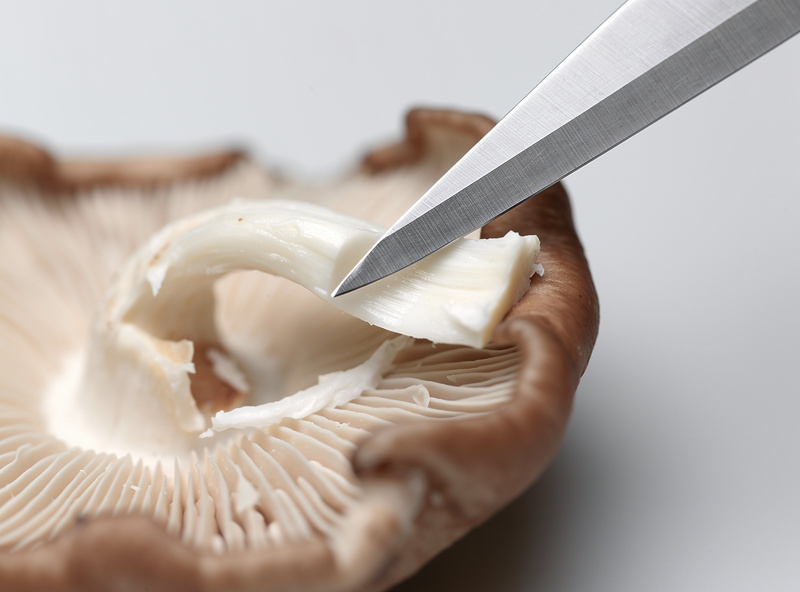
Here is the single thing that makes or breaks a clone. The surface of any mushroom — cap, gills, stem exterior — is covered in bacteria, mold spores, and whatever it picked up growing and being handled. The interior flesh is essentially sterile. So you never swab the outside; you tear the mushroom open by hand to expose clean inner tissue and take your sample from there. Cut, and the contamination follows the blade in. Tear, and you reach pristine flesh. This one move — rip, don’t slice — is why some growers’ clones come up clean every time and others fight contamination constantly.
The best spot to sample varies a little by species, but a reliable target is the dense interior where the stem meets the cap, or deep in the firm flesh of a meaty mushroom like king oyster. You want a piece a couple of millimeters across — small is good; large just brings more risk along.
Step by step
- Work in your SAB or flow hood. Wipe the surface, your gloves, and the outside of the mushroom and tools with 70% isopropyl. Lay out the clean agar plate.
- Flame the scalpel until it glows, then let it cool a few seconds — a red-hot blade kills the tissue you are about to clone.
- Tear the mushroom open with clean hands or by levering it apart, exposing the sterile inner flesh. Do not touch the freshly exposed interior with anything unsterile.
- With the cooled scalpel, excise a small piece (2–3 mm) of clean interior tissue.
- Lift the plate lid just enough, place the tissue piece near the center, mycelium-side down, and re-cover immediately.
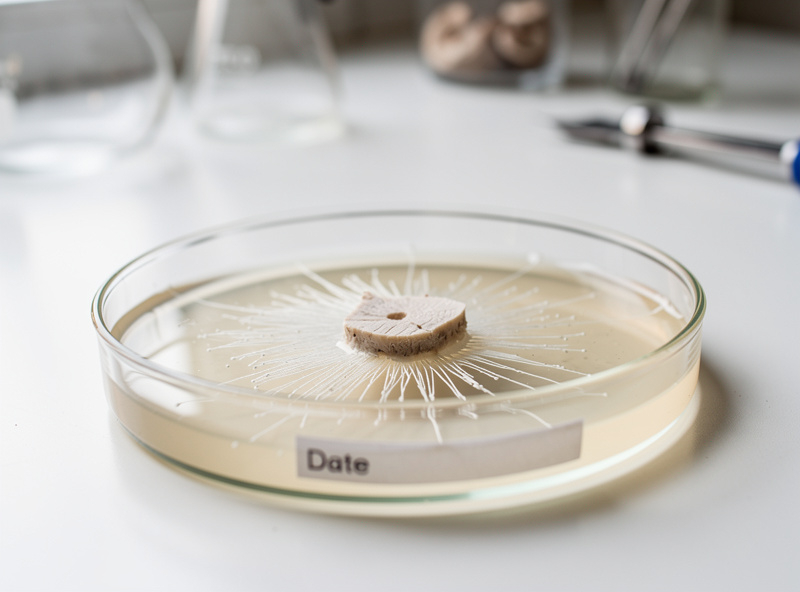
- Seal with micropore tape, label with the species and date, and incubate somewhere clean, dark, and temperature-steady.
Which species clone easily — and which fight you
Not every mushroom clones with equal willingness, and knowing that ahead of time saves a lot of confusion. The meaty, firm-fleshed species are the easiest wins: king oyster clones beautifully because there is so much dense, sterile interior to sample from, and regular oysters are forgiving and fast. Lion’s mane clones well too, though its tissue is softer and you want a genuinely fresh specimen. Shiitake is doable but slower to take hold on the plate, so give it patience before you call a clone failed. The ones that frustrate beginners are the thin, delicate, or quick-to-rot mushrooms — enoki and the like — where there is barely any firm interior to reach and the tissue degrades fast once the fruit is past peak.
The practical takeaway: start your cloning practice on a fresh king oyster or oyster. They are the most likely to hand you a clean, vigorous plate on the first try, which builds the technique and the confidence before you take on a fussier species. And whatever you clone, the fresher the fruit the better — a mushroom cloned the day it was picked has a far cleaner interior than one that has sat in a fridge drawer for a week.
Reading the plate — and cleaning it up
Over the next several days, white mycelium should fan out from the tissue chunk across the agar. That is what success looks like: clean, white, radiating growth with no off-colors, no slimy zones, no sour smell through the lid. If you see a bacterial sheen or a spot of green or black mold creeping in — common, especially on a first clone — do not panic and do not throw the genetics away. Transfer a clean wedge from the leading edge of the mycelium, as far from the contaminant as you can reach, onto a fresh plate. One or two of these isolation transfers walks a pure culture out of a marginal first plate. If the contamination is bacterial, my wet-spot guide covers how to tell exactly what you are dealing with, and the broader contamination guide maps the rest.
Once you have a clean, fully grown clone plate, it is a master culture: take wedges from it to inoculate liquid culture or sterilized grain, and seal one plate to refrigerate as a living backup. From there the path is the standard chain — clean plate to grain to bulk to fruit — and your favorite mushroom is back on the bench. That is the quiet pleasure of cloning: the same instinct that keeps a good sourdough starter alive year after year, pointed at a fruiting body. Isolate the line you love, keep it clean, and you never have to hope the next batch gets lucky.
Frequently Asked Questions
What is mushroom cloning?
Cloning takes a small piece of living tissue from a fruiting body and grows it on agar into a pure culture that is genetically identical to that mushroom. Unlike spores, which shuffle genetics, a clone is a faithful copy of the exact mushroom you liked, so you can reliably reproduce its size, speed, and resilience.
Why do you tear a mushroom open instead of cutting it to clone?
The outer surface of a mushroom is covered in bacteria and mold spores, while the interior flesh is essentially sterile. Tearing the mushroom open by hand exposes clean inner tissue to sample from, whereas slicing in from the outside drags surface contamination inward. Rip, do not slice, is the move that keeps clones clean.
Can I clone a store-bought or foraged mushroom?
Yes, as long as it is fresh and firm. A standout mushroom from a market or your own grow clones well from its sterile interior flesh. Freshness matters most, because an old or limp specimen carries a heavier contamination load and weaker tissue, which lowers your success rate.
How long until a clone shows growth on agar?
Healthy white mycelium usually fans out from the tissue piece within several days, depending on species and temperature. Watch for clean, radiating white growth with no off-colors, slimy zones, or sour smell through the lid. If a contaminant appears, isolate a clean wedge from the leading edge onto a fresh plate.
Do cloned mushrooms lose vigor over time?
They can. A clone preserves genetics faithfully now, but vigor can fade over many successive transfers, a process called senescence. A clone is a reliable working copy rather than an immortal one, so over the long term growers refresh a strain from a fresh fruit or a stored spore source.