
Grow bag size is quoted by how much hydrated substrate the bag holds, and the two you actually need are a small bag for spawn or small-batch work (1 to 2 pounds) and a full fruiting-block bag (3 to 5 pounds). Match the bag to the job: undersize a fruiting block and yields drop; oversize a spawn bag and it colonizes slowly and unevenly.
The size codes on listings — “3T,” “4,” volumes in liters — are genuinely opaque until someone tells you what they map to, and picking wrong is the most common ordering mistake I see after micron rating. This is the size companion to the full mushroom grow bags guide; here I am only talking about volume and how it should track the stage you are growing for and the species you are growing.
How Bag Size Is Measured
Bag capacity is the volume of hydrated substrate the bag comfortably holds with headroom left to fold and seal the top. It is not the flat dimensions of the plastic — a bag that looks big lying flat may only take a few pounds once you leave room to close it. Most sellers quote a substrate weight range or a liter volume; I mentally convert everything to “how many pounds of field-capacity sawdust” because that is what I am filling it with.
Gussets matter here. A gusseted bag has side folds that let a flat sack open into a standing brick, so it holds more usable volume and produces a block that stands on its own for fruiting. A flat, non-gusseted bag of the same footprint holds less and flops. For fruiting blocks I always buy gusseted; the standing brick shape is half the point.
Spawn Bags: Small and Fast
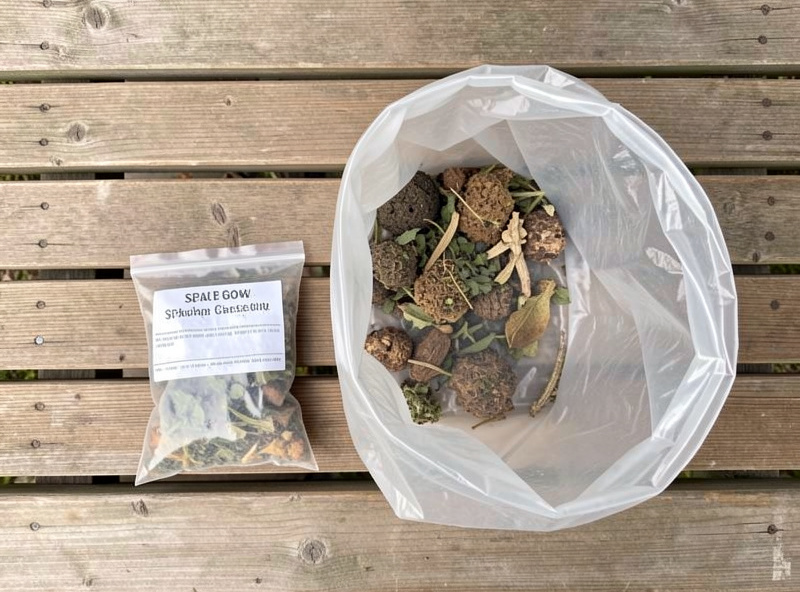
For spawn — colonized grain used to inoculate bulk substrate — I want a smaller bag, roughly 1 to 2 pounds of grain. A small bag colonizes faster because the mycelium has less distance to travel, and a smaller mass of grain is easier to break up and distribute by massaging the bag. It also means that if one bag contaminates, you lose a small unit, not a giant one.
Grain in a bag is a genuinely good workflow — it pours cleanly into bulk substrate and skips the jar-shaking step — and I compare it head to head with jars in grow bags vs jars for grain spawn. Whatever vessel you use, the grain prep is the same discipline covered in grain spawn preparation and grain sterilization. Size the spawn bag to how much bulk you plan to inoculate: a couple of pounds of grain spawn is enough to run several fruiting blocks or a monotub.
Fruiting Block Bags: The 5-Pound Workhorse
The fruiting block bag is the one most people picture — a gusseted bag holding 3 to 5 pounds of sterilized supplemented sawdust or Masters Mix, inoculated with spawn and colonized into a solid brick you fruit from. Five pounds is the sweet spot: big enough to produce a satisfying multi-flush harvest, small enough to sterilize in a home pressure canner and handle without the block breaking apart.
Go bigger and you run into two problems. A block much over five pounds is slow to sterilize all the way through its dense core — heat penetrates slowly, so an oversized brick needs marathon canner times and still risks an under-sterilized center. And a huge block is unwieldy: hard to fit in the canner, hard to massage, prone to cracking. Two five-pound blocks beat one ten-pound block almost every time, on both sterility and handling.
Matching Size to Species
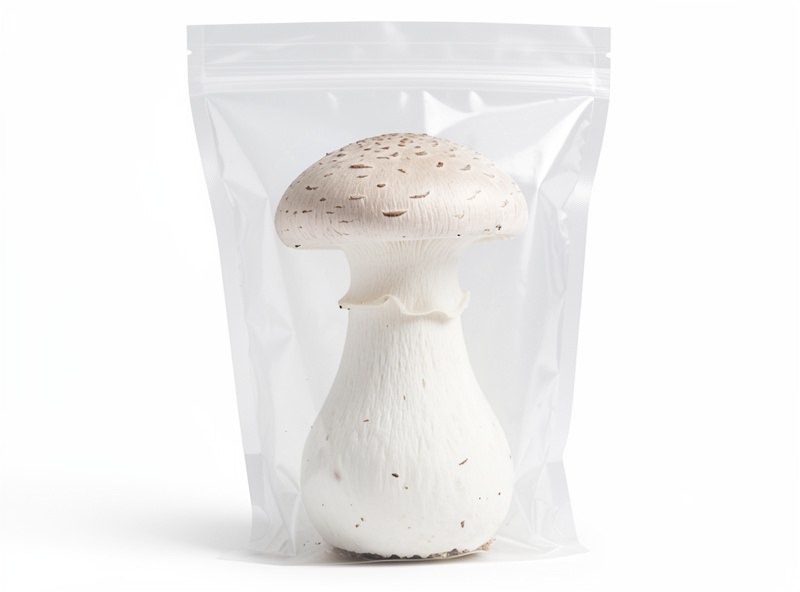
Species changes the ideal block size at the margins. Vigorous colonizers like king oyster and oyster are happy in a full five-pound block. Lion’s mane fruits beautifully from a five-pound Masters Mix block and is forgiving about size. Shiitake is the outlier: it wants a long colonize-and-brown period, so a slightly smaller, denser block that fully browns is often easier to manage than a giant one that never finishes.
The other variable is how you intend to fruit. If you plan to fruit through the bag with slits, the block size sets your fruiting surface, so a taller block with more slit area can yield more. If you plan to open the block into a chamber, size for what your chamber can hold and how much surface you can keep humid — a decision I unpack in fruiting in bag vs open chamber.
Buying the Right Quantity
Bags are cheap per unit but you burn through them, so I buy the two sizes I actually use in bulk rather than a variety pack. A stack of 5-pound gusseted fruiting bags and a stack of small spawn bags covers everything I run. I keep the whole vessel decision — bags vs jars vs tubs — in mind when ordering, because a monotub grow needs grain spawn bags plus a tub, while a pure bag grow needs fruiting bags and spawn bags. For the wider gear picture, the equipment hub lays out what pairs with what.
Filling to the Right Level
Size is only half the equation — how full you pack the bag matters as much as which bag you bought. I fill a fruiting bag to leave a good hand’s width of headroom at the neck, because I need room to fold and seal cleanly, and because an overpacked block has no air space for the mycelium to breathe into as it colonizes. Pack the substrate firm but not crushed; a block compressed like concrete colonizes slowly through its airless core, while a loosely filled block leaves channels that dry out and pin unevenly.
The moisture level is set by the field-capacity test before the substrate ever goes in, and you cannot fix it afterward without opening the sterile bag. So the order is always: hydrate to field capacity, pack to a firm even fill with neck headroom, then fold and seal. Get those three right and a correctly sized bag does the rest.
Grow Bag Sizes at a Glance
| Use | Fill weight | Gusseted? | Notes |
|---|---|---|---|
| Spawn / small batch | 1–2 lb grain | Optional | Fast colonize, easy to break up, low loss if contaminated |
| Standard fruiting block | 3–5 lb substrate | Yes | The workhorse; sterilizes fully, stands to fruit |
| Oversized block | 6 lb+ | Yes | Avoid; slow-to-sterilize core, unwieldy, cracking |
I restock plain autoclavable gusseted 5-pound fruiting-block grow bags and a separate stack of small spawn bags. As an Amazon Associate I earn from qualifying purchases.
Frequently Asked Questions
What size grow bag should I use for a fruiting block?
A gusseted bag holding 3 to 5 pounds of hydrated substrate is the standard. Five pounds sterilizes fully in a home pressure canner, stands up on its own to fruit, and produces a strong multi-flush harvest without being unwieldy.
Can a grow bag be too big?
Yes. A block much over five pounds is slow to sterilize through its dense core, risking an under-sterilized center, and it is hard to handle and prone to cracking. Two five-pound blocks are better than one ten-pound block on both sterility and handling.
What size bag is best for grain spawn?
A small bag holding 1 to 2 pounds of grain. It colonizes faster, is easier to break up and distribute by massaging, and limits your loss to a small unit if a bag contaminates. Size it to how much bulk substrate you plan to inoculate.
Do I need gusseted grow bags?
For fruiting blocks, yes. Gussets let a flat bag open into a standing brick shape, holding more usable substrate and giving a block that stands on its own to fruit. For spawn, gussets are optional since the grain fills the bag either way.
How much substrate does a 5-pound grow bag hold?
About 3 to 5 pounds of substrate at field-capacity moisture, with headroom left to fold and seal the top. Fill to the squeeze-test moisture level and leave enough space at the neck to close the bag cleanly.