
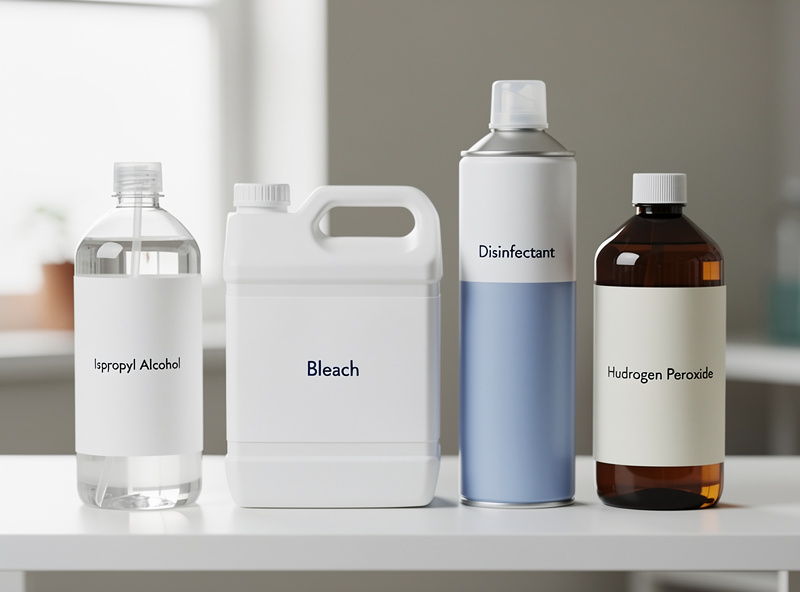
Walk into any home grower’s space and you will find a small armory of spray bottles: isopropyl, bleach, Lysol, maybe hydrogen peroxide, sometimes a chlorine dioxide kit. The mistake I see constantly is treating them as interchangeable — reaching for whichever is closest and assuming “a disinfectant is a disinfectant.” They are not interchangeable. Each one has a job it does well and several it does badly, and using the wrong one in the wrong place is how people either fail to actually sanitize or slowly destroy their own gear.
After years of wiping down still-air boxes, flow-hood surfaces, jar lids, and my own hands batch after batch, I have settled on a clear division of labor between these agents. This is what each sanitizer is genuinely for, where it falls short, and the simple routine I actually run.
First, the honest truth about “sterile” at home
None of these surface sanitizers sterilize. Sterilization — killing everything including bacterial endospores — happens in the pressure canner, full stop. What sanitizers do is reduce the contaminant load on surfaces, hands, and tools to the point where your sterile technique can win. They are about stacking the odds, not creating a sterile field. Once you internalize that, you stop expecting a spray bottle to do the canner’s job and start using each agent for what it actually delivers.
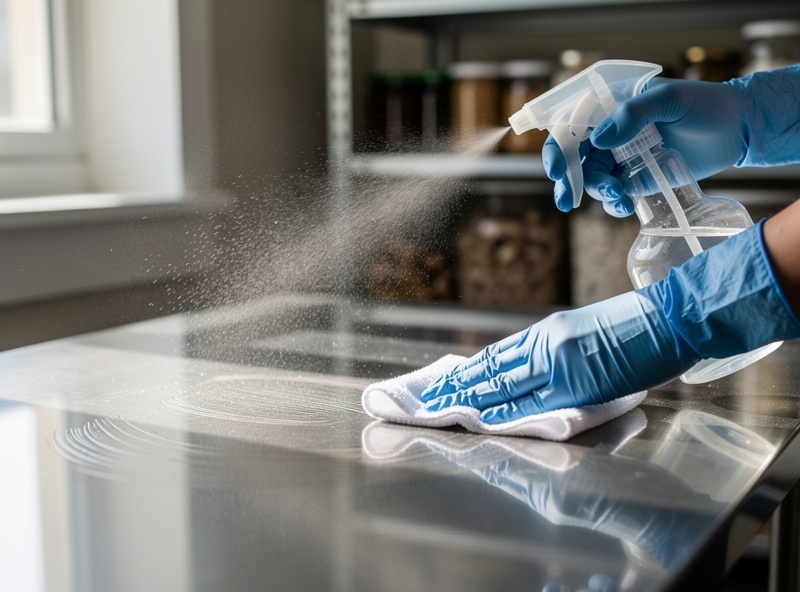
The agents, head to head
Here is the comparison I wish someone had handed me when I started — what each one is for, where it fails, and the practical notes that matter at the bench.
| Agent | Best use | Strengths | Weaknesses / cautions |
|---|---|---|---|
| 70% isopropyl (IPA) | Surfaces, gloves, tools, lids, skin | Fast-acting, evaporates clean with no residue, safe on most gear | Flammable (keep away from your flame source); 70% works better than 90%+ because the water helps it penetrate cells |
| Bleach (sodium hypochlorite) | Deep-cleaning a contaminated room, floors, non-porous tubs | Cheap, powerful, kills spores on contact at the right dilution | Corrosive to metal, off-gasses, leaves residue, harsh on skin — never your everyday wipe; dilute ~1:10 and rinse |
| Lysol / quaternary spray | Air and surfaces inside a SAB before work | Convenient, broad-spectrum, a popular SAB pre-spray | Leaves residue, not a substitute for IPA on tools; let it settle before working |
| 3% hydrogen peroxide | Surfaces, some substrate/grain surface treatments | Breaks down to water and oxygen, low residue, gentle | Weaker and slower than IPA on surfaces; loses potency with light and age |
| Chlorine dioxide | Periodic deep room sanitation | Very effective broad-spectrum sanitizer | Fussy to mix and use safely; overkill for routine wipe-downs |
70% isopropyl: the everyday workhorse
If I could keep only one, it would be 70% IPA, and the “70%” is not a typo or a budget choice. Isopropyl at 70% actually outperforms 90%+ for killing microbes, because the water content helps the alcohol penetrate cell walls instead of flash-evaporating off the surface. This is the bottle I spray on the SAB interior, my gloves, the outside of jar lids, the scalpel handle, and my forearms before every transfer. It evaporates clean, leaves no residue to interfere with mycelium, and is safe on glass, steel, and plastic. The one caution: it is flammable, so it and your alcohol lamp or torch do not share airspace while either is in use.
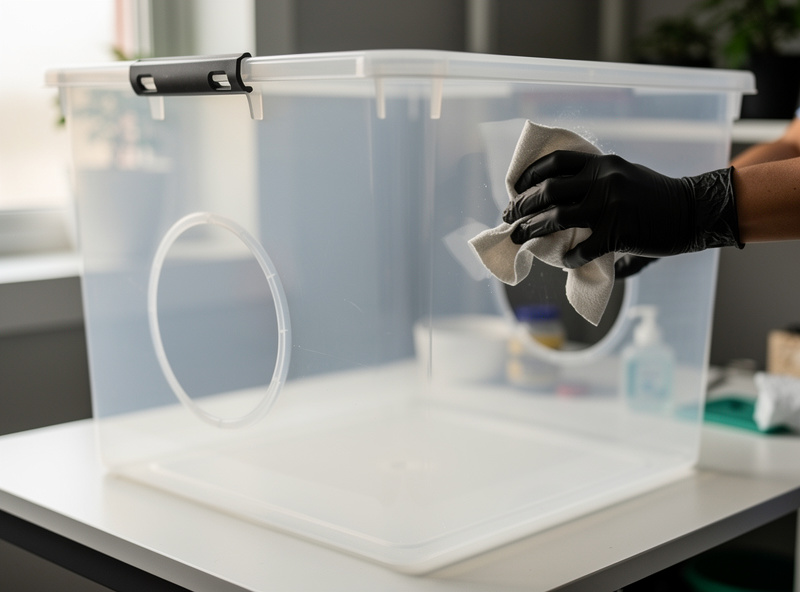
Bleach: the heavy artillery you rarely need
Bleach earns its place exactly once in a while: when a space has had a contamination outbreak and needs a hard reset. Diluted roughly 1:10 with water, it will kill what a wipe of alcohol will not, including many spores, on non-porous floors and tubs. But it is the wrong tool for daily work — it corrodes metal, off-gasses chlorine you do not want to breathe in a small grow space, leaves a residue you must rinse, and is rough on skin. I reach for it to scrub down a room after a bad batch, then rinse and air it out, and I do not let it anywhere near my flow hood’s stainless or my tools as a routine wipe.
Lysol, peroxide, and the rest
A quaternary spray like Lysol is the classic still-air-box pre-treatment: spray the interior air and surfaces, close it up, let it settle for a few minutes so the aerosol drops out, then do your alcohol wipe and start work. It is convenient and broad-spectrum, but it leaves a residue and is not a stand-in for IPA on tools. Three-percent hydrogen peroxide is the gentle option — it breaks down to water and oxygen, leaves almost nothing behind, and is handy for surfaces and some grain or substrate surface treatments, but it is slower and weaker than alcohol and degrades with light and age, so a dusty old bottle may be doing very little. Chlorine dioxide is genuinely effective for periodic deep sanitation, but it is fussy enough to mix and ventilate that I treat it as a once-in-a-while deep clean, not a daily tool.
Contact time: the variable everyone ignores
The single most overlooked factor with every one of these agents is dwell time. A disinfectant does not work the instant it lands — it needs to stay wet on the surface long enough to do its job. A quick spritz that you immediately wipe dry has barely started. With isopropyl that window is short because it acts fast, but even there I let surfaces stay visibly wet for a moment before wiping rather than chasing the spray with a cloth. With a quaternary spray like Lysol the settle time matters more, which is exactly why the SAB pre-spray-then-wait routine exists. And with bleach, the dilution has to actually sit on the surface for the contact period before rinsing or it is mostly theater. If a sanitizer seems to “not be working,” the cause is far more often too little dwell time than the wrong product.
There is also a real difference between sanitizing a surface and protecting your hands. Bleach and high-strength agents are hard on skin and will dry and crack it over a long session, which is its own contamination risk — cracked skin sheds more. This is part of why I glove up and sanitize the gloves rather than dousing bare hands in harsh chemicals all evening. Gloves are cheap; they let me use the right agent aggressively on the right surface without paying for it with my skin.
The routine I actually run
Day to day it is simple. Before a session I wipe the work surface and the SAB or hood interior with 70% IPA (or pre-spray a SAB with Lysol, let it settle, then IPA-wipe). I spray my gloves and forearms, wipe tool handles and the outside of every jar lid, and re-spray my gloves anytime they touch something outside the clean zone. I flame the scalpel separately — alcohol cleans the handle, fire sterilizes the blade. Bleach comes out only for a room reset after a contamination run, followed by a rinse and a good airing. That division of labor — IPA for everything routine, fire for blades, bleach for disasters, the rest for niche cases — is the whole system.
Surface sanitation is one leg of a three-legged stool; it only matters alongside good airflow and real sterilization. Where you do your transfers decides how hard the sanitizers have to work — my breakdown of the still-air box vs. flow hood covers that choice, the grain sterilization routine handles the canner side, and the contamination guide ties it all together. The same clean-process instinct runs every patient-microbial corner of the workshop: the right agent, in the right place, at the right time.
Frequently Asked Questions
Why is 70 percent isopropyl better than 90 percent for sanitizing?
At 70 percent the water content helps the alcohol penetrate microbial cell walls instead of flash-evaporating off the surface, so it kills more effectively. Higher concentrations evaporate too fast and can be less effective for surface disinfection. For routine bench, glove, and tool wipes, 70 percent is the standard choice.
Can I use bleach to clean my mushroom grow area?
Yes, but treat it as a deep-reset tool, not a daily wipe. Diluted about 1 to 10 it kills what alcohol will not, useful after a contamination outbreak on non-porous floors and tubs. It corrodes metal, off-gasses, and leaves residue, so rinse afterward, air the space out, and keep it away from tools and flow-hood surfaces.
Do surface sanitizers actually sterilize?
No. None of these surface agents sterilize, because they do not kill bacterial endospores. Sterilization happens only in the pressure canner. Sanitizers reduce the contaminant load on surfaces, hands, and tools enough for clean technique to succeed; they stack the odds rather than create a sterile field.
Is Lysol good for a still-air box?
It is a popular still-air-box pre-treatment. Spray the interior, close it up, and let the aerosol settle for a few minutes before wiping with isopropyl and starting work. It is broad-spectrum and convenient but leaves a residue, so it complements rather than replaces an alcohol wipe on tools.
Is hydrogen peroxide useful for mushroom cultivation?
It has a niche. Three-percent hydrogen peroxide breaks down to water and oxygen, leaves little residue, and works for surfaces and some grain or substrate surface treatments. It is slower and weaker than alcohol, though, and degrades with light and age, so an old bottle may do very little.
What should I clean my tools with between transfers?
Wipe tool handles with 70 percent isopropyl and sterilize the working blade in a flame. Alcohol cleans the handle and surfaces; fire sterilizes the cutting edge. Re-flame the blade between cuts and re-spray your gloves whenever they touch anything outside the clean zone.