
Pioppino — the black poplar mushroom, Cyclocybe aegerita — is one of the most rewarding gourmet species to grow at home and one of the most underrated in the kitchen. It fruits in tidy clusters of dark-capped, slender-stemmed mushrooms off a supplemented hardwood block, colonises faster than the fussier specialty species — a healthy block runs fully in about two weeks — and brings a deep, nutty, almost wine-like flavour that survives long cooking where softer mushrooms fall apart. If you want a specialty mushroom that punches above its difficulty, this is the one.
I keep pioppino in regular rotation because it hits a sweet spot: it is more interesting than oyster, more forgiving than beech, and genuinely excellent to eat. It is a wood-lover that takes the same sterilised-block workflow as lion’s mane and king oyster, and it can also be grown outdoors on hardwood logs and stumps for a low-effort perennial crop. This guide covers both routes. If you are new to block growing, read the gourmet specialty mushrooms guide first for the full sterile-chain picture, then come back for the pioppino specifics.
Why Pioppino Deserves a Spot on the Bench
Three things make pioppino worth growing. First, the flavour: where many cultivated mushrooms are mild, pioppino is assertively nutty and savoury, the kind of mushroom that carries a dish on its own. Second, the texture: the firm stems and caps hold their bite through braising, roasting, and long simmering — it is one of the few gourmet mushrooms I will happily put in a dish that cooks for an hour. Third, the growing experience: pioppino is more forgiving than its delicate appearance suggests. The mycelium is reasonably vigorous, the species pins willingly once the block is ready, and it does not demand the long maturation wait that makes beech such a test of patience.
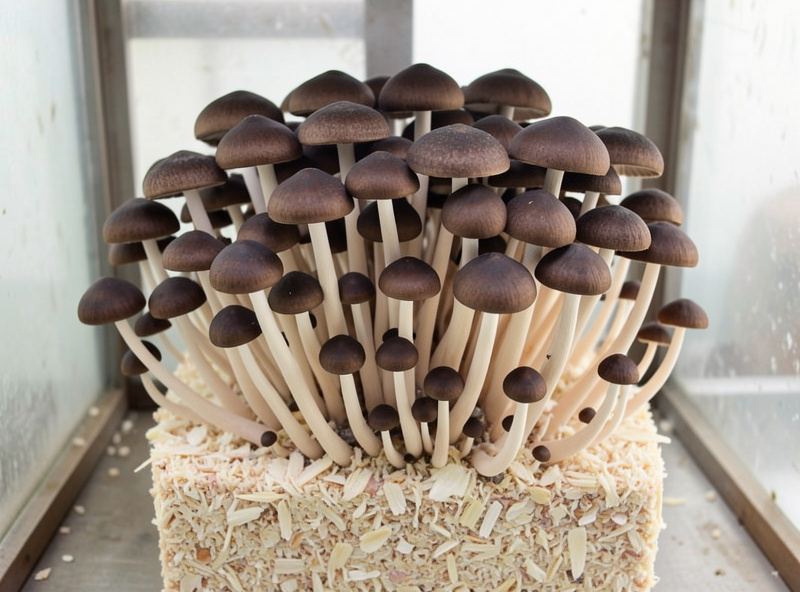
It also produces a handsome flush. Pioppino fruits in dense bouquets — dozens of mushrooms rising together from a single fruiting point, dark domed caps on long cream stems — and the visual payoff matches the kitchen one. For a home grower stepping up from oyster and lion’s mane into the specialty species, pioppino is the natural next move: it adds the sterilised-block discipline without piling on the difficulty of the slow, particular mushrooms.
Substrate and Spawn
Pioppino is a hardwood-loving block species and wants a rich, sterilised substrate. A supplemented hardwood sawdust block is the standard, and a Masters Mix of sawdust and soy hull works very well. As with every nutritious substrate, the supplementation that boosts yield also feeds contaminants, so it must be sterilised in a pressure canner rather than pasteurised. Pioppino is more vigorous than beech, which buys you a little more contamination tolerance, but clean technique still pays.
Inoculate sterilised, cooled blocks with grain spawn or liquid culture and colonise in the dark at room temperature. Pioppino colonises at a sensible pace — typically a couple of weeks to run a block fully — and the mycelium is bright white and cottony. Unlike beech, pioppino does not need a long sealed maturation period; once the block is fully colonised and the surface starts to firm up, it is close to ready to fruit. Some growers see early pins forming inside the bag, which is a good sign the block wants to go.
Sourcing Spawn and What to Expect
Pioppino is sold under several names — pioppino, black poplar mushroom, velvet pioppino, and its older botanical name Agrocybe aegerita alongside the current Cyclocybe aegerita. They are all the same mushroom, so do not be put off by the label variation when buying spawn. You will most often find it as grain spawn or sawdust spawn from gourmet mushroom suppliers, and either works fine for inoculating a block. If you intend to grow on logs, sawdust spawn is the easier form to pack into drilled holes.
Set realistic expectations on yield and pace. A well-run pioppino block returns a good first flush roughly in proportion to its substrate weight, with the first flush carrying most of the harvest and a smaller second flush following if you reset the block well. From inoculation to first harvest you are typically looking at four to six weeks indoors — quicker than beech, slower than oyster. That speed, combined with the willing pinning, is what makes pioppino feel rewarding rather than nerve-wracking: you get the satisfaction of the specialty-species workflow without the long, tense maturation wait, and you find out fairly quickly whether your block is healthy.
Colonisation and Fruiting
Once the block is fully colonised, fruiting pioppino is straightforward. Introduce it to fruiting conditions: a temperature around 15 to 20°C, high humidity, light, and good fresh-air exchange. Cut a fruiting hole or open the top of the bag to expose a surface, and move the block into a humid fruiting chamber. Pioppino does not need the dramatic cold shock that enoki and nameko demand; a normal cool-room fruiting temperature is enough to trigger it.
Pins emerge in clusters and develop quickly into the signature bouquet. Pioppino wants generous fresh air during fruiting — it is making proper caps, not elongated stems, so keep the FAE and humidity balance tilted toward good air exchange while keeping the surface moist so pins do not dry out. Too little fresh air gives you long, leggy stems and small caps, the opposite of what you want from this species. With the air right, the stems stay proportionate and the caps develop their dark, slightly domed shape. Expect a strong first flush and usually a smaller second; the flushes and harvest guide covers resetting the block between them.
To get that second flush, do not bin the block after the first harvest. Once you have cut the cluster, let the block rest for a few days, then rehydrate it if the surface has dried — some growers briefly soak the block in cool water to recharge its moisture. Return it to fruiting conditions and a second, smaller bouquet usually follows within one to two weeks. A third flush is occasionally possible but rarely worth the chamber space, the same diminishing-returns pattern you see across gourmet block species. When the block finally stops producing, it is spent substrate, not waste — it goes onto the garden or seeds an outdoor patch.
Logs and Stumps: The Outdoor Option
Pioppino is also one of the gourmet species you can grow outdoors on wood, which makes it a low-effort perennial crop if you have the space. In nature it grows on poplar — hence “black poplar mushroom” — and on other hardwoods like willow, elder, and elm. You inoculate freshly cut hardwood logs or a standing stump with spawn, much as you would for shiitake, and let nature handle the fruiting on its own seasonal schedule.
The method mirrors log shiitake closely: drill holes in fresh hardwood, pack them with spawn, seal with wax, and stack the logs somewhere shaded and damp to colonise over the following months. My log inoculation guide walks through the drill-spawn-wax-stack process step by step, and the shiitake-on-logs guide covers the same outdoor approach in detail — both translate directly to pioppino. Logs take longer to start producing than an indoor block, but once established they fruit for several years with almost no input, typically flushing in the cooler, wetter parts of the year. For a stump you want gone anyway, inoculating it with pioppino turns a removal job into a multi-year harvest.
Harvest, Kitchen, and Storage
Harvest pioppino as a whole cluster by cutting at the base, ideally when the caps have opened from their tight button stage but are still firm and the edges have not begun to flatten or upturn. The whole bouquet comes away together. The stems are firm and entirely usable — do not discard them as you might with a tougher-stemmed species — though the very base where it met the substrate should be trimmed.
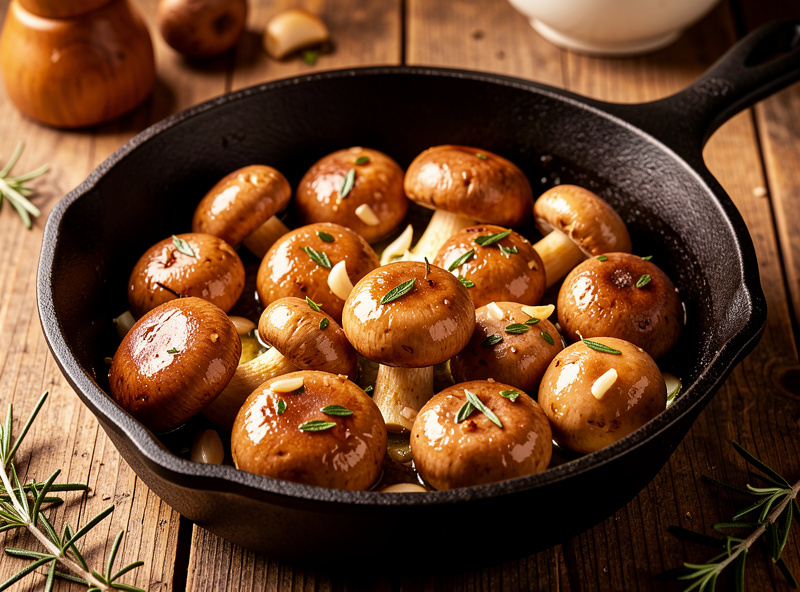
In the kitchen, pioppino is a joy precisely because it does not collapse. Slice the clusters, get a pan hot, and let them brown properly; the firm texture means you can give them real colour without them turning to mush, and the nutty flavour deepens with browning. They are superb in slow-cooked dishes — ragùs, braises, anything where a softer mushroom would disappear — and they pair beautifully with garlic, thyme, and a splash of wine. Like all cultivated gourmet mushrooms, pioppino is cooked, never eaten raw. The dark caps hold their colour and the stems stay pleasantly toothsome even after long cooking.
Pioppino is an Italian kitchen staple, which tells you exactly how to use it. It belongs in the dishes Italian cooks have always put it in — sautéed with garlic and parsley as a side, folded through pasta and risotto, stewed into a sugo, or layered into a baked dish where its firmness lets it keep its identity among softer ingredients. It also takes wonderfully to a hot, fast roast: toss the clusters in oil and salt, roast until the edges crisp, and the nutty flavour intensifies. Because the texture is so reliable, pioppino is a good mushroom to cook ahead — it reheats without going to mush, so a batch sautéed on the weekend holds up through the week. That kitchen versatility, more than anything, is why it has stayed in my regular rotation.
Fresh pioppino stores well for a gourmet mushroom thanks to those firm caps and stems — several days in a paper bag in the fridge. It also dries excellently, concentrating the nutty flavour into something you can rehydrate into stocks and sauces through the year; the preservation guide covers drying and freezing. A dried jar of pioppino is one of the better things to have in the pantry from a home grow.
Where Pioppino Fits Among the Cluster Mushrooms
Pioppino belongs to a loose family of clustered, wood-loving gourmet mushrooms that home growers tend to discover together, and it helps to know where it sits among them. Compared with beech and shimeji, pioppino is faster and more forgiving — it skips the long maturation wait and pins more willingly — while beech offers that very firm, crunchy bite and a longer fridge life. Compared with nameko, pioppino is warmer-growing and drier-textured, where nameko is a cold-lover with a distinctive gelatinous glaze. And compared with the oyster you probably started on, pioppino trades a little of oyster’s bulletproof ease for far more flavour and a firmer texture.
That positioning is exactly why I recommend pioppino as the bridge species. Once you are comfortable with oyster on straw and ready to take on the sterilised-block workflow, pioppino lets you practise the full pressure-canner-and-clean-transfer routine on a species that will reward you quickly and forgive a small mistake. Get pioppino dialled and the harder cluster mushrooms — beech, nameko, and eventually maitake — become much less intimidating, because the technique transfers directly. It is the species I point people toward when they tell me oyster has stopped feeling like a challenge.
Troubleshooting Pioppino
Pioppino gives fewer problems than the fussier specialty species, but a few come up. Long, thin, pale stems with undersized caps mean too little fresh air during fruiting — increase ventilation in the chamber. Pins that shrivel and abort point to the fruiting surface drying out, so raise humidity. A block that colonised but stalls before fruiting usually just needs the trigger conditions properly set — light, fresh air, and an exposed surface; pioppino is willing once it has those. On the contamination side, the standard wood-lover risks apply: green Trichoderma or a sour, wet smell means under-sterilised substrate or a poor transfer, and those blocks go in the bin rather than into the chamber. The contamination guide has the full diagnostic rundown, and the beginner mistakes guide covers the broader pitfalls that catch people moving from kits to real block growing. None of these are unique to pioppino — they are the universal block-growing issues — which is part of why I rate it such a good step up into the specialty species.