
Shiitake blocks fruit in 60 to 90 days indoors and run for two to three months; hardwood logs take 6 to 18 months to colonize but then crop for three to six years outdoors. Both grow the same mushroom from the same fungus — the difference is entirely about speed, equipment, and how much of the work nature does for you. Blocks trade money and sterile technique for speed; logs trade time for simplicity.
I run both methods, and the honest answer to “which is better” is that they solve different problems. If you want shiitake on the table this season, indoors, year-round, you want blocks. If you want a low-effort outdoor stand that crops every spring and fall for years with almost no gear, you want logs. This guide compares them straight across so you can pick. The block route is covered in depth in the growing shiitake guide; the outdoor route lives in how to grow shiitake on logs, and this page stays on the comparison rather than re-teaching either method.
The Core Difference: Sterile Block vs Natural Log
A block is sterilized supplemented sawdust colonized indoors in a sealed bag; a log is a fresh-cut hardwood round colonized outdoors in the open air. That one structural difference cascades into every other tradeoff — speed, cost, contamination risk, and lifespan all flow from whether you sterilized a nutrient-rich substrate or let a dense log slowly take over on its own.
The block is fast because supplemented sawdust is loose, nutritious, and pre-digested for the fungus — but that same richness means it must be pressure-sterilized and worked in clean air, because anything else in there grows just as fast. The log is slow because solid hardwood is dense and low in available nutrition, so the mycelium creeps through it over a year or more — but that density also means a log shrugs off contamination that would wipe a block, because there is little free food for competitors and the shiitake simply outlasts them. Speed and fragility go together; slowness and resilience go together.
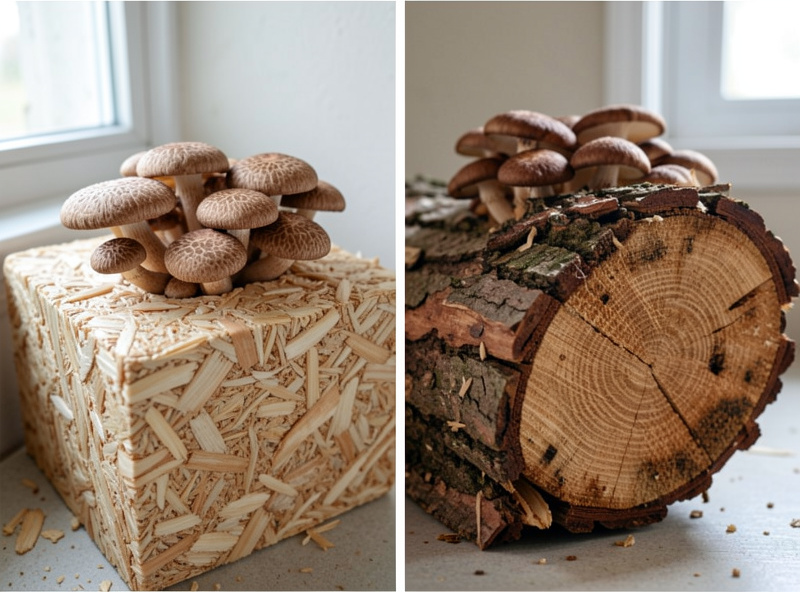
Head-to-Head Comparison
The table lays out the practical numbers I plan around. Treat the yields as realistic home-scale figures, not commercial-operation claims, which run higher with dedicated fruiting rooms and graded log stock. Michigan State University Extension lays out the log colonization timeline, and Lentinula edodes behaves the same on sawdust or solid wood.
| Factor | Supplemented Blocks | Hardwood Logs |
|---|---|---|
| Time to first harvest | 60–90 days | 6–18 months |
| Setting | Indoor, climate-controlled | Outdoor, shaded stand |
| Equipment needed | Pressure canner, still-air/flow hood, fruiting chamber | Drill, angle grinder bit, spawn, wax |
| Upfront cost | Higher (sterilizing + climate gear) | Lower (hand tools, logs often free) |
| Skill demand | Sterile technique critical | Beginner-friendly |
| Productive lifespan | 2–3 months, 2–4 flushes | 3–6 years |
| Yield | 1–2 lb per 5 lb block | 0.5–1 lb per log per year |
| Year-round cropping | Yes | No — spring/fall flushes |
| Labor pattern | Intense over weeks | One inoculation day, then wait |
| Contamination risk | Higher (rich substrate) | Lower (dense wood) |
Speed and Yield Over Time
Blocks win on speed and on yield-per-month; logs win on total yield over their multi-year life and on yield-per-hour of labor. A single 5-pound block returns 1 to 2 pounds across a couple of months and is then spent, while a log gives less per year but keeps giving for half a decade off one afternoon of work.
The way I think about it: a block is a sprint and a log is a pension. If you build blocks back to back you can out-produce a small log stand on raw poundage, but only by repeating the whole sterilize-spawn-colonize-brown cycle every time. A log stand, once colonized, asks almost nothing of you — a soak to force a flush, a harvest, and otherwise it sits in the shade doing its own thing. For realistic numbers on what either substrate actually returns per pound, see my yield-per-block guide, which explains biological efficiency rather than the inflated figures kit sellers quote.
Cost, Effort, and Space
Blocks cost more to start and demand a sterile workflow; logs cost little but need outdoor space and a year of patience. A block run means a pressure canner, a clean transfer space, and a fruiting chamber with a humidifier — real upfront spend — whereas a log project can run on a drill, an inoculation bit, spawn, and wax, with the logs themselves often free from seasonal pruning.
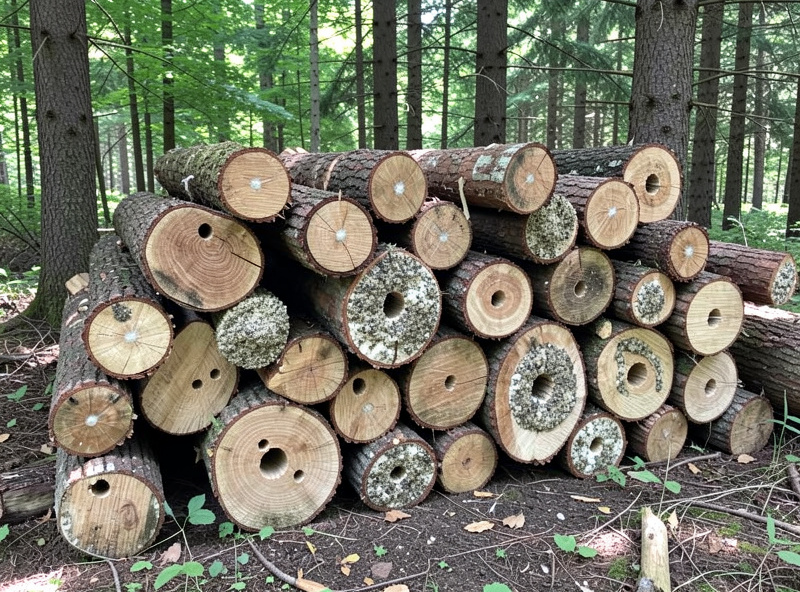
Effort is shaped differently too. Block work is front-loaded and intense across several weeks: mixing, hydrating, sterilizing, spawning under clean air, then babysitting the fruiting climate. Log work is one busy inoculation day — drill, spawn, wax, stack in the shade — and then mostly waiting, covered in my log inoculation guide. Space matters: blocks need a temperature-stable indoor shelf and a fruiting tent, while logs need a shaded outdoor spot that stays humid. If you have a damp, shady corner of a garden, logs cost you almost nothing to run.
Flavor, Texture, and Which to Choose
Many growers, myself included, find log-grown shiitake denser and more intensely flavored than block-grown, likely because the slower colonization and natural wood build a firmer fruit body. Block shiitake is still excellent and far more convenient; the flavor gap is real but modest, and both dry into the concentrated umami that makes shiitake worth growing at all.
So choose by your constraints, not by chasing a flavor edge. Pick blocks if you grow indoors, want shiitake year-round, can commit to sterile technique, and want a harvest within three months. Pick logs if you have a shaded outdoor space, prefer low ongoing effort, do not mind waiting a year for the first flush, and want a stand that crops for years. Both methods use the same fruiting trigger — a cold-water soak shock, which I cover in the soak-shocking guide — and both want similar fruiting conditions once pinning starts. If you go the log route, wood choice matters more than anything else, so read best wood for mushroom logs and when to inoculate before you cut. If you go the block route, start with growing shiitake on supplemented blocks for the full recipe and method.
Can You Run Both?
Yes, and it is the setup I actually keep: blocks indoors for fast, year-round harvests and a small log stand outdoors for hands-off seasonal flushes. Running both smooths out the gaps — the logs crop in spring and fall while the blocks fill in summer and winter — and the skills transfer, since the soak-shock and fruiting know-how is identical across substrates.
The only thing that does not transfer is the sterile side: logs need none of it, while blocks live and die by it. If you are new and unsure, I usually steer people to start with a few logs in spring for the low-risk, low-cost entry, then add block growing once you want indoor control and faster cycles. That way your first shiitake experience is a forgiving one, and you graduate to the more demanding block pipeline with realistic expectations already in place. Either way, both feed back into the same complete shiitake guide.
Contamination Risk: Why Logs Forgive and Blocks Punish
Logs tolerate mistakes that destroy blocks, because a dense hardwood round offers little free food for competitors while a supplemented block is a buffet. On a log, shiitake simply outlasts the green molds and bacteria that land on it; on a block, those same organisms have a bran-rich substrate to explode across before slow shiitake can defend it.
This is the single biggest reason I steer nervous beginners toward logs first. A log inoculation can be done on a picnic table with hand tools and still succeed, because the wood itself is the defense — there is no sterilization to get wrong and no clean-air window to blow. A block, by contrast, lives or dies on the pressure-sterilization being long enough and the spawning being done in still air or under a flow hood. Get either wrong and the block sours or greens out, often weeks into the colonize when you have already invested the most patience. The contamination organisms are the same across both methods, so the diagnostic skill transfers — green dust is Trichoderma, wispy grey is cobweb mold, a slimy sour patch is bacterial — and the toss-versus-save calls live in my shiitake troubleshooting guide. The difference is purely how often you have to make those calls: rarely on logs, regularly on blocks until your sterile technique is dialed.
Climate, Season, and Where You Live
Blocks free you from the seasons entirely, while logs tie you to your local spring and autumn. Indoors, a block run holds 16 to 18°C and 80 to 90% humidity in a fruiting tent regardless of what the weather does, so you can crop shiitake in midsummer or midwinter. Logs depend on outdoor temperature swings and rainfall, naturally flushing in the cooler, wetter shoulder seasons.
Where you live tips the balance. In a hot, dry climate an outdoor log stand struggles without irrigation and shade cloth, and the natural flushes are short — block growing in a climate-controlled room is the more reliable path. In a temperate, humid region with real shade, logs almost run themselves, and the cost and effort savings are enormous. Sweden’s cool, damp summers suit an outdoor wine-cap bed and a shiitake log stand well, but the long dark winters are exactly when an indoor block keeps fresh shiitake coming. That seasonal complementarity is why I keep both going. Whichever you choose, the soak-shock trigger and the fruiting conditions are the same once pins appear, so the growing skill you build on one method carries straight to the other.