
To force a shiitake block to fruit, submerge the fully browned block in cold water at 10 to 15°C for 6 to 24 hours, weighing it down so it stays under. The sudden chill and full rehydration mimic the autumn rains that trigger shiitake in the wild, and a strong soak shock sets a heavy, even flush of pins within three to five days. It is the single highest-leverage move in block shiitake.
Soak-shocking is also where impatient growers go wrong — too short, too warm, or on a block that has not finished browning, and you get a thin scatter of pins that abort. This guide covers the water temperature, the soak duration, how I weigh blocks to confirm the shock worked, and how to re-shock between flushes. It slots into the wider growing shiitake guide, and assumes your block is already through the colonize-and-brown stage covered in growing shiitake on supplemented blocks.
Why Cold-Water Shocking Triggers a Flush
Shiitake evolved to fruit after a cold autumn rain, so a sudden drop in temperature combined with full rehydration is the signal that tells a browned block it is time to make mushrooms. The shock breaks the block out of its resting, energy-storing phase and synchronizes pinning across the whole surface, which is why a good soak gives one big even flush rather than a few stragglers.
The two triggers work together: the cold alone is a weak signal and the water alone is a weak signal, but cold water delivers both at once. A block that browned for weeks has also dried and firmed up, losing moisture it needs to push fruit bodies; the soak restores that water at the same moment the chill says “go.” This is the same biological logic behind the natural flushes on outdoor logs, which growers force the same way; Michigan State University Extension describes the same cold-water soak used to shock Lentinula edodes logs into flush, the route covered in the log vs block comparison. On a block you simply get to control the timing precisely.
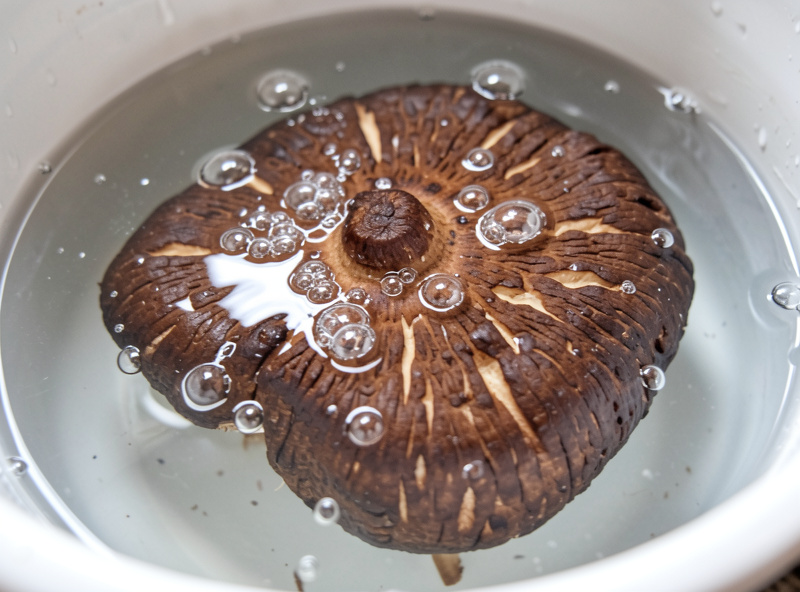
Water Temperature: Aim for 10 to 15°C
The colder the water relative to the block, the stronger the shock — aim for 10 to 15°C, which is cool tap water in most homes or tap water with a few ice packs added. A block sitting at room temperature dropped into 12°C water gets a clear 8 to 12 degree shock, which is plenty to trigger pinning.
This is the step heated-flat growers miss. If your tap runs lukewarm in summer, the shock is too gentle and the block responds weakly or not at all, so I keep a couple of frozen water bottles to drop the bath temperature without diluting it. Do not overcorrect into near-freezing water for hours, which stresses the mycelium without improving the flush — the goal is a sharp, clear temperature gap, not an ice bath. A simple waterproof thermometer takes the guesswork out of hitting the band. As an Amazon Associate I earn from qualifying purchases.
Soak Duration: 6 to 24 Hours
Soak a first-flush block for 6 to 12 hours and a drier, later-flush block for 12 to 24 hours — the firmer and more dehydrated the block, the longer it needs to rehydrate fully. The aim is to restore the water the block lost during browning and previous flushes, not just to wet the surface.
I soak overnight as my default, which lands in the middle of that range and suits most blocks. A freshly browned block that is still fairly heavy rehydrates quickly and can over-soak past a day, going waterlogged and prone to bacterial blotch on the coming flush, so I keep first soaks shorter. A block on its third flush, light and dried out, gets the full 24 hours because it has the most water to reclaim. When in doubt, weigh rather than guess — which is the next step.
Weigh the Block to Confirm the Shock Worked
Weighing the block before and after the soak is the only objective check that the shock will work: a properly rehydrated block regains most of the weight it lost since the last flush, usually climbing back to within 5 to 10% of its fully-colonized weight. If the block barely gains weight, it did not absorb enough water and the flush will be weak.
I note each block’s weight when it finishes colonizing, then weigh it again before and after every soak. A block that came out of browning at, say, light and firm should leave the soak noticeably heavier and denser; if it does not, I extend the soak. A digital kitchen scale turns soak-shocking from guesswork into a repeatable process, and over a few blocks you learn exactly what weight regain precedes a heavy flush for your strain and substrate. This is the kind of simple measurement that the persona Arsenal actually supports — a scale and a thermometer, not invented precision.
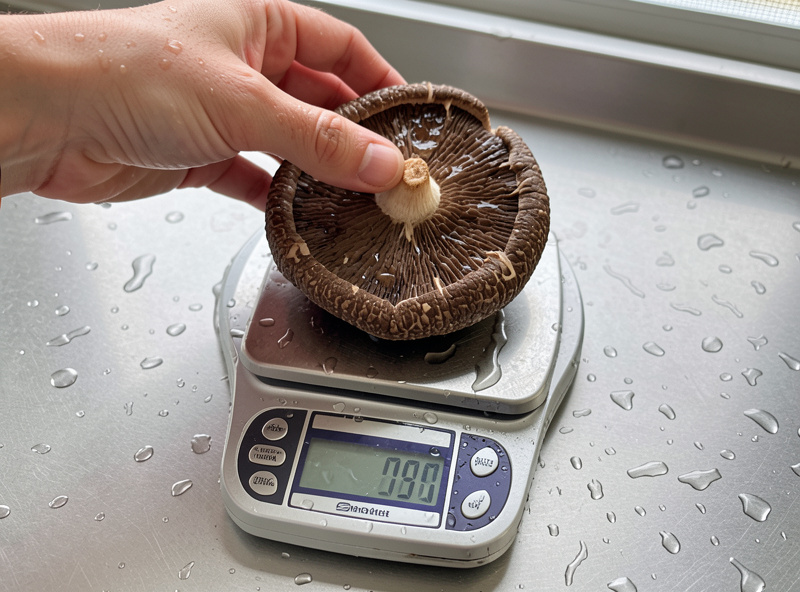
Keep the Block Submerged
A colonized shiitake block floats, so you must weigh it down to keep it fully under water for the whole soak — a partly-floating block rehydrates unevenly and pins unevenly. I hold blocks down with a second container filled with water, a clean weight, or a plate, making sure no part of the block sits proud of the surface.
Uneven submersion is a quiet cause of patchy flushes. The submerged portion rehydrates and pins while the exposed top stays dry and barely fruits, so the block looks half-shocked. Use a tub deep enough that the block sits well below the surface with the weight on top, and check it once during a long soak to confirm nothing has bobbed up. Cold tap water is fine; there is no need for additives, and I avoid anything that fouls the water, since the block will sit in it for hours.
After the Soak and Re-Shocking Between Flushes
Pull the block, let it drain for a few minutes, and move it straight into fruiting conditions — 16 to 18°C, 80 to 90% humidity, good fresh-air exchange — where pins appear within three to five days. After harvesting that flush, rest the block one to two weeks, then soak-shock again to trigger the next round.
Each re-shock works the same way but on a progressively lighter, more depleted block, so later soaks run longer and the flushes get smaller. I judge a block finished when a full 24-hour soak no longer brings the weight up much and pins stop responding, or when contamination finally breaks through the weakened rind. A stubborn block that browned properly but will not pin usually just needs a colder, longer soak — drop the water temperature and extend to a full day before giving up on it. From here the block moves into the environment detailed in the fruiting conditions guide, and if a soak produces aborts or off pins, the troubleshooting guide walks through the causes. Realistic per-flush yields are in my yield-per-block guide.
Frequently Asked Questions
How long should I soak a shiitake block?
Soak a first-flush block 6 to 12 hours and a drier, later-flush block 12 to 24 hours. Overnight is a good default. The firmer and more dehydrated the block, the longer it needs to fully rehydrate before fruiting.
What water temperature triggers shiitake to fruit?
Cold water at 10 to 15°C gives the temperature shock shiitake needs. A room-temperature block dropped into 12°C water gets an 8 to 12 degree drop, which is plenty. In summer, add frozen water bottles to cool the bath.
Why won’t my shiitake block fruit after soaking?
Usually the block was not fully browned, the water was too warm, or the soak was too short to rehydrate it. Confirm the block browned firm, drop the water to 10 to 15°C, and extend the soak to a full 24 hours before giving up.
How do I know the soak worked?
Weigh the block before and after. A properly rehydrated block regains most of the weight it lost since the last flush, usually within 5 to 10% of its fully-colonized weight. Little weight gain means it did not absorb enough water.
Do I need to weigh the block down while soaking?
Yes. A colonized shiitake block floats, so weigh it down with a water-filled container or plate to keep it fully submerged. A partly-floating block rehydrates and pins unevenly, giving a patchy flush.
Can I soak-shock the same block more than once?
Yes. Re-shock between flushes after a one to two week rest. Each soak works on a lighter, more depleted block, so later soaks run longer and flushes shrink. The block is spent when a full soak no longer raises its weight or sets pins.