
Growing enoki at home means deliberately growing the same mushroom two completely different ways. Give it normal air and it makes a small, brown, honey-flavoured cap; restrict the fresh air so carbon dioxide builds up and keep it cold, around 8 to 13°C, and the very same mushroom stretches into the long, pale, slender clusters you recognise from the supermarket. Enoki is the one gourmet species where you intentionally starve it of air to shape it.
That single trick — cold plus high CO2 — is the whole game with enoki (Flammulina velutipes), and once you understand it the species becomes genuinely fun to grow. It is a wood-loving mushroom that fruits beautifully from jars or bottles on a supplemented sawdust substrate, and it rewards a cool grow space that most other gourmet species would refuse to fruit in. This guide covers both forms, the substrate, the bottle method, and exactly how to drive the elongation. If you are new to indoor block species, start with the broader gourmet specialty mushrooms guide first, then come back for the enoki specifics.
Wild-Type Brown vs the Long Pale Form
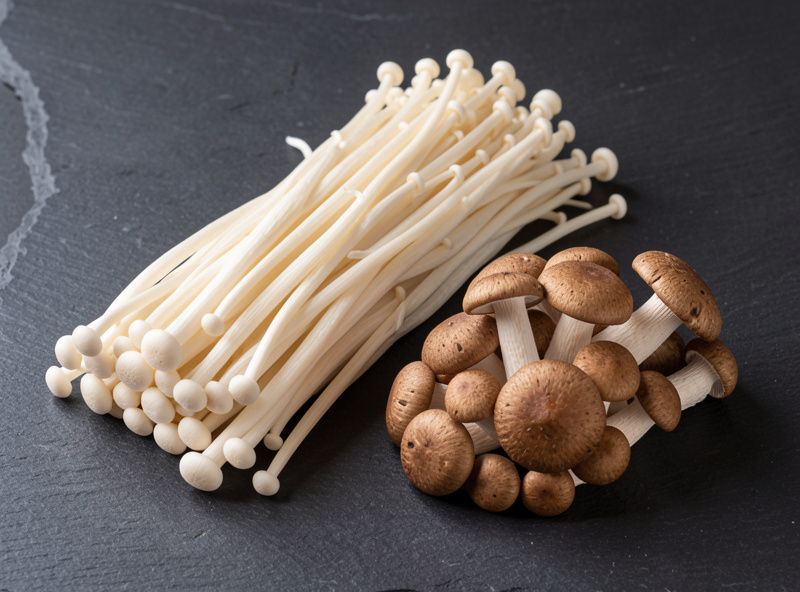
The pale, leggy enoki in plastic sleeves is a cultivated phenotype, not a different species. Grown in open air with normal light, Flammulina velutipes makes a sturdy brown mushroom with a proper rounded cap and a velvety stem base — its other common name, velvet foot, comes from this wild form. It is honestly delicious and more flavourful than the pale version, and if you just want to eat enoki, growing the brown form is easier because you skip the elongation entirely.
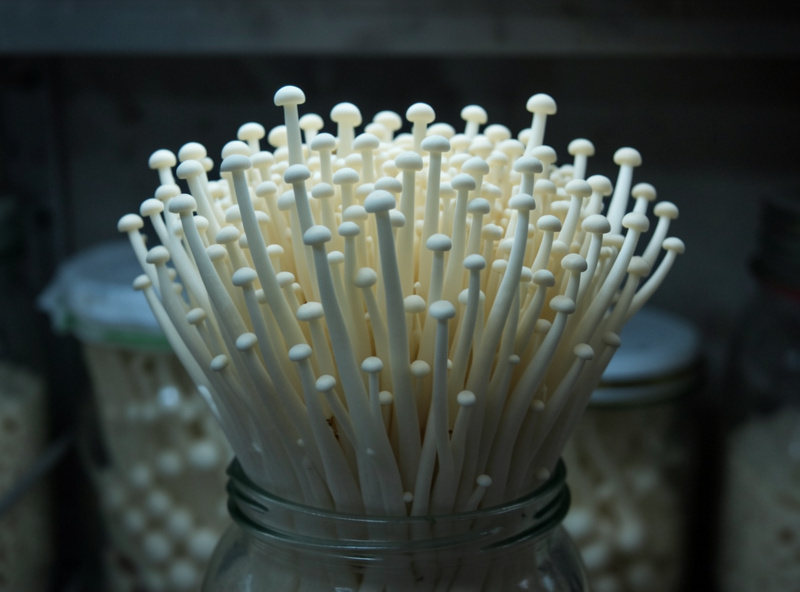
The long white form is what you get by changing the environment, not the genetics. Excluding light keeps the stems pale, restricting fresh-air exchange so CO2 accumulates tells the mushroom to push stem length rather than cap development, and cold temperatures slow everything down so the stems stay thin and firm rather than thickening. Confined inside a tall collar of paper or plastic around the jar mouth, the cluster grows straight up toward the only opening. It is a controlled deprivation, and it is reversible — the same block will make brown caps if you change its conditions mid-grow.
Substrate and Spawn for Enoki
Enoki is a sawdust-block species. It wants a nutritious hardwood substrate, which in practice means supplemented hardwood sawdust or a Masters Mix of sawdust and soy hull. Because that substrate is rich, it must be sterilised rather than pasteurised — the extra nutrition that boosts yield also feeds any contaminant that gets in. I run enoki substrate through a pressure canner exactly as I would for lion’s mane or king oyster.
For starting culture you can use grain spawn, liquid culture, or a colonised culture from agar. Whatever you choose, the grain step is where most home grows fail, so if you are making your own, sterilise it properly — my grain spawn guide covers the times and pitfalls. If you want to skip the riskiest links entirely, buy ready-made enoki grain spawn and inoculate sterilised jars of substrate directly. Enoki colonises at room temperature like any wood-lover; the cold comes later, only when you want it to fruit.
The Jar or Bottle Method
Enoki is traditionally grown in bottles, and that method scales down perfectly for the home. Fill wide-mouth jars with sterilised supplemented sawdust, sterilise, cool, and inoculate with spawn. Cap loosely or use a filter lid and let the substrate fully colonise in a clean, dark, room-temperature spot — full colonisation usually takes a few weeks and the surface will turn solid white.
Once colonised, many growers scrape the top layer of mycelium flat to encourage even pinning across the whole surface rather than a few dominant clumps. Then comes the collar: a cylinder of paper, card, or plastic extending several centimetres above the jar mouth. This collar is what channels the developing mushrooms upward into a tight bundle and, just as importantly, traps CO2 around the growing stems. Without a collar you get a sprawling mess of short mushrooms; with one you get the clean vertical cluster.
A note on jar geometry, because it matters more than it seems. Wide-mouth jars give you a large fruiting surface and therefore a fatter bundle, which is what you usually want. The depth of substrate matters too — too shallow and the colony runs out of food before it can push a full flush of long stems, too deep and you are wasting substrate the mushroom never reaches. A fill of roughly two-thirds of the jar is a sensible middle ground for a home grow, leaving headroom for the mycelium to consolidate before you fit the collar and move it to the cold.
One reason I like the bottle method for enoki specifically is that it keeps the grow compact and easy to refrigerate. A few jars fit on a single shelf of a dedicated fridge, which is exactly the cold environment enoki needs and which no other gourmet species on my shelf demands. If you only ever cold-fruit one mushroom, enoki is the one that justifies clearing a fridge shelf for it.
Cold and CO2: Shaping the Stems
This is the part that makes enoki enoki. To trigger fruiting, move the colonised, collared jars somewhere cold — 8 to 13°C is the target, which for most of us means a cellar, an unheated room in winter, or a dedicated fridge. Cold is non-negotiable; a colonised enoki jar will simply sit in a warm room and refuse to fruit, which is the single most common reason home growers think they have failed. Keep it dark to hold the pale colour.
Pins appear as a fuzzy white carpet across the surface, then begin to elongate up into the collar. Now you manage the air. Where almost every other mushroom wants generous fresh-air exchange, enoki wants the opposite during elongation — you let CO2 build up inside the collar to push the stems long and keep the caps small and tight. This is the deliberate inversion of the usual FAE and CO2 balance. You still want some humidity so the pins do not dry out, but the heavy ventilation you would give oyster is exactly what you withhold here. The colder and more CO2-rich the environment, the longer and more slender the harvest. Let in more air and light and the same cluster will broaden into brown-capped velvet foot instead.
Harvest and Kitchen
Harvest the whole bundle by cutting at the base once the stems have reached the length you want and before the small caps open and flatten — for the pale form that is usually when caps are still tight buttons. The cluster comes away as one bunch. Trim off the dense, substrate-bound base, which is tough, and use the long stems and small caps above it.
Enoki must be cooked — it is not a raw mushroom, and the long stems can be fibrous if undercooked. They are superb in broths and hot pots, where they cook in seconds and bring a delicate crunch, and they crisp up beautifully when pan-fried in tight little bundles. The brown velvet-foot form has a deeper, almost fruity flavour and stands up to longer cooking. Either way, the home-grown version is fresher and far more flavourful than the watery sleeves at the shop, which is the entire reason to grow a specialty mushroom yourself. Fresh enoki keeps only a few days in a paper bag in the fridge because the thin stems decline fast.
Because enoki declines so quickly, it is one of the species where it pays to cook or preserve a flush promptly rather than letting it sit. The long stems do not dry as gracefully as a meaty mushroom — they turn wiry — so I treat enoki as a fresh-eating crop and use the preservation methods on the brown velvet-foot form, which holds up better dried. A practical habit: the moment a bundle comes off, drop the trimmed stems straight into a simmering broth or a hot pan. Enoki cooked within an hour of harvest is a genuinely different ingredient, sweet and delicate, and it is the clearest argument for growing your own rather than buying a tired sleeve.
Yields and Reflushing
Enoki will usually give you more than one flush from a single jar. After harvesting the first bundle, scrape the spent surface back to clean mycelium, rehydrate the substrate if it has dried at the top, and return the jar to the cold. A second flush is common, sometimes a third, each progressively smaller as the substrate is consumed — the same diminishing pattern you see across gourmet species in the flushes and harvest guide. The first flush is reliably the biggest and the one worth planning meals around.
Total yield per jar is modest compared with a big oyster block, but enoki makes up for it in how little space and how cheap the substrate is. Because the whole grow happens in jars at fridge temperatures, you can stagger several jars to colonise at room temperature on different dates and then cold-fruit them in sequence, giving yourself a steady trickle of fresh enoki through the cold months rather than one glut. That staggering is the practical answer to enoki’s modest per-jar return: run more jars, not bigger ones.
Common Enoki Problems
The complaints I hear about enoki almost always trace to temperature or air. A colonised jar that will not pin is nearly always too warm — get it properly cold and it usually fires within a week or two. Short, stumpy, fat-stemmed mushrooms instead of long thin ones mean too much fresh air or too much light during elongation; tighten the collar and reduce ventilation. Brown caps when you wanted pale stems is the same fix — less light, less air, colder. On the contamination side, the usual suspects apply: green Trichoderma or a sour, wet smell means the substrate or grain was under-sterilised, and those jars go in the bin. The contamination guide covers the full diagnostic picture. And if enoki feels like a lot of fuss for your first grow, it is — start with one of the easiest mushrooms to grow and come to enoki once your sterile technique is reliable.
Frequently Asked Questions
Why won’t my enoki mushrooms fruit?
The most common cause is temperature. Enoki needs cold to fruit, ideally 8 to 13 degrees Celsius, and a colonised jar will simply sit dormant in a warm room. Move it somewhere genuinely cold like a cellar or a dedicated fridge and it usually begins pinning within a week or two.
How do I get the long white enoki stems instead of brown caps?
Keep the jars cold, dark, and low on fresh air so carbon dioxide builds up inside a tall collar around the jar mouth. Cold slows growth to keep stems thin, darkness keeps them pale, and high CO2 pushes stem length while keeping caps small. More light and air gives the short brown velvet-foot form instead.
What substrate does enoki grow on?
Enoki is a wood-loving species that grows on a nutritious hardwood substrate, typically supplemented sawdust or a Masters Mix of sawdust and soy hull. Because the substrate is rich, it must be sterilised in a pressure canner rather than just pasteurised, the same as for lion’s mane or king oyster.
Is wild-form brown enoki edible?
Yes. The brown, round-capped form, also called velvet foot, is the same species grown in normal air and light. It is fully edible, easier to grow because you skip the elongation step, and many growers find it more flavourful than the pale cultivated form. Cook it thoroughly like any enoki.
Do I need a collar to grow enoki?
For the long pale form, effectively yes. A cylinder of paper, card, or plastic above the jar mouth channels the mushrooms upward into a tight bundle and traps CO2 around the stems to drive elongation. Without a collar you get a sprawling cluster of short mushrooms rather than the clean vertical bunch.