
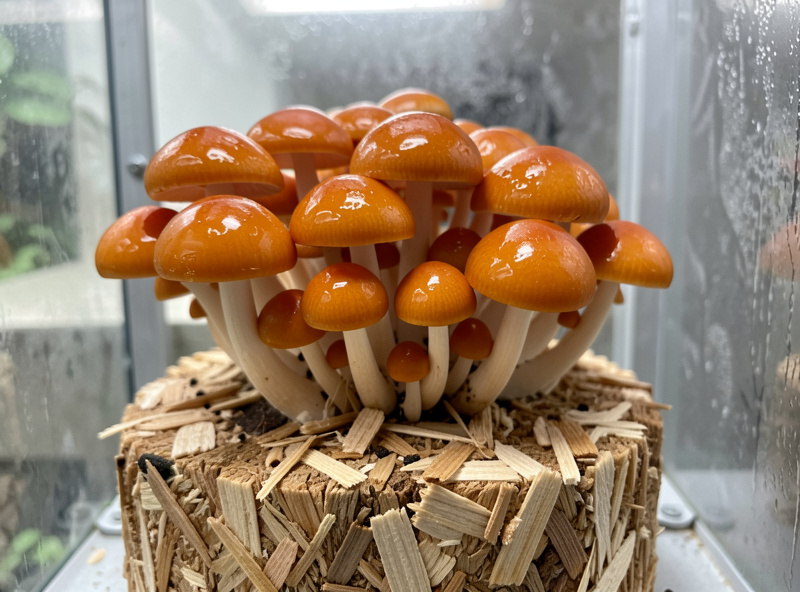
Nameko (Pholiota microspora) is the cold-loving specialty mushroom prized for the glossy, faintly gelatinous sheen on its small amber caps — the coating that makes a miso soup silky and gives the mushroom its name, which comes from the Japanese for slippery. It fruits in dense clusters of orange-brown buttons on a sterilised hardwood block or on logs, wants genuinely cool temperatures around 10 to 16°C, and rewards patience with a mushroom you will almost never find fresh anywhere outside Japan.
That glossy glaze puts some growers off before they have tried it, which is a shame, because cooked into a soup or a hot pot it turns into one of the most satisfying textures in the gourmet world. Nameko is a wood-lover that takes the familiar sterilised-block workflow, with two twists: it needs cold to fruit, and the slippery coating that looks alarming raw is exactly the prized feature. This guide covers the substrate, the cold trigger, the gelatinous glaze, and the kitchen. If you are new to block growing, start with the gourmet specialty mushrooms guide for the full sterile-chain picture first.
What Makes Nameko Different
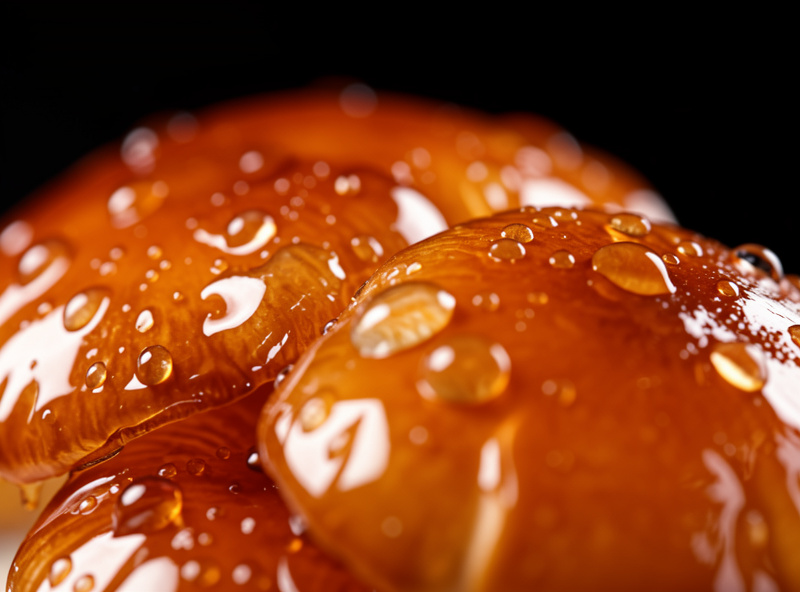
Two things set nameko apart from the other cluster mushrooms. The first is the coating. Nameko caps develop a natural glossy, gelatinous film as they mature — it is not slime from spoilage, it is the mushroom’s signature feature, and it thickens a broth the way nothing else in the gourmet line-up does. The flavour underneath is mild, earthy, and faintly nutty, but it is the texture people grow nameko for. Do not wash that coating away under a tap; a gentle wipe is all a fresh nameko needs.
The second is the cold. Where pioppino and beech fruit at cool-room temperatures, nameko genuinely wants it cold — 10 to 16°C for fruiting, cooler than most species will tolerate. In a warm room a colonised nameko block simply will not pin, the same trap that catches enoki growers. For a cool climate this is a gift: nameko thrives in the kind of unheated cellar or autumn-into-winter shed temperatures that stall other species. In my Swedish setup the cold months do the triggering for me.
Substrate and Spawn
Nameko is a hardwood-loving block species and wants a rich, sterilised substrate. A supplemented hardwood sawdust block is standard, and a Masters Mix of sawdust and soy hull works well. As always with a nutritious substrate, the supplementation that drives yield also feeds contaminants, so the block must be sterilised in a pressure canner, not pasteurised. Nameko colonises at a moderate pace — slower than oyster, broadly similar to pioppino — so clean inoculation matters.
Inoculate sterilised, cooled blocks with grain spawn or liquid culture and colonise in the dark at room temperature. Nameko can be a little slow to fully consolidate, and like many cool-season wood-lovers it benefits from being allowed to finish colonising completely before you push it toward fruiting. The mycelium is white and cottony; the amber colour only appears when the mushrooms themselves form. Nameko is also one of the species that grows happily on logs, which gives you a low-effort outdoor route covered below.
Colonisation and the Cold Trigger
Once the block is fully colonised, fruiting nameko comes down to getting it cold. Drop the temperature into the 10 to 16°C range, expose a fruiting surface by opening the bag or cutting a hole, raise the humidity, and give it light and good fresh-air exchange. The temperature drop is the key signal — without it the block sits dormant no matter how perfect the humidity. If you have a cellar, an unheated room, or a cool autumn, those conditions do the work; otherwise a temperature-controlled space is needed, the same cold-fruiting logic as enoki but at a slightly more forgiving range.
Pins emerge as a carpet of tiny amber dots that develop into dense clusters of small, round, glossy-capped mushrooms. Nameko wants proper fresh air during fruiting to form good caps — keep the FAE and humidity balance tilted toward air exchange while keeping the surface moist. The high humidity actually helps the characteristic glaze develop. A humid fruiting chamber held cold is the ideal indoor environment.
Like most block species, nameko gives more than one flush. After the first harvest, rest the block, rehydrate it if the surface has dried, and return it to cold fruiting conditions; a second flush usually follows, smaller than the first. Because nameko is slower and cooler than pioppino, allow a little more time between flushes — rushing a cold-season species rarely pays. Expect the first flush to carry the bulk of the harvest, and treat anything beyond the second as a bonus rather than a plan.
A Cool-Climate Grower’s Mushroom
Nameko is one of the few gourmet species where a cold climate is an advantage rather than an obstacle, and that shapes how I grow it. Most of the indoor work on my shelf is about adding warmth and humidity; nameko flips that, because the cold I would normally fight is exactly what triggers it. In a Swedish autumn and winter, the natural temperatures in an unheated room or cellar sit right in nameko’s fruiting range, so I can colonise blocks in the warm part of the year and let the cold season do the triggering for free. It is the seasonal counterpart to the warm-loving reishi I run in summer — between them they keep something fruiting across the calendar.
This makes nameko a smart choice for anyone in a temperate or cold region who has struggled to fruit warm-season mushrooms in winter. Rather than heating a chamber against the season, you lean into it. The practical rhythm is simple: inoculate and colonise through late summer, then move blocks to the cold as autumn sets in and harvest through the coldest months when little else wants to fruit. For a grower who likes to match crops to the seasons, nameko earns its shelf space by producing exactly when the warm-lovers go quiet.
Indoor Blocks vs Outdoor Logs
Nameko grows well both ways, and the right choice depends on your space and patience. Indoor blocks are faster and let you control the cold trigger precisely; logs are slower to start but then fruit for years with almost no input, on nature’s cool-season schedule. The log method mirrors shiitake exactly — drill, spawn, wax, and stack fresh hardwood — and my log inoculation guide covers the process step by step.
| Factor | Indoor Block | Outdoor Logs |
|---|---|---|
| Time to first harvest | Weeks to a couple of months | Often a year or more |
| Cold trigger | You control it | Nature’s autumn/winter |
| Effort after setup | Active fruiting management | Very low; near-perennial |
| Productive lifespan | One block cycle | Several years per log |
| Best for | Quick results, small space | Patience, outdoor space |
Harvest, Kitchen, and Storage
Harvest nameko as whole clusters by cutting at the base while the caps are still small, rounded, and glossy and before they open out flat — the small button stage is when the texture is best. Handle them gently; the caps bruise and the coating is part of the appeal, so do not scrub it off. A light wipe to remove any substrate is all they need.
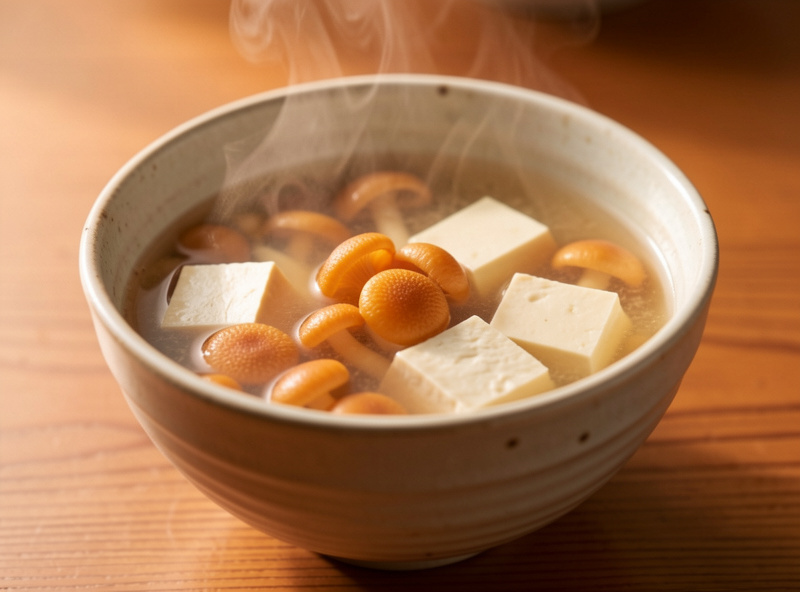
In the kitchen, nameko is made for soup. Its glaze thickens and enriches broth, which is why it is the classic mushroom for miso soup, where the little amber caps and silky texture are the whole point. It is also excellent in hot pots, stews, grated-radish dishes, and anywhere you want a mushroom that adds body to a liquid. Cook it thoroughly — like all cultivated gourmet mushrooms it is not eaten raw — and add it toward the end of cooking so the caps keep their shape. The mild flavour means nameko plays a supporting, textural role rather than dominating a dish.
Beyond soup, nameko shines anywhere its glaze can do its work. It is excellent simmered briefly and dressed with grated daikon and a splash of soy, folded into a savoury rice bowl, or added to a noodle broth where it lends body without muddying the flavour. It also pairs naturally with other umami ingredients — a little dashi, miso, or soy brings the best out of it. Because it is mild, nameko is a mushroom you cook with rather than around: it earns its place through texture and the silkiness it gives a liquid, not through a bold flavour of its own. Once you have grown a flush and dropped a handful of those glossy little caps into a hot bowl of soup, the appeal that no photograph quite conveys makes immediate sense.
Fresh nameko is best used quickly — a few days in a paper bag in the fridge — because the moist, coated caps do not keep as long as a dry-fleshed mushroom like beech. The traditional preserved form is nameko packed in jars or brine, which is how it is most often sold commercially, but for a home grower the fresh, just-picked clusters are the reason to bother. If a flush outpaces the kitchen, the preservation guide covers your options, though nameko’s texture suits fresh use and short-term storage best.
Troubleshooting Nameko
The classic nameko failure is a colonised block that refuses to fruit, and it is nearly always temperature — too warm. Get it properly cold and it usually pins within a week or two. Dry, dull caps without the glossy coating mean the humidity is too low; the glaze develops best in a genuinely humid chamber. Aborting pins also point to the surface drying out. On the contamination side, the standard wood-lover risks apply: green Trichoderma or a sour, wet smell means under-sterilised substrate or a poor transfer, and those blocks are discarded, not fruited — the contamination guide covers the diagnostics. One genuine point of confusion worth flagging: new growers sometimes mistake nameko’s natural healthy glaze for bacterial slime or spoilage and throw out a perfectly good flush. On a firm, fresh, sweet-smelling cluster that sheen is the feature, not a fault. If nameko’s cold demands and slow pace feel like a lot, build your technique on a faster species first — the pioppino guide is a good warm-up, and the beginner mistakes guide covers the universal pitfalls.
Frequently Asked Questions
Why is my nameko mushroom slimy, and is that normal?
Yes, it is normal and desirable. Nameko caps develop a natural glossy, gelatinous coating as they mature, which is the mushroom’s signature feature and what thickens and enriches a miso soup. On a firm, fresh, sweet-smelling cluster the sheen is the prized trait, not spoilage. Do not wash it off.
What temperature does nameko need to fruit?
Nameko is a cold-lover and needs roughly 10 to 16 degrees Celsius to fruit, cooler than most gourmet species. A colonised block kept in a warm room will sit dormant and refuse to pin. A cellar, unheated room, or cool autumn weather provides the temperature drop it needs to begin fruiting.
What substrate does nameko grow on?
Nameko is a hardwood-loving species that grows on a rich, sterilised substrate, typically supplemented hardwood sawdust or a Masters Mix of sawdust and soy hull. Because the substrate is nutritious, it must be sterilised in a pressure canner rather than pasteurised. Nameko also grows well on hardwood logs.
Can you grow nameko on logs?
Yes. Nameko grows well on fresh hardwood logs using the same drill, spawn, wax, and stack method as shiitake. Logs are slower to start, often taking a year or more for the first harvest, but then fruit for several years with very little input on a natural cool-season schedule.
How do you cook nameko mushrooms?
Nameko is classic in miso soup, where its glaze thickens the broth, and it works in hot pots and stews. Cook it thoroughly, never raw, and add it toward the end so the small caps keep their shape. Its mild flavour means it plays a textural, supporting role rather than dominating a dish.