
The seven most common beginner mushroom growing mistakes are: under-pressure-cooked grain, lid-cracking during colonization, wrong substrate hydration, buying spawn with no fruiting chamber ready, ignoring fresh air exchange, mistaking cobweb mold for healthy mycelium, and quitting after one failed tub. In my own early batches, the gap between “fails constantly” and “reliable” tracked almost exactly to how many of these seven I was still getting wrong.
Beginner mistakes are one chapter of a longer first-year story; the month-by-month roadmap and kit-vs-DIY decisions live in my mushroom growing for beginners guide.
Most “I tried mushroom growing and it didn’t work” stories trace back to two or three of the same beginner errors made over and over. None of them are about advanced technique — they are about cheap discipline gaps that pile up between inoculation and harvest. The article below walks through each one with the specific number, ratio, or check that prevents it. Written by Kenny Nyhus Fadil, publisher of MycoMansion and the Sovereign Fortress hobbyist network.
Mistake 1: Pressure-Cooking Grain for Less Than 90 Minutes
Grain spawn must hit 15 PSI for at least 90 minutes (sea-level), longer if you live above 3,000 feet. Anything under that and dormant bacterial endospores survive the cycle, then bloom during the warm colonization window. The classic symptom is yellow liquid pooling in the bottom of the jar at day 5-7 — bacterial wet spot. This isn’t a mushroom-specific number pulled from nowhere: it borrows directly from home-canning science on low-acid foods, where the National Center for Home Food Preservation documents that destroying bacterial spores reliably requires sustained temperatures of 240-250°F, which a pressure canner only reaches at 10-15 PSI (NCHFP, Ensuring Safe Canned Foods). In my own grow log, under-cooked grain is by far the most common cause behind a jar I’ve had to toss — and it’s the mistake I see repeated most often on cultivation forums too. The full sterilization protocol — verified PSI, hold time by jar size, altitude adjustment, and the pre-soak and drying steps that prevent wet spot — is documented in the sterilize grain spawn guide.
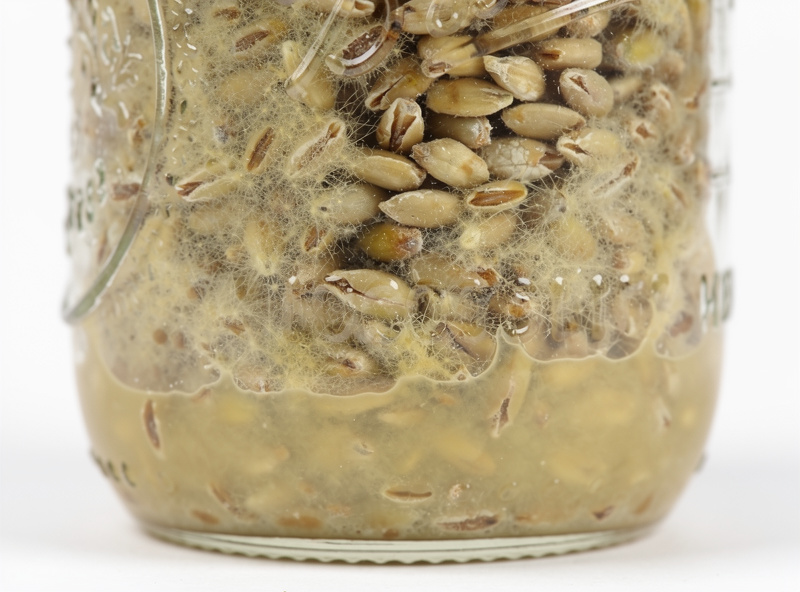
The fix is mechanical: invest in a real pressure cooker (not an electric pressure cooker — most don’t reach a verified 15 PSI), set a timer separate from the cooker’s own gauge, and start the timer only when full pressure is reached. For half-pint jars run 75 minutes, pint jars 90 minutes, quart jars 105 minutes. If you are growing at altitude, add 10 minutes per 1,000 feet above sea level. Browse our mushroom growing equipment guides for specific pressure cooker recommendations that actually hold pressure. Once spawn is colonized, learn what healthy mycelium looks like before opening jars.
Mistake 2: Cracking the Lid to “Check on It” During Colonization
Every time the jar or bag opens during colonization, a fresh dose of airborne contamination spores enters. Beginners do this constantly — a quick peek every two days “just to see how it’s going.” In my own experience, jars I’ve left fully sealed until a real checkpoint have failed far less often than the ones I couldn’t resist opening early — every crack of the lid is a real, avoidable roll of the dice. The mycelium does not need your attention; it needs to be left alone.
Set a calendar reminder for day 10, then day 14, then day 18. Do not lift the lid until then. If a jar looks stalled at one of those checkpoints, give it 96 more hours before doing anything — colonization is rarely linear, and a jar that looks half-done at day 12 is often fully colonized by day 16. The discipline of leaving sealed containers sealed is the single biggest skill jump between week-one and week-three growers.
Mistake 3: Getting Substrate Hydration Wrong (The Field-Capacity Test)
Bulk substrate at field capacity holds the maximum water it can without weeping. Beginners almost always either under-hydrate (substrate falls apart in your hand) or over-hydrate (substrate leaves a wet streak on your palm). Both kill yields. The test is one squeeze: grab a fistful, squeeze hard for two seconds, and look at your palm. A few drops is right. A wet streak is too wet. Crumbling apart is too dry.
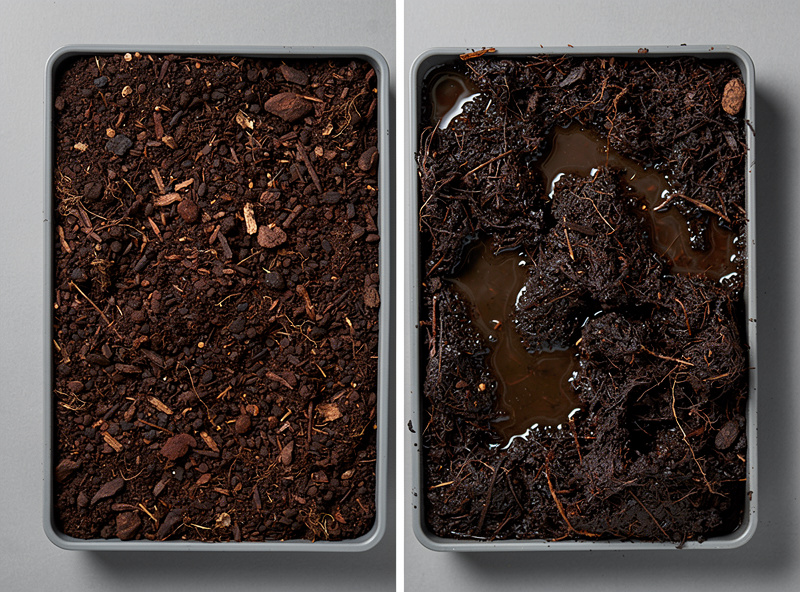
Over-hydrated coir traps anaerobic bacteria that produce the rotten-egg smell every grower learns to recognize. Under-hydrated substrate stalls colonization — the mycelium runs out of available water in the first centimeter and crawls to a halt. For a compressed coco coir brick, a starting point is roughly one part coir to six or seven parts boiling water by weight (a typical 650g brick takes around 4-4.5 liters) — but brick density and how much vermiculite or gypsum you’re mixing in shift that number, so the squeeze test is what I actually trust before bagging, not the ratio. The substrate guides walk through ratios for coir, straw, hardwood sawdust, and Masters Mix individually.
Mistake 4: Buying Spawn Before the Fruiting Chamber Is Built
Spawn arrives, beginner inoculates, two weeks pass, the substrate is colonized — and there is no fruiting chamber. The jar sits on a shelf in a 40% humidity living room and either aborts pins or dries out before forming any. This is the most preventable of all beginner mistakes and probably the most common. Spawn is the last thing to buy, not the first.
Order of operations: build the fruiting chamber first (a shotgun fruiting chamber, monotub, or Martha tent works equally well for first-time growers), confirm it holds 85-95% humidity for 12 hours unattended, THEN buy spawn. A 6-quart monotub with six 1-inch fresh-air-exchange holes per side, lined with a half-inch of moist perlite, costs under $30 and works reliably. Do this two weeks before spawn arrives so you have time to dial it in.
Mistake 5: Ignoring Fresh Air Exchange (FAE)
Mushrooms need oxygen. They produce CO2 as a byproduct of growth, and at concentrations above roughly 1,500 ppm, fruiting body formation stalls or deforms. Beginners almost universally under-ventilate. The visible signs are heavy lid condensation, pin abortion, and fruits that grow long thin stems with tiny caps (sometimes called “alien penis” stems by experienced growers — long, narrow, no bend).
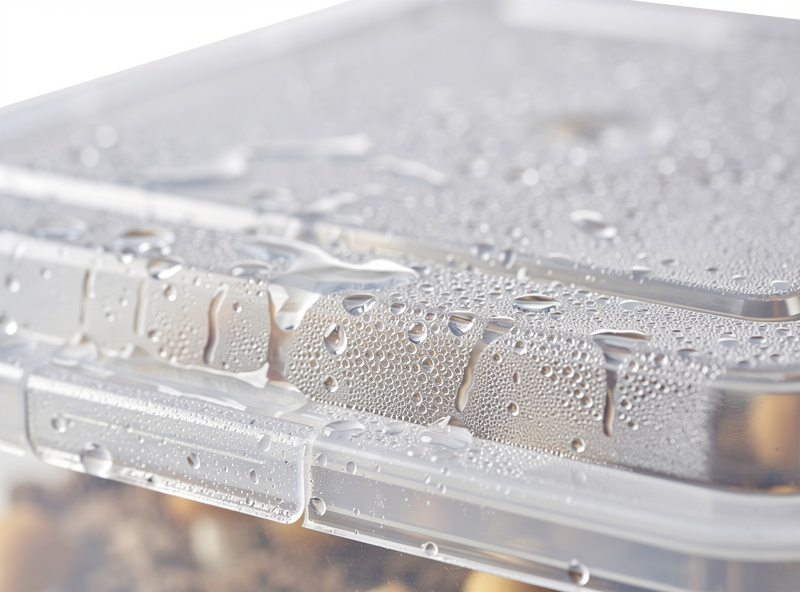
The fix: drill more holes than you think you need, and fan the chamber two to four times per day for 30 seconds each. A small USB fan running on a 6-hour-on / 6-hour-off cycle works for the lazy version. Hygrometers are cheap — keep humidity in the 85-92% range, not 95%+. If lid condensation forms during fruiting, you have too much humidity and not enough FAE. The cultivation safety disclaimer covers ventilation considerations for indoor grows in living spaces.
Mistake 6: Mistaking Cobweb Mold for Healthy Mycelium
Cobweb mold (Dactylium dendroides) is a fast-growing gray-white fungal contaminant that spreads in 36-48 hours under high humidity. It looks deceptively similar to early-stage mycelium to a beginner’s eye, especially the wispy first growth across a substrate. Confusing the two costs the entire tub — and confusing the other direction (panicking and tossing healthy mycelium) wastes a perfectly good batch. Both errors are common in week one.
The fastest visual call is texture and growth direction: healthy mycelium is dense, white, and hugs the substrate; cobweb mold is loose, fluffy, gray-tinted, and lifts upward into the headspace. The full breakdown — seven visual differences plus the fan, smell, and 90-minute time tests — is in our guide on cobweb mold vs mycelium. Bookmark it before your first tub goes into fruiting; you will refer back to it.
Mistake 7: Quitting After One Failed Tub
First-batch success for self-taught beginners is genuinely inconsistent — species, technique, and how many of the six mistakes above you’re still making all move the number a lot. That inconsistency is normal, and it means most beginners hit at least one contamination event in their first three tubs. The mistake is not contamination. The mistake is quitting before the third tub, which is when most growers actually see results because they have stopped making the first six errors above.
Failed tubs are also the best learning tool — the failure mode tells you exactly what to fix. Yellow liquid means under-cooked grain. Gray fluffy growth means cobweb plus high humidity. Long thin stems mean low FAE. A dehydrated substrate means under-hydration or a leaky chamber. Each failure is one variable resolved. Document every batch with photos and notes — by the third or fourth tub, the patterns become obvious. See more contamination troubleshooting guides for failure-mode-to-cause mapping.
Quick-Reference Table: Mistake, Outcome, and Fix
| Mistake | Symptom | Typical Outcome | Fix |
|---|---|---|---|
| Under-pressure-cooked grain | Yellow liquid at jar bottom day 5-7 | Usually a total loss — toss the jar | 15 PSI for 90+ min, separate timer |
| Cracking lid for “checks” | Random green/black spots day 7-10 | Meaningfully higher contamination risk | Don’t open until day 10 / 14 / 18 |
| Wrong substrate hydration | Anaerobic smell or stalled colonization | Reduced yield to a stalled batch | Squeeze test: a few drops, no streak |
| No fruiting chamber ready | Pins abort, fruits dry, cracked caps | Most fruits never finish | Build chamber 2 weeks before spawn arrives |
| Insufficient fresh air exchange | Long thin stems, lid condensation | Lower yield, deformed fruit | Fan 2-4× daily, more FAE holes, <92% humidity |
| Cobweb mold misidentified | Gray fluffy lifting growth | Likely total loss if untreated past 48h | Compare visual + smell + fan tests |
| Quitting after one fail | Discouragement, abandoned hobby | All future yields | Run three tubs minimum before judging |
Frequently Asked Questions
What is the most common mistake first-time mushroom growers make?
Pressure-cooking grain spawn for too short a time at insufficient pressure is the single most common first-time mistake. Beginners often run 30-60 minutes when 90 minutes at a verified 15 PSI is required to kill bacterial endospores. Yellow liquid pooling in the jar by day 5-7 is the diagnostic symptom.
How long does it take to colonize a mushroom grain spawn jar?
A correctly inoculated quart jar of rye berry spawn typically takes 14-21 days to fully colonize at 75-78°F. Half-pint jars finish in 10-14 days under the same conditions. Slower colonization is normal in cooler rooms; faster than 10 days suggests the strain is aggressive or the temperature ran above 80°F.
Why are my mushroom pins aborting before they grow into fruits?
Pin abortion is almost always caused by either CO2 buildup from poor fresh air exchange (target under 1,500 ppm during fruiting), humidity dropping below 80%, or temperature swings greater than 8°F within 24 hours. Increase FAE first — most abortion cases resolve with two extra fan cycles per day.
Should I open my mushroom grow jar to check colonization progress?
No. Every time the lid opens, fresh contamination enters. Jars checked constantly fail noticeably more often than jars left sealed until an actual checkpoint. Mark check-in dates at day 10, 14, and 18 only — and only visually inspect through the glass without breaking the seal.
Can a contaminated mushroom tub be saved?
Small cobweb mold patches under 10% surface coverage are worth treating with a 3% hydrogen peroxide mist plus a 30-minute fresh-air-exchange spike; in practice that combination saves more tubs than it loses, though it isn’t a guarantee — even calibrated commercial fungicides tested against this pathogen in peer-reviewed trials only reach 61-81% control. Bacterial wet rot, green Trichoderma, or any contamination above roughly a quarter of the surface is not worth chasing — discard the substrate.
How many tubs should I run before deciding mushroom growing is too hard?
Plan for at least three tubs before judging. Almost every beginner hits a contamination event in the first one or two batches, and each failed tub usually points straight at one fixable cause. Most growers who quit after one failure were one variable change away from a working setup.