
A successful mushroom season produces more fresh fruiting bodies than any household can eat in a week. After three years of harvesting from indoor blocks, outdoor logs, and foraged patches, my pantry now runs five concurrent preservation methods — dried slices in mason jars, vacuum-packed frozen rounds, lacto-fermented oyster pickles, fine powders for tinctures and teas, and double-extraction medicinal tinctures in amber bottles. Each method has a species, a use case, and a shelf life that the others cannot match.
This guide is the kitchen-side counterpart to my cultivation hubs. It covers when to dry versus freeze versus ferment, the species-specific cooking notes that separate excellent from edible, the powders and extracts that turn fresh harvest into medicine and seasoning, and the pantry rotation schedule that keeps the whole system stocked year-round. Preservation is the step most home growers underplan; getting it right is what makes cultivation pay off for the household, not just for the blog.
The Five Preservation Methods Compared
Each method has a sweet-spot species, a shelf life, and a flavour profile. The table below is my working reference for which mushroom goes to which preservation pipeline. Yields shown are the dry-weight or processed-weight equivalent of 500 grams of fresh mushrooms — the typical single flush from one home block.
| Method | Best Species | Shelf Life | Yield from 500g Fresh | Effort | Flavour Retention |
|---|---|---|---|---|---|
| Dehydrator drying | Lion’s mane, shiitake, oyster, turkey tail, reishi | 2-3 years | 40-70g dried | Low — set and forget | Excellent |
| Vacuum-packed freezing | Hen of the woods, king bolete, chanterelle | 12 months | 500g frozen rounds | Moderate — par-cook first | Good with par-cook |
| Lacto-fermentation | Oyster, shiitake, button | 4-6 months refrigerated | 400g fermented pickle | Moderate — daily check first week | Different — tangy, umami-deep |
| Powdering (post-drying) | Lion’s mane, reishi, turkey tail, cordyceps | 6-12 months (oxidation-limited) | 40-70g powder | Low — grind dried | Good for medicinal, poor for cooking |
| Double-extraction tincture | Reishi, chaga, lion’s mane, turkey tail | 3+ years | 250-400ml tincture | High — 14-day workflow | n/a (medicinal extract) |
| Salt-curing | Lobster mushroom, milk caps | 6-12 months | 300g cured | Moderate | Heavily transformed |
For most home growers, drying handles 80 percent of the preservation load. Freezing is reserved for species that lose too much during dehydration (chanterelle and hen of the woods specifically). Lacto-fermentation is the underrated method most home growers never try; once you have done it once, you will run a fresh jar every harvest. Tinctures and powders are the medicinal pipeline — the cultivation side of those choices is covered in the medicinal mushrooms home guide.
Drying: The Default Method for Most Species
Drying is the simplest, cheapest, and most flavour-retentive preservation method for almost every mushroom species I grow. My standard procedure: slice fresh mushrooms to roughly 8 millimetres thick, lay on dehydrator trays without overlapping, run at 45-50 C with airflow until the slices snap rather than bend (typically 6-12 hours depending on initial moisture). Pack snap-dry slices immediately into glass mason jars with an oxygen absorber and a tight lid, store in a dark cupboard.
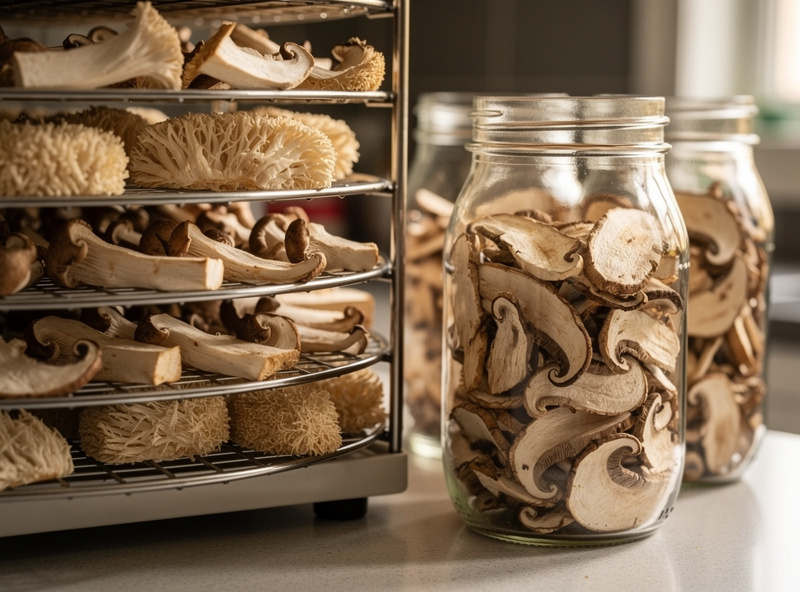
Temperature is the single variable that decides whether you get pantry-grade dried mushroom or a leathery oxidised mess. Above 55 C the volatile aroma compounds escape and the active medicinal compounds in reishi and lion’s mane start to degrade. Below 40 C the drying takes 24+ hours and bacterial spoilage becomes possible mid-cycle. The 45-50 C window is the safe target across every species I have processed; the detailed method-by-method comparison (dehydrator vs oven vs air-dry vs freeze-dry) is in how to dry mushrooms for storage, and the medicinal-species-specific notes (where compound preservation matters more than texture) are in how to dry medicinal mushrooms.
The dehydrator I use is a 600-watt Excalibur with five trays — 110 dollars in 2024 prices. A budget alternative is any 350-500 watt round stack-tray dehydrator at 50-70 dollars; they work fine for occasional use but the airflow is less even, leading to inner trays drying slower than outer. An oven on its lowest setting (60-70 C with the door propped open) works in a pinch but uses far more electricity and never quite hits the right temperature window. The same dehydrator also turns marinated slices into a chewy mushroom jerky snack — dried hotter, at around 60 C, and stopped while still pliable rather than snapped dry.
Freezing: For Species That Survive It
Not all mushrooms freeze well raw. Hen of the woods (maitake), king bolete (porcini), and chanterelles all turn to mush after raw freezing because the cell walls rupture and lose structural water on thaw. The fix is par-cooking before freezing: sauté slices for 4-6 minutes in butter or olive oil over medium heat, cool to room temperature, then vacuum-pack in 250-gram portions and freeze. Par-cooked mushrooms thaw to roughly 90 percent of fresh texture.
Raw freezing does work for a few species — oyster mushrooms tolerate it because the cell walls are sparser; lion’s mane keeps acceptable texture if frozen within 6 hours of harvest. For everything else, par-cook. The vacuum packer is the single piece of equipment that elevates frozen mushrooms from “edible” to “indistinguishable from fresh after thaw” — a 70-dollar FoodSaver handles every species I run.
One specific trick: chanterelles freeze well when par-sautéed dry (no oil, no salt) until they release their water and reabsorb it. The technique is called dry-sautéing and it concentrates the flavour while removing the water that would otherwise crystalise and destroy texture. A 500-gram bag of dry-sautéed-then-frozen chanterelles unfreezes into something almost indistinguishable from fresh, and stores cleanly for a full year.
Lacto-Fermentation: The Underrated Method
Lacto-fermented mushrooms taste nothing like fresh mushrooms and that is the point. The flavour profile is tangy, deeply umami, slightly funky in the way good kimchi is funky — perfect as a sandwich condiment, ramen topping, or pickle to break the fat in a rich dish. My standard recipe is 500 grams of fresh oyster or shiitake mushrooms cut into 2-3 cm pieces, 2 percent salt by total weight, 1 clove garlic, 1 teaspoon black peppercorns, weighted under brine in a 1-litre fermentation jar for 7-10 days at 18-22 C.
Lacto-ferment-grade mushrooms must be very fresh (within 12 hours of harvest) and from a clean cultivation environment — any contamination on the mushroom surface carries into the fermentation. I do not lacto-ferment wild-foraged mushrooms because the surface microflora is too unpredictable. For oyster mushrooms from my cultivation blocks, lacto-fermentation has been a six-out-of-six success rate; for shiitake, slightly more variable because the chewy texture wants a longer ferment (12-14 days) to fully integrate.
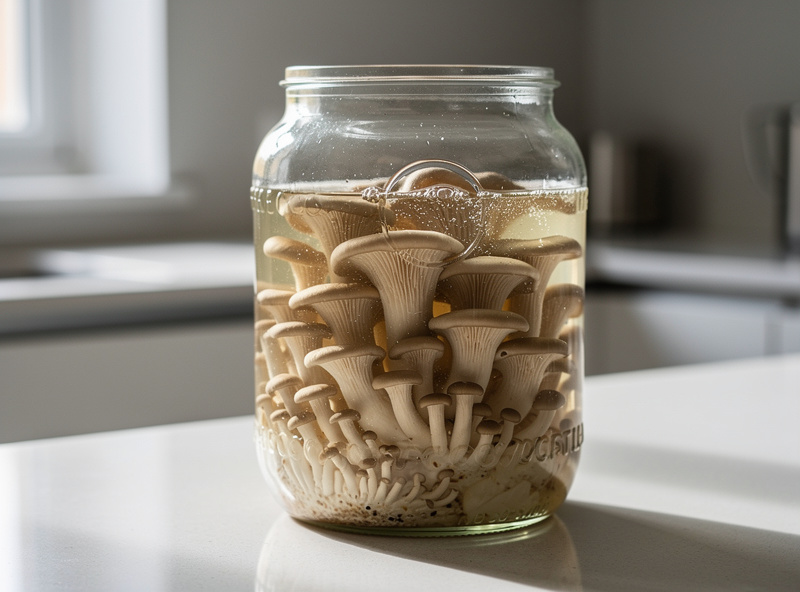
The fermentation discipline mirrors what I use for vegetables. Daily check for the first three days for surface kahm yeast (skim if present, ferment continues), look for active bubbling from day two, taste at day seven and decide if it needs longer. The visual-ID and rescue protocols for kahm yeast versus actual mold cross over perfectly — there’s a detailed guide at Ferment Foundry’s kahm yeast guide covering the same calls in vegetable ferments; mushroom lacto-ferments and sauerkraut share the same surface-yeast risk profile. For the faster vinegar-brined alternative that adds the acid directly rather than fermenting it, see my pickled mushrooms recipe.
Powders, Extracts, and Tinctures
Once snap-dried, medicinal species transform into the most flexible kitchen ingredient I keep. A coffee grinder reserved for mushrooms turns dried slices into fine powder and umami seasoning in 60 seconds; the powder goes into smoothies (lion’s mane, cordyceps), coffee (reishi, chaga), bone broths (turkey tail), and capsules for those who prefer a measured, swallowable format — follow whatever serving size is stated on the commercial capsule product you’re modelling the DIY version on rather than eyeballing an amount. The grinder must be dedicated — residual coffee oils ruin mushroom powder; residual mushroom flavour ruins coffee.
Powders have a shorter shelf life than whole slices because the increased surface area accelerates oxidation. My rule: grind only the quantity I will use in the next 8 weeks; keep the remainder as whole slices. A 60-gram powder jar typically lasts 30-45 days at everyday household use rates, though how much gets used per serving varies by product and recipe — check the label or the source recipe for a suggested amount rather than assuming a fixed measurement. The full extraction methods — when to powder, when to tincture, when to decoct — are in the dedicated medicinal mushrooms home guide, and the specific protocols for sauna-paired use are in medicinal mushrooms and sauna recovery.
Double-extraction tincture is the gold standard for reishi, chaga, and any species where you want both water-soluble polysaccharides (beta-glucans) and alcohol-soluble triterpenes. The 14-day workflow is straightforward but unforgiving on timing: alcohol extract first (14 days agitating daily), set aside, then hot-water decoct the spent mushroom (2 hours at 80-90 C), combine extracts at 1:1, store in amber bottles. A 250-millilitre tincture from a 50-gram dry batch lasts roughly 5 months at typical household use rates — dropper serving sizes vary by concentration and brand, so manufacturers commonly suggest a range on the label rather than a single fixed amount.
Cooking Methods That Preserve Flavour and Compounds
Different cooking methods unlock or destroy different compounds. Heat above 80 C activates beta-glucans (good for medicinal preparations like turkey tail tea) but destroys the volatile aromatics that make lion’s mane taste like crab. The rule I follow: for medicinal targets, decoct slowly at sub-boil temperatures; for culinary targets, cook hot and fast to lock in aromatics before they evaporate.
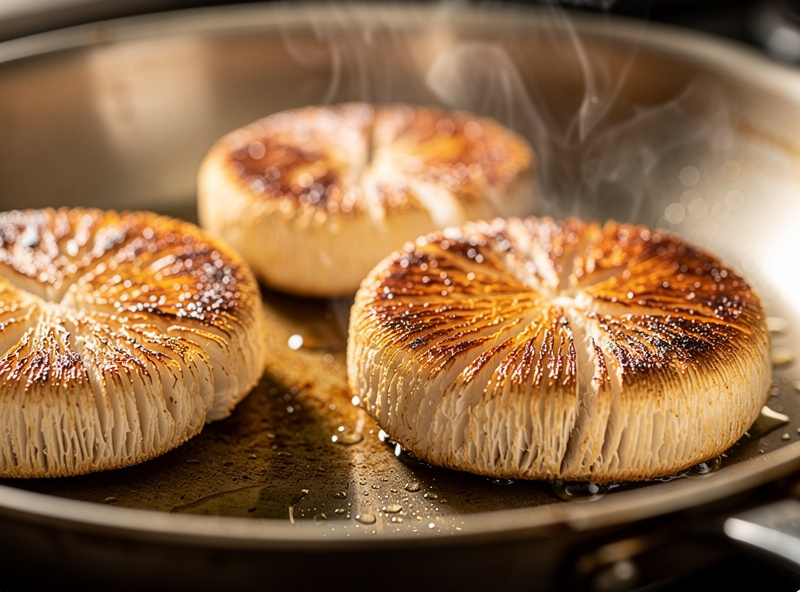
For lion’s mane specifically, the crab-cake texture beginners aim for requires high-heat dry-sauté before adding any fat. Slice the fruiting body to 1-2 centimetre thick rounds, press in a paper towel for 60 seconds to remove surface moisture, sear in a dry pan over medium-high heat for 2-3 minutes per side until the surface caramelises, then add butter and a pinch of salt only at the end. The detailed three-method comparison (dry-sauté, butter-poach, deep-fry) is in how to cook lion’s mane mushroom.
For other species: oyster mushrooms want hot fast cooking in a hot pan; over-stirring releases too much water and you end up steaming rather than searing. Shiitake benefits from a 2-minute pre-soak in just-off-boil water if dried (reserve the soaking water as a substitute for mushroom stock — it carries the deep umami the mushroom would otherwise give the dish). Reishi is too tough for culinary use; powder it or decoct it. Chanterelles are best in butter with shallot and a splash of cream; their delicate aroma is wrecked by competing flavours. Hen of the woods loves brown butter and rosemary, and benefits from a slow finish in the oven to develop the crisp edges.
Species-Specific Cooking Notes
Each species I grow has a kitchen role I have settled on after years of trying every method. Lion’s mane: crab-cake substitute and high-end risotto add-in; do not waste it in soups. Oyster: stir-fry, lacto-pickle, pasta sauce; the workhorse that goes in everything. Shiitake: stock base, ramen topping, dry storage; often dried for its deeper umami, though fresh caps sear beautifully — the full fresh-versus-dried split is in my shiitake mushroom recipes. Reishi: tea, tincture, daily wellness routine; never as a culinary ingredient.
Cordyceps: powdered into pre-workout smoothie or steeped in hot water for 10 minutes as a morning drink. Maitake (hen of the woods): brown-butter fried as a side, or par-cooked and frozen for winter ramen. Turkey tail: always tea or decoction, never culinary; the chitin is too tough for chewing. Chaga: long decoction (3-4 hours simmer) for daily tea; some households prefer a tincture format instead, following whatever serving guidance came with the product or recipe it’s modelled on. Each species earns its kitchen role through experimentation; the assignments above are my personal optima after roughly 200 cooked dishes.
For pantry rotation, I label every jar with species, harvest date, drying date, and a small dot system showing whether it is current-year (green dot), last-year (yellow), or older (red — to be used immediately or discarded). The labelling system took 10 minutes to set up and has eliminated the slow drift toward old-stock mushrooms that used to lose quality before I noticed. The same labelling discipline shows up in guides on aging cheese in a curing chamber; the underlying principle of dated rotation transfers across fermentation, charcuterie, and mushroom pantry work.
Pantry Management and Shelf Life
Shelf life depends on three factors: moisture content at packing, oxygen exposure, and storage temperature. Snap-dry mushrooms (under 8 percent moisture) packed in glass jars with a 100-cc oxygen absorber and stored at 15-20 C have a confirmed shelf life of 2-3 years for whole slices and 6-12 months for ground powders. Vacuum-packed frozen mushrooms last 12 months before texture and flavour decline. Tinctures last 3+ years in amber bottles in a cool dark cupboard.
The single biggest threat to dried mushroom storage is moisture re-uptake. A jar opened daily in a humid kitchen will reabsorb enough water within 30 days to soften the slices and start mold formation. The fix: split each batch into a daily-use small jar (refilled from the bulk jar weekly) and a sealed bulk jar opened only for the weekly refill. The bulk jar maintains its packing dryness; the daily-use jar gets through its contents before re-uptake matters.
My personal pantry stock at any time: roughly 800 grams of dried lion’s mane, 600 grams of dried oyster, 400 grams of dried shiitake, 300 grams of dried reishi, 200 grams of dried turkey tail, 100 grams of dried cordyceps. Total dry weight: 2.4 kilograms, which represents roughly 24 kilograms of original fresh harvest. That is one full household-year of cooking and medicinal use, with a buffer for slow harvest periods. For the cultivation side that produces that volume, see the substrate guide and the equipment guide; the year-round system is what they collectively describe.
Sourcing the kitchen-side gear took me three years of buying-and-replacing before I settled on a small list that earns its place on a busy kitchen counter. The 600-watt dehydrator runs once a week during harvest season; the dedicated coffee grinder grinds dried mushroom only and lives next to the tincture cupboard; a vacuum sealer with two roll-stock cassettes handles all freezer prep; a 4-litre fermentation crock with glass weights handles every lacto-ferment without ever needing replacement gaskets. Total kitchen-side spend, separate from cultivation gear: about 220 dollars over three years.
For a household that wants to start the preservation pipeline today, the minimum first kit is a basic stack-tray dehydrator (50 dollars), 12 wide-mouth 500-millilitre mason jars (18 dollars), a 24-pack of 100-cc oxygen absorbers (8 dollars), and a single 1-litre fermentation jar (12 dollars). That 88-dollar starter kit handles the first year’s worth of dried storage and one running fermentation jar — enough to learn the pipeline before scaling. The same beginner-cost framing applies to outdoor cultivation as covered in the outdoor mushroom growing guide, and to indoor equipment as covered in the equipment guide — start cheap, scale only when the current tier constrains output.
Frequently Asked Questions
What is the best way to preserve a large mushroom harvest?
Drying handles 80 percent of preservation work for most species. Use a 350-600 watt dehydrator at 45-50 C with airflow until slices snap rather than bend (6-12 hours), then pack into glass mason jars with an oxygen absorber. Shelf life is 2-3 years for whole slices. Use vacuum-packed freezing only for species that lose too much during drying (chanterelles, hen of the woods, porcini).
Can I freeze fresh mushrooms without cooking them first?
Most species need par-cooking before freezing. Sauté slices for 4-6 minutes in butter or olive oil, cool, then vacuum-pack and freeze. Raw freezing works only for oyster mushrooms and very fresh lion’s mane; other species turn to mush on thaw because cell walls rupture and lose water. Par-cooked frozen mushrooms keep 90 percent of fresh texture for up to 12 months.
How long do dried mushrooms last in storage?
Snap-dry whole slices packed in glass mason jars with a 100-cc oxygen absorber and stored at 15-20 C in a dark cupboard last 2 to 3 years. Ground mushroom powders last 6 to 12 months because increased surface area accelerates oxidation. Tinctures last 3 or more years. The single threat to all dried storage is moisture re-uptake — open the jar as rarely as possible.
Are lacto-fermented mushrooms safe to eat?
Yes, when made from very fresh cultivated mushrooms (within 12 hours of harvest) at 2 percent salt by total weight under brine. Avoid lacto-fermenting wild-foraged mushrooms because the surface microflora is unpredictable. Check daily for surface kahm yeast (harmless, skim if present) versus actual mold (fuzzy, coloured — discard the batch). Refrigerated fermented mushrooms keep 4-6 months.
What temperature should I dry medicinal mushrooms at?
45-50 C with airflow. Above 55 C the active compounds in lion’s mane (erinacines and hericenones) and reishi (triterpenes) begin to degrade. Below 40 C the drying takes over 24 hours and bacterial spoilage can occur mid-cycle. The 45-50 C window preserves both flavour aromatics and active medicinal compounds.
How do I get the crab-cake texture from lion’s mane mushroom?
Slice the fresh fruiting body to 1-2 centimetre thick rounds, press in a paper towel for 60 seconds to remove surface moisture, then sear in a dry pan over medium-high heat for 2-3 minutes per side until the surface caramelises. Add butter and a pinch of salt only at the end. The dry-sear before adding fat is the key — adding butter or oil first turns the mushroom rubbery.
Related Guides on MycoMansion
- How to Dry Mushrooms for Storage: Dehydrator vs Oven vs Air Dry
- How to Cook Lion’s Mane Mushroom: Crab-Cake Texture in Three Methods
- How to Dry and Store Medicinal Mushrooms for Maximum Potency
- Medicinal Mushrooms: The Complete Home Cultivation Guide
- How to Cook Morels Safely: Cleaning, Cooking, and the False-Morel Warning
- Mushroom Foraging: The Complete Field Identification Guide