
Lion’s mane, reishi, and cordyceps are the three medicinal mushrooms that come up most often in sauna-recovery conversations — and they’re also three species I grow myself. This guide covers what the peer-reviewed research on each one actually says (not marketing copy), and how to grow the fruiting bodies at home rather than buying extract. If you want the cultivation side end-to-end, my guide on growing medicinal mushrooms at home covers substrate and technique for all three.
Nothing on this page is medical advice or a personal dosing recommendation. It’s a summary of published research doses for context, not instructions. Talk to a physician before adding any supplement to a health routine, especially if you take prescription medication.
Why These Three Come Up Alongside Sauna Recovery
Infrared sauna use and these mushrooms get discussed together because both are marketed around the autonomic nervous system and recovery — heat exposure and the sauna’s post-session vagal rebound on one side, and specific bioactive compounds (beta-glucans, hericenones, ganoderic acids, cordycepin) on the other. That’s a reasonable premise for further research, but I want to be upfront: I haven’t found a clinical study that tests sauna plus any of these three mushrooms together as a stack. The evidence below is for each mushroom on its own. For the sauna side specifically, InfraredSaunaLab’s guide to infrared saunas covers temperature, duration, and frequency.
Lion’s Mane (Hericium erinaceus): What the Research Shows
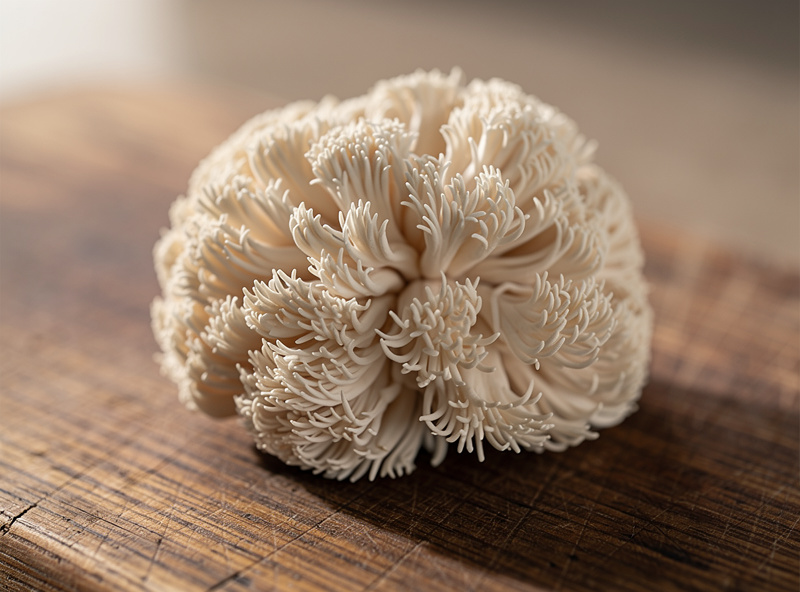
Lion’s mane contains hericenones and erinacines, compounds studied for nerve growth factor (NGF) stimulation in lab and animal research. The most-cited human trial is a small double-blind, placebo-controlled study out of Japan: 30 adults aged 50-80 with diagnosed mild cognitive impairment took 3 g/day of dried Yamabushitake powder (in tablet form) for 16 weeks. The treatment group scored significantly better on a cognitive function scale at weeks 8, 12, and 16 versus placebo — but scores dropped again within 4 weeks of stopping, meaning the effect didn’t appear to persist without continued use (Mori et al., 2009, Phytotherapy Research).
That’s one small trial in an older, cognitively-impaired population — not proof of a cognitive boost in a healthy adult, and I’m not going to claim it is. It’s the strongest human evidence that exists for this species, and it’s worth reading in full before drawing conclusions.
Growing your own: Lion’s mane grows on hardwood logs and supplemented sawdust blocks. The process is more demanding than oyster mushrooms — sterilization required, slower colonization, more contamination-prone — but produces the same fruiting body the research above and commercial extracts are made from. My oyster mushroom guide covers the easier substrate-on-coffee-grounds approach; lion’s mane needs the more advanced setup in my sterile-technique equipment guide.
Reishi (Ganoderma lucidum): What the Research Shows
Reishi contains ganoderic acids and triterpenes studied for effects on the stress-response and immune system. A randomized, double-blind, placebo-controlled trial of 132 adults diagnosed with neurasthenia (a fatigue-and-stress-symptom diagnosis) took a standardized reishi polysaccharide extract (Ganopoly), 1,800 mg three times daily (5.4 g/day total) for 8 weeks. The treatment group showed a larger reduction in fatigue scores and larger improvement in a general well-being scale than placebo (Tang et al., 2005, Journal of Medicinal Food).
A real safety note, not a scare line: reishi has documented antiplatelet/anticoagulant activity — it can increase bleeding and bruising risk in people already taking blood thinners (warfarin, aspirin, clopidogrel) and is generally advised against before surgery. This is well-established enough that it’s worth repeating plainly: if you’re on any blood-thinning medication, that’s a conversation with a doctor first, not a supplement-label decision (WebMD Reishi Mushroom monograph).
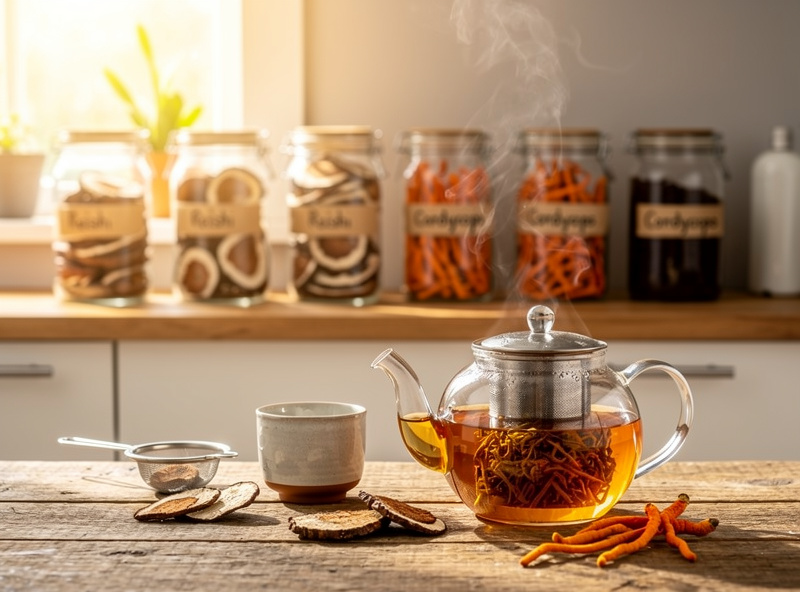
Growing your own: Reishi grows on hardwood logs (oak, maple, birch). The fruiting body takes roughly 6-12 months from inoculation to first flush but keeps producing off the same log for several years. Reishi tea brewed from home-grown fruiting bodies is the cheapest path to a consistent supply if you already have log space.
Cordyceps militaris: What the Research Shows
Cordyceps militaris contains cordycepin, studied for effects on exercise tolerance and oxygen use. The relevant human trial used a six-species mushroom blend (marketed as PeakO2) that included Cordyceps militaris alongside reishi, lion’s mane, shiitake, king trumpet, and turkey tail — not isolated cordyceps on its own, which is an important distinction the marketing around this study often glosses over. Twenty-eight healthy young adults took 4 g/day of the blend; after 3 weeks, the supplemented group showed a significant VO2 max improvement (+4.8 ml/kg/min) and longer time-to-exhaustion versus placebo, though the 1-week acute-dosing phase showed little effect (Hirsch et al., 2016, Journal of Dietary Supplements).
Note militaris (Cordyceps militaris) vs. sinensis (Cordyceps sinensis, now reclassified as Ophiocordyceps sinensis): almost all the cordycepin-focused research, including the study above, uses militaris. Sinensis is the wild, parasitic, extremely expensive species from Tibetan/Himalayan alpine regions — not something a home grower is producing.
Growing your own: Cordyceps militaris grows on grain-based substrates and produces orange fruiting bodies in 6-10 weeks — more technically demanding than lion’s mane but achievable in a home setup with a still-air box and solid sterile technique.
Comparison Table
| Mushroom | Studied Compound | Human Trial Referenced | Dose Used in That Trial | Trial Duration |
|---|---|---|---|---|
| Lion’s mane (Hericium erinaceus) | Hericenones, erinacines | Mori et al. 2009 | 3 g/day dried powder | 16 weeks |
| Reishi (Ganoderma lucidum) | Ganoderic acids, triterpenes | Tang et al. 2005 | 5.4 g/day polysaccharide extract | 8 weeks |
| Cordyceps militaris | Cordycepin | Hirsch et al. 2016 (6-mushroom blend) | 4 g/day blend | 3 weeks |
This table describes what each cited study tested — it is not a recommended dose. Study populations, extraction methods, and health status all affect whether a given dose applies to anyone else.
Growing All Three at Home
Of the three, lion’s mane and reishi are the two I’d point a home grower toward first — both fruit on hardwood substrate with equipment most cultivators already have (a still-air box, a pressure canner or sterilizer, a fruiting chamber). Cordyceps militaris is the outlier: it grows on grain rather than wood, needs tighter sterile technique, and the orange fruiting bodies are more sensitive to contamination than either of the other two. If you’re new to sterile cultivation, my mushroom growing for beginners guide and my drying and storage guide for medicinal species cover the foundational technique before you take on cordyceps.
How I Actually Work These Into My Kitchen
I don’t run a stack or a schedule — I grow what I grow and use it the way I’d use any other ingredient. Lion’s mane gets sautéed and eaten like a substitute for crab or scallops (the texture is the whole reason to grow it — see my lion’s mane cooking guide). Reishi is too woody and bitter to eat as food, so mine goes into simmered tea — sliced dried fruiting body, simmered low for 30-45 minutes, which is standard practice for extracting the water-soluble polysaccharides rather than a dosing schedule. Cordyceps militaris is the one I’ve fruited the least of; the orange fruiting bodies are small and the grain-substrate contamination risk is real, so it’s more of an occasional batch than a staple.
None of that is a health regimen — it’s just how a mushroom that’s already in the grow tent ends up on a plate or in a mug. If you’re weighing whether any of these belongs in your own routine at all, that’s a question for a doctor who knows your medications and history, not a cultivation blog.
What This Is Not
None of this replaces sleep, hydration, an actual training program, or medical care for a diagnosed condition — and none of the studies above claim it does either. The research on each species is real but limited: small sample sizes, specific populations (older adults with MCI, neurasthenia patients, young trained adults), and short trial windows. Treat the studies as a starting point for your own reading, not a verdict. The InfraredSaunaLab infrared sauna safety guide covers contraindications on the heat-exposure side.
Frequently Asked Questions
Is there research on combining medicinal mushrooms with infrared sauna specifically?
Not that I’ve found. The mushroom studies below (lion’s mane, reishi, cordyceps militaris) were each conducted on their own, without a sauna component. Any combined recovery benefit is a reasonable hypothesis, not a tested finding.
What dose did the lion’s mane cognitive study use?
The Mori et al. 2009 trial used 3 g/day of dried Yamabushitake (Hericium erinaceus) powder for 16 weeks in adults aged 50-80 with diagnosed mild cognitive impairment. This describes the study, not a personal dosing recommendation.
Does reishi really interact with blood thinners?
Yes, and it’s well documented. Reishi has antiplatelet/anticoagulant activity and can increase bruising and bleeding risk when combined with warfarin, aspirin, or clopidogrel. Anyone on blood-thinning medication should talk to a doctor before using reishi in any form.
Was the cordyceps VO2 max study on cordyceps alone?
No — the Hirsch et al. 2016 trial used a six-mushroom blend (Cordyceps militaris, reishi, lion’s mane, shiitake, king trumpet, turkey tail) at 4 g/day, not isolated cordyceps. The VO2 max improvement (+4.8 ml/kg/min after 3 weeks) is attributed to the blend, not cordyceps in isolation.
Can I grow my own medicinal mushrooms instead of buying extract?
Lion’s mane and reishi, yes, with intermediate sterile-cultivation skill on hardwood substrate. Cordyceps militaris requires more sterile technique than most home setups since it grows on grain rather than wood. Start with oyster mushrooms to build the foundational technique before progressing to medicinal species.
Is this page medical advice?
No. It summarizes published research for context and covers home cultivation. It is not a personal health recommendation, and it doesn’t replace a conversation with a physician, especially for anyone on prescription medication.