
The best shiitake recipes start with a decision most cooks skip: fresh or dried. Drying concentrates the guanylate in shiitake into a deep, almost meaty umami that fresh caps never quite reach, which is why I keep 400 grams of dried shiitake in the pantry even though I fruit fresh ones on hardwood blocks. For everyday cooking, fresh shiitake sears beautifully; for stock, ramen, and rice dishes, dried wins.
I have grown shiitake on logs and sawdust blocks for years, and the kitchen rule that matters more than any single recipe is this: the cap is the food, the stem is the stock. Below are the techniques and the handful of recipes I cook on repeat, each built around getting the most umami out of the species.
Fresh vs Dried Shiitake: Which to Use
Use fresh shiitake when you want a meaty, seared texture and dried shiitake when you want deep umami flavour. Drying triggers an enzymatic change that multiplies the guanylate content, so a rehydrated dried shiitake carries far more savoury depth than a fresh one — but loses the firm bite. Most of my cooking uses dried for flavour-forward dishes and fresh for texture-forward ones.
Always remove the stem before cooking, fresh or dried. The shiitake stem is too fibrous to chew pleasantly no matter how long you cook it, but it is pure flavour — I drop every stem into a freezer bag and use them to build a mushroom stock. Throwing the stems away is the most common waste in shiitake cookery.
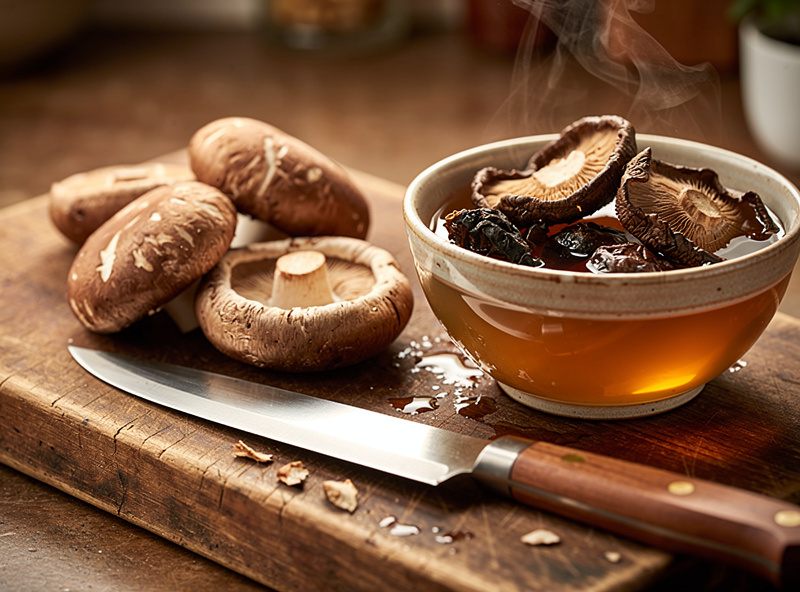
Fresh shiitake from my own blocks have a denser cap than store-bought because of the long colonise-and-brown cycle the blocks go through, which is the same reason log-grown shiitake taste more concentrated — covered in best wood for mushroom logs. If you are buying, choose caps that are thick, domed, and dry to the touch, not flat and damp.
Dried shiitake sold in Asian grocery stores comes in a wide quality spread, and it’s worth knowing the two main grades rather than grabbing the cheapest bag. Donko is the premium grade — picked before the cap fully opens, so it stays thick, dense, and often cracks into a pale crown pattern on top; it’s chewier and carries more concentrated umami. Koshin is picked after the cap opens, so it’s thinner, flatter, and rehydrates faster, which makes it the practical choice for stock and soup where quick, even rehydration matters more than maximum chew. I keep both around: donko for takikomi gohan and dishes where the mushroom itself is the star, koshin for dashi and anything that needs to rehydrate fast on a weeknight.
How to Rehydrate Dried Shiitake (and Save the Liquid)
Rehydrate dried shiitake in warm water for 20-30 minutes until pliable, or use a 2-minute just-off-boil quick soak when you are in a hurry. The critical step is to keep the soaking liquid: it becomes an instant umami-rich dashi that should never go down the drain. Strain it through a fine sieve to catch grit, then use it as the stock base for the same dish.
For maximum flavour I soak in cool water overnight in the fridge — the slow rehydration draws out the most guanylate without clouding the liquid. The reserved soaking water is the secret behind a good shiitake broth and is exactly the substitute-for-stock trick noted across the cooking and preservation hub. Squeeze the rehydrated caps gently before slicing so they sear instead of steam.
Six Shiitake Recipes Worth Keeping
These are the dishes that earn shiitake a permanent place on the kitchen shelf. Each one is built to play to the species’ umami strength, and the table flags whether fresh or dried is the better choice.
| Dish | Fresh or Dried | Key Technique | Cook Time | Flavour Profile |
|---|---|---|---|---|
| Shiitake dashi (stock) | Dried | Cold-soak, gentle simmer | 30 min + soak | Deep umami base |
| Garlic-butter seared caps | Fresh | Score caps, high-heat sear | 8 min | Meaty, rich, savoury |
| Shiitake “bacon” (roasted) | Fresh | Thin-slice, oil, 200 C roast | 20 min | Crisp, smoky, salty |
| Shiitake bok choy stir-fry | Fresh | Very high wok heat | 5 min | Tender-crisp, garlicky |
| Takikomi gohan (mixed rice) | Dried | Cook in reserved soak water | 40 min | Earthy, comforting |
| Ramen topping | Dried | Braise in soy-mirin | 15 min | Sweet-savoury, glossy |
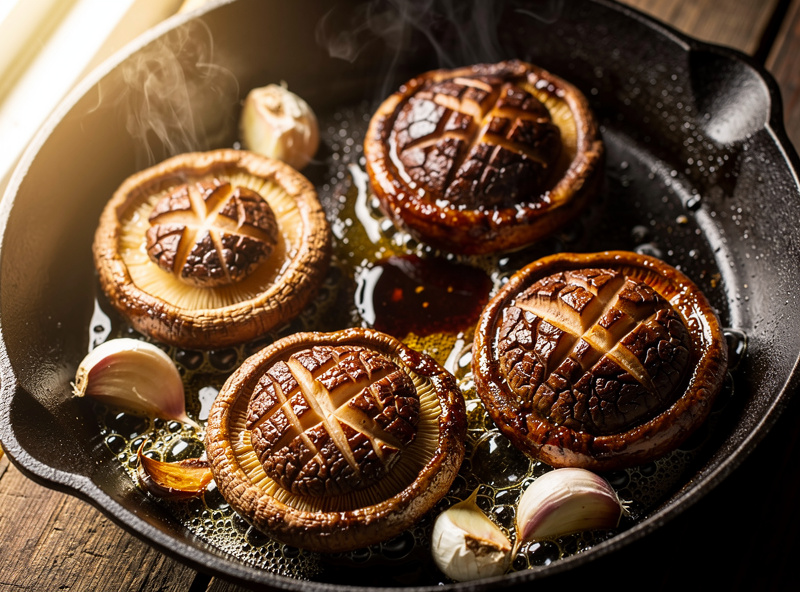
The garlic-butter sear is my weeknight default: score a shallow cross-hatch into each fresh cap, sear gill-side-down in a hot dry pan for 3 minutes to release moisture, then add butter, smashed garlic, and a splash of soy and baste for 2 more minutes. The scoring lets heat and butter penetrate the dense cap so it cooks through without the surface going leathery.
For takikomi gohan, the Japanese mixed rice that turned me into a dried-shiitake hoarder, slice rehydrated caps thin, layer over rinsed short-grain rice, and cook the rice in the reserved shiitake soaking water with a little soy and mirin. The rice drinks up the dashi and every grain tastes of mushroom. It is the single best argument for never discarding soak liquid.
Ramen Toppings and Shiitake “Bacon”
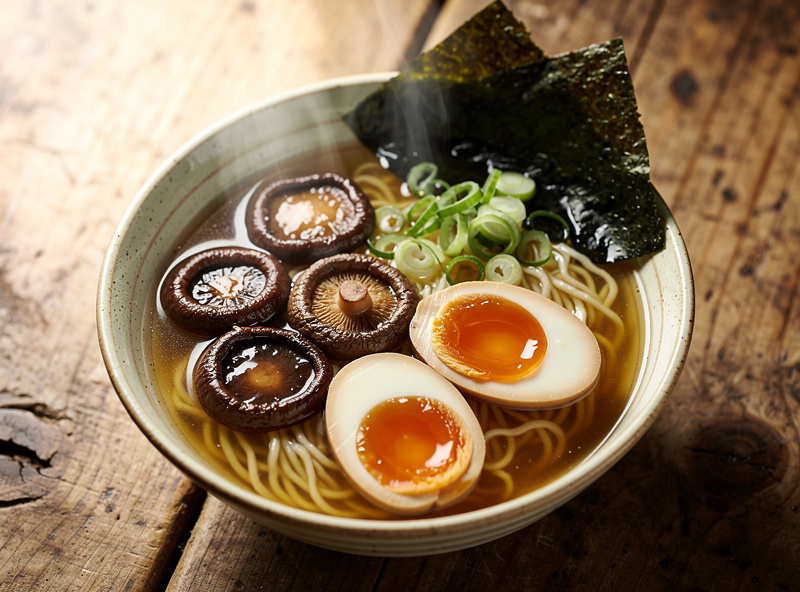
Braised dried shiitake is the classic ramen topping: simmer rehydrated caps in equal parts soy and mirin with a teaspoon of sugar for 15 minutes until glossy and glazed. They keep a week in the fridge in their braising liquid and lift a bowl of instant noodles into something worth sitting down for. Slice thin and fan over the bowl with the soft egg.
Shiitake “bacon” uses fresh caps: slice 3 mm thick, toss with neutral oil, smoked paprika, and salt, then roast at 200 C for about 20 minutes, tossing once, until the edges crisp. It is smoky, salty, and shatters like a crisp — excellent crumbled over salads or eggs. If you want a true shelf-stable chewy snack rather than a roast-and-eat crisp, that is a different process covered in mushroom jerky, which marinates and dehydrates rather than roasts.
Cook Shiitake Thoroughly: The Lentinan Note
Always cook shiitake fully — never serve them raw or barely warmed. Raw and undercooked shiitake contain lentinan, a thermolabile polysaccharide that can trigger shiitake dermatitis (also called flagellate dermatitis) in a minority of people: an itchy, whip-like linear rash that typically shows up anywhere from a day to several days after eating (DermNet NZ puts the range at 24 hours to 5 days, most commonly 2-3 days). Thorough cooking breaks lentinan down and removes the risk entirely — the reaction isn’t seen with properly cooked shiitake, only raw, lightly cooked, or powdered/raw-processed caps.
This is not a reason to avoid shiitake — it is a reason to cook them properly, which you want to do for flavour and texture anyway. Every recipe on this page already clears the bar: a real sear, roast, or braise runs well past the point where lentinan breaks down, so if you’re following the times above you were never at risk in the first place. Give caps a full sear or a proper braise; a quick toss in a barely-warm pan is the only realistic way to undercook them. The same cook-it-properly discipline matters far more for wild species like morels, where it is a genuine toxicity issue rather than a rare sensitivity — see how to cook morels safely.
Storing and Preserving Shiitake
Fresh shiitake keep 7-10 days in a paper bag in the fridge, longer than most gourmet species because the dense cap holds up. For anything beyond that, dry them — shiitake is the species that improves with drying, gaining the umami depth that makes the dried form worth keeping. The dehydrator method is in how to dry mushrooms for storage.
Shiitake also lacto-ferments and freezes well. For freezing, par-cook first; for a tangy pickle, the salt-brine ferment runs a little longer for shiitake than for oyster because of the chewy texture. Both routes, plus the full pantry-rotation system, are in the cooking and preservation hub.
Gear I reach for: a cast-iron skillet that holds heat for searing dense caps, a fine-mesh strainer for clarifying the soaking liquid, and a food dehydrator for turning a fresh flush into deep-umami dried caps.
Disclosure: MycoMansion is reader-supported. As an Amazon Associate I earn from qualifying purchases made through links in this article, at no extra cost to you. I only point to gear I actually use or would buy for my own kitchen.
Frequently Asked Questions
Are dried or fresh shiitake better for cooking?
It depends on the dish. Dried shiitake have far deeper umami because drying multiplies their guanylate content, so they win for stock, ramen, and rice dishes. Fresh shiitake have a firmer, meatier bite and are better for searing and stir-fries. Many cooks keep both on hand.
Do you eat shiitake stems?
No, the stems are too fibrous to chew even after long cooking, but never throw them away. Shiitake stems are full of flavour, so save them in a freezer bag and use them to build a mushroom stock. Cook and eat only the caps.
Should you save the water from soaking dried shiitake?
Yes, always. The soaking liquid becomes an instant umami-rich dashi. Strain it through a fine sieve to remove grit, then use it as the stock base for the same dish, or to cook rice. Discarding it throws away the best flavour the mushroom has to offer.
How long do you cook shiitake mushrooms?
Fresh shiitake need about 8 minutes for a garlic-butter sear: 3 minutes gill-side-down to release moisture, then 2 minutes per side with butter. Roasted shiitake bacon takes 20 minutes at 200 C, and braised ramen toppings simmer for 15 minutes in soy and mirin.
Can you eat shiitake mushrooms raw?
No, cook shiitake thoroughly. Raw and undercooked shiitake contain lentinan, which can trigger shiitake dermatitis, an itchy rash, in a minority of people a day or two after eating. Thorough cooking breaks lentinan down completely, so a proper sear or braise removes the risk.
How do you rehydrate dried shiitake quickly?
Use a 2-minute soak in just-off-boil water when you are short on time, or 20-30 minutes in warm water for better texture. For maximum flavour, cold-soak overnight in the fridge. Squeeze the caps gently before slicing so they sear rather than steam, and keep the strained liquid.