
Pickled mushrooms are vinegar-brined, not salt-fermented — a distinction that matters for both flavour and safety. Acid from vinegar does the preserving work immediately, giving you a tangy, garlicky pickle ready in 24 hours that keeps three to four weeks in the fridge. My default is a quick refrigerator pickle: par-cook the mushrooms, pack in a hot vinegar brine, and chill. No canning, no risk, no fuss.
This is a different method from the lacto-fermented mushrooms covered in the cooking and preservation hub, where salt and time let bacteria produce the acid. Pickling adds the acid; fermenting grows it. Both are excellent, but pickling is faster, more foolproof, and the right entry point. Here is how I do it, plus the safety facts that genuinely matter with low-acid mushrooms.
The Quick Refrigerator Pickle
The easiest and safest pickled mushroom is a refrigerator quick pickle: par-cook the mushrooms for 5 minutes, pack them into a clean jar with aromatics, pour over a hot 1:1 vinegar-and-water brine with salt and sugar, cool, and refrigerate. They are ready to eat in 24 hours and hit their peak at 48. Because they live in the fridge and are not shelf-canned, there is no botulism risk to manage.
My working brine for a 1-litre jar: 250 ml white wine or cider vinegar (5 percent acidity), 250 ml water, 1 tablespoon salt, 1 tablespoon sugar, 2 cloves garlic, 1 teaspoon black peppercorns, 1 bay leaf, and a few sprigs of dill or thyme. Bring it to a boil, pour over the par-cooked mushrooms packed in the jar, let it cool on the counter, then refrigerate. That is the whole recipe.
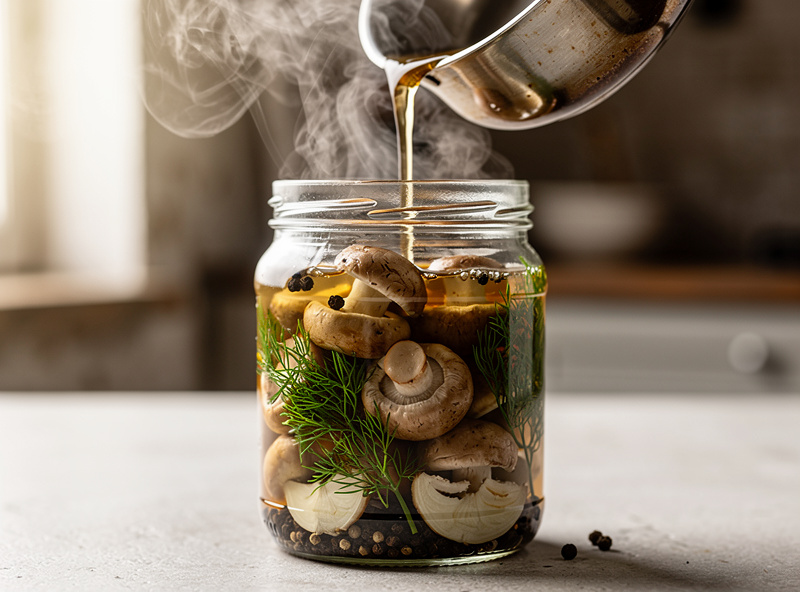
Always par-cook the mushrooms first — never pickle them raw. A 5-minute simmer or sauté drives out the water that would otherwise dilute the brine, sets the texture so they stay pleasantly firm rather than going slimy, and makes them digestible. Raw mushrooms in brine weep liquid, soften, and turn the pickle cloudy. This par-cook step is the same texture-protecting logic behind freezing mushrooms.
Best Mushrooms for Pickling
The best pickling mushrooms are firm species that hold their texture in acid: button and cremini, oyster, king oyster, shiitake, and the honey mushrooms that Eastern European cooks have pickled for generations. Soft, delicate species turn to mush in brine, so the rule mirrors freezing — dense and firm pickles well, fragile does not.
King oyster is my favourite for pickling because it can be sliced into thick coins that stay meaty and snappy for weeks. Oyster fronds pickle fast and make a superb sandwich and antipasto component. Button mushrooms are the traditional choice and the most forgiving for a first batch. If you are pickling foraged honey mushrooms, cook them especially thoroughly first — raw honey mushrooms cause stomach upset — and follow the identification cautions in the mushroom foraging guide.
Pickle Styles Compared
Once you have the base method, the flavour profile is yours to shape. The table compares the styles I rotate through, with the safety note for each, since storage method is where pickling goes wrong.
| Style | Acid / Flavour Base | Storage | Shelf Life | Safety Note |
|---|---|---|---|---|
| Quick fridge pickle | 1:1 vinegar-water, salt, sugar | Refrigerator | 3-4 weeks | Safest; no canning needed |
| Dill and garlic | Cider vinegar, dill, garlic | Refrigerator | 3-4 weeks | Keep submerged in brine |
| Sweet-and-sour | Vinegar, extra sugar, chilli | Refrigerator | 3-4 weeks | Safe; higher sugar |
| Oil-marinated antipasto | Acidified first, then oil | Refrigerator only | 4 days if garlic included, up to 1 week garlic-free | Never store in oil at room temp |
| Hot-pack canned | Tested 5% vinegar recipe | Pantry (sealed) | 12 months | Use a tested recipe; do not improvise acidity |
| Lacto-ferment (different method) | 2% salt brine, no vinegar | Refrigerator | 4-6 months | Cultivated mushrooms only |
For most people the quick fridge pickle and its flavoured variants are all you need. The sweet-and-sour with a sliced chilli is the one that disappears fastest at my table; the dill-and-garlic is the classic deli pickle. Reach for canning only if you genuinely need shelf-stable jars, and only with a tested recipe — covered next.
The Low-Acid Safety Facts
Mushrooms are a low-acid food, which means improperly canned mushrooms can support Clostridium botulinum — the safety point that separates fridge pickling from shelf canning. A refrigerator quick pickle is safe because cold storage and vinegar together prevent the bacterium. But you cannot simply water-bath-can plain mushrooms in water: that is the classic botulism mistake.
If you want shelf-stable jars, you have two safe routes: acidify with a tested pickling recipe that brings the whole jar to a sufficiently low pH using 5 percent vinegar, then water-bath process — the National Center for Home Food Preservation’s marinated whole mushrooms recipe is exactly this kind of validated, tested method, worth reading even if you don’t follow it verbatim; or pressure-can plain mushrooms at the NCHFP’s validated time and pressure for whole or sliced mushrooms, adjusted for your altitude. Do not improvise the vinegar ratio on a canned recipe — the acidity is what makes it safe, not a guess.
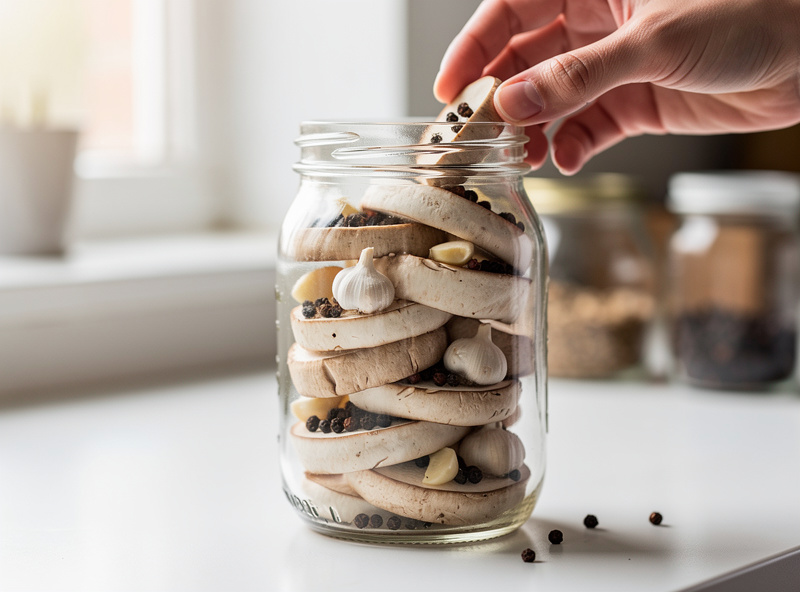
The oil-marinated antipasto deserves its own warning: mushrooms covered in oil at room temperature are a textbook botulism risk because oil creates the oxygen-free environment the bacterium needs. Always acidify mushrooms in vinegar first, then cover with oil, store in the fridge — and if garlic is part of the mix, I’d rather be conservative than clever about the timeline. NCHFP’s own guidance on garlic-in-oil caps refrigerated storage at 4 days unless you’re following a validated, pH-tested recipe, because garlic is a known soil-borne C. botulinum vector even once it’s in oil. My acidify-first antipasto isn’t a lab-tested recipe, so for a garlic-and-mushroom jar I treat that 4-day window as the safe ceiling, not the “one to two weeks” I’d otherwise be tempted to claim — garlic-free, well-acidified oil-mushroom mixes can hold a bit longer refrigerated, but garlic changes the math. Never leave garlic-and-mushroom-in-oil on the counter. Treat oil marination as a short-term fridge preparation, not a preservation method.
Serving and Using Pickled Mushrooms
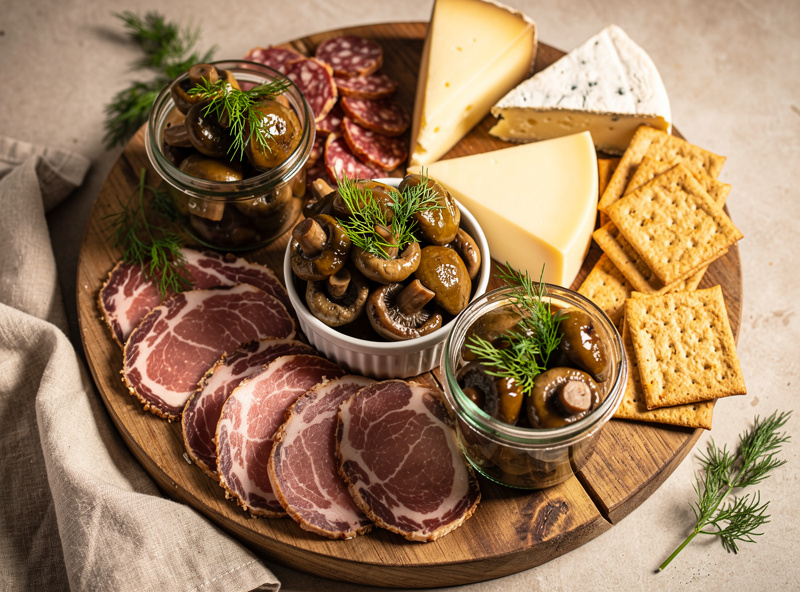
Pickled mushrooms are a condiment that punches above their effort: they cut through rich, fatty dishes the way any good pickle does. I put them on cheese and charcuterie boards, chop them into potato salad and grain bowls, layer them onto sandwiches and burgers, and serve them straight as a bar snack with a cold drink. The brine itself makes a sharp salad dressing base.
Keep the mushrooms fully submerged under the brine between uses — any pieces poking above the liquid can spoil. Use a clean fork each time rather than fingers, and they will hold their quality for the full three to four weeks. If you find yourself making them constantly, that is the signal to try the longer-keeping lacto-ferment or to start cooking the surplus fresh instead — both routes are mapped out across the cooking and preservation cluster.
Gear I reach for: a set of wide-mouth mason jars for packing and storing, a canning funnel for clean hot-brine pours, and a set of glass weights to keep the mushrooms submerged under the brine.
Disclosure: MycoMansion is reader-supported. As an Amazon Associate I earn from qualifying purchases made through links in this article, at no extra cost to you. I only point to gear I actually use or would buy for my own kitchen.
Frequently Asked Questions
What is the difference between pickled and fermented mushrooms?
Pickling adds acid directly with vinegar, preserving the mushrooms immediately and giving a tangy pickle in 24 hours. Fermenting uses a salt brine and time so bacteria produce the acid, taking 7-14 days and giving a deeper, funkier flavour. Pickling is faster and more foolproof; both keep mushrooms in the fridge.
Do you have to cook mushrooms before pickling them?
Yes, always par-cook for about 5 minutes first. Cooking drives out water that would dilute the brine, sets the texture so the mushrooms stay firm rather than slimy, and makes them digestible. Raw mushrooms in brine weep liquid, soften, and turn the pickle cloudy. Never pickle mushrooms raw.
How long do pickled mushrooms last?
Refrigerator quick pickles keep three to four weeks as long as the mushrooms stay fully submerged in the brine and you use a clean fork. Oil-marinated antipasto mushrooms are more conservative: about 4 days refrigerated if garlic is part of the mix, per NCHFP’s own garlic-in-oil guidance, or up to a week if it’s garlic-free and well-acidified. Properly canned pickles with a tested 5 percent vinegar recipe keep about 12 months in the pantry.
Are home-canned mushrooms safe?
Only with a validated method. Mushrooms are low-acid, so you cannot simply water-bath-can them in water without risking botulism. Use a tested pickling recipe that acidifies the jar with 5 percent vinegar before water-bath processing (NCHFP publishes one), or pressure-can plain mushrooms at NCHFP’s validated time and pressure. Refrigerator pickles avoid the risk entirely.
Can you store mushrooms in oil?
Only briefly and only in the fridge. Mushrooms covered in oil at room temperature are a botulism risk because oil creates the oxygen-free environment the bacterium needs. Acidify the mushrooms in vinegar first, then cover with oil, and refrigerate. If garlic is in the jar, NCHFP’s own garlic-in-oil guidance caps refrigerated storage at 4 days unless you’re using a validated, pH-tested recipe, since garlic is a known soil-borne botulism vector even once it’s in oil; garlic-free, well-acidified mixes can hold a bit longer. Never leave mushroom-and-garlic-in-oil on the counter.
What mushrooms are best for pickling?
Firm species that hold their texture in acid: button and cremini, oyster, king oyster, shiitake, and honey mushrooms. King oyster sliced into coins stays especially meaty and snappy. Avoid soft, delicate species, which turn to mush in brine. The same firm-versus-fragile rule applies to freezing mushrooms.