
The best mushroom stock is built from the parts you would otherwise throw away: shiitake stems, oyster bases, and trimmings, plus a handful of dried mushrooms for depth. Roast or sauté them first, simmer for about 45 minutes — no longer, or the flavour turns muddy — and strain. The result is a dark, savoury, intensely umami base that outperforms any cube and costs nothing.
I keep a “stock bag” in the freezer and drop every stem and trimming into it as I cook, then build a batch whenever it fills. Between that, the dried mushrooms on the shelf, and the soaking water I never pour away, mushroom stock is the most economical thing in my kitchen. Here is how to build it, from a quick weeknight dashi to a concentrated demi you can freeze in cubes.
Build It From Scraps
Mushroom stock starts with the trimmings most cooks discard. Shiitake stems are too fibrous to eat but are pure concentrated flavour; oyster and king oyster bases, stem ends, and slightly past-prime caps all belong in the pot. Collect them in a freezer bag as you cook through the week, and when the bag is full you have the makings of a stock for free.
The single best scrap is the soaking water from rehydrating dried shiitake — it is already an instant umami-rich stock and should never go down the drain. Strain it through a fine sieve to catch grit and use it as the liquid base for the whole batch. This is the same reserved-liquid trick that runs through shiitake recipes and the wider cooking and preservation hub.
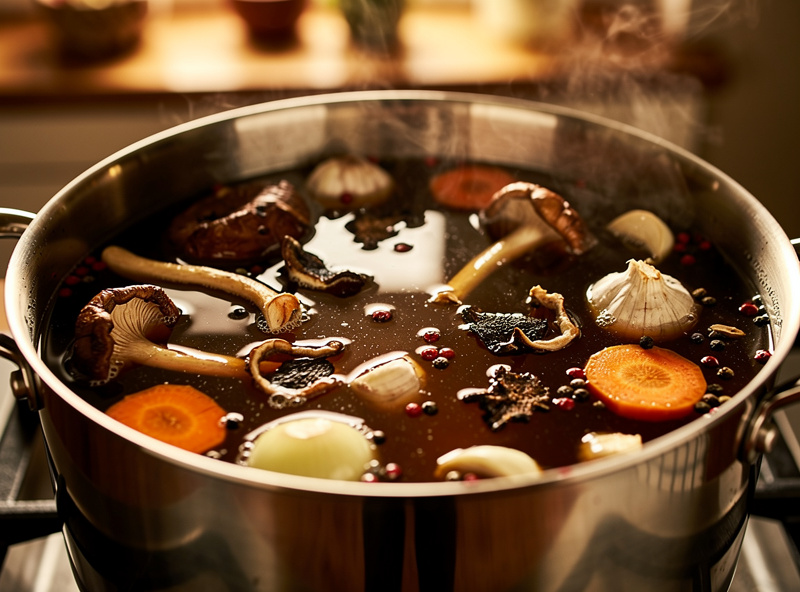
A handful of dried mushrooms transforms a scrap stock into something with real backbone. Dried shiitake brings deep savoury weight because drying concentrates guanylate, a nucleotide that amplifies the perceived umami of the glutamate already in the mushroom rather than just adding more flavour on top (Sugimoto Shoten, a Japanese dried-shiitake producer that documents the chemistry). A few dried porcini add a nutty woodland note on top of that base that makes the stock taste expensive. If you keep a mushroom umami powder, a teaspoon stirred in at the end is the fastest way to deepen a stock that tastes thin.
Roast First for Depth
For the richest stock, sauté or roast the mushrooms and aromatics before adding water. Browning triggers the Maillard reaction, building a layer of toasty, savoury depth that a raw-start stock never reaches. Roast scraps with onion, carrot, and garlic at 220 C for 20 minutes until caramelised, or sauté them hard in the stock pot, then deglaze and add water.
From there the method is simple: cover the roasted mushrooms and aromatics with cold water, add a bay leaf, a few black peppercorns, and a splash of soy sauce, bring to a gentle simmer, and cook for about 45 minutes. Do not boil it hard or simmer it for hours — unlike a beef bone stock, mushroom flavour peaks around the 45-minute mark and then turns increasingly bitter and muddy. Strain through a fine-mesh sieve and discard the spent solids.
Stock and Broth Styles Compared
Stock is a lighter, unseasoned base; broth is richer and seasoned to drink on its own. The table compares the styles I make, with the simmer time and best use for each.
| Style | Key Ingredients | Simmer Time | Flavour | Best Use |
|---|---|---|---|---|
| Basic scrap stock | Stems, trimmings, aromatics | 45 min | Clean, savoury | Risotto, soup base |
| Roasted mushroom stock | Roasted scraps, dried porcini | 45 min | Deep, toasty | Gravy, braises |
| Shiitake-kombu dashi | Dried shiitake, kombu | Cold-steep, no boil | Clean umami | Ramen, miso soup |
| Rich mushroom broth | Stock plus miso, soy, ginger | 45 min + season | Full, drinkable | Sipping, noodle bowls |
| Concentrated demi | Reduced stock | Stock plus 30-40 min reduce | Intense, glossy | Pan sauces, freezer cubes |
| Quick soak-water stock | Reserved shiitake liquid | None | Instant umami | Cook rice, deglaze |
The shiitake-kombu dashi is the one to learn first — it needs no cooking at all. Steep a few dried shiitake and a strip of kombu in cold water in the fridge overnight, then lift them out. The cold extraction gives a remarkably clean, deep umami with none of the bitterness a hot boil can introduce, and it is the backbone of a good miso soup or ramen.
Mistakes That Ruin a Batch
The most common mistake is letting the pot run too long, thinking more time means more flavour. It does not — past about 45 minutes the mushrooms have given up what they have, and the remaining time just breaks down more solids into the liquid, which is what turns a clean stock muddy and slightly bitter. If a batch tastes flat after 45 minutes, the fix is more mushrooms or a longer roast beforehand, not a longer simmer.
The second mistake is skipping the strain-through-a-fine-sieve step, or worse, pressing hard on the solids to squeeze out “every last drop.” Pressing forces fine particulate and bitter compounds from spent mushroom flesh into an otherwise clean stock, clouding it and dulling the flavour. Let it drain on its own, and if you want every bit of that flavour, blend the drained solids into a duxelles instead rather than forcing them through the sieve.
The third is salting the stock itself instead of the finished dish. An unsalted stock reduces cleanly into a concentrated demi without ever risking an over-salted sauce; a salted one gets more concentrated and more salty every time it reduces, which is how a good pan sauce ends up inedible. I only season at the broth or dish stage, never in the pot.
Turning Stock Into Broth
A broth is stock taken further with seasoning so it can be sipped on its own. Take a finished mushroom stock and build it up with a spoon of miso, a splash of soy and rice vinegar, grated ginger, and a little toasted sesame oil. Warm it through without boiling the miso, and you have a savoury, warming broth that stands alone or carries noodles and vegetables.
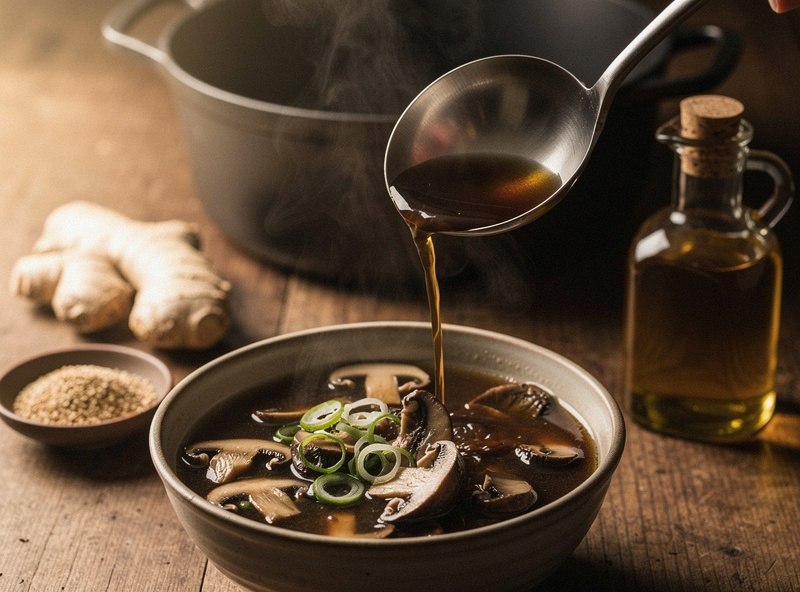
Keep salt light in the stock itself and season at the broth or dish stage — an unsalted stock is far more versatile because you control the final seasoning when you know what it is going into. A teaspoon of tomato paste fried in with the aromatics adds colour and a savoury roundness, and a Parmesan rind dropped in during the simmer gives a non-vegetarian version extra depth. These are the same flavour-building levers behind a good oyster mushroom pan sauce.
Storing and Freezing Stock
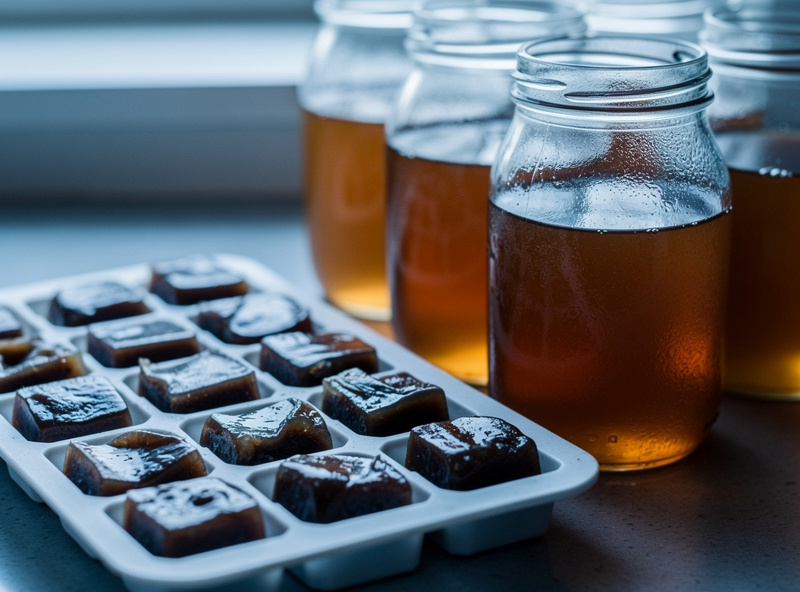
Mushroom stock is still a cooked, unsalted liquid, and it follows the same rules as any other homemade broth: 3 to 4 days in the fridge in a sealed container, and it stays safe well beyond that in the freezer but starts losing quality after 2 to 4 months (University of Nebraska-Lincoln Extension). I cool mine quickly in a shallow container before it goes in the fridge — a full pot of hot stock cooling slowly on the counter is the same food-safety mistake as leaving any other broth out too long. The most useful way to freeze it is concentrated and portioned: reduce the strained stock by half to a glossy demi, cool it, and freeze in an ice-cube tray. Each cube is a hit of intense mushroom flavour that drops straight into a sauce, risotto, or gravy with no thawing.
Freezing stock in cubes uses the same portion-and-vacuum logic as the rest of the freezer, covered in how to freeze mushrooms. For longer storage, reduce the stock to a thick syrup and freeze that — it takes minimal space and reconstitutes into a powerful base. The spent solids strained out of the pot can go to the compost or, surprisingly, be blended into a savoury duxelles-style spread if they were not boiled to bitterness.
Gear I reach for: a heavy stainless stock pot with an even base, a fine-mesh strainer for a clear pour, and a silicone ice-cube tray for freezing concentrated stock in portions.
Disclosure: MycoMansion is reader-supported. As an Amazon Associate I earn from qualifying purchases made through links in this article, at no extra cost to you. I only point to gear I actually use or would buy for my own kitchen.
Frequently Asked Questions
What do you use to make mushroom stock?
Build it from scraps: shiitake stems, oyster and king oyster bases, stem ends, and past-prime caps collected in a freezer bag. Add a handful of dried mushrooms for depth and aromatics like onion, carrot, garlic, bay, and peppercorns. The reserved soaking water from dried shiitake is itself an instant stock base.
How long do you simmer mushroom stock?
About 45 minutes at a gentle simmer. Unlike bone stock, mushroom flavour peaks around the 45-minute mark and then turns increasingly bitter and muddy if cooked longer. Do not boil it hard or simmer for hours. Roasting the mushrooms first adds depth without needing extra simmer time.
What is the difference between mushroom stock and broth?
Stock is a lighter, unseasoned base used to build other dishes, while broth is richer and seasoned to sip on its own. Turn stock into broth by adding miso, soy, ginger, and a little sesame oil, then warming it through without boiling. Keep the stock itself lightly salted for versatility.
How do you make mushroom dashi without cooking?
Steep a few dried shiitake and a strip of kombu in cold water in the fridge overnight, then lift them out. The cold extraction gives a clean, deep umami with none of the bitterness a hot boil can cause. It is the ideal base for miso soup and ramen and takes no active cooking.
How long does mushroom stock last?
Treat it like any other homemade broth: 3 to 4 days in the fridge in a sealed container, and best quality for 2 to 4 months in the freezer, per University of Nebraska-Lincoln Extension guidance on leftover storage. Cool it quickly in a shallow container before refrigerating rather than leaving a full pot to cool on the counter. The best way to freeze it is reduced by half to a concentrated demi and portioned in an ice-cube tray, so each cube drops straight into a sauce or risotto with no thawing. Reduce further to a syrup for compact storage.
Should you roast mushrooms before making stock?
Yes, for the richest stock. Browning the mushrooms and aromatics first triggers the Maillard reaction and builds a toasty, savoury depth a raw-start stock never reaches. Roast scraps with onion, carrot, and garlic at 220 C for 20 minutes, then deglaze and add water before simmering for 45 minutes.
Related Articles
- Mushroom Cooking and Preservation: The Complete Kitchen Guide
- Shiitake Mushroom Recipes: Fresh, Dried, and Umami-Forward
- Mushroom Powder and Seasoning: Umami Blends From Dried Mushrooms
- How to Freeze Mushrooms: Par-Cook, Vacuum-Pack, and Store
- How to Cook Oyster Mushrooms: Sear Them Right Every Time