
Growing pink oyster mushrooms is the warm-weather answer to oyster cultivation: Pleurotus djamor fruits hard at 20–30°C, colonizes faster than almost any gourmet species, and throws vivid coral-pink clusters in as little as two to three weeks from inoculation. The catch is shelf life — fresh pink oysters last barely a day or two, so they are a grow-and-eat species, not a store-it crop.
Pink is the species I run when the Swedish summer makes my grow room too warm for blue and pearl. It is fast, forgiving of heat, and genuinely striking on the plate before cooking knocks the color out. This guide covers how I grow pink from spawn to harvest, why it behaves so differently from the cool-weather oysters, and the one thing that catches everyone out — that short shelf life. For the species overview, start with the oyster mushroom growing guide.
What Makes Pink Oyster Different
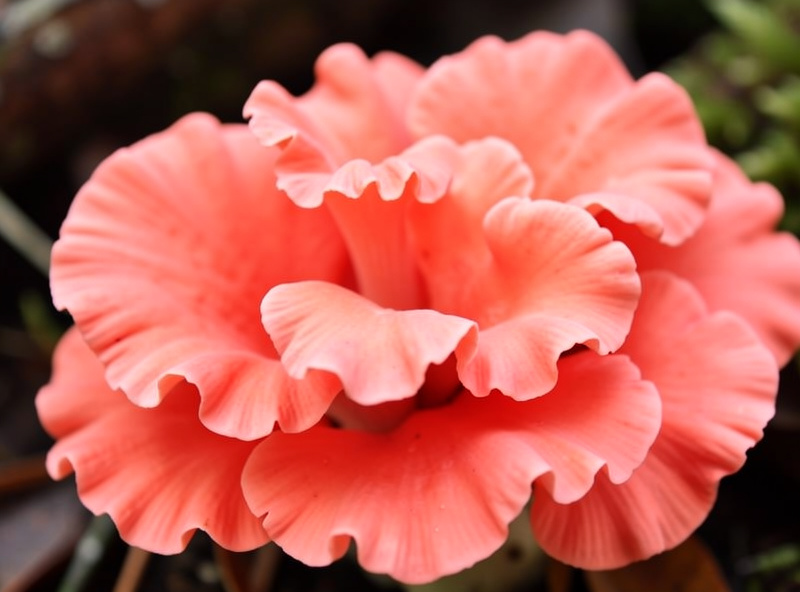
Pink oyster is a tropical species, and everything about its behavior follows from that. It wants heat (20–30°C, the opposite of blue and pearl), it colonizes blisteringly fast, it fruits in dense ruffled clusters, and it deteriorates almost as quickly as it grows. The vivid pink is at its most intense when young and fades to tan with age and disappears entirely when cooked.
Here is how pink stacks up against the cool-weather workhorses, so you can pick the right species for your room temperature.
| Trait | Pink (P. djamor) | Blue / Pearl (P. ostreatus) |
|---|---|---|
| Fruiting temp | 20–30°C | 10–20°C |
| Colonization speed | Very fast (5–10 days) | Fast (10–14 days) |
| Fresh shelf life | 1–2 days | 5–7 days |
| Best season | Summer / warm rooms | Year-round / cool rooms |
| Color when cooked | Fades to brown | Stays grey-tan |
If your space runs cool, pink will sulk and you should grow blue or pearl instead. If it runs warm, pink and golden oyster are the species that will actually thrive where the others stall.
The Best Substrate for Pink Oyster
Pink oyster fruits on the same substrates as other oysters — pasteurized straw, CVG, supplemented sawdust, and coffee grounds — but its speed and heat tolerance make it especially well suited to straw in warm conditions. Because it colonizes so fast, it is very good at outrunning contamination even on nutrient-rich substrates that would be risky with a slower species.
I run pink on pasteurized wheat straw most often; it is cheap, it yields well, and pink’s aggression means I worry less about a perfect pasteurization. CVG works just as well for a cleaner, more repeatable result. The full substrate breakdown is in the substrate guide, and the pasteurization methods are compared in straw pasteurization. Pink also grows readily on spent coffee grounds, which suit its fast, warm-loving nature.
Spawning and Speed
Pink’s defining trait at the spawn stage is raw speed. At a 1:4 or 1:5 spawn-to-bulk ratio and warm colonization temperatures around 24–28°C, pink can fully colonize a bulk substrate in 5 to 10 days — noticeably faster than blue or pearl. That speed is a real contamination advantage, because the mycelium claims the substrate before competitors can establish.
Keep the colonizing substrate warm and the process is almost foolproof. Mix spawn thoroughly through the bulk, load it into bags or a bucket, and keep it in the warmest clean spot you have. The spawn-to-bulk ratio guide covers the numbers, and the bucket method is a perfect low-effort container for pink because the warm season does the temperature work for you.
Fruiting Pink Oyster
Pink fruits at 20–30°C with high humidity (85–95%), strong fresh-air exchange, and light. It pins fast and abundantly — often the most prolific pinner of any oyster — and goes from pin to harvestable cluster in just a few days. The warmth that pink demands is exactly why it is a summer species in temperate climates; in winter you would be heating a tent constantly to keep it happy.
As with all oysters, give it plenty of fresh air or you will get leggy stems instead of full ruffled clusters. Pink’s fast metabolism means it produces CO2 quickly, so airflow matters even more than with slower species. Mist the air, not the mushrooms. The airflow balance is covered in the FAE and CO2 guide, and the humidifier setup in the fruiting chamber humidifier guide.
Harvest — Catch It Early
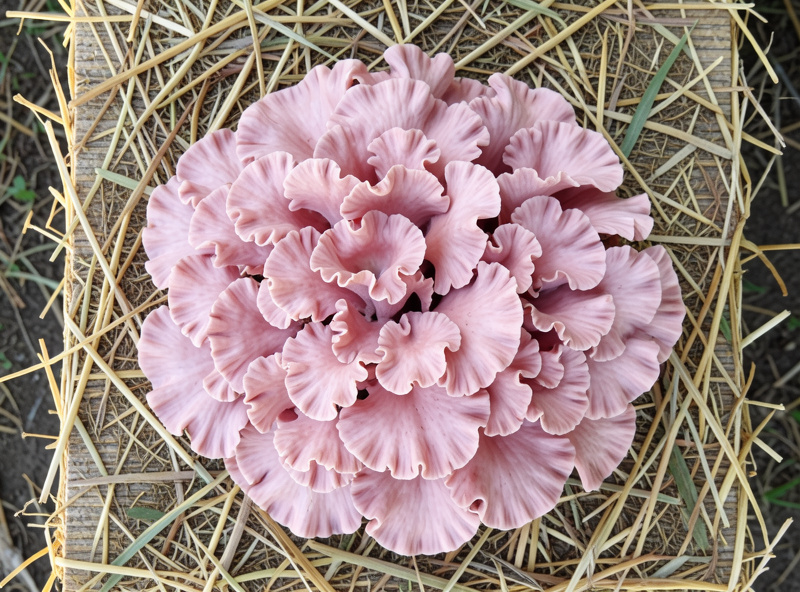
Harvest pink oyster younger than you would any other species — the moment the clusters are full but before the caps start to flatten and the color fades. Pink’s fresh shelf life is brutally short, often just 1 to 2 days even refrigerated in a paper bag, so plan to cook or preserve it almost immediately. This is not a mushroom you grow to stock the fridge.
The flavor is worth it: cooked low and slow, pink oyster develops a savory, faintly bacon-or-seafood quality that holds up in a hot pan even after the color cooks out. Because it deteriorates so fast, I dehydrate or cook any surplus the same day I pick it. For the kitchen technique, the oyster cooking guide covers getting a proper sear, and spent pink blocks have the usual second-life uses in the spent substrate guide.
Yield and Growing Pink in Containers
Pink oyster is a generous producer for its size — biological efficiency on straw runs in the same 75–100% range as other oysters, meaning roughly 0.75 to 1 lb of fresh mushrooms per pound of dry substrate, delivered fast and usually in one or two big flushes rather than the longer tail you get from slower species. Because it fruits so quickly, the second flush is often smaller and worth keeping only if the block still looks clean.
For containers, pink does beautifully in a bucket or a grow bag, and its warmth requirement means a sunny indoor spot in summer often supplies the heat for free. I keep a fan moving air past the fruiting clusters and a humidifier holding the chamber high, but otherwise pink mostly grows itself once it is warm. The full container walk-through is in the bucket method guide, and the gear basics are in the equipment guide. Apartment growers in particular get good mileage from pink in summer — the small-space setup guide shows how.
Why Pink Is a Summer Species
The single biggest mistake with pink oyster is trying to grow it cold. Below about 18°C it colonizes sluggishly and may refuse to pin at all, which feels like a failed grow when it is really just the wrong season. If your room is cool, grow blue or pearl and save pink for summer or a heated space.
The other watch-point is that pink’s speed cuts both ways: it goes over-ripe fast, and an over-mature cluster left on the block invites bacterial blotch and a sour smell. Stay ahead of it. Beyond that, pink is one of the most contamination-resistant oysters precisely because of its colonization speed — if a grow does go wrong, the contamination guide helps you make the save-or-toss call.
As an Amazon Associate I earn from qualifying purchases. A bag of pink oyster grain spawn dropped into warm pasteurized straw is the fastest way to a summer harvest.
Frequently Asked Questions
What temperature do pink oyster mushrooms need?
Pink oyster is a tropical species that fruits best at 20 to 30 degrees Celsius. Below about 18 degrees it colonizes slowly and may not pin at all, which makes it a summer or heated-space species in temperate climates.
How long do fresh pink oyster mushrooms last?
Pink oyster has a very short fresh shelf life, often just one to two days even refrigerated in a paper bag. It is a grow-and-eat species, so plan to cook or dehydrate it the same day or the day after harvest.
Why does my pink oyster lose its color when cooked?
That is normal. The vivid pink pigment breaks down with heat, so cooked pink oyster fades to brown. The color is at its most intense on young, fresh clusters and fades naturally with age even before cooking.
How fast do pink oyster mushrooms grow?
Pink is one of the fastest gourmet species. At warm temperatures it can colonize bulk substrate in 5 to 10 days and fruit a few days after pinning, putting first harvest at roughly two to three weeks from inoculation.
What does pink oyster mushroom taste like?
Cooked low and slow, pink oyster develops a savory, meaty quality often described as faintly bacon-like or seafood-like. The flavor holds up in a hot pan even after the pink color cooks out to brown.