
Beech mushrooms — sold as shimeji or clamshell — are the patience test of home cultivation. The block colonises in the usual few weeks, then it does something most gourmet species do not: it sits and matures for a further two to four weeks before it will pin, and rushing that maturation gets you nothing. The reward is a firm, nutty, never-slimy cluster of small marbled caps that holds its texture through any cooking. There are two types you will grow, brown (buna-shimeji) and white (bunapi-shimeji), and they are the same species, Hypsizygus tessellatus.
If you have grown a sawdust-block species like lion’s mane or king oyster, you already know most of the workflow here — sterilised supplemented hardwood, clean inoculation, full colonisation. What beech adds is the maturation wait and a cold, bright, humid pinning trigger. It is not a beginner mushroom, but it is one of the most satisfying once your technique is reliable. This guide assumes you have the block-growing basics from the gourmet specialty mushrooms guide; here we focus on what makes beech particular.
Brown Beech vs White Beech
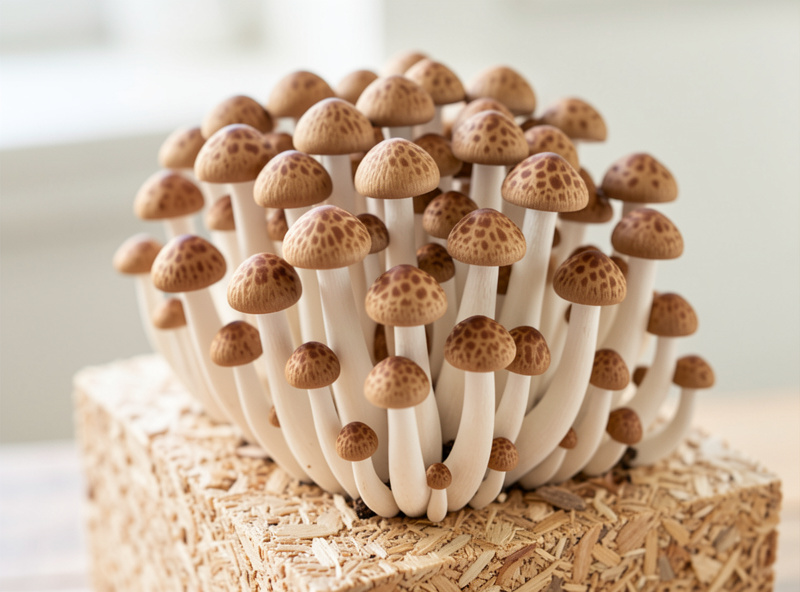
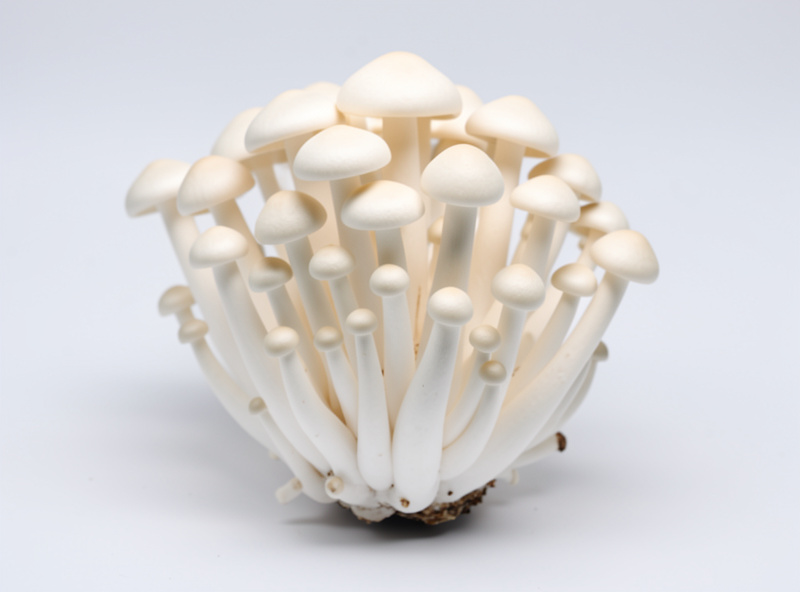
The two cultivated types are genetically very close. Brown beech, buna-shimeji, has small tan-to-brown marbled caps and is the original; white beech, bunapi-shimeji, is a paler selection with ivory caps. In the kitchen they behave almost identically — firm, nutty, slightly crunchy when cooked — with the white form often a touch milder and the brown a little more savoury. Grow whichever you can get spawn for; many growers run both in the same chamber because their conditions are identical.
| Trait | Brown Beech (buna-shimeji) | White Beech (bunapi-shimeji) |
|---|---|---|
| Cap colour | Tan to brown, marbled | Ivory to white |
| Flavour cooked | Nutty, savoury | Nutty, milder |
| Texture | Firm, crunchy | Firm, crunchy |
| Substrate | Supplemented hardwood | Supplemented hardwood |
| Maturation wait | 2–4 weeks | 2–4 weeks |
| Eaten raw? | No — bitter raw | No — bitter raw |
A word on the naming, because it trips people up. What you buy as spawn labelled “shimeji,” “beech mushroom,” or “clamshell” is almost always Hypsizygus tessellatus — the species in this guide. The word shimeji in Japanese is broader and historically refers to several clustered mushrooms, including true shimeji (Lyophyllum shimeji), which is largely a wild, mycorrhizal mushroom not practically cultivated at home. For a home grower, that distinction is academic: the cultivable, block-grown shimeji is Hypsizygus, and that is what every retailer means when they sell shimeji spawn. Do not go looking to cultivate the wild Lyophyllum type — it does not grow on a sawdust block the way these do.
One rule applies to both and it matters: beech mushrooms must be cooked. Raw, they are unpleasantly bitter; thorough cooking removes the bitterness entirely and brings out the nutty flavour and firm bite they are prized for. This is not a mushroom to nibble raw off the block.
Substrate and Spawn
Beech is a wood-lover and wants a rich, sterilised substrate. A Masters Mix of hardwood sawdust and soy hull is ideal, and a supplemented sawdust block works well too. The supplementation that drives good yields also makes the substrate a feast for contaminants, so it must be sterilised in a pressure canner, not pasteurised. Beech is slower and less aggressive than oyster, which means it gives contaminants more time to take hold — clean technique counts for more here than on a forgiving species.
Grow it in filter-patch bags or wide jars. Inoculate sterilised, cooled substrate with grain spawn or liquid culture, and keep everything scrupulously clean during transfer; a slow coloniser punishes a sloppy inoculation. Colonise in the dark at room temperature. The block will turn solid white over a few weeks, and this is the point where beginners make their mistake — they see a fully white block and expect mushrooms. Beech is not done yet.
The Maturation Wait
After full colonisation, beech needs a maturation period before it can fruit. Leave the colonised block at room temperature, still sealed, for another two to four weeks. During this time the mycelium consolidates and often develops a slightly bumpy, sometimes pigmented surface — for the brown form this can look like a tan crust forming. This is normal and necessary. The block is building the reserves it needs to push a cluster, and a block fruited before it has matured gives a weak, aborted flush or nothing at all.
This wait is the single biggest reason home growers struggle with beech, because it runs against the instinct that a white block is a ready block. Patience is the technique. I treat the maturation wait the same way I treat a shiitake block browning or a salami losing weight in the curing chamber — it is finished when it is finished, not when I want it to be. Resist the urge to open and check constantly; just let it sit somewhere clean and stable.
The Timeline From Inoculation to Harvest
It helps to see the whole calendar before you start, because beech is a longer commitment than most gourmet species and knowing that up front stops you giving up halfway. From inoculating a sterilised block, expect roughly two to three weeks for full colonisation at room temperature, then a further two to four weeks of maturation while the block sits sealed, then one to two weeks in the fruiting chamber from trigger to harvest. All in, you are looking at somewhere between six and nine weeks from inoculation to the first cluster on your cutting board.
That is a long time for a block to stay vulnerable, which is the real reason beech rewards good technique rather than enthusiasm. A fast species like oyster is forgiving partly because it is in and out before a contaminant can win the race; beech gives slow contaminants weeks of opportunity. The practical takeaway is to over-invest in the sterilisation and inoculation steps for this species in particular — a clean start is worth more here than anywhere else in the gourmet line-up. If you run several blocks at once, stagger the inoculation dates so you are not gambling the whole batch on a single clean session, the same logic I apply to grain spawn jars.
Triggering and Fruiting the Cluster
Once the block has matured, you induce pinning with a combination of cold, light, humidity, and fresh air. Drop the temperature to around 13 to 18°C — a cool initiation, cooler than the room it colonised in — and introduce light and good fresh-air exchange. Expose the substrate surface by opening the bag or cutting a fruiting hole, and move the block into a humid fruiting chamber at high humidity. The cold shock and environmental change tell the matured mycelium it is time.
Pins appear as a dense carpet of tiny dark dots that develop into the characteristic clustered bouquet, dozens of small mushrooms on slender stems rising together. Beech wants more fresh air than enoki — you are aiming for normal cap development, not elongation — so keep the FAE and humidity balance tilted toward good air exchange while keeping the surface from drying. Harvest the whole cluster by cutting at the base when the caps have opened but are still firm and convex. Beech typically gives one strong flush and sometimes a smaller second; the flushes and harvest guide covers reading the timing.
Kitchen and Storage
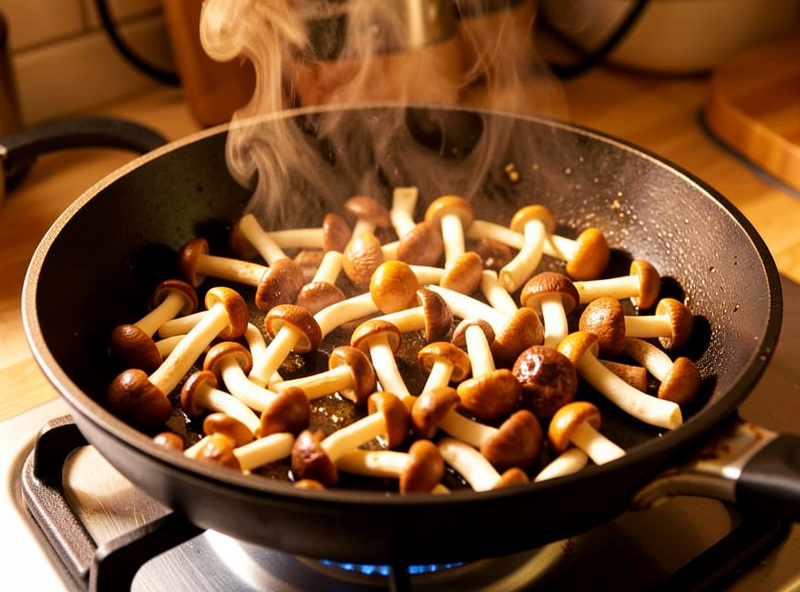
Beech mushrooms are a cook’s favourite because they keep their shape and bite where softer mushrooms collapse. Separate the cluster into individual mushrooms, trim the dense base, and cook them thoroughly — sauté until golden, add to stir-fries late, or roast them. The bitterness of the raw mushroom vanishes with heat and leaves a clean, nutty, slightly crunchy result. They take well to soy, butter, and garlic, and they hold up in longer-cooked dishes far better than oyster or enoki.
Fresh beech keeps well for a gourmet mushroom — up to a week in a paper bag in the fridge, longer than the fragile enoki — because the firm caps resist bruising. If a flush outpaces the kitchen, they sauté-and-freeze nicely. The same firm texture that makes them good to cook makes them forgiving to store.
This durability is part of why beech is worth the patience it demands. An enoki bundle has to be cooked within days; a beech cluster gives you a week of options and survives a long braise without turning to mush. For a grower, that means a beech flush is less of a race against the fridge than most specialty species, and the firm, marbled clusters look genuinely impressive on the plate — a payoff that suits the weeks of waiting that went into them. Out of all the slow species I run, beech is the one whose finished mushroom most clearly justifies the calendar it costs.
Common Beech Problems
The number one issue is fruiting too early — a white but unmatured block that gives a feeble flush or none. The fix is simply waiting the extra weeks. The second is contamination during the long, slow colonisation; because beech is not aggressive, an under-sterilised block or a sloppy transfer often loses out to green Trichoderma or bacterial wet spot, both covered in the contamination guide. A block that matured but will not pin usually needs a stronger trigger — more cold, more light, more fresh air. And dried, aborting pins mean the fruiting surface is too dry; raise humidity. If beech feels like a lot of conditions to juggle, it is, which is why I steer first-timers to easier species first and flag the usual traps in the beginner mistakes guide before they tackle the patience species.
Frequently Asked Questions
Why won’t my beech mushroom block fruit even though it’s fully white?
Beech needs a maturation period after colonisation. Leave the fully colonised block sealed at room temperature for another two to four weeks before trying to fruit it. A white block is not a ready block, and fruiting it too early gives a weak, aborted flush or nothing at all.
Are brown and white beech mushrooms different species?
No. Both are Hypsizygus tessellatus. Brown beech (buna-shimeji) is the original tan-capped form and white beech (bunapi-shimeji) is a paler ivory selection. They grow under identical conditions and cook almost the same, with the white form slightly milder and the brown a little more savoury.
Can you eat shimeji mushrooms raw?
No. Beech and shimeji mushrooms are unpleasantly bitter when raw and must be cooked. Thorough cooking removes the bitterness completely and brings out the nutty flavour and firm, slightly crunchy texture they are prized for. Always sauté, stir-fry, or roast them rather than eating them raw.
What temperature does beech mushroom need to fruit?
Around 13 to 18 degrees Celsius for fruiting initiation, which is cooler than the room temperature it colonises at. The drop in temperature, combined with light, high humidity, and good fresh-air exchange, is what triggers a matured block to pin into the clustered bouquet of small mushrooms.
What substrate is best for growing beech mushrooms?
A sterilised, supplemented hardwood substrate. A Masters Mix of hardwood sawdust and soy hull is ideal, or a supplemented sawdust block. Because the substrate is rich, it must be sterilised in a pressure canner rather than pasteurised, and clean technique matters because beech colonises slowly.
Is beech mushroom hard to grow for beginners?
It is one of the harder gourmet species, mainly because of the long maturation wait and its slow, non-aggressive colonisation that gives contaminants time to establish. Beginners are better served starting with oyster or wine cap and moving to beech once their sterile technique is reliable.