
Lion’s mane fruiting conditions come down to four dials — humidity, fresh-air exchange, temperature, and light — and unlike most gourmet species, the one that makes or breaks the flush is air. Hold 85–95% relative humidity and 18–21°C, give it bright indirect light, and then flood the chamber with fresh air to keep CO2 low. Stale air is the single reason a lion’s mane block grows deformed antlers instead of a solid toothed pillow.
This is the species-specific environment guide that the complete lion’s mane growing guide points to. I’ll walk through exactly what each dial does during pinning and fruiting, the numbers I run in my own tent, and how I stage the conditions down as the fruit matures so it firms up instead of going soft.
The Four Dials and Their Target Ranges
Before the detail, here is the whole environment on one card. These are the ranges I hold for Hericium erinaceus from the moment a colonized block goes into fruiting through harvest. The big shift versus colonization is that fruiting wants the opposite of an incubation shelf: cooler, brighter, wetter, and far more air.
| Dial | Colonization | Fruiting target |
|---|---|---|
| Temperature | 20–24°C | 18–21°C |
| Relative humidity | n/a (sealed) | 85–95% |
| Fresh-air exchange | Minimal | High (4–6+/day) |
| Light | Dark | Indirect, 8–12 hrs |
| CO2 (rough) | High, fine | Below ~800 ppm ideal |
Fresh-Air Exchange: The One That Actually Matters
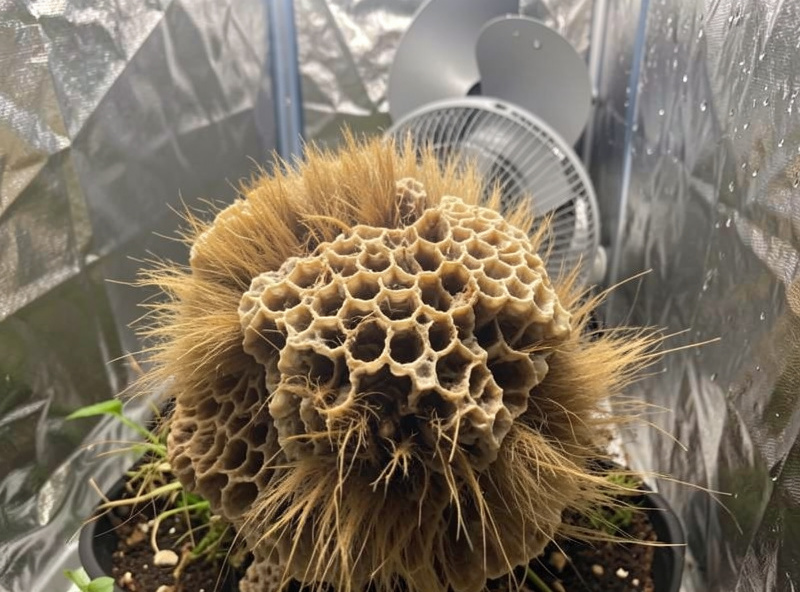
If you only get one dial right, make it fresh-air exchange. Lion’s mane reads carbon dioxide as a “keep stretching” signal, so a block fruiting in stale, CO2-heavy air grows long branching coral or antler shapes with no spines. The correct toothed body only forms when CO2 stays low — I aim for plenty of air changes, a small circulation fan running, and I’d rather over-ventilate and re-humidify than let the chamber go stagnant.
The trap is that FAE and humidity fight each other: every air change dumps the moist air and the surface dries. So you don’t just crank a fan — you balance it against the humidifier. In my Martha-style tent I run an ultrasonic humidifier on a humidistat with scheduled fan-driven exchanges, so when the fan pulls fresh air the humidifier catches the room back up. The full numbers and the physiology behind it are in FAE and CO2 for mushroom fruiting. If your block is branching, the answer is always more air first.
Humidity: High, But Staged Down
Lion’s mane fruits best at 85–95% relative humidity, but holding the very top of that range all the way to harvest gives you a soft, water-logged fruit that bruises and spoils fast. My approach is to keep humidity high during pinning and early growth — when the primordia are fragile and dry out instantly — then ease it toward the lower 80s as the spines elongate, which firms the fruit up for a better texture and longer shelf life.
The single biggest beginner mistake here is opening the chamber to “check on it” during pinning. Every time you open the tent you drop the humidity off a cliff, and lion’s mane primordia abort or crust over from a single bad swing. Watch through the plastic, and trust a calibrated hygrometer rather than your eyes. If you see the surface drying or the spine tips browning, that’s your humidity (or excessive dry FAE) talking. Getting the pinning trigger itself right is covered in triggering your first pins.
Temperature: A Comfortable Window
Temperature is the forgiving dial. Lion’s mane fruits across a fairly wide band, but 18–21°C is the sweet spot for dense, fast development. Cooler than about 15°C and growth crawls; much warmer than 24°C and you both slow pinning and tilt the odds toward contamination, because the same warmth that the block likes, mold likes more. I deliberately drop the temperature a few degrees from the colonization shelf when I introduce fruiting — that small cold shock is part of the pinning trigger, alongside the light and air change.
One practical note for home growers in a warm room: lion’s mane is more heat-tolerant than oyster for fruiting, so you have a little slack in summer, but the contamination risk climbs with the thermometer. If your space runs hot, prioritize getting blocks into fruiting quickly after full colonization rather than letting them sit warm.
Light: A Cue, Not Photosynthesis
Mushrooms don’t photosynthesize, but lion’s mane uses light as a directional and timing cue — it tells the block “you’re at a surface, fruit here.” Bright indirect light for 8–12 hours a day is plenty; a north-facing window, ambient room light, or a cheap LED on a timer all work. You do not need anything strong or warm. If you’re choosing a dedicated fixture, I cover color temperature and schedule in best grow light for mushrooms.
What light won’t do is fix bad air. I mention this because new growers sometimes add a grow light hoping it’ll solve deformed growth — it won’t. Branching is CO2; browning is dry air; light only governs where and roughly when pinning happens.
Staging the Conditions Across One Flush
Lion’s mane isn’t a set-and-forget species — the ideal conditions shift across the roughly two-week arc from cut block to harvest, and matching that arc is what separates a firm, sweet flush from a soft one. Here’s how I move the dials in practice.
Days 1–4, the pinning window. Right after I cut the block I push humidity to the top of the range, drop the temperature a couple of degrees, switch the light on a timer, and start the fan-driven air exchanges. This is the most fragile phase: the block is deciding where to pin, and a humidity crash or a stale pocket here either aborts the pins or branches them. I do not open the chamber at all in this window — everything is watched through the plastic.
Days 5–10, the bulk. Once primordia have set and started rounding into a recognizable body, I hold humidity high but lean harder on fresh-air exchange, because the growing mass produces more CO2 and is more prone to branching the bigger it gets. This is where most antler problems actually appear — not at pinning, but mid-growth when the fan schedule that was fine for a small pin can’t keep up with a big block. If it starts to branch, more air, immediately.
Days 10–14, firming up. As the spines lengthen toward harvest I ease humidity down into the low 80s. That slight drying tightens the texture, reduces bruising, and buys shelf life. Keep the air moving. You’re now watching for the harvest cue — spines a quarter-inch or longer but not yet yellowing — which the harvesting guide covers in detail.
If you’d rather not babysit the dials by hand, this whole arc automates well. A humidistat-driven humidifier plus a fan on a repeat-cycle timer covers 90% of it; controllers and sensors handle the rest. I cover the gear in grow room automation and fruiting chamber sensors.
Reading the Block: What Good and Bad Conditions Look Like
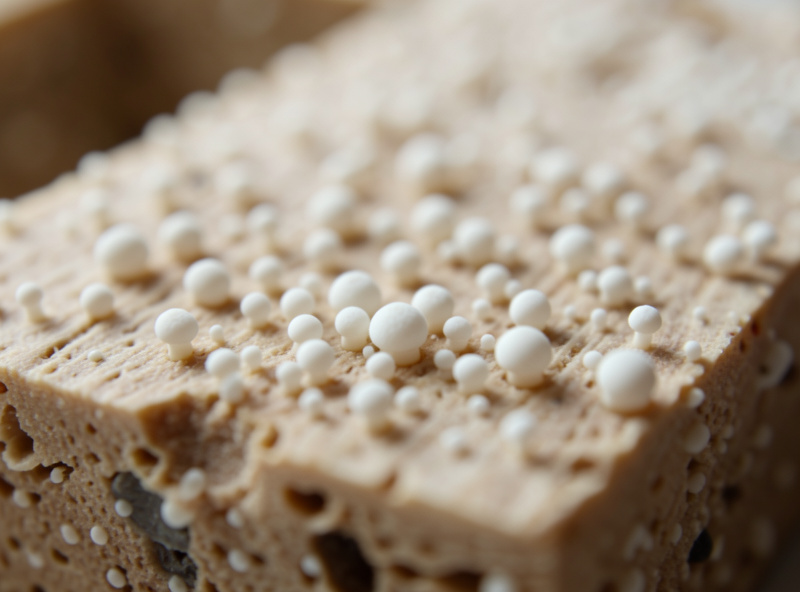
The beauty of lion’s mane is that it tells you exactly what your environment is doing. A block in good conditions forms compact white primordia that develop into a single rounded mass with downward-hanging spines. A block in stale air branches into antlers. A block that’s too dry develops brown, crusty, or cracked spine tips and stalls. A block that’s too wet and poorly ventilated goes soft, sometimes with a slimy or sour patch that’s tipping into bacterial blotch.
Because the feedback is so visual, you can usually correct mid-flush: more air for branching, more humidity for crusting, more air and less standing water for sliminess. The full symptom-to-fix matrix lives in lion’s mane growth troubleshooting, and once you’ve dialed the environment, harvest timing is the next call — covered in harvesting lion’s mane correctly. Whether you’re running a big bag or a jar changes the fruiting geometry a little, which I get into in block vs jar method.
Frequently Asked Questions
What humidity does lion’s mane need to fruit?
Lion’s mane fruits best at 85 to 95 percent relative humidity. Keep it near the top of that range during pinning when primordia are fragile, then ease it toward the low 80s as the spines elongate to firm the fruit up and improve shelf life.
Why is fresh-air exchange so important for lion’s mane?
Lion’s mane reads high carbon dioxide as a signal to keep stretching, so a block in stale air grows long branching antlers instead of a solid toothed body. Strong fresh-air exchange keeps CO2 low so the mushroom forms proper spines.
What temperature is best for fruiting lion’s mane?
18 to 21 degrees Celsius gives the densest, fastest development. Lion’s mane tolerates a wider band, but below about 15C growth crawls and above 24C you slow pinning and raise contamination risk. A few degrees of cooling helps trigger pins.
Does lion’s mane need light to fruit?
It needs light as a cue, not for energy. Bright indirect light for 8 to 12 hours a day tells the block where to fruit and roughly when. Ambient room light, a north window, or a timed LED all work. Light will not fix deformed growth caused by stale air.
Why does my lion’s mane look like white coral or antlers?
That branching shape is too much carbon dioxide from poor fresh-air exchange. The block is stretching instead of forming spines. Increase ventilation in the chamber and the next flush will form a normal rounded toothed body.