
Mushrooms do not photosynthesize, so the goal of a grow light is not energy — it is a pinning trigger and a direction cue. A cheap 6500K daylight LED running 12 hours a day at low intensity is all most gourmet species need to pin evenly and grow toward the light instead of into deformed knots. After fruiting oyster, lion’s mane, king oyster, and shiitake under everything from a window to dedicated LED strips, my verdict is that growers massively overspend here: you want the right color temperature and a timer, not wattage.
This guide covers what light actually does for fruiting mushrooms, the color temperature and schedule I run, and how the few light-sensitive species differ. It belongs to the broader home mushroom equipment guide alongside the fruiting tent and humidity gear.
Why Mushrooms Need Light at All
Fungi have no chlorophyll and get all their energy from the substrate, so light is not food. Instead, most cultivated species use light as a signal to initiate pinning and as a directional cue — fruits grow toward the light source (positive phototropism), which is why blocks fruited in total darkness often produce blind, capless, twisted growth. A modest light tells the mycelium “you have reached the surface, form fruiting bodies here.”
The intensity needed is genuinely low. The common rule of thumb is enough light to read a newspaper by — roughly 500-1000 lux at the substrate. You are not driving photosynthesis, so high-output grow panels meant for plants are wasted money and add heat that fights your humidity. This is the single biggest overspend I see new growers make.
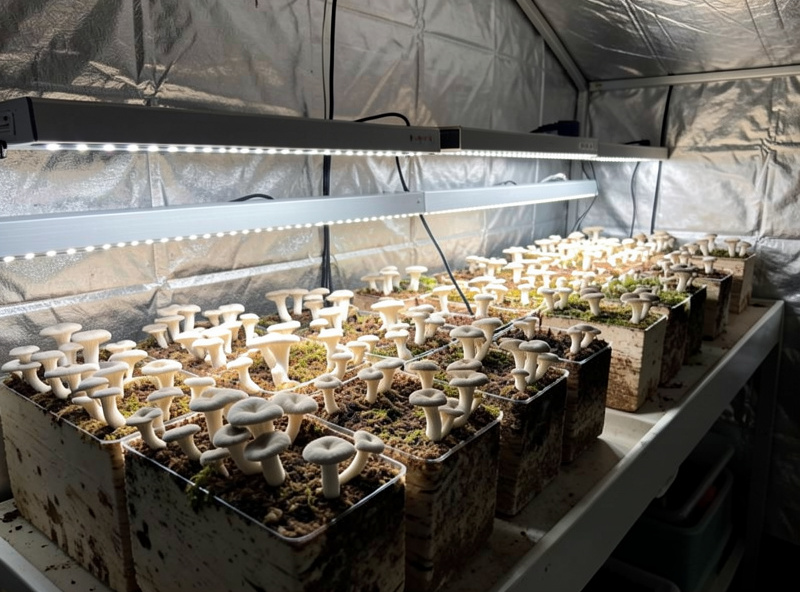
Color Temperature and Schedule I Run
I run plain 6500K daylight LED — the cool white that mimics overcast daylight. Mushrooms respond mainly to the blue end of the spectrum for pinning, so a daylight LED covers it without any specialty “full spectrum” grow bulb. Warm 2700K bulbs work but are slightly less effective at triggering pins; I keep my fruiting light cool and bright-ish.
Schedule matters more than brand. I put the light on a timer for 12 hours on, 12 hours off — mushrooms do not need a precise photoperiod, but a day/night cycle is closer to natural and avoids the (minor) risk of a constant-light hot zone. There is no benefit to 24-hour light; it just wastes energy and dries the chamber. A simple LED daylight strip on a mechanical timer is the whole setup. As an Amazon Associate I earn from qualifying purchases.
Light Needs by Species
Light demand varies, but the range is narrow — no gourmet species needs intense light, and a couple barely need any. Here is how the species I fruit actually respond, from most to least light-driven.
| Species | Light Sensitivity | Notes |
|---|---|---|
| Oyster (pearl, blue, pink) | Moderate | Pins and colors better with daylight; pink especially |
| Lion’s Mane | Low-moderate | Needs some light to form a tidy single head, not coral |
| King Oyster | Low | Light shapes caps; mostly FAE-driven |
| Shiitake | Moderate | Light helps trigger pinning on browned blocks |
| Reishi | Moderate | Light directs antler vs conk morphology |
| Enoki | Very low | Grown dark/cool for long white stems on purpose |
The interesting outlier is enoki: it is deliberately grown in low light and high CO2 to force the long, pale, slender stems you see in stores. That is the exception that proves the rule — light is a morphology lever, not a food source, so you can dial it intentionally. For oyster, the gateway species, just give it daylight and a timer and it pins beautifully. The fruiting tent setup is where the light, humidifier, and fan all come together.
Placement and Heat
Mount the light so it illuminates the fruiting surface without sitting so close it heats or dries the substrate. With LED strips this is easy — they run cool — which is the main reason I never use the old fluorescent tubes or incandescent bulbs that throw real heat. In a vertical Martha tent, a strip down each shelf edge lights every level; in a tub, a strip across the lid is plenty.
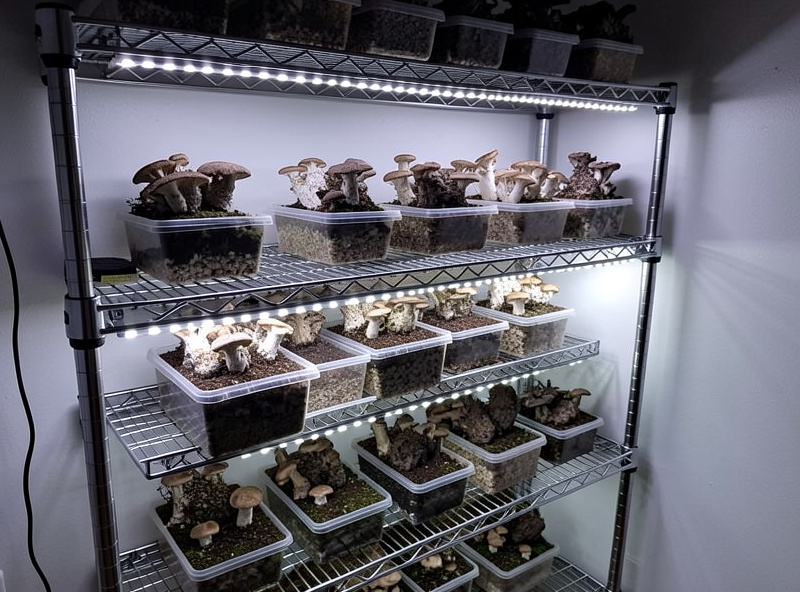
Watch for one subtle problem: a light bright enough to matter that also adds heat can pull your humidity down and warm a pocket of the chamber. LEDs largely solve this, but if you are running anything warmer, keep it off to the side and confirm your hygrometer is not dropping when the light cycles on. Light is the easiest variable in fruiting — it earns the least attention precisely because a daylight LED on a timer just works.
DIY and Budget Options
You do not need to buy a “mushroom light.” Any cool-white LED you already own — a desk lamp, a shop light, an under-cabinet strip — works if it lands daylight-ish color on the fruiting surface for half the day. Ambient room light from a north-facing window plus normal household lighting is often enough for oyster. I have fruited clean flushes under a $10 strip and a kitchen timer.
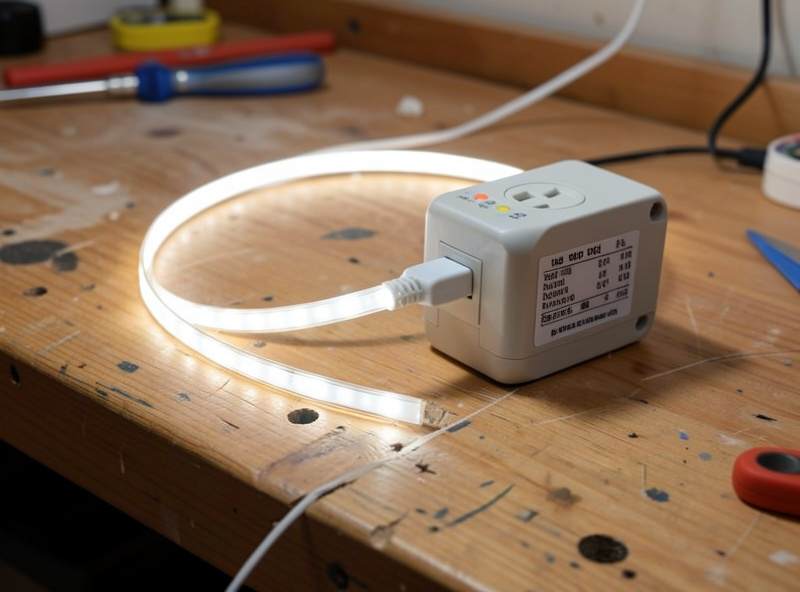
The one upgrade worth making is a timer so you are not manually switching lights. Beyond that, spend your budget on humidity control and fresh-air exchange, which are the variables that actually make or break a flush. After enough grows you internalize the hierarchy: substrate and sterilization first, then humidity and air, and light a distant last — necessary, but cheap and forgiving.
One DIY note from my own bench: if you are lighting a tall Martha tent, run a continuous LED strip down each shelf upright rather than a single panel at the top. A top-only light leaves the lower shelves dim, and you will see the difference — lower blocks pin later and lean upward chasing the light. A few feet of strip costs almost nothing and gives even illumination on every tier, which keeps fruiting synchronized across the whole rack. The same clean-process instinct that runs the rest of my grow room applies here too: mount the strip so it wipes down easily, because anything inside a humid fruiting chamber eventually grows a film if you ignore it.
Frequently Asked Questions
Do mushrooms need a grow light to fruit?
Most cultivated mushrooms need some light to trigger pinning and to grow toward the surface, but they do not photosynthesize. A modest cool-white LED, bright enough to read by, is plenty. Total darkness often produces blind, twisted, capless growth instead of proper fruits.
What color temperature is best for growing mushrooms?
6500K daylight LED is the best general choice because mushrooms respond mainly to the blue end of the spectrum for pinning. Warm 2700K bulbs work but trigger pins slightly less effectively. You do not need a specialty full-spectrum plant grow light.
How many hours of light do mushrooms need per day?
Run the light about 12 hours on and 12 hours off on a timer. Mushrooms do not require a precise photoperiod, but a day-night cycle is closer to natural. There is no benefit to 24-hour light, which only wastes energy and dries the chamber.
Can I use a regular LED bulb instead of a grow light?
Yes. Any cool-white LED that lands daylight-ish color on the fruiting surface works, including a desk lamp, shop light, or under-cabinet strip. Since mushrooms use light as a signal and not as food, an inexpensive household LED on a timer is all you need.
Why are my mushrooms growing toward the light and bending?
That is positive phototropism, which is normal and useful. Mushrooms grow toward the light source, so position the light above or evenly around the fruiting surface to get straight growth. Light coming from one side will pull all the fruits in that direction.