
A magnetic stir plate is worth buying — or building — only once liquid culture is a regular part of your workflow, and even then it is a convenience, not a necessity. It spins a small (25–40 mm) magnetic bar inside a jar of sterilized broth, keeping the growing mycelium aerated and broken up so it disperses evenly instead of settling into one slimy clump. Well-dispersed liquid culture inoculates grain faster and more evenly, but you can make perfectly usable LC without a stir plate at all.
I run liquid culture on a stir plate for the species I propagate often, and it genuinely speeds up colonization when I inoculate grain from it. But I am blunt with new growers: if you are still losing jars at the grain stage, a stir plate is not your problem, and buying one will not fix it. This guide covers what a stir plate does, magnetic bar sizing, realistic speed settings, and the honest buy-or-build math. It sits near the bottom of the priority list in the lab equipment buying guide for exactly that reason.
What a Stir Plate Does for Liquid Culture
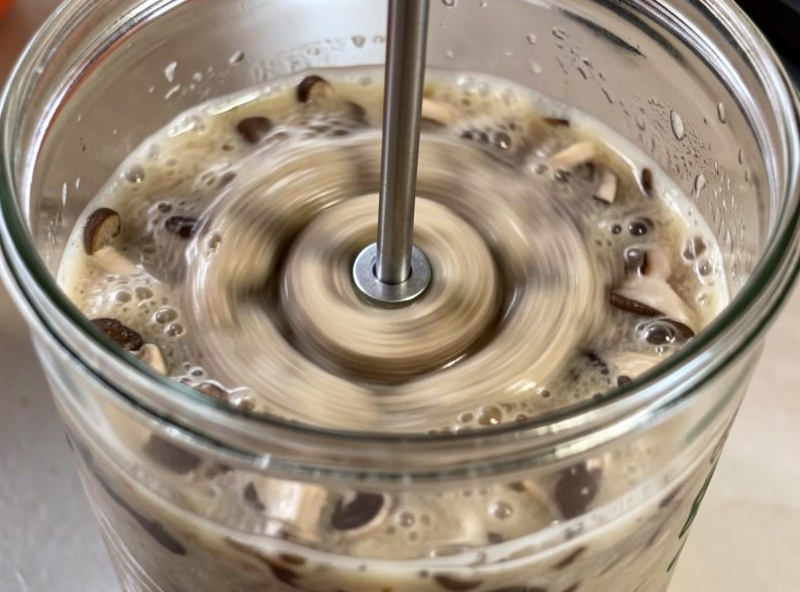
Liquid culture is mycelium growing in a sterilized sugar-water broth — light malt extract at roughly 4 g per 100 ml, or honey water, are common recipes. Aseptic culture and media handling are covered in depth by university mushroom programs such as Penn State Extension. Left still, the mycelium tends to grow as a single mass and the broth stays clear around it. A stir plate keeps a gentle vortex going, which does two useful things: it introduces air for the aerobic mycelium and it shears the growing tissue into many small fragments, so the whole jar clouds up with dispersed growth in days rather than weeks.
That dispersion is the real payoff. When you draw LC into a syringe to inoculate grain jars, evenly suspended mycelium means every jar gets a fair, fast-starting dose. Clumped LC gives you an uneven draw and slower, patchier colonization. It is a genuine quality-of-life improvement for anyone running LC in volume — but the operative phrase is “in volume.” For an occasional jar, still LC works fine; it just takes longer to mature.
Magnetic Bars: Size and Coating
The stir bar is a magnet sealed in an inert coating, and getting the size right matters more than people expect. Too small a bar for the jar and it does not move enough broth; too large and it clunks against the glass and can throw off the spin at higher speeds. For a typical wide-mouth pint or quart LC jar, a bar in the 25–40 mm range spins a good vortex without drama. Match the bar to the jar diameter so it can turn freely at the bottom.
Coating matters because the bar gets sterilized inside the jar. A PTFE-coated bar is inert, smooth, and handles repeated pressure-canning cycles, which is exactly what an LC bar goes through — it rides along in the pressure canner when you sterilize the broth. Drop the bar into the jar before sterilizing, cap with a self-healing port lid, and it is ready to spin once cooled. A couple of bars in different sizes covers most jar shapes you will use.
Speed: Gentle Beats Fast
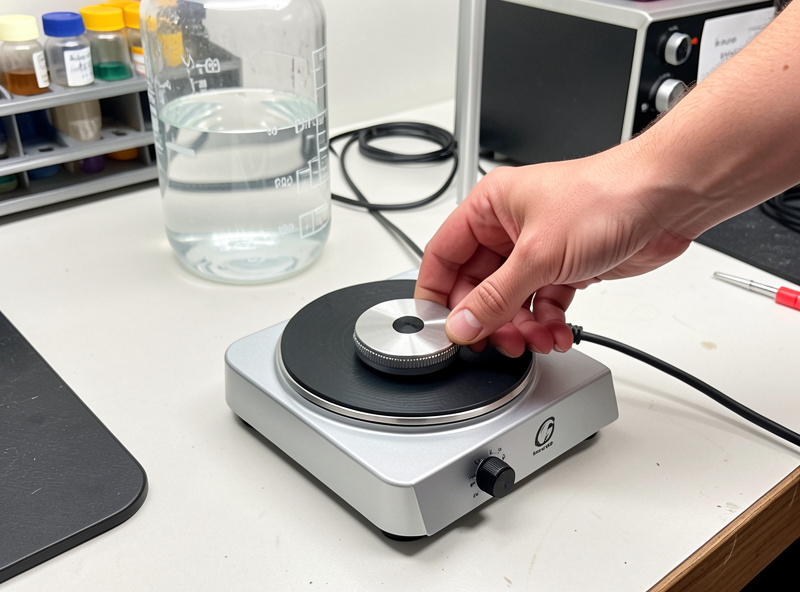
New stir-plate owners almost always run them too fast. My first DIY plate — a PC fan with two magnets hot-glued to the hub — I cranked to full speed the first night, and the bar promptly lost sync and started machine-gunning against the bottom of the jar, a rattle you could hear across the room; the broth foamed instead of folding over, and that batch came out stringy and slow to inoculate. Backing the potentiometer down to a lazy, smooth vortex fixed it immediately. You want a steady, moderate vortex — enough to keep the broth moving and folding air in, not a violent whirlpool. Excessive speed can tear mycelium too aggressively and, on cheaper plates, causes the bar to lose sync and rattle. A gentle spin for a few hours a day, or intermittently over several days, matures a jar nicely; it does not need to run flat-out around the clock.
Adjustable speed is therefore the one feature worth having, so you can dial in a smooth vortex for your jar and bar combination. Some growers run the plate in bursts rather than continuously, which is fine — the goal is periodic aeration and dispersion, not maximum RPM. Watch the vortex, not the dial: when the broth turns over smoothly without the bar losing its grip, that is your setting. This is the same measured, patience-over-force mindset the whole grow rewards.
Buy or Build?
| Factor | Buy Commercial | DIY Build |
|---|---|---|
| Cost | Moderate | Very low (PC fan + magnets + controller) |
| Difficulty | None, plug in | Basic electronics, an evening |
| Speed control | Built-in dial | Add a potentiometer |
| Best for | Want it working now | Tinkerers, tight budgets |
This is the tool where DIY genuinely pays. The guts of a stir plate are a computer case fan, two rare-earth magnets glued to the hub, a power source, and a potentiometer for speed — parts many people already have in a drawer. A home build costs a fraction of a commercial unit and works just as well for LC. Unlike a laminar flow hood, where the pricey HEPA filter caps your savings, here the DIY math is strongly in your favor.
That said, a commercial stir plate is inexpensive enough that if electronics are not your thing, buying one is no shame — it plugs in and works. Decide by how much you enjoy the build versus how quickly you want to be running LC. To compare parts or ready-made units, start with a search for magnetic stir plates and bars.
As an Amazon Associate I earn from qualifying purchases.
The honest bottom line: a stir plate is a fine upgrade once liquid culture is part of how you work, and a great DIY project if you like building. But it earns its spot only after the fundamentals — sterilization, clean transfers, incubation — are already solid, which is the order the starter gear list and the full equipment guide both lay out. Buy it because you run LC, not because a kit told you to.
Frequently Asked Questions
Do I need a stir plate for liquid culture?
No. You can make usable liquid culture without one; it just matures more slowly and less evenly. A stir plate keeps the broth aerated and disperses the mycelium so it clouds up faster and inoculates grain more evenly, which helps most when you run liquid culture in volume.
What size magnetic stir bar should I use for a culture jar?
For a typical wide-mouth pint or quart jar, a PTFE-coated bar in the 25 to 40 mm range spins a good vortex. Too small and it does not move enough broth; too large and it clunks the glass and loses sync at speed. Match the bar to the jar diameter.
How fast should a stir plate run for liquid culture?
Gently. Aim for a steady, moderate vortex that folds air in without a violent whirlpool. Too much speed tears the mycelium and makes the bar rattle and lose sync. A few hours a day or intermittent bursts over several days is plenty; it need not run flat-out.
Is it worth building a DIY stir plate?
Yes, if you enjoy simple electronics. A PC fan, two rare-earth magnets, a power source, and a potentiometer make a stir plate for a fraction of a commercial unit and work just as well for liquid culture. Buy a ready-made one only if you want it running immediately.
Can I sterilize the stir bar inside the culture jar?
Yes. Drop a PTFE-coated bar into the broth before sterilizing, cap with a self-healing port lid, and run the jar through the pressure canner. PTFE is inert and handles repeated canning cycles, so the bar is ready to spin once the jar cools.