
A laminar flow hood is worth buying when you start doing agar work and open grain transfers regularly — not before. It pushes HEPA-filtered air — 99.97% of particles down to 0.3 microns removed — across your work surface in a smooth, particle-free sheet, sweeping contaminants away from open plates so they settle away from your culture instead of into it. For routine transfers through a jar port, a cheap still-air box does the same job; the hood earns its price only once you are working with open petri dishes and volume.
I run both a still-air box and a laminar flow hood, and I know exactly where the line between them falls. Most growers ask about a flow hood far too early, then spend on it before their process needs it. This guide covers what a hood actually does, the HEPA and blower specs that matter, the buy-versus-build math, and the honest answer to “do I need one yet?” It slots directly under the broader lab equipment buying guide, which ranks it as a later purchase for good reason.
What Laminar Flow Actually Does

“Laminar” means the air moves in parallel layers with almost no turbulence. A blower forces room air through a HEPA filter, which removes 99.97% of particles down to 0.3 microns, and the clean air then flows out across your work in a steady wall. Because the air is always moving toward you and away from the filter face, any stray mold spore or bacterium is carried off the open plate before it can land. You work between the filter and your hands, in a zone of continuously replaced sterile air.
This is a fundamentally different approach from a still-air box, which works by keeping the air dead still so nothing settles during the minute your plate is open. Both work; they just win in different situations. Still air is enough for quick, mostly-closed transfers. Laminar flow is what lets you leave a plate open, pour agar, cut wedges, and pass tissue between dishes without holding your breath.
The HEPA Filter: The Part That Matters Most
The HEPA filter is the heart of the hood and the component you should never cheap out on. A genuine HEPA filter rated H13 or H14 under the EN 1822 standard removes at least 99.95–99.995% of 0.3-micron particles, which is the size range that matters for airborne mold and bacteria. Buy a hood (or build one) around a real, certified HEPA filter with a documented rating — a vague “HEPA-type” filter is not the same thing and can leak the exact particles you are trying to exclude.
Filter size also sets your usable work area. A larger filter face gives a wider curtain of clean air and more room to work with plates and jars; a small filter leaves you crammed. If you are going to invest at all, get a filter face big enough to hold an open plate, your hands, and a jar or two comfortably. The filter is the one part where the specification is non-negotiable, the same way a canner’s pressure rating is non-negotiable in the sterilization step.
Blower Size and Airflow
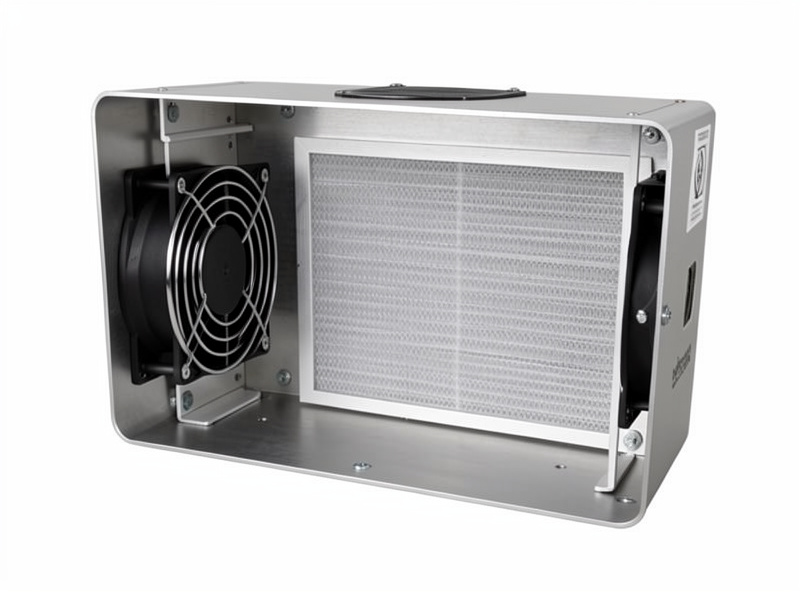
The blower has to push enough air through the filter to maintain smooth flow across the whole work surface, because HEPA filters are dense and create real resistance. Undersize the blower and you get weak, uneven airflow that does not reliably protect the plate; oversize it and you get turbulence and noise. The goal is a gentle, even face velocity — enough that a light tissue held at the filter drifts steadily outward, not so much that it flaps.
Matching blower to filter is the trickiest part of speccing a hood, which is a strong argument for buying a matched commercial unit if you are not comfortable with the airflow math. When people build their own, undersizing the blower for the filter’s resistance is the most common mistake — the hood looks right but does not actually maintain laminar flow. If you build, choose the blower to overcome the specific filter’s pressure drop with margin to spare.
Commercial Hood vs. DIY Build
| Factor | Buy Commercial | DIY Build |
|---|---|---|
| Cost | Higher | Lower, but HEPA still pricey |
| Airflow tuning | Matched at factory | You must match blower to filter |
| Certainty | Known-good performance | Depends on your build quality |
| Best for | Anyone unsure of the airflow math | Hands-on builders on a budget |
The buy-versus-build calculus is different from a stir plate, where DIY saves a lot for little risk. Here the HEPA filter is the expensive part either way, so building your own saves less than people expect, and a badly matched build can quietly fail to protect your work. My honest take: if you are handy and will source a real certified filter and a properly sized blower, a DIY hood is a great project. If you are not confident in the airflow, buy a matched unit — a hood that does not actually maintain laminar flow is worse than the still-air box you already have.
Do You Actually Need One Yet?
Here is the question that saves the most money. If your current work is inoculating grain jars through self-healing ports and doing grain-to-grain transfers, a still-air box handles it and you do not need a hood. If you are moving into agar — pouring plates, cloning tissue, sectoring cultures, cleaning up a contaminated strain — that open-plate work is where a hood transforms your success rate. That transition is the trigger, not a fixed skill level.
I built my culture library on agar, and the flow hood is what made that reliable; before it, open-plate work in still air was a gamble — I lost most of a pour of MEA plates to green Trichoderma one humid afternoon, spores drifting in the moment I lifted a lid, and that batch is what finally justified the hood. The aseptic principles behind it are well covered by university mushroom programs such as Penn State Extension. But I still use the SAB for everyday transfers because it is faster to set up. Buy the canner and a SAB first, get a species fruiting cleanly, and add the flow hood when agar becomes part of your routine — the sequence laid out in the full equipment guide and echoed in the starter gear list. To compare current models and filters, start with a search for laminar flow hoods.
As an Amazon Associate I earn from qualifying purchases.
Frequently Asked Questions
Do I need a laminar flow hood to grow mushrooms?
No. For inoculating grain jars through a port and grain-to-grain transfers, a still-air box is enough and costs almost nothing. A flow hood becomes worth it once you do agar work and open transfers, where its filtered airflow reliably protects open plates.
What HEPA rating do I need for a flow hood?
Use a genuine certified HEPA filter rated H13 or H14, which removes at least 99.95 to 99.995 percent of 0.3-micron particles. Avoid vague HEPA-type filters, which can leak the mold and bacteria particles you are trying to exclude.
How big should the blower be for a laminar flow hood?
Big enough to push smooth, even air through the dense HEPA filter without turbulence. A light tissue at the filter face should drift steadily outward, not flap. Undersizing the blower for the filter resistance is the most common DIY mistake.
Is it cheaper to build or buy a laminar flow hood?
Building is cheaper, but less than people expect because the certified HEPA filter is costly either way. A commercial unit comes with the blower and filter matched at the factory, which is safer if you are not confident sizing the airflow yourself.
Can I use a still-air box instead of a flow hood?
Yes, for most hobby work. A still-air box keeps the air dead still so nothing settles during a quick, mostly-closed transfer. It is enough until you start leaving plates open for agar pouring, cloning, and sectoring, which is when laminar flow pays off.
Where does a flow hood fit in the buying order?
Later. Buy a pressure canner, a scale, and a cheap still-air box first, get a species fruiting cleanly, then add a flow hood when agar and open culture work become routine. Buying it before you do that work is money spent early.