
Preserving foraged mushrooms starts the second you cut them, not when you reach the kitchen. Keep them cool, dry, and breathing in an open basket or mesh bag, brush off dirt in the field, keep species separate, and plan to process them within a day. Get the field handling right and later drying or freezing actually works; get it wrong and the best preservation method in the world is rescuing a haul that is already half spoiled.
This is the part of foraging that beginners skip and regret. You can find a perfect flush and still ruin it on the walk back to the car. I treat a basket of wild mushrooms the way I treat a fresh harvest off a fruiting block — the clock starts at the cut, and how I handle the next few hours decides the quality of everything after. This guide covers field-to-home handling specifically; for the full kitchen methods of drying, freezing, and storing, see our complete preservation guide, and it all sits under the broader field identification guide.
Preservation Starts in the Field
Wild mushrooms are mostly water and they keep respiring after they are picked, which means they begin breaking down immediately. Warmth, moisture against their surfaces, and crushing all accelerate that decline. Everything you do in the field is aimed at slowing it: keep them cool, keep air moving around them, and keep them from getting bruised or wet in a sealed container. None of it is complicated, but all of it is time-sensitive.
The mental model that helps is to stop thinking of picking and preserving as two separate jobs. They are one continuous process, and the field is its first stage. A mushroom that rode home cool and dry in a basket can be dried, frozen, or cooked at its peak; a mushroom that sweated in a plastic bag in a warm pack is already compromised before you wash the dishes to start.
Carry Them Right: Cool, Dry, and Breathing
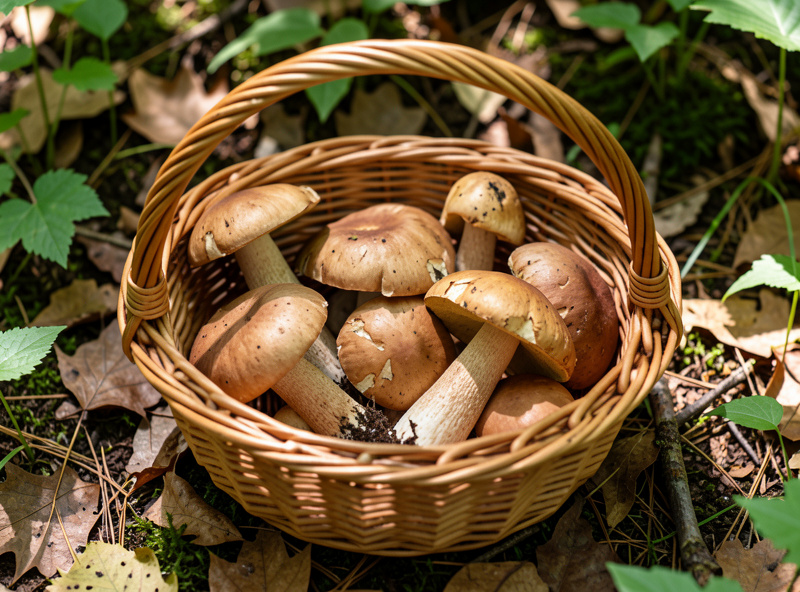
The single most important field decision is what you carry mushrooms in. An open basket or a breathable mesh bag lets air circulate and keeps the harvest firm; a sealed plastic bag traps respiration moisture and turns a beautiful flush slimy within a couple of hours. This is the same principle that makes a basket the right tool for picking, and it carries straight through to preservation: airflow is everything.
Keep the basket out of direct sun and out of the warmest part of your pack. Heat is the accelerant that undoes good handling fastest, so a shaded, ventilated carry beats a dark, stuffy one every time. On a hot day I will even drape a damp cloth loosely over the top — not sealing it, just shading and cooling — to take the edge off the temperature without trapping moisture against the caps.
Clean as You Go: Brush, Trim, and Triage
Cleaning in the field saves you work and protects the harvest. A quick whisk with the brush on your foraging knife knocks off the worst soil and forest debris before it grinds into gills and pores on the walk out. Trim away obviously bug-eaten sections and tough bases right there, so you are not carrying home weight you will only cut off anyway. And triage honestly: a waterlogged, slug-chewed, or clearly past-its-prime mushroom does not improve in the basket, and a single rotting specimen speeds the decline of everything it touches. Leave the worst ones in the woods.
What I avoid in the field is washing. Water is the enemy of shelf life and of every later preservation method, because mushrooms soak it up and then resist drying and turn mushy when frozen or cooked. Dry brushing in the field, and saving any real cleaning for just before you cook or process, keeps the harvest in the best possible state for whatever comes next.
Keep Species Separate
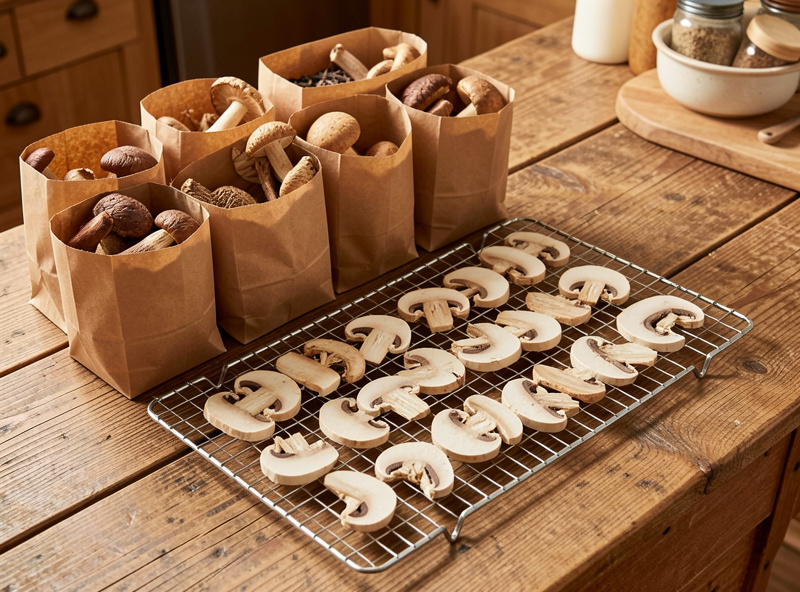
Carry a few paper bags and keep each species in its own. There are two reasons, and both matter. The practical one is preservation: different mushrooms have different moisture levels and shelf lives, and a wet species packed against a dry one drags the dry one down. The safety one is identification — keeping finds separate means a single unconfirmed mushroom never touches the ones bound for the pan, and you can re-examine each species cleanly at home. The North American Mycological Association makes the same point bluntly: never eat any wild mushroom until its identity is confirmed beyond doubt. Paper, not plastic, for the same breathability reason as the basket. I label each bag with a pencil as I fill it, because two similar species you were certain you could tell apart in the woods look maddeningly alike on the kitchen counter three hours later, and a five-second note removes all doubt.
The Drive Home: The Most Overlooked Step
The car is where more hauls die than anywhere else. A basket of mushrooms left on a seat in a warm vehicle cooks slowly in its own trapped heat, and a long drive on a hot day can undo a perfect morning’s foraging. On warm days I carry a cooler — not packed in ice, which adds the moisture we are trying to avoid, but cool, with the mushrooms in their breathable bags or basket set inside or beside a chilled pack so the air around them stays cool and dry.
If the drive is short and the day is mild, simply keeping the basket out of direct sun and cracking a window is enough. The point is to be deliberate about it rather than tossing the harvest in a hot trunk and forgetting it for two hours. The few minutes of thought here protect everything you did right earlier.
From Field to Storage: The First Hours Home
Once home, deal with the harvest promptly — ideally the same day, and at the latest the next. Sort and re-inspect each species, set aside anything for tonight’s meal, and decide how the rest gets preserved. The fastest holding move is to keep them refrigerated in a paper bag, where most sturdy species last several days breathing rather than sweating. For longer storage, the two reliable paths are drying and freezing, and which one suits a given mushroom depends on the species.
This is the handoff point to the kitchen, and it is where the full methods take over: low-temperature drying for species that rehydrate beautifully, and saute-then-freeze for those that store better cooked than raw. All of that, with temperatures and timing per species, lives in the kitchen preservation guide — and if morels are your haul, the dedicated cooking morels safely guide covers their particular handling.
Drying in the Field on Multi-Day Trips
On longer trips where you cannot get a harvest home quickly, you can begin drying in the field. The requirements are simple: airflow, low humidity, and patience. Slice mushrooms thin, lay them in a single layer on a mesh screen or thread them on a line, and let moving air do the work in a dry, shaded spot — harsh direct sun degrades color and quality, so shade with a breeze beats baking heat. Field drying will not finish the job to brittle-dry storage on its own in most climates, but it buys time and weight, and you complete the drying properly once home. For a single day’s foraging, though, none of this is necessary: good cool, dry, breathing carry and prompt processing at home is the whole game.
Frequently Asked Questions
How should I carry foraged mushrooms to keep them fresh?
Carry them in an open basket or breathable mesh bag so air circulates, and keep them out of direct sun and heat. Never use a sealed plastic bag, which traps respiration moisture and turns the harvest slimy within a couple of hours.
Should I wash foraged mushrooms in the field?
No. Water shortens shelf life and ruins later drying and freezing because mushrooms absorb it readily. Dry-brush off soil and debris in the field with the brush on a foraging knife, and save any real cleaning for just before you cook or process them.
How long can foraged mushrooms sit before I process them?
Process them the same day if you can, and within a day at most. Sturdy species hold several days refrigerated in a paper bag, but quality is highest when you sort, inspect, and preserve or cook the harvest promptly after getting home.
Why does the car ruin foraged mushrooms?
A basket left in a warm vehicle traps heat and cooks the harvest slowly, undoing good field handling on a long hot drive. Carry a cooler on warm days, keep mushrooms in breathable bags set near a chilled pack rather than on ice, and keep them out of the sun.
Can I dry mushrooms in the field on a long trip?
Yes, partly. Slice them thin, lay them in a single layer on a screen or thread them on a line in a dry, shaded, breezy spot. Field drying buys time and reduces weight but usually will not reach full storage dryness, so finish the drying properly once home.