
There is no single mushroom foraging law in the United States. Whether you can legally pick a mushroom depends almost entirely on who manages the land you are standing on, not on which state line you crossed to get there. National parks generally prohibit collecting; many national forests allow small personal-use harvests; state and private land run a patchwork of their own rules. The only reliable move is to confirm with the specific land manager before you forage.
I am going to be honest about the limits of this guide up front, because in my world a wrong instruction is worse than no instruction. This is an overview of how foraging rules are structured, not legal advice for your exact spot, and regulations change. Use it to ask the right questions of the right agency. It sits under our complete field identification guide as the legal-context companion — because knowing what a mushroom is does you no good if you are not allowed to pick it there.
Why “By State” Is the Wrong Question
Foragers naturally ask “is it legal in my state?” but that framing misleads you, because a single state contains a dozen different land jurisdictions with different rules. A national park, a national forest, a state park, a state forest, a county preserve, and a private woodlot can all sit within a few miles of each other and each answer the question differently. The useful question is not “what state am I in” but “who owns and manages this exact piece of ground, and what does that manager allow?”
Once you reframe it that way, the patchwork becomes navigable. There are only a handful of land categories, each with a typical posture toward foraging, and your job is to identify which category you are on and then verify the specifics for that particular unit. The categories give you the prior; the managing agency gives you the answer.
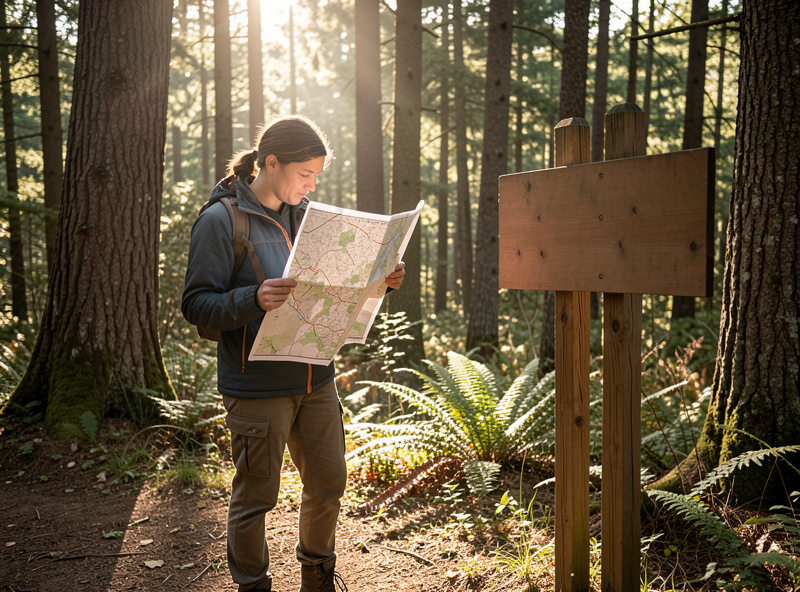
Federal Land: Parks, Forests, and Public Range
Federal land is where the categories matter most, because the agencies differ sharply. The National Park Service manages parks for preservation, and as a rule collecting plants and fungi for personal consumption is prohibited — a few parks make narrow exceptions, but the default you should assume is “no.” National forests, managed for multiple use by the U.S. Forest Service, are far more permissive: many allow personal-use mushroom harvesting, often free up to a posted quantity and by inexpensive permit above it. The exact allowance is set forest by forest, so the limit on one national forest tells you nothing reliable about the next.
Other federal public lands, such as those managed for range and recreation, frequently allow personal-use foraging as well, again subject to local rules and any special designations like wilderness or research areas. The throughline is simple: parks lean prohibitive, forests and general public land lean permissive, and “permissive” still means you check that specific unit’s current rules and permit requirements before you fill a bag.
State and Local Land: The Patchwork Within the Patchwork
State-managed land mirrors the federal split but with fifty sets of rules layered on top. State parks often restrict or prohibit collecting much like national parks, while state forests and wildlife areas are frequently more open to personal-use foraging. County and municipal parks are their own world — some welcome foragers, many quietly prohibit removing anything at all, and the rule is often buried in a general “do not remove plants, rocks, or natural features” ordinance that sweeps fungi in without naming them.
This local layer is the one foragers most often get wrong, precisely because a city or county park feels casual and unregulated. It usually is not. Before you treat a local greenspace as fair game, read its posted rules or check the managing department’s website, because a friendly-looking community woodland can carry a flat no-collection policy.
Private Land: Permission Is the Whole Game
On private land the rule is the simplest of all and the one people most like to ignore: you need the owner’s permission, every time, no exceptions. Foraging without permission is trespassing regardless of how remote or unfenced the woods look, and “I was only picking mushrooms” is not a defense. The upside is that private permission is often easy to get — many landowners are happy to let a respectful forager take mushrooms they would never use themselves, especially if you ask, share some of the haul, and leave the place as you found it.
If you forage the same private ground regularly, treat the relationship the way you would any standing arrangement: ask clearly, respect any limits the owner sets, close gates, and never expand the agreement on your own. A good private foraging relationship is worth more than any public permit, and it lasts only as long as you honor it.
Sustainable, Low-Impact Foraging Beyond the Letter of the Law
Staying legal is the floor, not the ceiling. Even where foraging is fully permitted, how you do it determines whether the resource and your access survive. Take only what you will use, leave plenty behind to drop spores and feed wildlife, and never strip a patch bare just because the rules technically allow it. Cut or twist mushrooms rather than raking up the soil and the underground mycelium with them, stay on durable ground, and pack out anything you bring in.
This matters legally as well as ethically, because access tends to tighten where managers see damage. Heavy-handed, wasteful foraging is exactly what prompts a county to add a no-collection rule or a forest to cap permits. Every forager who treats the woods gently is quietly protecting the next person’s right to be there. I think of it the same way I think about contamination control on the bench: the careful habit is not a constraint on the hobby, it is what lets the hobby continue. Forage as though you want to come back in ten years, because you do.
Protected Species and Sensitive Habitats
A few additional wrinkles sit on top of the land-ownership question. Some regions legally protect specific fungi or restrict commercial harvest, and some habitats — wilderness areas, ecological reserves, research natural areas — carry collecting restrictions regardless of the surrounding land’s general rules. Commercial foraging, where you sell what you pick, is a separate and far more regulated activity almost everywhere and is well beyond the scope of casual personal-use foraging.
None of this should scare a personal-use forager off, but it is worth knowing that “the land allows foraging” and “this particular species or this particular zone is open” are two different checkboxes. When in doubt, the managing agency can tell you both.
| Land type | Typical foraging posture | Before you pick |
|---|---|---|
| National park | Generally prohibited | Assume no; confirm any rare exception with the park |
| National forest | Often allowed, personal use | Check the forest’s limit and permit rules |
| General federal public land | Frequently allowed | Verify unit rules and special designations |
| State park | Often restricted | Read posted rules; many prohibit collecting |
| State forest / wildlife area | Frequently more open | Confirm with the managing state agency |
| County / city park | Varies, often prohibited | Check local ordinances and posted signs |
| Private land | Owner’s permission required | Always ask first; no permission means no |
What Happens If You Get It Wrong
The consequences of foraging where you should not range from mild to genuinely serious, and they are worth knowing because they shape how much diligence each situation deserves. On most public land, a first offense for collecting where it is prohibited typically means a ranger contact and a citation or fine, with the size depending on the agency and whether harm was done. Repeat or commercial-scale violations escalate quickly, and removing material from a protected area or wilderness can carry heavier penalties.
On private land the exposure is different: unauthorized foraging is trespassing, and a landowner who finds strangers harvesting their woods is well within their rights to involve the authorities. None of this is meant to frighten a careful personal-use forager, who almost never runs into trouble. It is meant to explain why the ten-minute check is worth it. The downside of confirming the rule is a few minutes; the downside of guessing wrong can be a fine and a lost spot.
How to Actually Find the Rule for Your Spot
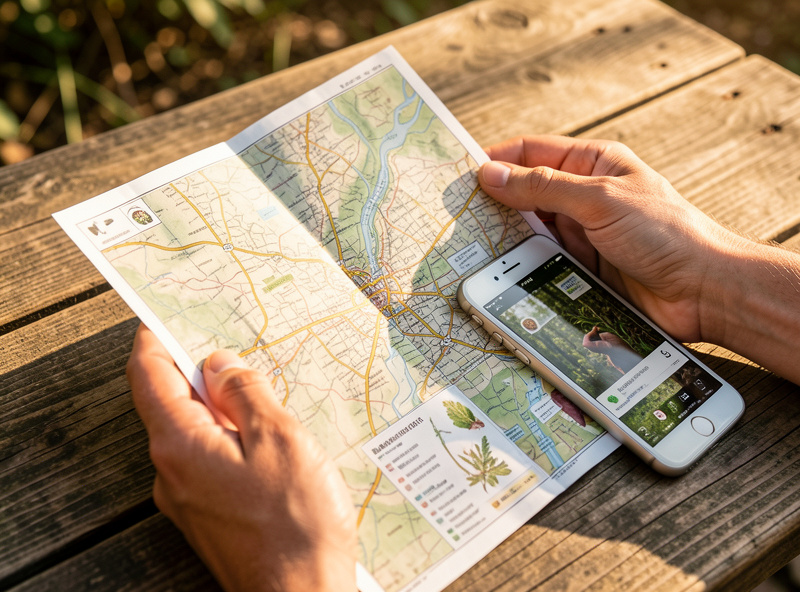
The practical workflow takes ten minutes and saves you a citation or worse. First, identify the managing agency for the exact parcel — a land-ownership map or the agency’s site will tell you. Second, read that agency’s current rules on collecting fungi, and look specifically for personal-use allowances, quantity limits, and permit requirements rather than assuming. Third, when the website is ambiguous, call or email the unit office and ask directly; rangers answer this question constantly. Fourth, read the posted signs at the trailhead, which sometimes carry rules the website does not.
Your local mycological society is the best shortcut of all. Members know exactly which nearby lands are open, which require permits, and who to ask, and they have already made the calls you are about to make. Joining one buys you accurate local legal knowledge along with everything else. The same care that keeps my grow room clean keeps my foraging legal — verify before you act, every time. If you are gearing up for those first legal outings, our foraging gear guide covers the kit, and the species pieces on hunting morels, identifying chanterelles, and telling chicken of the woods from its toxic look-alike cover what to look for once you have found legal ground to walk.