
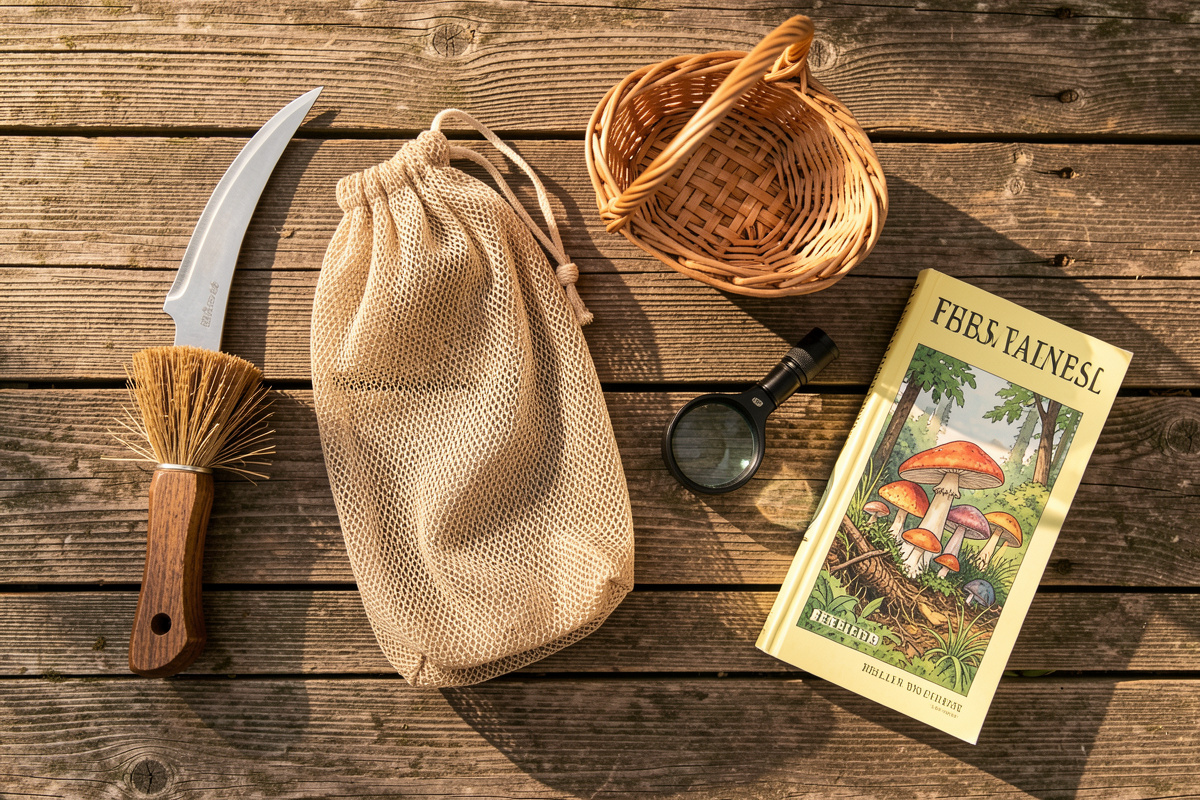
The essential mushroom foraging kit is short: a knife with a stiff brush, a breathable mesh bag or open basket, and a trusted regional field guide. Add a hand lens, a few paper bags to keep species separate, and proper footwear, and you are equipped for almost any walk. You can assemble a real working kit for around $40-60 total — less than the cost of a nice dinner out.
I have a habit of over-buying gear for every hobby, so take it seriously when I tell you foraging resists it. The discipline that matters in the woods is in your eyes and your field guide, not in your pack. This guide breaks down what genuinely earns a place in the kit, what is nice to have, and what you can skip — and it slots under our complete field identification guide as the equipment companion to the species-by-species pieces. As an Amazon Associate I earn from qualifying purchases.
The Short List That Actually Matters
Foraging has one of the lowest barriers to entry of any outdoor hobby. The non-negotiable core is three items: something to cut with, something breathable to carry finds in, and a reliable reference to identify against. Everything beyond that is refinement. I have walked out of the woods with a full basket using nothing but a pocketknife and a paper bag, and on the flip side, no amount of expensive kit substitutes for knowing what you are looking at.
So the right way to think about gear is in tiers: the three essentials, a handful of genuinely useful extras, and a longer list of things you can happily ignore. Spend your attention on the field guide above all — it is the cheapest item on the list and the one that keeps you safe.
The Knife: Your One True Specialist Tool
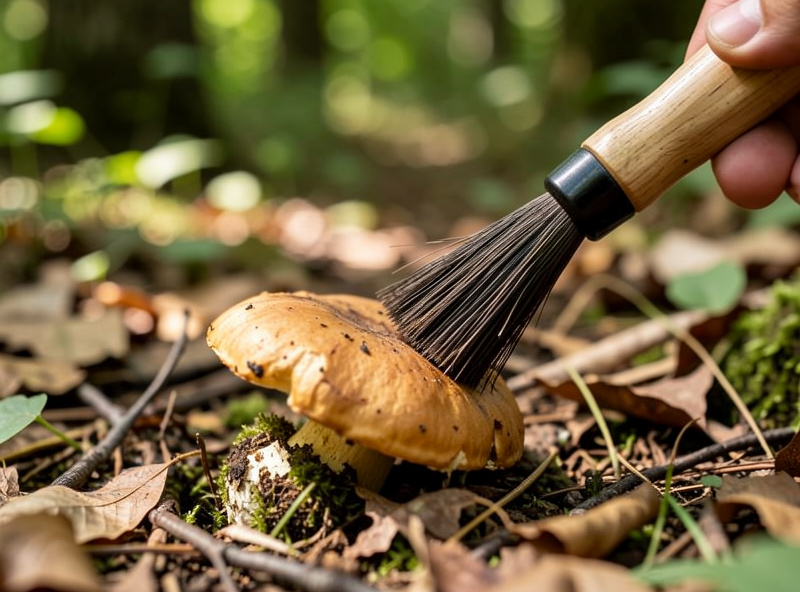
A dedicated foraging knife is the one purpose-built tool worth owning. The classic design is a curved blade for cleanly cutting mushrooms at the base paired with a stiff brush on the handle for whisking dirt and debris off caps in the field. Cutting rather than uprooting keeps the mushroom clean and, more importantly, leaves the underground mycelium — the actual organism — intact to fruit again. The brush means you carry less soil home and clean less at the sink.
You do not strictly need a specialist knife; any sharp folding knife cuts a mushroom. But the brush-equipped design genuinely speeds up a productive day, and a curved blade is more controlled for low cuts at the base. If you want the purpose-built version, a mushroom foraging knife with a brush is an inexpensive upgrade that I reach for over a plain blade every time.
Carrying the Harvest: Mesh Bags and Baskets
How you carry mushrooms matters more than beginners expect. Two principles drive it: the container must breathe, and it must not crush. A sealed plastic bag turns a beautiful flush into a sweating, slimy mess within hours because mushrooms are mostly water and respire after picking. An open basket or a breathable mesh foraging bag lets air move and keeps the harvest firm.
The mesh design has a second benefit foragers like: as you walk, spores sift down through the openings and back into the woods. Whether or not that meaningfully reseeds a patch, it costs nothing and fits the leave-it-better ethic. For fragile species like morels, a rigid basket prevents the crushing that a soft bag allows. I carry mesh for sturdy finds and a small flat basket when I expect something delicate.
The Field Guide: The Most Important Thing You’ll Buy
If you buy one thing, buy a good regional field guide — and make it regional, not a glossy global coffee-table book. Fungi vary by continent and habitat, and a guide written for your area shows the species and look-alikes you will actually meet. A paper guide that you read at home, before and after a walk, builds the mental library that keeps you safe in a way an app cannot. A regional mushroom field guide is the highest-value few dollars in this entire kit.
Phone ID apps have their place as a prompt — a starting point for what to investigate — but never as the final word. I treat an app the way I treat a hunch on the bench: it tells me what to test, not what to trust. Confirm every edible against a real guide and, ideally, an experienced local forager before it goes in the pan.
The Hand Lens and Small Extras
A few small items punch above their size. A 10x jeweler’s loupe or hand lens lets you read fine features — pore size, gill attachment, surface texture — that separate similar species. Paper or wax bags let you keep each species separate so a single unidentified mushroom does not ride home touching your dinner. A small notebook or your phone camera records the host tree, habitat, and growth habit, which are part of identification, not afterthoughts. Foil or paper plus a glass for taking spore prints at home rounds out the diagnostic kit.
Dressing for the Woods
The least glamorous gear is the gear that actually keeps the day pleasant. Waterproof boots with grip, because the best mushroom ground is damp and sloped. Long sleeves and long trousers against brush, nettles, and especially ticks — a tick check after every outing is non-negotiable in many regions, and the CDC’s tick guidance is worth reading before the season. A hat, water, and a charged phone for navigation and emergencies. None of this is mushroom-specific, but skipping it ends more foraging days early than any missing knife.
| Item | Tier | Why it earns a place |
|---|---|---|
| Foraging knife with brush | Essential | Clean cuts at the base; brushes off field dirt |
| Mesh bag or basket | Essential | Breathable, prevents crushing and sweating |
| Regional field guide | Essential | The core safety reference for your area |
| 10x hand lens | Useful | Reads fine ID features on similar species |
| Paper/wax bags | Useful | Keeps species separated until identified |
| Boots and long clothing | Essential | Footing, brush protection, tick defense |
| Phone ID app | Optional | A prompt only — never the final identification |
Two Kits: The Day Walk vs the Serious Setup
I think about foraging gear as two kits that share a core. The first is the day-walk kit, the one I grab without thinking: knife in a pocket, a folded mesh bag, the regional guide in the car, boots on, phone charged. That is genuinely all you need to come home with dinner, and it is what I would tell any beginner to start with. Buy the guide first, the knife second, and the bag can be anything breathable you already own.
The second kit is the serious-day setup for when I am heading out specifically to forage a known wood: a flat basket for delicate species alongside the mesh bag, the hand lens, a stack of paper bags to separate finds, a small notebook for habitat notes, and spore-print supplies waiting at home. Nothing in that second tier is expensive, and you will accumulate it naturally over a season or two as you learn which species you actually chase. The mistake is buying the serious kit on day one — you will not know what you need until the woods have taught you, and the learning is the point.
What You Can Skip
Plenty of “foraging gear” is marketing. You do not need a specialized vest, a fancy GPS unit beyond your phone, expensive baskets, or any gadget that promises to identify mushrooms for you. Skip anything that substitutes a device for your own learning, because that is exactly the substitution that gets foragers hurt. Put the saved money toward a second regional guide or a class with a local mycological society — both buy more safety than any object.
Frequently Asked Questions
What gear do I need to start foraging for mushrooms?
The three essentials are a knife with a brush, a breathable mesh bag or open basket, and a trusted regional field guide. A hand lens, paper bags to separate species, and waterproof boots with long clothing round out a complete starter kit for very little money.
Why shouldn’t I carry mushrooms in a plastic bag?
Mushrooms are mostly water and continue to respire after picking, so a sealed plastic bag traps moisture and turns a firm harvest into a sweating, slimy mess within hours. A breathable mesh bag or open basket keeps air moving and the harvest firm.
Is a mushroom identification app good enough to forage safely?
No. ID apps are useful only as a prompt for what to investigate, never as the final word. Fungi have dangerous look-alikes, and you should always confirm an edible against a regional field guide and ideally an experienced local forager before eating it.
Do I really need a special mushroom knife?
Not strictly. Any sharp folding knife cuts a mushroom. But a purpose-built foraging knife with a curved blade and a brush speeds up a productive day, makes clean cuts at the base, and reduces the dirt you carry home, which is why many foragers prefer one.