
The fastest way to separate chicken of the woods from a jack-o’-lantern is to look underneath. Chicken of the woods is a shelf-forming polypore with a smooth pore surface and no gills, growing in overlapping orange brackets straight out of wood. The jack-o’-lantern is a gilled mushroom that grows in clustered tufts at the base of trees and is toxic. If your bright orange find has gills, it is not chicken of the woods — full stop.
Both fungi flag down beginners with the same vivid orange, both show up in the same autumn woods, and both grow in eye-catching clusters, so it is no surprise people lump them together. But structurally they could not be more different, and once you know the one feature that splits them you will never confuse the two again. This guide sits under our complete field identification guide and walks through that split, the other look-alikes worth knowing, and how to eat chicken of the woods without trouble.
Two Orange Autumn Fungi People Lump Together
Color is the worst identifying feature in mushrooming, and chicken of the woods versus the jack-o’-lantern is the textbook proof. Both wear roughly the same orange, both fruit in late summer and autumn, and both can stop a hiker in their tracks. New foragers reach for the brightest, most confident-looking thing in the woods, and orange clusters check that box twice. The fix is to ignore the color entirely and go straight to structure: how it is built and what grows on.
That habit — structure over color — is the single most protective reflex you can build. The same discipline that keeps me from trusting one signal on an agar plate keeps me from trusting one signal in the field. Color is a signal. Structure is a confirmation. We identify on confirmations.
Chicken of the Woods: What It Actually Is
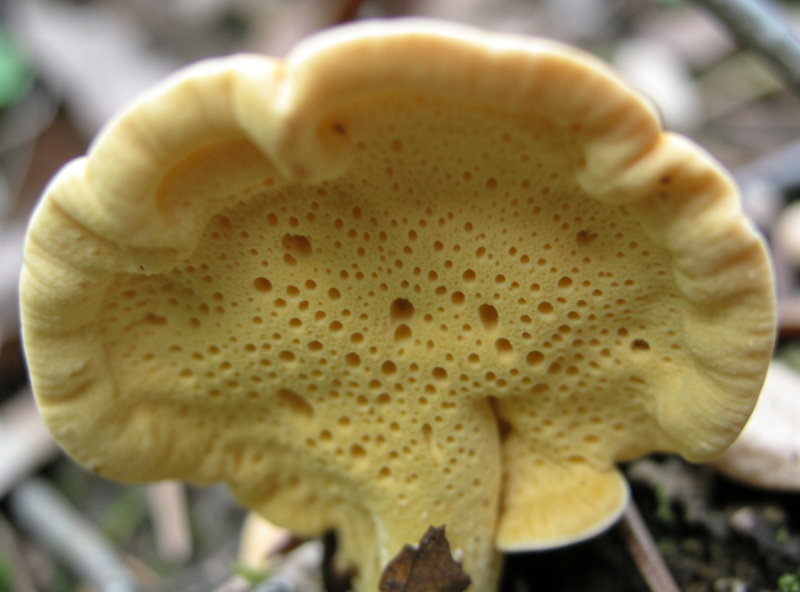
Chicken of the woods (Laetiporus) is a bracket fungus — a polypore — that grows in overlapping, fan-shaped shelves directly on wood: living hardwoods, stumps, and fallen logs, most classically oak. The top surface is a soft suede orange, and the underside is a bright sulphur-yellow surface of tiny pores, not gills. There is no stem in the usual sense; the shelves attach broadly to the wood at one edge. Young growth is soft, moist, and faintly lemon-edged; older brackets fade pale, dry out, and crumble.
That pore surface is everything. Run a finger across the underside of a true chicken of the woods and you feel a fine, even, spongy field of pores, like firm felt. There are no blades, no folds, nothing to peel. Combined with the broad shelving growth straight out of wood, the poreless — rather, gill-less — underside is the feature that rules a jack-o’-lantern out instantly.
Jack-o’-Lantern: The Gilled Imposter
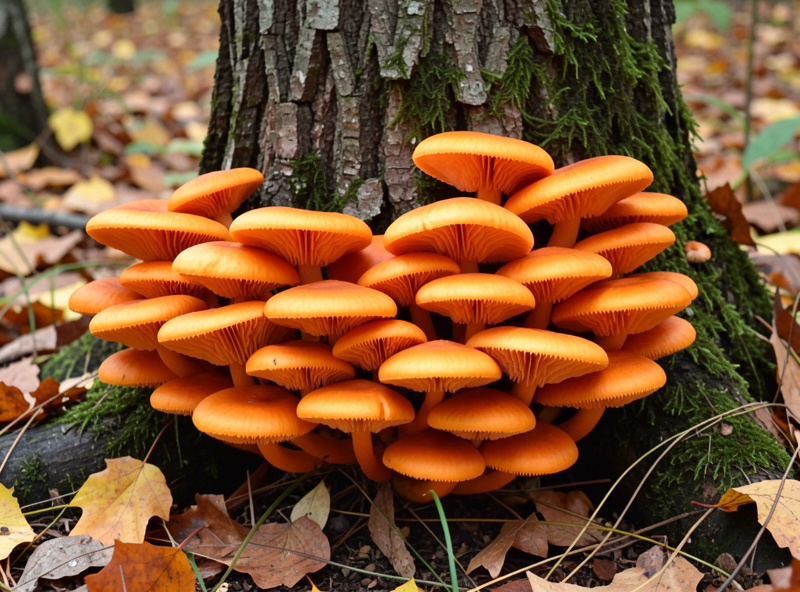
The jack-o’-lantern (Omphalotus) is a true gilled mushroom. It grows in dense clusters fused at a common base, at the foot of trees and stumps or over buried roots, where it can look as though it is rising from the soil. It has a defined cap and stem, and underneath that cap are true gills — thin, sharp, blade-like plates that run down the stem. The whole mushroom is orange through the flesh, and the gills are famous for a faint greenish bioluminescence in fresh specimens in the dark.
Eating a jack-o’-lantern brings on severe vomiting, cramps, and diarrhea, usually within a couple of hours. It is rarely fatal but reliably miserable, and it is one of the most common mushroom poisonings precisely because of this orange confusion. The gills alone end the debate: chicken of the woods has none.
Side by Side: The Features That Separate Them
When two fungi share a color, you separate them on the features color cannot fake. Here is the comparison I would put in front of any new forager before their first autumn season.
| Feature | Chicken of the Woods (edible) | Jack-o’-Lantern (toxic) |
|---|---|---|
| Underside | Sulphur-yellow pore surface, no gills | Sharp true gills running down the stem |
| Form | Overlapping flat shelves, no real stem | Capped-and-stemmed mushrooms in clusters |
| Grows on | Directly out of wood: trunks, stumps, logs | Clustered at tree bases and over buried roots |
| Flesh | Pale to lemon, soft when young | Orange throughout |
| Texture | Meaty, fibrous, suede-topped | Typical soft gilled-mushroom flesh |
Other Chicken of the Woods Look-Alikes Worth Knowing
The jack-o’-lantern is the headline confusion, but a careful forager keeps two more cautions in mind. First, not every Laetiporus is equal: specimens growing on conifers, eucalyptus, or yew are widely reported to cause stomach upset and reactions and are best left alone — stick to chicken of the woods growing on hardwoods, ideally oak. Second, old, faded, crumbly brackets cause digestive trouble in many people even when correctly identified; the edible window is the young, soft, moist outer edges, not the tough older shelf.
There are also harmless-but-inedible bracket fungi that a beginner might glance at and dismiss as “some orange shelf,” which is fine — the danger only runs one direction here, toward the gilled jack-o’-lantern. Get the gills-versus-pores call right and the hardwood-host call right, and chicken of the woods becomes one of the safer large edibles to learn.
Where and When to Look for Chicken of the Woods
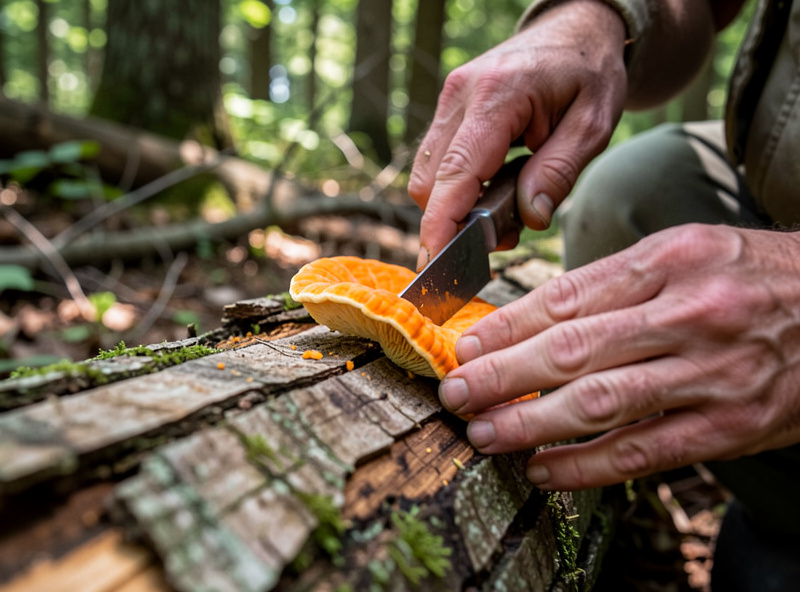
Chicken of the woods is one of the more findable large edibles because it fruits from the same wood for years, often reappearing on the exact log or stump you found it on last season. The main flush comes in late summer through autumn, with a lighter spring showing in some regions after warm rains. I scan the trunks and bases of mature oaks, standing dead hardwoods, and big fallen logs — this is an eyes-up mushroom, not an eyes-down one, because a bright orange shelf six feet up a trunk is easy to walk straight past while you are staring at the ground for morels.
Because it grows back, it pays to mark productive trees and time your return. The eating window is narrow even on a good specimen: catch it young and soft-edged. A bracket that looked perfect last weekend can turn pale, tough, and crumbly within days of dry weather, so when a flush is fresh and tender, that is the day to harvest. One generous oak can yield several pounds, which quickly becomes a preservation question rather than a foraging one — a good problem, and the reason the storage guide below earns a place in this cluster.
Eating Chicken of the Woods Safely
Even a correctly identified chicken of the woods deserves respect in the kitchen. Harvest only the young, tender, soft-edged growth and trim away anything tough, buggy, or dried. Always cook it thoroughly — never sample it raw — and the first time you eat it, eat a small portion only, because a minority of people react to even good specimens regardless of identification. If that small portion sits fine, you can eat normally next time.
Stick to hardwood hosts, cook it well, start small, and keep your first finds separate until you are confident. This is exactly the cautious, one-variable-at-a-time approach I take to every new culture and every new ferment — the surplus and storage methods carry over to the kitchen, and our preservation guide covers freezing and drying the haul. If you ever feel ill after eating any wild mushroom, contact Poison Control or emergency services without waiting.
Frequently Asked Questions
How do I tell chicken of the woods from a jack-o’-lantern?
Look underneath. Chicken of the woods has a sulphur-yellow pore surface and no gills, and grows as overlapping shelves on wood. The jack-o’-lantern has sharp true gills, a cap and stem, and grows in clusters at the base of trees. Gills mean it is not chicken of the woods.
Does chicken of the woods have gills?
No. Chicken of the woods is a polypore with a fine pore surface on its underside, not gills. Any bright orange fungus with blade-like gills is something else, and possibly the toxic jack-o’-lantern, so it should not be eaten as chicken of the woods.
Is the jack-o’-lantern mushroom deadly?
The jack-o’-lantern is toxic but rarely fatal. It causes severe vomiting, cramps, and diarrhea, usually within a couple of hours of eating it. It is one of the most common mushroom poisonings because people confuse its orange color with edible species.
Can chicken of the woods make you sick?
Even correctly identified chicken of the woods can upset some people, especially specimens growing on conifers, eucalyptus, or yew, or old crumbly brackets. Eat only young tender growth from hardwoods, always cook it thoroughly, and try a small portion the first time.
What trees does chicken of the woods grow on?
Chicken of the woods grows directly on wood, most reliably on oak and other hardwoods, as well as stumps and fallen logs. Foragers generally avoid specimens on conifers, eucalyptus, and yew because those are more often reported to cause reactions.