
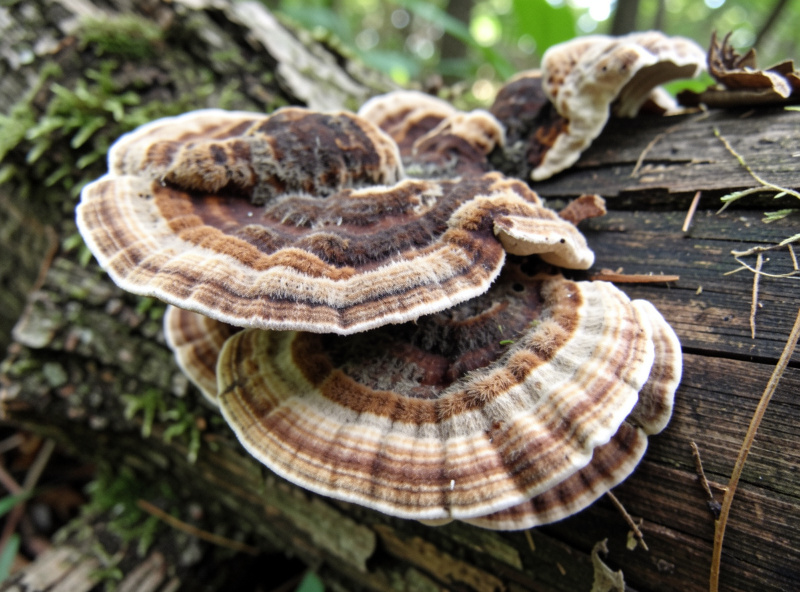
Turkey tail (Trametes versicolor) is the easiest functional mushroom I grow, and it is the one I point beginners to when reishi feels too slow. It fruits on hardwood — logs, sawdust blocks, or stumps — in concentric bands of brown, tan, and blue-grey that genuinely look like a wild turkey’s tail. Outdoors on a log it takes 6-12 months to colonize and then fruits for years; indoors on a sawdust block it can fruit in about 4-8 weeks after full colonization.
What makes turkey tail forgiving is that it is an aggressive saprophyte that shrugs off competitors most species would lose to. It also fruits across a wide temperature range, so it tolerates a garage or an outdoor log pile far better than the fussier wood-lovers. This guide covers both the log method and the indoor block method, plus how to tell real turkey tail from the look-alikes you do not want.
How Do You Grow Turkey Tail on Logs?
Grow turkey tail on freshly cut hardwood logs by drilling holes, hammering in inoculated dowels or packing sawdust spawn, and sealing the holes with wax. Use logs 3-6 inches across and 3-4 feet long from oak, beech, birch, or maple; expect 6-12 months to colonize before the first flush.
I cut my logs in late winter when the bark is tight and the wood is full of stored sugars, then let them rest a couple of weeks before inoculating — fresh-cut wood still has active antifungal defenses that fade after cutting. I drill rows of holes in a diamond pattern, hammer in inoculated dowel plugs, and seal each one with cheese wax to lock in moisture and keep contaminants out. Then the logs go in shade against the north side of a shed. Turkey tail is patient work, but a well-run log fruits every spring and fall for 4-6 years — the best yield-per-effort of any species I run outdoors.
How Do You Grow Turkey Tail Indoors on Sawdust?
Indoors, turkey tail fruits on supplemented hardwood sawdust blocks the same way shiitake does — sterilize the block, inoculate with grain spawn, colonize fully, then introduce fresh air and humidity. Indoor blocks fruit in about 4-8 weeks after full colonization versus the many months a log takes.
I run turkey tail on the same supplemented sawdust blocks I described in my supplemented sawdust substrate recipe, sterilized at 15 PSI rather than pasteurized because the long colonize-and-fruit window invites contamination otherwise. Once the block is solid white, I introduce fresh-air exchange and high humidity in the fruiting tent and the banded brackets push out within a couple of weeks. The blocks are thin and shelf-like rather than the meaty fruit you get from oyster, so do not expect a heavy harvest by weight — turkey tail is grown for the dried, banded brackets, not for a stir-fry.
If you are deciding between dowel plugs and sawdust spawn for the indoor or log route, I reach for sawdust spawn when I want fast, aggressive colonization and have a flow hood or clean space to work in, and for dowel plugs when I am inoculating logs in the garden where speed matters less than convenience. Dowels are slower to leap from plug to plug but they are far more forgiving to install outdoors without sterile conditions — you are hammering pre-colonized wood into wood, which gives turkey tail a strong head start over anything in the log. For a first-time grower I almost always steer them to plugs on a couple of logs: the failure rate is low, the tools are just a drill and a mallet, and you learn the whole inoculation rhythm without needing the sterile chain an indoor block demands.
How Do You Identify Real Turkey Tail?
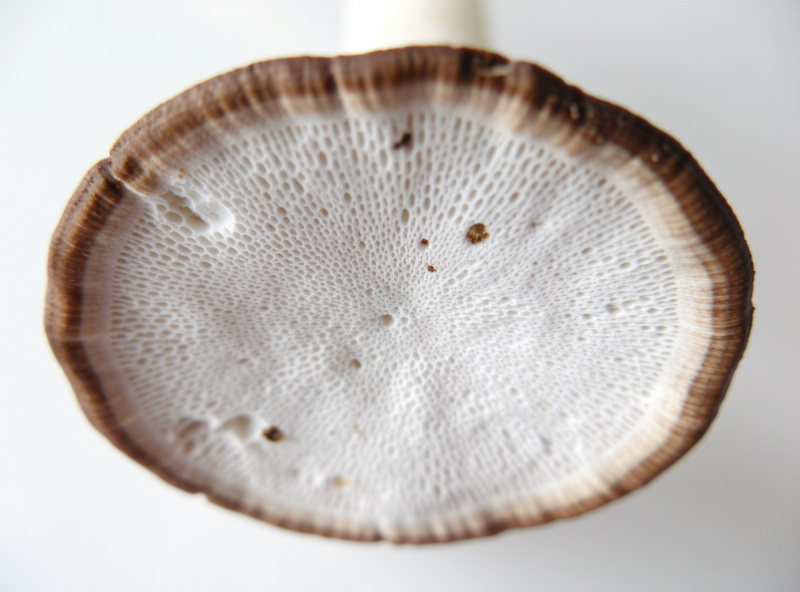
Real turkey tail has tiny pores on its underside (not gills, not smooth), flexible thin brackets under 3 mm thick, and concentric bands with a fuzzy surface. The most common look-alike, false turkey tail (Stereum ostrea), has a smooth underside with no pores — that pore test is the single most reliable field check.
I always flip a bracket and look at the underside first. True turkey tail shows a dense layer of fine white-to-cream pores; if the underside is smooth, orange-brown, and poreless, it is Stereum, which is not what you want. The brackets should also flex like leather rather than snap like wood. This identification discipline matters whether you are growing or buying spawn — getting the right organism into your logs is the whole game. The same careful-process instinct that protects my grow room from contamination applies to making sure you started with the correct species in the first place.
Turkey Tail: Logs vs Indoor Blocks
Logs are slower to start but fruit for years with almost no maintenance; indoor blocks fruit fast but only for a flush or two. For most home growers I recommend starting a couple of logs for the long game and running one indoor block if you want fruit this season.
| Factor | Outdoor Logs | Indoor Sawdust Block |
|---|---|---|
| Time to first flush | 6-12 months | 4-8 weeks after colonization |
| Productive lifespan | 4-6 years | 1-2 flushes |
| Maintenance | Very low (shade + occasional soak) | Daily humidity and FAE |
| Contamination risk | Low (outdoor competition) | Moderate (needs sterilization) |
| Best for | Long-term steady supply | Fast first harvest |
How Do You Care for Turkey Tail Logs Between Flushes?
Keep turkey tail logs in deep shade and let rainfall do most of the watering, but in a dry spell soak them for 12-24 hours in a tub or trough to drive the next flush. A log that dries below about 35% internal moisture stalls, so the soak is your main intervention — otherwise the species is close to hands-off.
I lean my logs in a loose lattice against the north wall of the shed where they get morning damp and no direct afternoon sun. After a hot week with no rain I drop them into a water trough overnight, weighting them so they stay submerged, then stand them back up — that cold-water shock plus the rehydration is the same flush trigger commercial log growers use. I leave at least a few inches of air gap between logs so the bark stays breathable and contamination from soil contact stays low. One mistake I made early on was laying logs flat directly on bare ground; they wicked up soil moisture unevenly and one rotted from the underside before turkey tail finished claiming it. Off the ground, in shade, with an occasional soak is the whole maintenance routine, and it is why a turkey tail log is the lowest-effort functional crop in my garden.
How Do You Harvest and Dry Turkey Tail?
Harvest turkey tail by cutting the whole bracket cluster from the log or block at any size — younger brackets are more pliable. Dry them at low heat (95-113°F) until they snap, then store airtight; the dried banded brackets are simmered into a long decoction tea rather than eaten.
I cut the clusters with clean scissors, give them a quick brush to clear debris, and lay them on dehydrator trays. Because the brackets are thin they dry quickly — usually a few hours. For storage moisture targets and the snap-test endpoint, my guide to drying and storing medicinal mushrooms covers it directly. Turkey tail is studied in the research literature for various compounds, but as with every functional species on this site I keep strictly to cultivation and preparation — the health side is a question for a clinician, not a grow guide.
Frequently Asked Questions
Is turkey tail easy to grow?
Yes. Turkey tail is one of the easiest functional mushrooms to grow because it is an aggressive saprophyte that resists competitors and tolerates a wide temperature range. On logs it needs almost no maintenance once inoculated.
How long does turkey tail take to grow on logs?
Turkey tail logs take 6-12 months to fully colonize before the first flush, then fruit every spring and fall for 4-6 years. Indoor sawdust blocks are much faster, fruiting 4-8 weeks after full colonization.
What wood is best for growing turkey tail?
Use freshly cut hardwood logs 3-6 inches across from oak, beech, birch, or maple. Cut in late winter when bark is tight and let logs rest a couple of weeks before inoculating with dowels or sawdust spawn.
How do you tell real turkey tail from look-alikes?
Real turkey tail has tiny pores on its underside, flexible brackets under 3 mm thick, and fuzzy concentric bands. The main look-alike, false turkey tail (Stereum ostrea), has a smooth poreless underside. The pore test is the most reliable check.
Can you eat turkey tail mushroom?
Turkey tail is too thin and leathery to eat as food. It is dried and simmered into a long decoction tea rather than cooked in a dish. It is grown for the dried banded brackets, not for a stir-fry.
Some links in this article are affiliate links; if you buy through them I may earn a small commission at no extra cost to you.