
A double-extraction tincture pulls reishi’s two different compound families with two different solvents: a high-proof alcohol soak captures the alcohol-soluble triterpenes, and a long hot-water decoction captures the water-soluble polysaccharides. You run both, then blend them. A single alcohol-only or water-only extraction leaves roughly half the spectrum of compounds behind in the spent mushroom, which is the whole reason this two-step method exists.
Reishi (Ganoderma lucidum) is the classic case for it because its prized constituents split cleanly across those two solubilities. This is a preparation-technique guide — the mechanics of getting a clean, shelf-stable extract out of mushrooms you grew or bought. It is not medical advice and contains no dosing guidance; for any question about whether or how to use a mushroom extract, talk to a qualified healthcare professional. If you want to grow the conks first, start with my guide to growing reishi at home.
Why Reishi Needs a Double Extraction
Reishi needs two solvents because its researched constituents are split between two solubility groups that no single solvent reaches. Triterpenes such as ganoderic acids are alcohol-soluble and barely move in water; the beta-glucan polysaccharides in the cell walls are water-soluble and are not freed by alcohol alone — they need heat and water to break out of the chitin. Use one solvent and you systematically miss the other group.
The research literature describes reishi as a source of both these compound families, and a double extraction is simply the home method that respects that chemistry instead of fighting it. I am describing what the solvents pull, not what the compounds do in a body — that second question is one for the published studies and your doctor, not for a cultivation site. What I can speak to firsthand is the technique that gets a full-spectrum extract rather than a partial one.
Which Solvent Pulls What
The simplest way to hold the method in your head is to map each compound family to its solvent and its step. Triterpenes go to alcohol at room temperature over weeks; polysaccharides go to water at a simmer over hours. The table below is the mental model I keep taped inside my prep cabinet.
| Compound family | Solubility | Extraction step | Typical condition |
|---|---|---|---|
| Triterpenes (ganoderic acids) | Alcohol-soluble | Alcohol maceration | 40% ABV+, 4-8 weeks, room temp |
| Beta-glucan polysaccharides | Water-soluble | Hot-water decoction | Low simmer, 2 hours or more |
| Bitter-tasting markers | Both | Visible in both menstruums | Deep amber to red color |
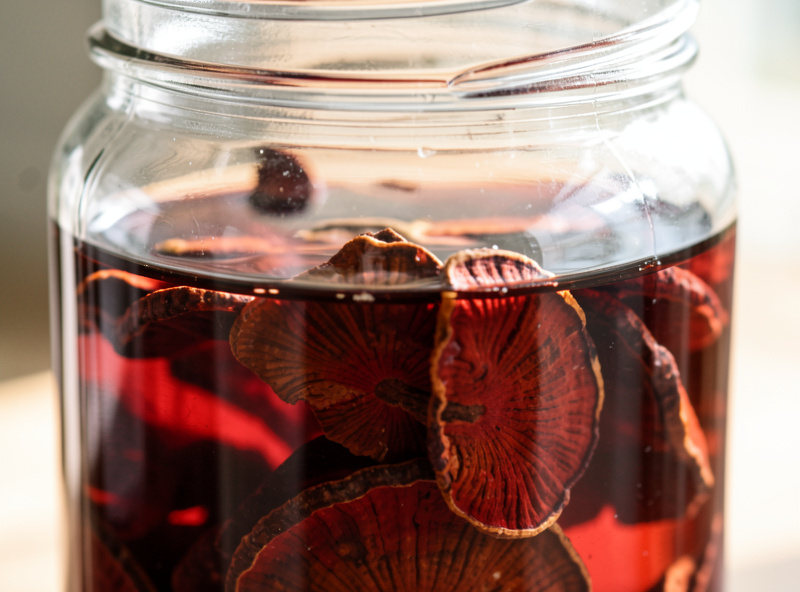
Reishi makes this easy to see because both extracts turn deep amber to mahogany and both taste intensely bitter — that bitterness is a rough visual and gustatory cue that the solvent is actually pulling something out of the mushroom rather than sitting clear and idle.
How Do You Do the Alcohol Extraction?
Pack a jar one-third full with dried, broken-up reishi, cover completely with at least 40% ABV spirit (80 proof vodka is the common floor; higher proof pulls more), seal, and keep it out of direct light for 4 to 8 weeks. Shake it every few days. The longer macerations give a darker, more bitter tincture, which tracks with more triterpene in solution.
Dried reishi matters here — fresh conks add water that dilutes your alcohol percentage and can let things spoil. I grind or snap mine into small pieces first because reishi is woody and hard, and more surface area means a faster, more complete pull. Glass only, lid sealed, label it with the date you started. When the soak is done you strain off the alcohol and, importantly, you keep the spent mushroom for the second step.
How Do You Do the Water Decoction?
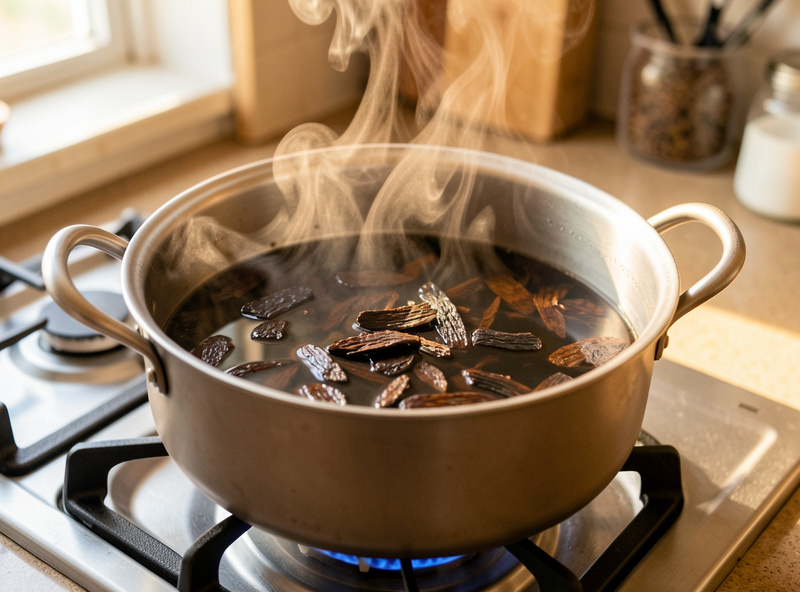
Take the alcohol-soaked mushroom (or fresh dried reishi if you run the steps in parallel), cover it with water, and hold it at a low simmer — never a hard boil — for at least 2 hours, topping up water as it reduces. You are aiming to reduce the volume down so the polysaccharides concentrate. Strain off the dark liquid; that decoction is your water-soluble half.
A low simmer is the detail people get wrong: a rolling boil can damage some of the polysaccharides you went to the trouble of extracting, so I keep mine at the barest movement on the surface for as long as my patience holds, often closer to 3 hours. The water comes out the color of strong coffee. Reishi’s woodiness means it tolerates these long simmers far better than a tender gourmet mushroom would.
Combining the Two Extracts
Blend the strained alcohol tincture and the cooled, strained water decoction so that the finished alcohol content lands around 25% — enough alcohol to keep the water-based half shelf-stable without refrigeration. A common practical blend is roughly equal parts of each when the alcohol started near 40%, but the target is the final alcohol percentage, not a fixed ratio.
The reason the alcohol level matters is preservation: below roughly 20% alcohol a water-rich tincture can grow mold or bacteria, and the whole point of combining is to get one stable bottle instead of a fridge-only decoction that turns in a week. I label the final bottle with the date and the rough alcohol percentage. Stored in amber glass away from light and heat, a properly combined extract keeps for a long time on the shelf.
Which Mushrooms Suit This Method?
Double extraction makes sense for tough, woody, polysaccharide-and-triterpene mushrooms — reishi is the textbook case, and turkey tail, chaga, and maitake are commonly prepared the same way. The shared trait is a dense, chitin-rich structure where heat and water are genuinely needed to free the water-soluble fraction. A tender gourmet mushroom does not justify the two-step effort; the woody medicinals do.
Reishi in particular earns the full method because it is so visibly bitter and so rich in alcohol-soluble compounds that an alcohol-only soak feels like it is “working,” which is exactly the trap — it pulls a striking dark tincture while quietly leaving the entire water-soluble half behind in the conk. Running the decoction on that same spent mushroom is almost free in effort and roughly doubles what you have captured, which is why I never compost a reishi soak until it has also been simmered.
Straining, Yield, and Storage
Strain each menstruum through a fine mesh first, then through a coffee filter or muslin to catch the fine sediment that otherwise settles as cloudy sludge in the bottle. Reishi sheds a lot of woody fines, so I strain twice every time. A jar packed one-third with dried reishi and topped with spirit yields a few hundred milliliters of finished combined extract once you blend in the decoction — modest, which is exactly why people batch it.
Press the spent mushroom firmly when you strain the alcohol step; a surprising amount of dark, loaded liquid hides in those waterlogged pieces and pours out under pressure. Once combined and bottled in amber glass, I store the extract in a cool, dark cabinet, never above the stove where heat cycles it daily. Clearly date and label every bottle — an unlabeled dark tincture is impossible to tell apart from three others a year later, and you will want to know which batch came out best.
Mistakes I Made Learning This
My first reishi tincture was alcohol-only because that is the easy half, and it was clear within days that I had thrown away the entire water-soluble side by composting the spent mushroom too soon. The second batch I boiled hard to save time and scorched the bottom of the pot, which adds a burnt note you cannot strain out. Both lessons came down to respecting that this is two slow processes, not one fast one.
The other early error was using fresh reishi straight off the grow block — the extra moisture dropped my effective alcohol percentage and the soak never developed the deep color a dried-mushroom soak does. Dry your conks fully first; my guide to drying and storing medicinal mushrooms covers getting them cracker-dry before you ever reach for the alcohol.
Frequently Asked Questions
What is a double-extraction tincture?
A double-extraction tincture uses two solvents in sequence: high-proof alcohol to pull alcohol-soluble compounds like triterpenes, and a long hot-water decoction to pull water-soluble polysaccharides. The two extracts are then blended into one shelf-stable bottle.
Why can’t you just use alcohol for a reishi tincture?
Alcohol alone leaves the water-soluble beta-glucan polysaccharides locked in the mushroom’s cell walls, which need heat and water to release. An alcohol-only tincture captures roughly half of reishi’s compound families and discards the rest in the spent mushroom.
What alcohol percentage should the finished tincture be?
Aim for around 25% alcohol in the combined bottle. That is high enough to keep the water-based half shelf-stable without refrigeration. Below about 20% alcohol, a water-rich tincture can spoil, so the final percentage matters more than a fixed ratio.
How long does each extraction step take?
The alcohol maceration runs 4 to 8 weeks at room temperature with occasional shaking. The water decoction runs at a low simmer for at least 2 hours, often closer to 3. Reishi’s woody structure tolerates these long times well.