
Grow turkey tail first. It colonizes faster, shrugs off contamination, fruits on supermarket-cheap hardwood, and forgives the rookie mistakes that will stall a reishi block for months. Reishi is the more striking mushroom and the bigger flush, but it wants 3 to 6 months of patience and tight CO2 control that a first-timer rarely has dialed in. Turkey tail gets you a finished, harvestable medicinal crop in a single season with almost no special gear.
Both are legal, non-psychoactive functional species I keep in rotation, and both belong in any home medicinal grow eventually. But “which first” is a real question with a clear answer, and getting it wrong is how people burn out before they ever taste success. This guide compares them head to head as cultivation projects — difficulty, speed, gear, and yield — so you start with the one that builds momentum. For the full lineup, see my complete medicinal mushroom cultivation guide.
Turkey Tail vs Reishi: Side-by-Side
The fastest way to decide is to line up the two species on the factors that actually determine whether a beginner succeeds: how forgiving the colonization is, how long until harvest, and how much environmental control the fruiting stage demands. Reishi loses on every speed and difficulty axis and wins only on visual drama and per-block yield.
| Factor | Turkey Tail | Reishi |
|---|---|---|
| Beginner difficulty | Easy — very forgiving | Moderate — CO2 fussy |
| Colonization speed | Fast, aggressive | Slower |
| Time to harvest | One season, weeks on a block | 3 to 6 months |
| Best substrate | Hardwood logs or blocks | Supplemented hardwood blocks |
| Fruiting control needed | Low | High — CO2 shapes the form |
| Contamination resistance | High | Moderate |
| Form harvested | Thin shelf brackets | Antler or conk |
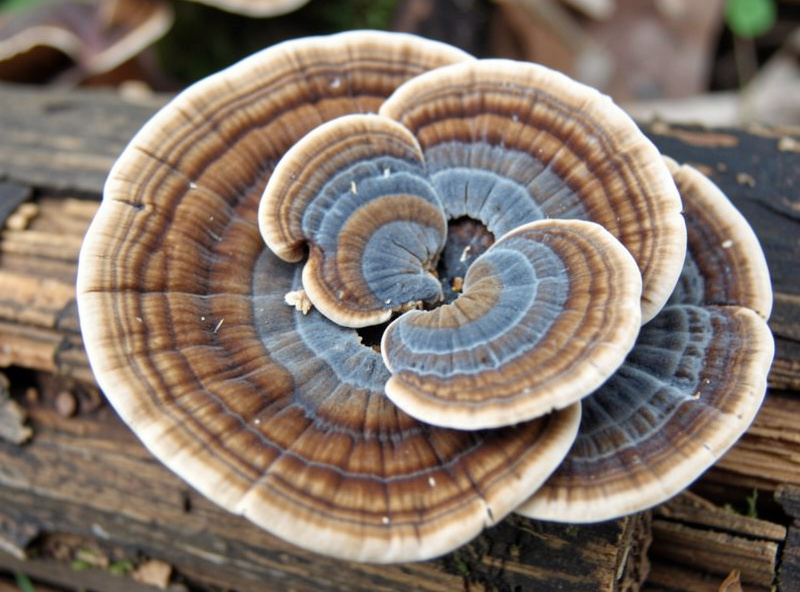
Why Turkey Tail Is the Better First Grow
Turkey tail (Trametes versicolor) is one of the most aggressive wood-decay fungi a home grower can buy, which is exactly what you want when your sterile technique is still shaky. It colonizes hardwood fast and out-competes most contaminants on its own, so a slightly imperfect transfer that would doom a reishi block often still runs clean on turkey tail. It is genuinely hard to kill.
It also asks for almost nothing at the fruiting stage. Where reishi needs you to choke or open CO2 deliberately to control whether you get antlers or a conk, turkey tail just fruits its thin banded brackets under normal humid fresh-air conditions. On my bench it goes from inoculated block to harvestable shelves in a matter of weeks, not the half-year reishi demands. That fast win is what keeps a beginner in the hobby.
Why Reishi Tests Your Setup
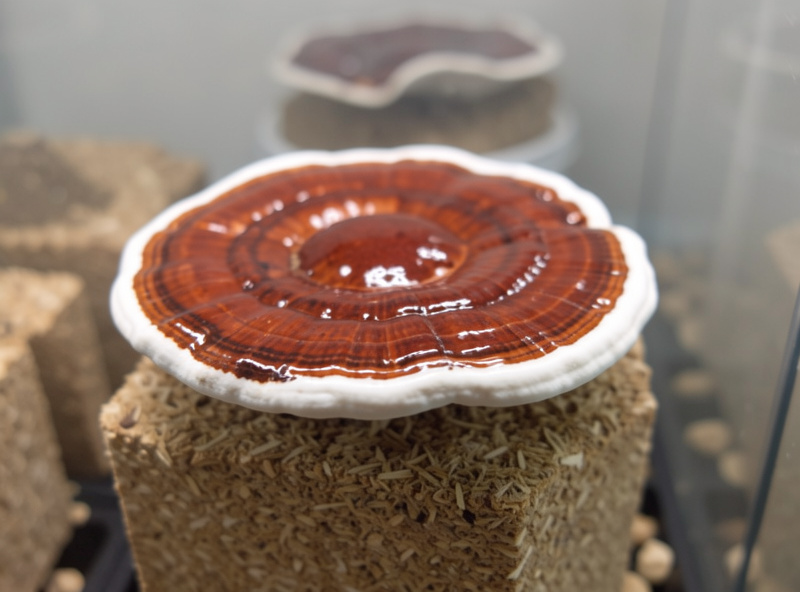
Reishi (Ganoderma lucidum) is slower and pickier, and its signature trick — growing as branching “antlers” or a flat “conk” — is entirely controlled by carbon dioxide. High CO2 in a sealed environment gives you antlers; opening up for fresh air gives the classic flat conk. Get that environmental control wrong and you get a stalled, deformed flush instead of a clean harvest.
It is also a long commitment. A reishi block can take 3 to 6 months from inoculation to a mature, harvestable fruiting body, and that is a long time to discover you had a contamination problem or your humidity was off. None of this makes reishi a bad grow — it is one of my favorites — but it rewards a grower who already knows how to read a block and dial a chamber. My reishi growing guide walks through the antler-versus-conk CO2 control in detail.
What Substrate Does Each Need?
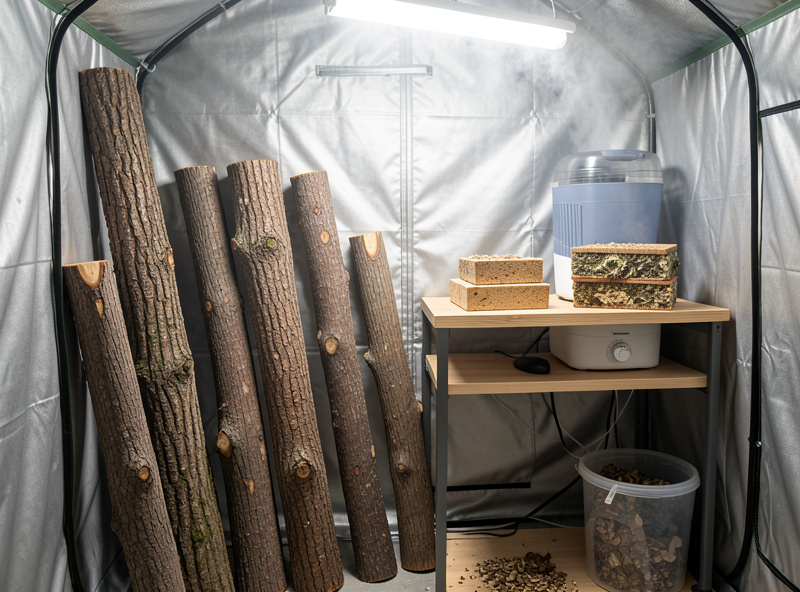
Both are hardwood lovers, but turkey tail is happy on plain hardwood logs or basic sawdust blocks, while reishi performs best on supplemented hardwood blocks with a bran or soy-hull boost. Turkey tail’s substrate forgiveness is part of why it is cheaper and easier to start — a cut oak or maple log inoculated with sawdust spawn will fruit turkey tail outdoors with no chamber at all.
Reishi can grow on logs too, but indoors most growers run it on supplemented blocks for a denser, faster colonization and a bigger conk. The supplementation that helps reishi also raises contamination risk, which loops back to why it is the harder beginner project. If you are weighing substrates generally, my supplemented sawdust block recipe covers the bran ratios that matter here.
What Yield and Timeline Should You Expect?
Turkey tail rewards patience cheaply: an inoculated hardwood log produces flushes of brackets for several years once it fully colonizes, with the first shelves often appearing the season after inoculation. Indoors on a block, turkey tail will throw a usable harvest of thin brackets within a few weeks of full colonization. The per-flush mass is modest because the brackets are thin, but the crop keeps coming.
Reishi is the opposite trade: one block or log gives you a single dense conk (or a cluster of antlers) per fruiting cycle, but that conk is a substantial, heavy piece of dried material once cured. The catch is the wait — that 3-to-6-month run from inoculation to mature conk is real, and there is no shortcutting it with heat or supplementation without inviting contamination. A first-year grower who wants something in the jar before autumn should run turkey tail; reishi is the project you start in spring and harvest before the holidays.
My honest read after running both for years: turkey tail builds the confidence and the muscle memory, and the day a reishi conk finally lacquers up glossy red is far more satisfying once you have a few easy wins behind you. Sequencing the two — easy crop first, statement crop second — is the whole argument of this guide.
Why People Grow These Two
Both turkey tail and reishi are grown as functional, non-psychoactive medicinal mushrooms, and both have been the subject of considerable research interest into their polysaccharide content. I want to be careful and honest here: the research literature studies these compounds, but that is a question for published studies and your doctor, not a claim I make on a cultivation site. What I grow them for is the dried shelf-tea and tincture stock, and the simple satisfaction of producing my own.
From a grower’s standpoint the appeal is that both store beautifully once dried — turkey tail brackets and reishi conks are tough and shelf-stable for a long time — so a single successful crop gives you raw material for months. If extracting is your end goal, the cultivation is only half the story; the preparation is its own craft.
The Gear I Use for Both
The good news is the kit overlaps almost entirely. Both species run on the same core setup I use across my medicinal grows: hardwood substrate, sawdust spawn, a clean transfer space, and a humid fruiting environment. The difference is that turkey tail tolerates a loose outdoor log setup while reishi rewards a controlled chamber. Start with turkey tail and you can build the rest of the kit gradually as you graduate to reishi.
If you are buying in, hardwood inoculation dowels are the cheapest way to start turkey tail on a log, and a basic ultrasonic humidifier is what eventually lets you control reishi indoors. As an Amazon Associate I earn from qualifying purchases; this is the gear I actually run on my own grows.
Frequently Asked Questions
Should a beginner grow turkey tail or reishi first?
Turkey tail first. It colonizes faster, resists contamination, grows on cheap hardwood, and fruits in weeks with little environmental control. Reishi takes 3 to 6 months and needs careful CO2 control, making it a better second project once your technique is solid.
Is turkey tail easier to grow than reishi?
Yes. Turkey tail is one of the most aggressive and forgiving wood-decay fungi, so it out-competes contaminants and tolerates rookie mistakes. Reishi is slower, pickier about CO2 at fruiting, and far less forgiving of an imperfect sterile transfer.
How long does each take to harvest?
Turkey tail can fruit harvestable brackets within weeks of full colonization. Reishi typically takes 3 to 6 months from inoculation to a mature antler or conk. The difference in patience required is one of the biggest reasons to start with turkey tail.
Can you grow turkey tail and reishi on the same substrate?
Both are hardwood lovers, so they share a substrate family. Turkey tail thrives on plain hardwood logs or basic sawdust blocks, while reishi performs best on supplemented hardwood blocks. You can run both on logs, but reishi usually does better on supplemented blocks indoors.
What controls whether reishi grows as antlers or a conk?
Carbon dioxide. High CO2 in a sealed environment pushes reishi into branching antler forms, while opening up for fresh-air exchange produces the flat lacquered conk. This CO2 sensitivity is a big part of what makes reishi harder than turkey tail.
Do turkey tail and reishi store well after harvest?
Yes. Both are tough, woody mushrooms that dry into shelf-stable material lasting many months. A single successful crop of either gives you a long-term supply of dried mushroom for teas and tincture stock once properly dried and stored.