
Overwintering an outdoor mushroom bed comes down to one idea: the mycelium is alive but dormant under the cold, and your job is to keep it from freeze-drying, not to keep it warm. A thick insulating mulch cap of 6 to 12 inches of straw or leaves over the bed traps soil warmth, holds moisture, and buffers the freeze-thaw swings that actually kill outdoor beds. Done before the first hard frost, that single layer carries a wine-cap bed or a log stack through a Nordic winter to fruit again in spring.
I winterize my outdoor wine-cap bed and log stack every autumn here in Sweden, and after a few seasons the routine is simple and forgiving — far more forgiving than people fear. Outdoor mushroom mycelium is hardy; it evolved in forests that freeze solid every year. The losses come from drying out and from repeated freeze-thaw heaving, both of which a good mulch cap prevents. Here is exactly how I overwinter beds and logs and bring them back in spring.
What Actually Threatens a Bed in Winter
Cold itself is rarely the killer. Wine cap, oyster, and shiitake mycelium all survive being frozen — they simply go dormant and wait. The real threats are two: desiccation, where cold, dry winter air and wind pull moisture out of an exposed bed until the mycelium dries past recovery; and freeze-thaw cycling, where repeated freezing and thawing heaves the substrate, tears mycelial connections, and lets the bed dry between cycles. Both are moisture-and-stability problems, not temperature problems.
That reframing is the whole strategy. I am not trying to keep the bed unfrozen — I am trying to keep it moist and stable while it freezes and stays frozen. A bed that freezes once in late autumn under deep mulch and stays evenly frozen until spring comes through better than a bed that swings above and below freezing a dozen times in an exposed, drying winter.
Mulching the Bed: Timing and Depth
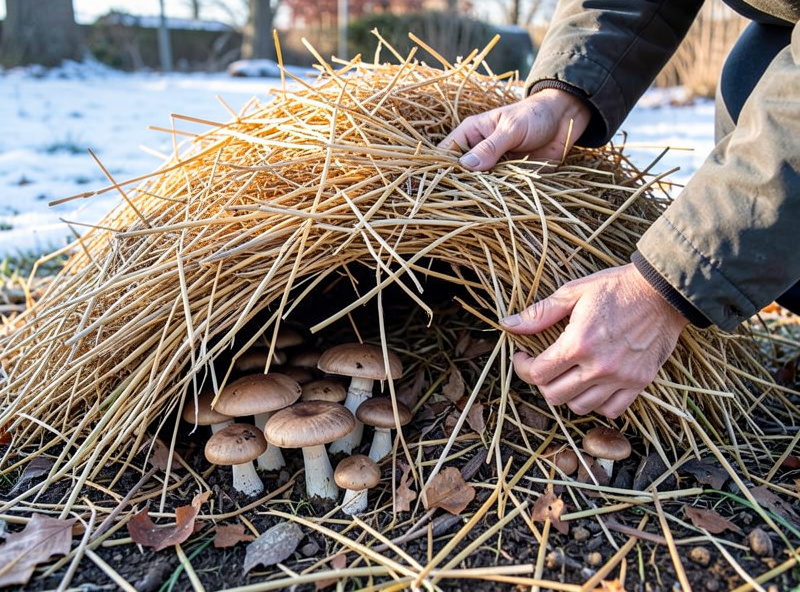
The core move is a heavy mulch cap applied before the first hard frost, while the ground still holds some warmth. I pile 6 to 12 inches of clean straw, fallen leaves, or extra wood chips over the whole bed — thicker in colder zones. That layer insulates the soil, slows freezing, holds humidity beneath it, and stops the wind from stripping moisture off the surface mycelium. It is the same logic gardeners use to overwinter perennials, pointed at a fungal bed instead of a root crown.
Timing matters as much as depth. Mulch too early in a warm autumn and you can trap warmth that keeps the bed trying to fruit when it should be shutting down; mulch after a hard freeze and you have already let the bed take the desiccation hit. I watch for the first light frosts as the signal that the bed is winding down, then cap it heavily before the first deep freeze. The bed underneath should go into winter damp — a good soak before mulching, if autumn has been dry, sets it up well.
| Element | Bed (Chips/Straw) | Log Stack |
|---|---|---|
| Main winter threat | Desiccation, freeze-thaw heave | Drying, end-grain checking |
| Protection method | 6 to 12 inch mulch cap | Stack tight, mulch base, shade |
| When to apply | Before first hard frost | Before first hard frost |
| Pre-winter moisture | Soak bed, then mulch | Soak logs if autumn is dry |
| Spring restart | Pull back mulch as it warms | Resume soak/shock cycle |
| Survives freezing? | Yes, goes dormant | Yes, goes dormant |
Overwintering Logs and Stacks
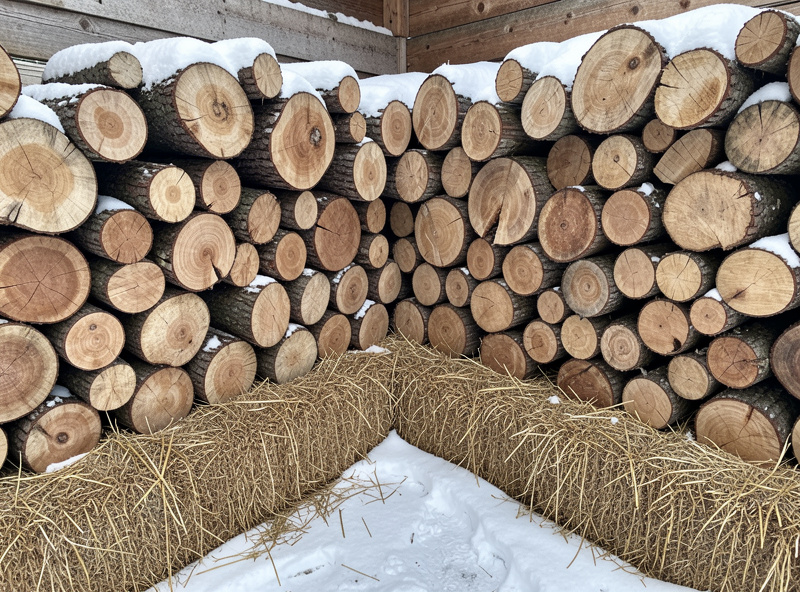
Inoculated logs are even hardier than beds — the wood itself buffers the mycelium — but they still want protection from drying winter wind. I stack logs tight together for the winter rather than spread out, mulch around the base of the stack, and keep them in their shaded spot out of the wind. Logs mid-spawn-run simply pause colonization in the cold and pick it back up in spring, losing nothing but time. The browning shiitake logs I cover in my shiitake-on-logs guide overwinter fine and resume right where they left off.
If autumn has been dry, I give the stack a good soak before the freeze so the logs go into winter at proper moisture — the same hydration that matters at inoculation, which I detail in my log inoculation guide. End grain that checks and cracks in dry cold wicks moisture out, so a tight, mulched, shaded stack that holds its moisture is all the winter protection logs need. I do not wrap or heat them; that is effort the logs do not ask for.
Snow Is Insulation, Not an Enemy
Where I grow, snow is a gift. A blanket of snow over a mulched bed is excellent insulation — it holds the soil at a stable temperature near freezing rather than letting it plunge with the air, and it cuts the drying wind entirely. I never clear snow off a mushroom bed; I let it pile up and do the insulating work the mulch started. In regions with reliable snow cover, the snow does half the overwintering job for you.
The trickier winters are the ones without steady snow — cold, dry, windy, and swinging across freezing repeatedly. Those are exactly the conditions the mulch cap exists for, so in a low-snow climate I go thicker on the mulch and make sure the bed went into winter well-watered. The goal in every case is a bed that freezes gently, stays moist, and is shielded from the wind, whether snow or straw is doing the shielding.
Container Beds and Raised Beds
Beds in containers, grow bags, or shallow raised frames need a little extra thought because they freeze harder and faster than ground beds — cold gets at them from the sides as well as the top, and they have no deep soil mass to buffer the temperature. For these I either mulch them even more heavily, including banking mulch up the sides, or move smaller containers against a sheltered wall where the building radiates a touch of warmth and blocks the wind.
The mycelium will still survive freezing in a container, but the freeze-thaw and drying risks are sharper, so a container bed rewards the most attention. If a small bed is portable, tucking it into an unheated shed or against the house for the coldest stretch splits the difference between full outdoor exposure and bringing it inside. The principle does not change — keep it moist, keep it stable, block the wind — it just takes a bit more mulch or a better-sheltered spot to deliver in a container.
Spring Restart
Bringing a bed back is mostly a matter of patience and timing. As the worst cold passes and the bed thaws, I gradually pull back some of the heavy winter mulch so the surface can breathe and warm, but I leave enough to keep moisture in — the bed will want to fruit as spring warmth and rain return. Wine-cap beds often throw their first spring flush within weeks of waking up, and a bed that overwintered well looks no different from one that never slept.
Logs simply rejoin their normal rhythm — I resume the soak-and-shock fruiting cycle once temperatures are reliably in range. Check the bed and logs for the bright, healthy white mycelium that means they came through fine; the contamination eye I use year-round, covered in my notes on healthy versus contaminated mycelium, applies just as much in spring. For where overwintering fits in the full outdoor system, the complete outdoor mushroom growing guide ties the season together, and the bed design guide covers building beds to overwinter well in the first place.
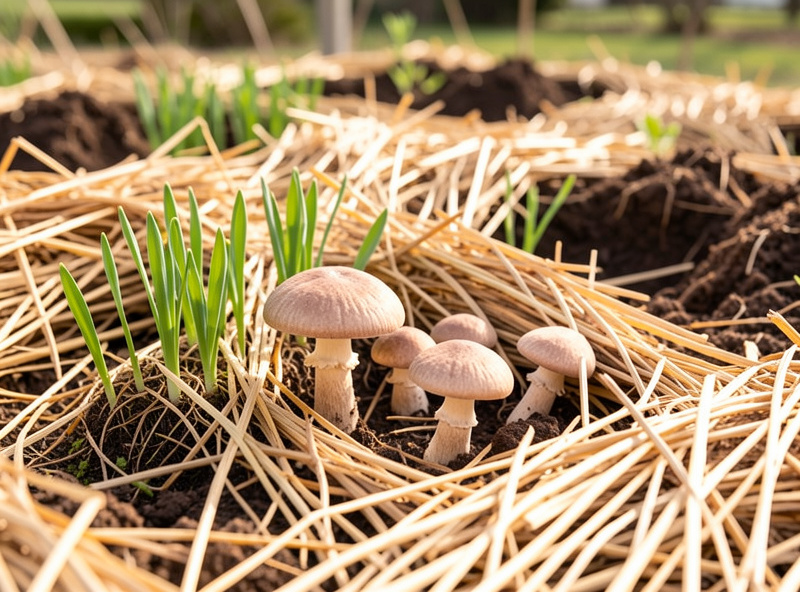
Overwintering needs nothing you would not already have — the one thing worth stockpiling in autumn is enough clean straw to cap every bed deeply. As an Amazon Associate I earn from qualifying purchases. A bale or two of clean straw mulch covers a season’s worth of bed and log winterizing.
Frequently Asked Questions
Will freezing kill my outdoor mushroom bed?
No. Wine cap, oyster, and shiitake mycelium survive freezing by going dormant. The real winter threats are drying out and repeated freeze-thaw cycling, both of which a thick mulch cap prevents.
How do you winterize an outdoor mushroom bed?
Soak the bed if autumn is dry, then cap it with 6 to 12 inches of clean straw, leaves, or wood chips before the first hard frost. The mulch insulates, holds moisture, and buffers freeze-thaw swings.
When should I mulch a mushroom bed for winter?
After the first light frosts signal the bed is winding down, but before the first deep freeze, while the ground still holds some warmth. Mulching too early can trap warmth and keep the bed trying to fruit.
Do inoculated logs need winter protection?
Logs are hardy because the wood buffers the mycelium, but protect them from drying wind. Stack tight, mulch the base, keep them shaded, and soak them before the freeze if autumn has been dry.
Should I remove snow from a mushroom bed?
No. Snow is excellent insulation, holding the bed at a stable temperature and blocking drying wind. Leave it in place. In low-snow climates, go thicker on the mulch to do the same job.
How do I restart a bed in spring?
As the bed thaws, gradually pull back some heavy mulch so the surface can warm and breathe, leaving enough to hold moisture. Wine-cap beds often flush within weeks of waking up as spring warmth and rain return.