
Companion planting with mushrooms works because the things mushroom beds need — deep shade, steady moisture, and undisturbed soil — are exactly the conditions found under and beside leafy garden plants. Tuck a wine-cap bed beneath broad-leaved vegetables or along a shaded perennial border and the plants shade the bed while the breaking-down wood chips feed the soil. It is one of the few garden partnerships where both sides genuinely benefit rather than one just tolerating the other.
I run my outdoor wine-cap bed threaded right through the garden rather than off in its own corner, and over a few seasons the pairing has earned its place: the mushrooms get the shade and moisture they want, and the spent substrate quietly improves every bed it touches. This guide is the practical version — which plants pair well with mushroom beds, why the partnership works, and how to lay it out without either side crowding the other.
Why the Partnership Works Both Ways
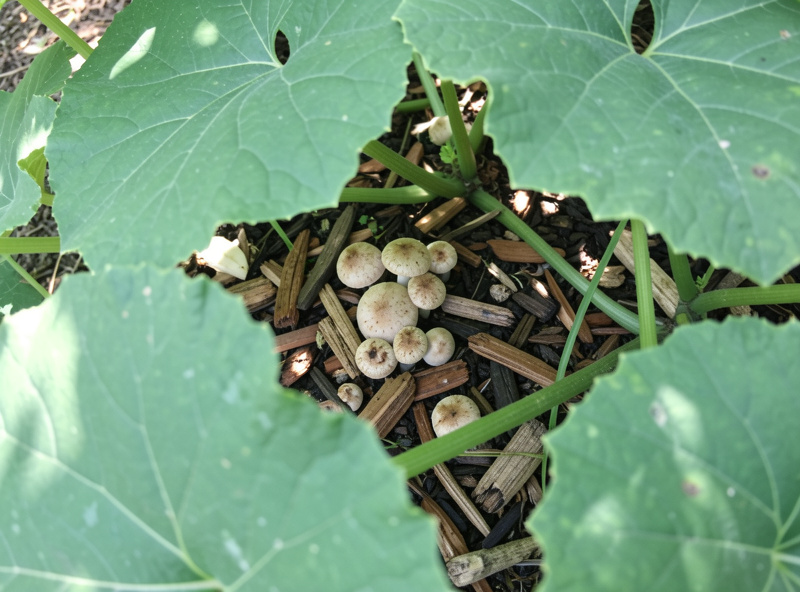
The benefit runs in two directions. Mushroom beds want shade and consistent soil moisture, and a canopy of squash, rhubarb, brassicas, or any broad-leaved plant delivers both for free — the leaves cut the sun and slow evaporation from the wood chips below. In return, the wood-chip substrate holds moisture like a sponge through dry spells and, as the mycelium and then the chips break down, releases a slow feed of organic matter into the root zone.
There is a soil-life dimension too. Wood-decay fungi like wine cap are part of how organic matter becomes soil, and a healthy fungal network in a mulched bed improves structure and water-holding over time. I am careful to keep that claim grounded — the research community studies mycorrhizal and saprotrophic fungi for soil benefits, and what I can say from my own beds is simply that the soil under a multi-year wine-cap bed ends up dark, crumbly, and full of life compared to bare ground beside it.
Best Plant Partners for Mushroom Beds
The ideal companions are plants that cast shade and do not mind sharing damp, mulched ground. Broad-leaved vegetables — squash, zucchini, rhubarb, brassicas — are my favorites because their canopy is exactly the dappled shade a wine-cap bed wants. Tall perennials and shrubs that throw afternoon shade along a border work the same way. The chip mulch suppresses weeds around those plants as a bonus, so the bed does double duty as a living mulch.
Avoid pairing mushroom beds with plants that demand full blazing sun and bone-dry soil — Mediterranean herbs and the like — because what suits them starves the mushrooms of moisture. And keep the bed clear of plants you will be digging up constantly; root vegetables and anything needing frequent cultivation disturb the mycelial network the bed depends on. The partnership rewards plants that share the ground without churning it.
| Plant Companion | What It Gives the Bed | Pairing Notes |
|---|---|---|
| Squash / zucchini | Broad-leaf shade, ground cover | Excellent — canopy shades chips |
| Rhubarb | Dense perennial shade | Excellent — permanent partner |
| Brassicas (kale, cabbage) | Mid-height shade | Good — share damp ground well |
| Berry shrubs / canes | Border shade, undisturbed soil | Good — long-term pairing |
| Leafy greens | Light shade | Fine — shallow roots, low disturbance |
| Root crops | Constant digging | Avoid — disturbs mycelium |
Laying Out a Mushroom-and-Plant Bed
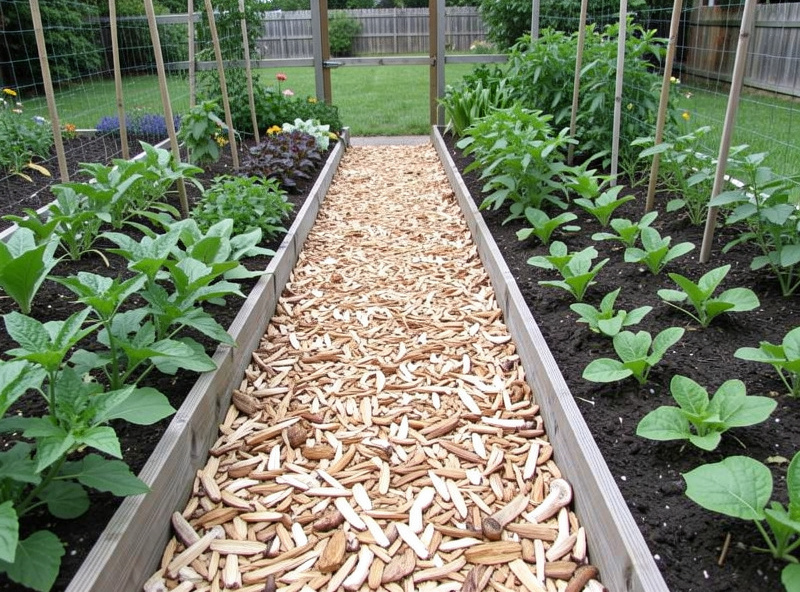
The layout that works for me is a wood-chip mushroom path or strip running between planted rows, where the plants on either side lean their canopy over the chips. I build the chip bed exactly as I would on its own — soaked hardwood chips layered with wine-cap spawn and a mulch cap — the full method is in my outdoor mushroom bed design guide. The difference in a companion layout is siting it deliberately where existing or planned plantings will shade it.
Spacing keeps both happy. I leave the mushroom strip wide enough that I can harvest from a planted-clear edge without trampling the bed, and I plant the companions far enough back that their roots are not fighting the chips for the surface moisture. Timing helps too — laying the chip bed in early spring lets it establish before the companion canopy fills in, so the mycelium is running well by the time the plants take over the shading job.
Feeding the Soil: Spent Substrate as Compost
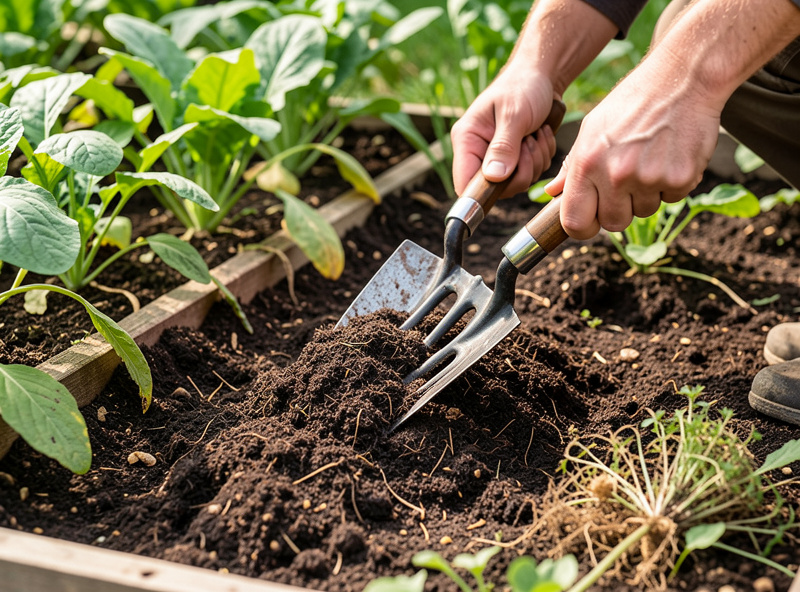
The longest-running benefit of companion mushroom planting shows up after the bed slows down. Spent wood-chip substrate is superb soil-building material — partially digested by the fungus into a crumbly, water-holding amendment that I fork straight into the surrounding beds. A retired mushroom bed becomes next season’s enriched planting soil, which is the whole regenerative logic of running mushrooms in the garden rather than apart from it.
This is the same closed-loop thinking I apply across the garden, and it is where mushrooms connect to the wider growing system. The chips that fruited wine cap this year feed the squash next year, and the squash shades the next chip bed — a rotation that keeps building soil. For the broader natural-growing and composting side of that loop, the home-composting crossover at CityRooted covers turning garden waste into the kind of soil this partnership thrives on.
The Living-Mulch Effect
The part of this partnership I did not expect until I lived with it is how well a colonized chip bed behaves as a mulch around the companion plants. A wood-chip layer that is fully run with wine-cap mycelium holds together and holds water far better than loose chips — the mycelium binds the bed into a moisture-retaining mat that the plants’ shallow feeder roots sit happily above. In a dry week the planted rows beside a colonized bed visibly hold up better than rows mulched with plain chips.
That living mulch also does the ordinary mulch jobs: it suppresses weeds, moderates soil temperature, and protects the surface from crusting and erosion. The difference is that this mulch also feeds you mushrooms while it works. I have stopped thinking of the chips as a separate mushroom project sitting in the garden and started thinking of them as a functional mulch that happens to fruit — which is the mindset shift that makes companion mushroom planting click.
Managing the Bed Among Plants
Running a bed among plants asks for a little restraint. Water the bed and the plants together in dry spells, but resist heavy cultivation anywhere near the chips — the mycelial network is the bed’s engine, and chopping through it sets fruiting back. I hand-weed rather than hoe near the bed, and I top up the chips each year right over the colonized layer to keep both the mushrooms producing and the living mulch intact around the plants.
Watch for the bed wanting to spread — wine cap is happy to run wherever there are chips, which is usually fine in a garden context but worth a tidy edge if you want it contained. The whole approach fits inside the larger outdoor system; for how companion beds sit alongside logs, mounds, and standalone beds, see my complete outdoor mushroom growing guide, and for the bed mechanics themselves, the bed design walkthrough.
Companion mushroom planting needs almost nothing beyond the spawn and the chips you would use for any bed. As an Amazon Associate I earn from qualifying purchases. A bag of wine cap garden spawn sized to the strip you are planting is the one thing to buy in.
Frequently Asked Questions
Which mushrooms work best for companion planting?
Wine cap (Stropharia) is the standout. It grows on wood chips, tolerates garden conditions, suppresses weeds as a living mulch, and breaks down into soil-building compost. Oyster on straw also pairs well in shadier spots.
What plants grow well with mushroom beds?
Broad-leaved plants that cast shade and share damp ground: squash, zucchini, rhubarb, brassicas, and berry shrubs along a border. Avoid full-sun, dry-loving plants and root crops that need constant digging.
Do mushrooms actually benefit garden plants?
The wood-chip substrate holds moisture and breaks down into organic matter that improves soil structure over time. Researchers study fungi for soil benefits; in practice, soil under a multi-year wine-cap bed becomes notably dark and crumbly.
Can I plant directly in a mushroom bed?
Plant beside it rather than churning through it. The mycelial network is what makes the bed work, and frequent digging sets fruiting back. Site companions at the edges and let their canopy lean over the chips.
What do I do with the bed when it stops fruiting?
Fork the spent wood-chip substrate into the surrounding beds as a soil amendment. It is partially digested, crumbly, and water-holding, so a retired mushroom bed becomes next season’s enriched planting soil.
When should I build a companion mushroom bed?
Early spring is ideal. Laying the chip bed before the companion canopy fills in lets the mycelium establish first, so it is running well by the time the plants take over the shading job for summer.