
Oak is the best wood for mushroom logs across most species and climates — dense, tight-barked, and the longest-producing option on the bench. Sugar maple is the solid second choice; red maple is a different story — university extension trials consistently rank it below oak, with thinner bark and noticeably fewer flushes per log. Birch colonizes fast and gives a strong early flush but burns out sooner. Avoid cherry, walnut, and any conifer. Cut logs in late winter while sap is high but freezing has stopped.
Wood species is one of two major decisions for log cultivation; for sawdust, CVG, straw, and the rest of the indoor substrate options, see my mushroom substrate guide.
If you are about to inoculate logs in spring, the species of wood you choose dictates everything that follows: how fast colonization runs, when fruiting starts, how many flushes you get, and how long the log keeps producing. Most beginners just use whatever fell in their yard — and it costs them flushes over the log’s life without them ever knowing why. The ranking and decision rules below come from my own outdoor runs cross-checked against the Cornell Small Farms shiitake log cultivation guide. Written by Kenny Nyhus Fadil.
Why Wood Species Matters More Than People Think
Mushrooms colonize wood by digesting lignin and cellulose, and hardwood species carry meaningfully different ratios of the two — hardwoods generally run somewhere in the 15-30% lignin range, with the denser, slower-growing species sitting at the higher end. On my bench that tracks with what I see in the log: the denser wood takes longer to fully colonize but keeps feeding the mycelium for years instead of one or two seasons. Pure cellulose woods like willow give a fast first flush and then nothing.
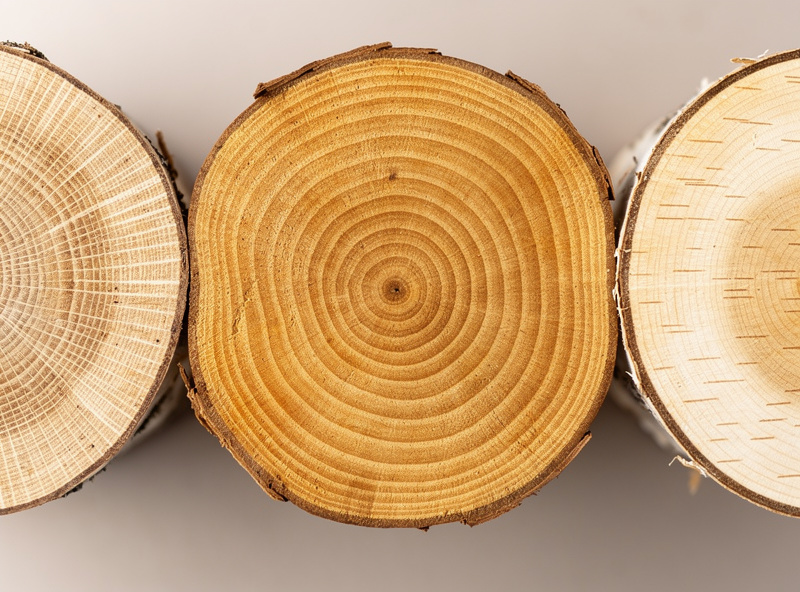
The other major factor is bark integrity. Loose-bark species (cherry, hickory after 6 months) lose moisture too fast in summer, which stalls fruiting and lets in competing molds. Tight-bark species (oak, maple, beech, birch) hold internal moisture for the full 3-5 year productive cycle. The bark is part of the substrate, not packaging — choose species that keep their bark on. Browse the substrate guides for indoor sawdust-based equivalents if outdoor cultivation is not an option. Time log inoculation by climate zone for best results. For wood-chip beds, see our wine cap mushroom outdoor bed guide.
Oak — The Best Overall Mushroom Log Wood
Oak is the universal answer for shiitake, lion’s mane, and oyster mushroom log cultivation. White oak is the gold standard (Quercus alba in the US), with red oak performing about as well according to Cornell’s field comparisons. Oak logs are the longest producers of the common species — Cornell’s extension trials clock red oak logs for roughly 8 serviceable flushes over the log’s life, well ahead of the shorter-lived alternatives. On my logs, first fruiting has landed the year after spring inoculation, with the heaviest flushes coming in year two and three — in line with what the extension literature reports for standard-diameter bolts.
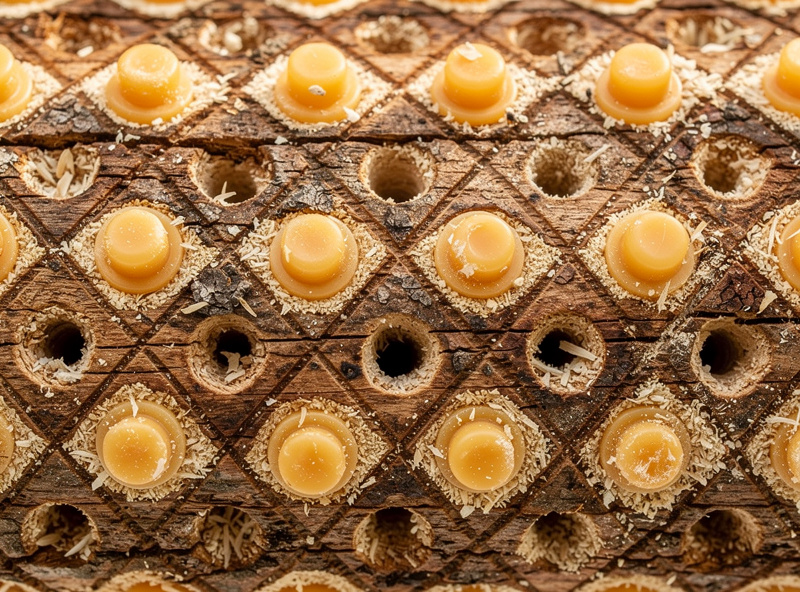
Oak’s high tannin content also slows competing fungi — Trichoderma and the wild jelly fungi struggle on oak in a way they do not on softer hardwoods. The trade-off is colonization speed: oak takes longer to fully colonize than a softer, less dense wood, and larger-diameter oak bolts can push first fruiting out to 18-24 months per the Cornell field data. The patience pays off in total yield over the log’s life.
Maple — Good Second Choice, But Only the Right Maple
This is where a lot of yard-wood log runs go wrong: “maple” is not one answer. Sugar maple is a genuinely solid second choice — Cornell extension work rates it well for shiitake, especially in the Northeast where it’s often available from sugarbush thinning. Red maple is a different species with a different report card: extension trials describe it as thin-barked and shorter-lived, with roughly half the serviceable flushes of a comparable red oak log. If you’re cutting maple, know which one is standing in your yard before you commit a weekend to drilling and inoculating it.
Maple is generally easier to drill and split than oak, which matters when you’re doing 30+ logs in a weekend, and sugar maple colonizes faster than oak’s dense wood does. Where I’ve run it, it’s a reasonable trade of total lifespan for a shorter wait to first harvest — just don’t reach for red maple expecting oak-like results.
Birch — The Budget Choice for Fast Turnover
Birch (paper birch or yellow birch) colonizes faster than oak on my bolts and gives a strong first flush, but the productive life is short — I’ve gotten one to two good seasons out of a birch log before it’s spent. Birch is lighter and lower in lignin than oak, so the mycelium works through it quickly and runs out of food sooner. It’s a reasonable choice if you want a fast, short-cycle log or you have a lot of free birch on hand — just don’t plan a multi-year rotation around it.
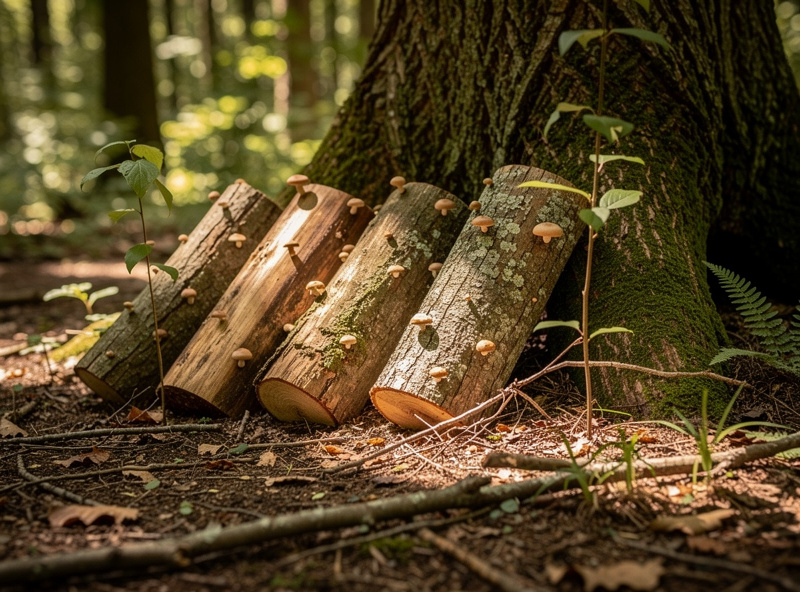
Avoid birch for long-term cultivation projects. A grower planning a 5-year shiitake operation should not put logs of any species other than oak (and maybe a few maple) into rotation. Birch is also one of the more contamination-prone species — its loose bark and high cellulose make it attractive to wild fungi. If you go with birch, plan to inspect logs monthly and pull any showing signs of competition. See the cobweb mold guide for visual ID against wild fungi colonizing log faces.
Woods to Always Avoid
Conifers — pine, fir, spruce, cedar, hemlock — never work for cultivated mushroom logs. The resin in softwoods inhibits the species we cultivate (shiitake, oyster, lion’s mane all fail on conifer wood). The only commercially viable conifer-mushroom is the matsutake on pine, and that is a wild ectomycorrhizal relationship, not log cultivation. Skip everything coniferous regardless of how many you have available.
Cherry, walnut, and hickory all work technically but bring practical problems. Cherry has loose bark that falls off mid-cycle, exposing the wood to dry rot. Walnut produces juglone, which suppresses some mushroom species. Hickory is dense and rewards patient growers but is hard to drill and the bark loosens with age. Stick to oak, sugar maple, and birch as your default three — between them they cover almost anything the average outdoor grower runs into. Also read about common beginner mistakes before committing to a large log run.
When to Cut and How to Store
Cut logs during winter dormancy, before bud swell in early spring, while the tree’s sugars are still up but the bark hasn’t started slipping. Ohio State’s extension guidance is blunt about this: logs cut in summer or fall consistently produce worse than winter-cut wood, and the moisture content needs to stay above roughly 35% by the time you inoculate. Cutting in the dormant window is what keeps you on the right side of that number.
Once cut, aim for 4-6 inches in diameter and 3-4 feet in length — that’s the sweet spot both Cornell and Ohio State extension guides converge on for balancing colonization speed against handling weight. You can go up to 8 inches if that’s what you’re bucking, but expect slower colonization on the fatter logs. Inoculate within a few weeks of cutting — wait long enough for the tree’s natural anti-fungal compounds to break down, but not so long the wood dries out. Cap the cut ends with melted beeswax to prevent moisture loss before mycelium colonizes through. Browse growing equipment guides for plug spawn vs sawdust spawn vs thimble inoculation tooling.
Comparison Table: Mushroom Log Wood Species
| Species | Productive life | Colonization speed | Bark durability | Best mushroom species |
|---|---|---|---|---|
| White oak | Longest of the common species — roughly 8 flushes per Cornell field data | Slower | Tight, holds for years | Shiitake, lion’s mane, oyster |
| Red oak | Comparable to white oak | Slower | Tight | Shiitake, lion’s mane, oyster |
| Sugar maple | Good, fewer flushes than oak | Faster than oak | Tight | Shiitake, oyster |
| Red maple | Short — roughly half red oak’s flush count per extension trials | Faster | Thin, wears out early | Oyster (hobby-scale only) |
| Paper birch | Short, 1-2 productive seasons on my logs | Fast | Loose, contamination-prone | Oyster, shiitake |
| Beech | Good, close to oak | Moderate | Tight | Lion’s mane, shiitake |
| Cherry | Short, bark fails mid-cycle | Moderate | Loose | Oyster (only) |
| Walnut | Avoid | n/a | n/a | none — juglone suppresses |
| Pine / fir / spruce | Avoid | n/a | n/a | none — resin inhibits |
Frequently Asked Questions
What is the best wood to use for shiitake mushroom logs?
White oak is the best wood for shiitake mushroom logs — dense, tight-barked, and the longest-producing option in extension field trials (Cornell’s data puts red oak at roughly 8 serviceable flushes over the log’s life). Sugar maple is a solid, faster-colonizing second choice. Red maple is not the same story — it’s thinner-barked and shorter-lived, so don’t treat “maple” as one interchangeable answer.
When should mushroom logs be cut?
Cut mushroom logs during winter dormancy, before bud swell in early spring — sap is still up but the bark hasn’t started slipping. Ohio State extension guidance is clear that logs cut in summer or fall consistently underperform winter-cut wood, and moisture content should stay above roughly 35% by weight at inoculation.
Can you grow mushrooms on pine or other softwood logs?
No — pine, fir, spruce, cedar, hemlock, and other conifers cannot host commercial mushroom species like shiitake, oyster, or lion’s mane. The resin compounds in softwoods inhibit cultivated species. Stick to deciduous hardwoods. The only mushroom-conifer relationship that works is wild matsutake, which is not log-cultivated.
How long does a mushroom log produce?
Productive life depends heavily on wood species. Oak is the longest producer of the common choices. Sugar maple and beech run good but shorter than oak. Red maple, birch, and cherry are shorter-cycle woods — on my logs birch and cherry are typically spent within a season or two, where oak keeps producing for years. Yields decline once the bark begins to slip.
What is the best diameter for mushroom logs?
Cornell and Ohio State extension guides both point to 4-6 inches in diameter and 3-4 feet in length as the sweet spot for shiitake logs. You can go up to 8 inches if that’s what you’re bucking, but expect slower colonization on the fatter logs. Smaller logs dry out too fast in summer and fruit out within a season.
Do mushroom logs need to be soaked before fruiting?
Yes — most species benefit from a cold-water soak once the log is fully colonized, which shocks the mycelium into pinning. On my shiitake logs a soak reliably brings on a synchronized flush within a week to ten days. I repeat the soak every few weeks during the warm season to push additional flushes.