
Coffee grounds work as a mushroom substrate — but only for oyster species, only when grounds are under 24 hours old, and only if you mix in 25-30% supplemental straw or sawdust pellets. Pure coffee-only grows lose to contamination far more often than a supplemented mix does — a published university-extension trial on spent coffee grounds plus hardwood sawdust started above 50% contamination losses before dedicated sanitation protocol changes brought it under 2%, which tells you the substrate itself isn’t the deciding factor, technique is. The popular “espresso bag of pink oysters” workflow is real, just not as simple as Reddit makes it sound.
Coffee grounds are one of six substrates worth knowing — sawdust, straw, CVG, logs, and rice broth are the others, all compared in my mushroom substrate guide.
Used espresso pucks and drip coffee grounds are pre-pasteurized by the brewing process (water at 195-205°F kills most competing molds), and they hold the right moisture and pH (5.5-6.5) for oyster mycelium to colonize. The catch is that coffee is also a Trichoderma magnet — green mold thrives in nitrogen-rich, slightly acidic, room-temperature beds. The article below covers exactly when coffee works, when it fails, and what to mix in. Written by Kenny Nyhus Fadil.
Why Coffee Grounds Work as a Mushroom Substrate
Coffee grounds carry three properties that make them oyster-friendly out of the bag. The brewing process pasteurizes them (sustained 195-205°F water effectively sterilizes the surface bacteria and most mold spores). The resulting pH lands at 5.5-6.5, which is the same range pleurotus species prefer. And the residual nitrogen content from undissolved bean compounds is high enough to support rapid colonization without supplementation in the first 7-10 days.
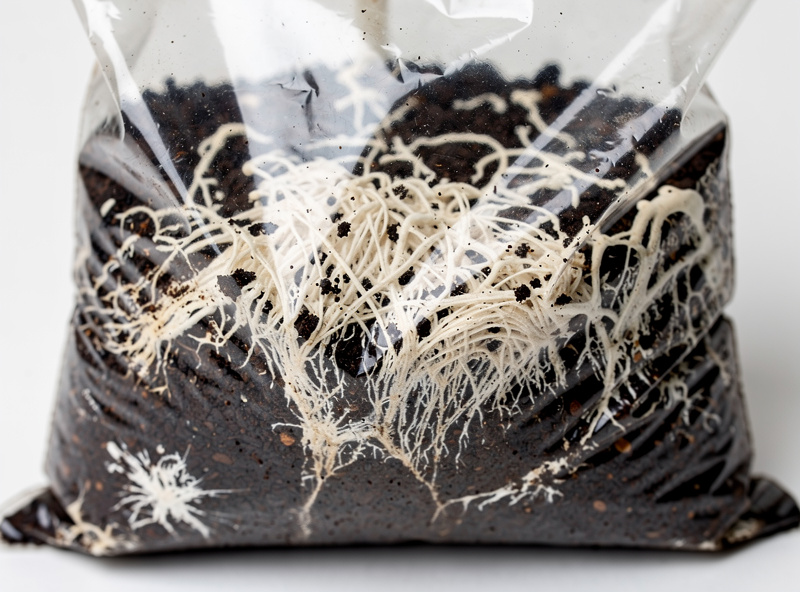
The mechanical properties matter too. Coffee grounds have particle size around 0.5-1.5 mm — fine enough for mycelium to bridge particles quickly, coarse enough to hold air pockets that prevent anaerobic conditions. A 1-pound bag of fresh espresso pucks colonized with grain spawn typically shows visible mycelium in 5-7 days at 70-75°F, full colonization in 14-18 days, and pinning within a week of fresh-air exposure. That timeline is faster than straw-only or pure coir setups by 3-5 days.
Why Pure Coffee-Only Substrates Fail So Often
Pure coffee-only grows fail at a noticeably higher rate than supplemented ones, and it traces back to four issues. First, used grounds left at room temperature for more than 24 hours grow Trichoderma and bacterial slime even before inoculation — coffee is a contamination breeding ground if you let it sit. A Northeast SARE-funded farmer research project running spent coffee grounds against hardwood sawdust hit contamination losses above 50% before locking down sanitation, drainage, and airflow protocol — and got that down under 2% once the process, not the recipe, was fixed (SARE Farmer/Grower Grant FNE17-874 final report). Second, the grounds become anaerobic in a tight bag because they pack densely (no air pockets at the bottom of a 5-pound brick).
Third, the nitrogen runs out around day 14. Without supplementation, the mycelium stalls partway through second flush and yields collapse. Fourth, water activity (Aw) in fresh espresso pucks is right at 0.97-0.99 — high enough that bacteria thrive alongside the mycelium until colonization is dense enough to outcompete them. Older grounds have lower Aw but more contamination already in place. There is a narrow time window for clean inoculation, and skipping it explains most failed coffee grows.
Best Mushroom Species for Coffee Substrate
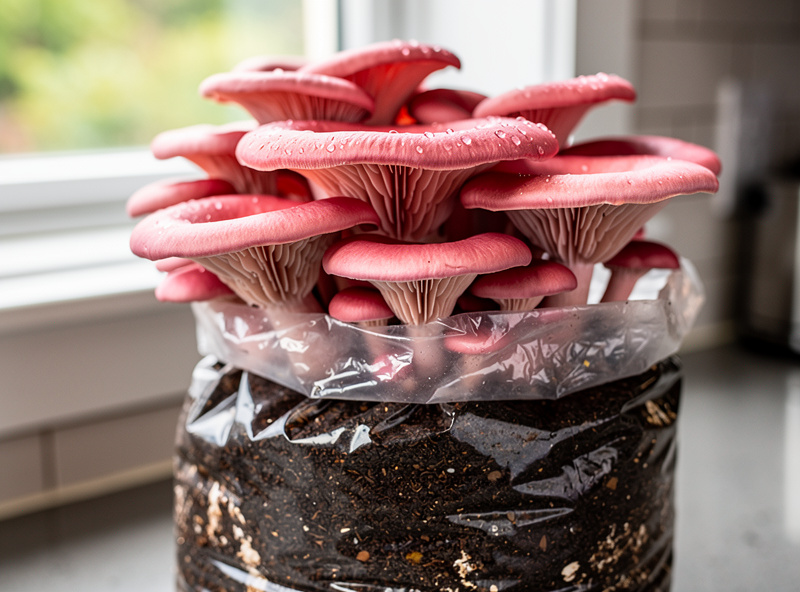
Oyster mushrooms (Pleurotus species) are the only commercially viable choice for coffee-based grows. Pink oyster (Pleurotus djamor), blue oyster (Pleurotus ostreatus), yellow oyster (Pleurotus citrinopileatus), and king oyster (Pleurotus eryngii) all colonize coffee successfully — in roughly that order of speed and reliability. Pink oyster is the most aggressive and the most beginner-friendly; it can outpace most contamination with a normal grain spawn ratio.
Lion’s mane, shiitake, and reishi do not perform well on coffee — they need woody substrates with longer-chain cellulose. In my own bench trials lion’s mane on a coffee-only substrate has been a near-total waste of a bag; the mix is too nitrogen-heavy and too fine-particled for how that species likes to run. Stick with oysters for coffee, save your hardwood sawdust for the species that need it. Browse the substrate guides for species-specific substrate matching.
The 70/30 Coffee Plus Supplement Recipe
The reliable recipe is 70% used coffee grounds plus 30% supplemental material by dry weight — close to the 50/50 coffee-to-hardwood ratio a published farmer-research trial settled on after testing several blends (that project used oak sawdust rather than pellets, along with a small measured dose of baking soda per batch to help suppress contamination without pushing the mix anaerobic). Best supplements (in order): hardwood pellets (the kind sold for pellet grills, broken down with hot water before mixing), pasteurized wheat straw chopped to 1-2 inch pieces, or supplemented sawdust. The supplement adds long-chain carbon, opens up air pockets, extends nitrogen availability, and meaningfully cuts contamination versus a coffee-only bag.
Process: collect coffee grounds for under 24 hours total (cafe pickups work well — most local cafes give them away in 5-pound bags). Mix the supplement, pasteurize the combined substrate at 160-180°F for 90 minutes (a turkey roaster works), squeeze to field capacity, inoculate at 10-15% grain spawn ratio, and bag in micropore-filtered grow bags. Avoid the seven beginner mistakes — wet rot from overhydrated coffee grounds is one of the most common.
Contamination Risks Specific to Coffee
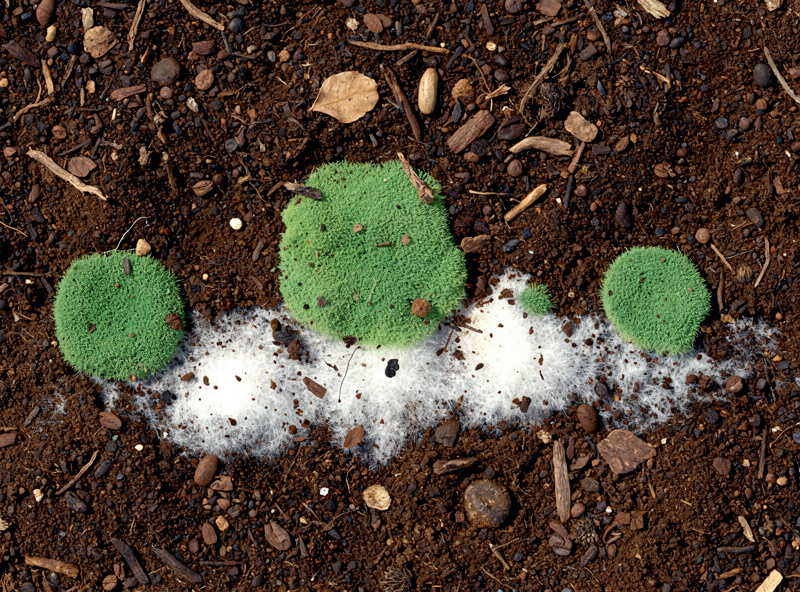
Trichoderma is the main enemy on coffee substrates. The mold loves nitrogen-rich, slightly acidic, room-temperature beds — which is exactly what spent coffee provides. Visible Trichoderma appears as bright green patches with a sharp boundary against any healthy white mycelium. Once present, it spreads at roughly 2-3 cm per day and is generally unrecoverable on coffee — toss the bag.
Cobweb mold also shows up in higher-than-normal frequency on coffee setups due to the moisture content. It looks visually similar to early-stage oyster mycelium, especially with pink oysters where the mycelium itself can have a faintly gray cast. The full breakdown of the visual differences is in our guide on cobweb mold vs mycelium — coffee growers refer to it more often than any other group of cultivators. See more contamination identification guides for prevention and rescue methods.
Realistic Yields and Whether It Is Worth It
Coffee-based substrates are genuinely lower-yielding than a purpose-bought substrate, and there’s real published data behind that. A peer-reviewed Ethiopian cultivation trial testing several Pleurotus species on composted coffee-processing waste recorded biological efficiency (BE — fresh mushroom weight as a percentage of dry substrate weight) of roughly 62% for P. ostreatus, 58% for P. sapidus, 41% for P. citrinopileatus, and 30% for P. eryngii on the same coffee-derived substrate (Dissasa, International Journal of Microbiology, 2022) — that study used coffee husk rather than home spent grounds, so treat it as a directional benchmark, not an exact match for a kitchen-scale coffee-plus-pellets bag. In my own coffee-supplemented bags, yields land well short of what the same species pull from Masters Mix or fresh hardwood pellets — coffee is a real substrate, just not the highest-yielding one available to a home grower.
Coffee makes sense as a substrate for two reasons: it is functionally free (cafes give it away), and it is novel enough to be educational and shareable. It does not make sense as a primary substrate for someone optimizing for yield per hour invested. For volume cultivation, hardwood pellets or Masters Mix beat coffee every time on cost-per-pound-of-mushroom. Most growers running multiple species use coffee specifically for pink oysters as a fun side project, not as their main workflow. The equipment guides cover what you need for both routes.
Comparison Table: Coffee vs Other Common Substrates
| Substrate | Setup cost | Best species | Yield vs purpose-bought substrate | Contamination risk (untreated coffee vs technique-controlled) |
|---|---|---|---|---|
| Pure used coffee | Free | Pink/blue oyster | Lowest of this group | High without strict sanitation and same-day inoculation |
| 70% coffee + 30% pellets | Roughly $2/lb pellets | All oyster species | Meaningfully better than coffee alone | Substantially lower than pure coffee with the same sanitation discipline |
| Pasteurized straw | Roughly $0.50-1/lb | All oyster species | Higher than either coffee option | Lower — straw handles pasteurization more forgivingly |
| Hardwood pellets only | Roughly $2/lb | Lion’s mane, shiitake, oyster | Higher still | Low with proper sterilization |
| Masters Mix (50/50 sawdust/soy) | Roughly $3/lb | Almost everything | Highest of this group | Lowest of this group with proper sterilization |
Frequently Asked Questions
Can you really grow mushrooms on used coffee grounds?
Yes — used coffee grounds work as a mushroom substrate for oyster species when fresh (under 24 hours old) and supplemented with 25-30% straw or hardwood pellets. Pure coffee-only setups lose far more batches to contamination than supplemented ones; a published farmer-research trial on spent coffee grounds plus hardwood sawdust started above 50% contamination losses and brought that under 2% once sanitation protocol, not the recipe, was fixed. Supplementing with straw or pellets meaningfully cuts contamination risk for the same reason.
What kind of mushrooms grow on coffee grounds?
Pink oyster, blue oyster, yellow oyster, and king oyster (all Pleurotus species) grow successfully on coffee grounds. Pink oyster is the most aggressive and beginner-friendly. Lion’s mane, shiitake, and reishi are a poor match for coffee — the substrate is too nitrogen-heavy and fine-particled for the woody, longer-chain cellulose those species prefer.
How fresh do coffee grounds need to be for mushroom growing?
Coffee grounds must be inoculated within 24 hours of brewing to minimize contamination. The brewing process pasteurizes the grounds at 195-205°F, but room-temperature storage allows Trichoderma mold and bacteria to colonize the grounds before mushroom mycelium can. Cafe-collected grounds should go directly from cafe to substrate bag.
Why are my coffee ground mushrooms not fruiting?
The most common cause is anaerobic conditions in the bag — pure coffee compresses too densely, cutting off oxygen to the lower layers. Adding 30% straw or hardwood pellets opens air pockets and resolves this. Other causes include nitrogen exhaustion past day 14 in unsupplemented coffee and high CO2 from poor fresh air exchange during fruiting.
How much coffee grounds do I need for one mushroom grow bag?
A standard 5-pound dry-weight grow bag uses 3.5 pounds of used coffee grounds plus 1.5 pounds of supplement (hardwood pellets or pasteurized straw). At cafe-pickup volumes that is one large coffee shop bag per grow. Most cafes hand out 5-10 pound bags daily and are happy to set them aside for pickup.
Is mushroom contamination on coffee grounds dangerous?
Trichoderma green mold and the bacterial wet rot common on coffee substrates are not directly toxic, but contaminated grows should not be eaten — the mushrooms that grew alongside contamination can carry mycotoxins from the competing molds. Standard practice is to discard any bag with visible green or black mold and not consume any fruits from it.