
Substrate is 70 percent of mushroom growing. Pick the wrong carbon source and even perfect technique will not save the block. Pick the right one and a beginner can hit commercial yields with a 60-dollar kit. After three years and roughly 50 substrate experiments — including the failures I rate as expensive — my working short list is exactly five recipes for the species I actually grow at home.
This hub covers what each substrate is, which species fruit on it, how to hydrate and pasteurise it, and where to buy the components without overpaying. I link to the deep-dive guides for the three substrate types I have written about in detail: coffee grounds, hardwood logs, and the CVG monotub standard. Use the comparison table to pick fast, then read the section for your chosen recipe.
The Substrate Map: What Feeds Which Mushroom
Mushrooms are not picky in the abstract, but each species has a substrate range where it actually performs. Oysters fruit on almost anything cellulose-based; lion’s mane needs supplemented hardwood; reishi prefers dense hardwood with high bran; cordyceps is grown on cooked rice and broth in jars. Picking the right substrate for the species is the first decision, and it determines the next ten. The one major edible that breaks the pattern is button and portobello, which need composted manure substrate rather than wood.
| Substrate | Best Species | Yield (BE %) | Cost per 5 kg | Sterilise Method | Difficulty |
|---|---|---|---|---|---|
| Hardwood sawdust + 20% bran | Lion’s mane, reishi, shiitake, turkey tail | 60-80% | $8-12 | Pressure-cook 90 min @ 15 PSI | Moderate |
| Pasteurised straw | Oysters (all colours) | 80-150% | $3-6 | Hot-water pasteurise 65-75 C, 90 min | Easy |
| CVG (coir + verm + gypsum) | Monotub gourmet species | 70-120% | $6-10 | Hot-water pasteurise or pressure-cook | Easy |
| Hardwood logs (oak, beech, maple) | Shiitake, lion’s mane, oyster, wine cap | 10-20% per year, 5-7 years total | Free if you cut your own | None — natural microflora | Slow |
| Used coffee grounds + straw | Oysters only, reliably | 50-90% | Free | None if fresh, pasteurise if older than 24 h | Easy but messy |
| Cooked white rice + broth (jars) | Cordyceps militaris | n/a (per-jar) | $2 per 500 ml jar | Pressure-cook 60 min @ 15 PSI | Moderate |
BE (Biological Efficiency) is wet mushroom weight divided by dry substrate weight, expressed as a percent. For the commercial-scale principles behind substrate selection and pasteurization — and the agronomic uses of spent substrate afterward — Penn State Extension’s mushroom substrate management and spent mushroom substrate resources are the standard references. Anything above 60% is a productive block; over 100% means you are getting more wet mushroom weight than the dry substrate started with — common with oysters on straw or coffee. The chart above is what I have personally measured across at least three blocks of each combination.
Hardwood Sawdust Plus Bran: The Supplemented Fruiting Block
Hardwood sawdust supplemented with wheat or oat bran is the workhorse substrate for every gourmet species I grow indoors. My standard recipe is 80 percent oak or beech pellets, 15 percent organic wheat bran, 5 percent gypsum, hydrated to 60-65 percent moisture. That mix fits 2 kilograms into a standard 5-litre filter-patch bag and produces 400 to 700 grams of lion’s mane in two flushes. The exact bran-supplemented build is in my supplemented sawdust recipe, and the higher-yielding soy-hull alternative is the Masters Mix.
The pellets matter. Hardware-store smoker pellets work because they are pre-dried, heat-pressed, and break down to a uniform sawdust texture when hydrated. Loose sawdust from a furniture shop is inconsistent in particle size and often contaminated with finishing dust. Stick to smoker pellets — they cost 12 to 18 dollars per 20-kilogram bag and last six months of normal cultivation.
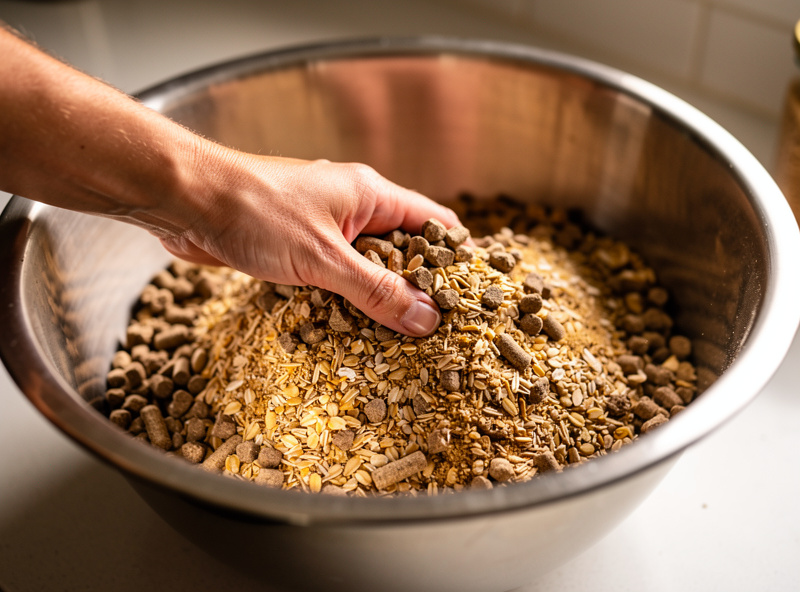
Bran percentages matter too. Twenty percent is the upper end for lion’s mane and turkey tail — push higher and you trade yield for contamination risk because the extra carbohydrates feed mold faster than they feed mushroom mycelium. Push lower than 15 percent and yields drop noticeably on reishi and shiitake. The exact percentages I use per species are in the lion’s mane growing parameters and medicinal mushrooms home guide.
Pasteurised Straw: The Cheapest Path to Oyster Yields
Straw is the substrate that turns oyster cultivation into a near-free hobby. A 25-kilogram bale of wheat straw costs 4 to 8 dollars at a farm-supply store and yields 200 kilograms of pasteurised substrate — enough for 40 to 60 oyster blocks. Pasteurisation, not sterilisation, is the operative word: heat to 65-75 C and hold for 90 minutes (the hot-water, lime, fermentation, and steam routes are in my straw pasteurization guide, and the wider cold vs hot pasteurization choice applies to every bulk substrate). Hotter than 80 C kills the beneficial thermophilic bacteria that compete with mold; lower than 60 C lets contaminants survive.
My hot-water method: chop straw to 5-10 cm lengths with garden shears, pack into a 60-litre insulated cooler, fill with 70 C water from a kettle, lid down, hold for 90 minutes. Drain through a mesh laundry bag, squeeze to field capacity, and the substrate is ready to bag and inoculate the moment it cools to 25 C. Total time including chop: under 3 hours.
One straw-specific failure pattern: water absorption. Wheat straw absorbs water unevenly; some stalks stay dry inside while others waterlog. The fix is a 24-hour cold soak before the hot pasteurisation step. The cold soak makes the straw absorb water through capillary action; the hot step kills contaminants. Skip the cold soak and you will get patchy colonisation no matter how good your liquid culture is. I learned this on the third block when I noticed dry pockets the mycelium refused to enter.
CVG: The Monotub Standard for Gourmet Species
CVG stands for Coir, Vermiculite, Gypsum, mixed in roughly a 4:1:0.2 ratio by volume and hydrated to field capacity. It is the workhorse bulk substrate for monotub gourmet species — particularly oysters, king stropharia, and shaggy mane — when you want yields above what straw alone can deliver. Coir gives you carbon and water retention; vermiculite gives you air gaps and structure; gypsum gives you trace calcium and prevents the substrate from packing into a dense mat. A full breakdown of how CVG compares to the other bulk substrate options — straw, supplemented sawdust, manure, and compost blends — is in the bulk substrate for mushroom growing guide.
My full CVG recipe, including hydration ratios and the field-capacity squeeze test, is in the dedicated CVG substrate recipe guide. Two specifics from that article worth flagging: the coir block should be the dense fully-organic kind (avoid coir sold with added fertilisers — they shift the C:N ratio and invite contamination), and the gypsum needs to be food-grade or agricultural — drywall gypsum has paper fibres that mold will exploit.
CVG is also forgiving on pasteurisation. You can pressure-cook it at 15 PSI for 90 minutes (full sterilise) for high-risk inoculations, hot-water pasteurise at 70 C for 90 minutes for normal use, or even bucket-tek pasteurise (just-boiled water poured over the dry mix, lid down for 8 hours) for low-stakes runs. I default to bucket-tek for oyster monotubs and pressure-cook for anything that takes more than 30 days to colonise.
Hardwood Logs: The Slow Substrate That Pays for Years
Outdoor hardwood logs are the longest-payback substrate in mycology. Inoculation is the same weekend’s work — drill, plug, wax — but first fruiting takes 9 to 18 months, and a properly inoculated oak log keeps producing for 5 to 7 years. My oldest shiitake log is in its fourth year and still pulls 100-200 grams per spring flush.
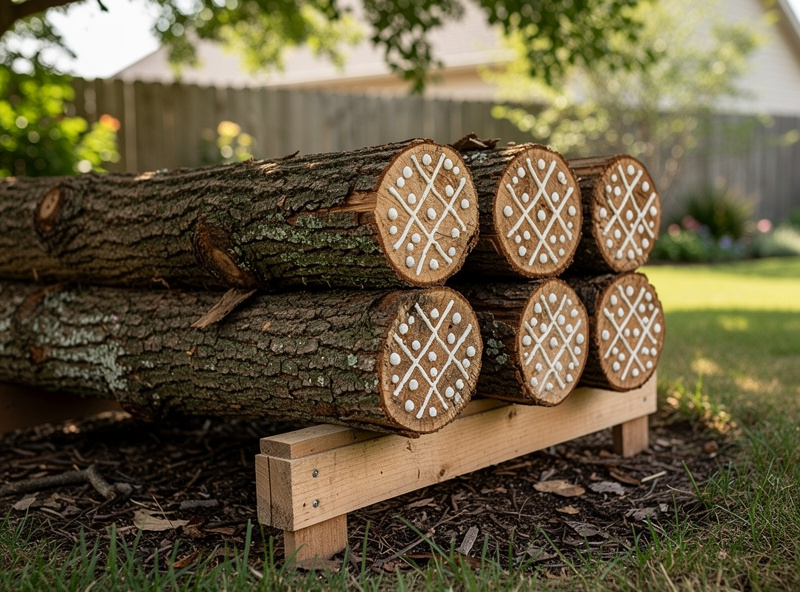
The species range is narrower than indoor work: shiitake is the king of log cultivation, lion’s mane and oyster work well, wine cap (Stropharia rugosoannulata) wants buried hardwood chips not whole logs, and reishi can be done on logs but slowly. Wood species matters as much as the cultivar — full details are in best wood for mushroom logs, but the short answer is oak and sugar maple are the most reliable, beech and birch are second-tier, and softwoods (pine, fir, cedar) are unusable.
Timing matters: fresh-cut logs need 2-4 weeks of resting to let the tree’s natural antifungal compounds break down before inoculation. Inoculate too soon and the antifungals inhibit the mycelium; wait too long and you lose to wild fungi colonising first. The when to inoculate mushroom logs guide walks through the climate-zone-specific timing window I use.
Coffee Grounds, Garden Waste, and Free Substrates
Used coffee grounds are the most over-hyped “free” substrate in mushroom cultivation. They work — for oysters specifically — but with caveats most blog posts omit. Coffee grounds are already partially pasteurised from the brewing process (95 C water for 4 minutes is close enough to a hot-water pasteurise), they are nitrogen-rich which favours mold over mycelium if you use them alone, and they go bad fast — anything older than 24 hours has too high a bacterial load.
My working coffee-grounds recipe is 50 percent fresh used coffee grounds and 50 percent pasteurised straw by volume, inoculated at 10 percent spawn rate. Oysters love this mix and yield 60-90 percent BE on a 2-kilogram block. The mix is also messy — coffee grounds stain bags, smell strong during colonisation, and the spent block is excellent garden compost — there are six good uses for a spent block once it stops fruiting. Full diagnostic and yield data is in does coffee ground substrate actually work.
Garden waste — chopped leaves, weed-free grass clippings, spent hops, cardboard — works for outdoor king stropharia beds and for some oyster species in shaded outdoor mounds. The crossover with permaculture is real; the same waste streams that feed a compost pile feed a wine-cap bed if you give the bed two seasons to establish. Patterns for outdoor beds and pathways are in wine cap mushroom outdoor beds and the oyster-on-yard-waste work in growing oyster mushrooms on garden waste.
Supplementation: Bran, Gypsum, Soybean Hulls, and the Diminishing Returns
Supplementation is the lever that distinguishes a hobbyist substrate from a commercial one. The standard supplements are wheat bran (cheap, ubiquitous, 15-30 percent inclusion), oat bran (slightly richer, 10-20 percent), soybean hulls (high protein, 15-25 percent, harder to source), and gypsum (calcium and structure, 2-5 percent always).
The trap is that more is not better. Bran above 30 percent of dry weight tips the C:N ratio into mold territory; I have personally fed trichoderma three reishi blocks by pushing supplementation too high. The species-by-species optima after measuring across two dozen blocks: lion’s mane 20%, turkey tail 15%, reishi 18%, oyster 10% (already nitrogen-rich on straw), shiitake 20%, maitake 30% (the outlier — maitake genuinely wants higher).
Gypsum is the universal additive. Five percent food-grade gypsum (calcium sulphate) does three things: buffers pH, prevents the substrate from compacting into a dense mat, and gives the mycelium trace calcium for cell-wall structure. There is no scenario where gypsum hurts yields at 5 percent, and most scenarios where it raises them by 10-15 percent. Buy a 5-kilogram bag of agricultural gypsum once and it lasts years.
Where I Buy Each Substrate Component (After Six Suppliers)
I have wasted money on every wrong supplier choice the first time, then settled into a sourcing pattern that costs about 60 dollars per month for unlimited cultivation. The breakdown is worth listing because most beginner guides assume you have access to mycology speciality stores; in practice, generic suppliers work fine if you know what to look for.
For hardwood pellets, my supplier is a farm and ranch store that sells smoker-grade pellets in 20-kilogram bags for 14 dollars. Avoid grilling pellets sold at higher markup at hardware stores — same product, double the price. For wheat bran, an organic feed-supply store sells 25-kilogram sacks for 9 dollars, with the dedicated-line certification that protects against soy cross-contamination. For straw, the cheapest reliable source is a local horse-bedding supplier; 25-kilo wheat-straw bales run 5-7 dollars and one bale lasts six months at my throughput.
Coir blocks I buy in 5-kilogram compressed bricks from a hydroponics shop — 12 dollars per brick, expands to roughly 70 litres of usable substrate. Vermiculite (horticultural grade, not insulation grade) comes from the same hydroponics shop at 18 dollars per 100-litre bag. Gypsum I buy once a year — a 5-kilogram bag of agricultural gypsum from a garden centre lasts roughly two years of normal cultivation. Liquid culture and grain spawn I source from two regional mycology suppliers (one for agar mother slants, one for sterilised grain); both are 8-15 dollars per culture and worth the small premium over ordering across borders.
Hydration, pH, and the Field Capacity Squeeze Test
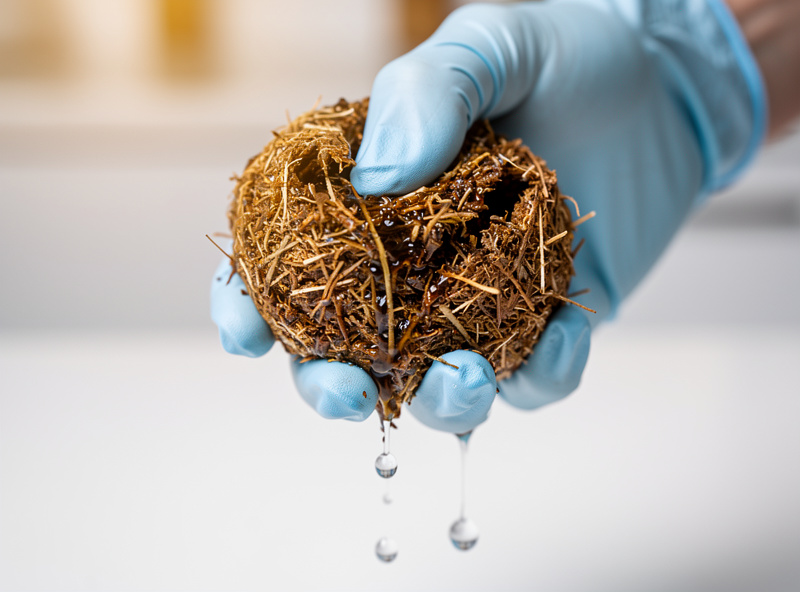
Field capacity is the moisture state where substrate holds the maximum water it can without water dripping out under gravity. For most mushroom substrates, that is 60 to 65 percent moisture by weight — measured the easy way with the squeeze test: grab a handful, squeeze hard, and you should release two or three drops, not a stream. No drops means too dry. A stream means too wet. Two or three drops is your target. The full field-capacity method, by feel and by weight, is in my substrate moisture guide.
Hydration shortcuts I learned the hard way: pre-soak hardwood pellets in just-off-boil water before mixing — the pellets expand to 3x their volume and absorb water uniformly. Soak straw cold for 24 hours then hot for 90 minutes (covered above). For CVG, the rule is “add water until the mix barely holds a clump when squeezed” then walk away for an hour — coir absorbs slowly and you will over-water if you correct too soon.
pH matters less than most beginner guides suggest. Mushroom mycelium tolerates pH 5.5 to 7.5 cheerfully; problems start outside that range. Hardwood substrates naturally drift slightly acidic; gypsum buffers that. Straw and coir are slightly alkaline; bran acidifies during colonisation. Unless you are working with very acidic substrates (peat, certain composts), do not buy a pH meter just for substrate — you will not need it.
Three Substrate Failures Worth Avoiding
The first was using softwood (pine) sawdust because a hardware store sold it cheap. The block colonised slowly, then quit halfway and let trichoderma take over within ten days. Pine resins (terpenes) directly inhibit mycelial enzymes — every dollar saved on softwood costs three on a failed block. New rule: hardwood only, full stop.
The second was a wheat-bran sourcing problem. I bought a 25-kilo sack from a feed store that turned out to be milled in a facility also handling soy meal. The protein and oil content tipped my hardwood blocks into a fast bacterial bloom — wet spot on three of four jars. New rule: organic wheat bran from a dedicated source, ideally pelleted to keep it dry until use.
The third was a hydration miscalculation on a 12-block batch. I trusted a printed recipe instead of running the squeeze test, ended up at 72 percent moisture, and four of twelve blocks puddled at the bottom of the bag. Mycelium hates standing water. New rule: trust the squeeze test, not the recipe — every substrate batch is different. The general training resource for this kind of diagnosis sits in my mushroom growing mistakes guide and the substrate-specific contamination patterns are in the mushroom contamination guide.
Frequently Asked Questions
Can I use pine or softwood sawdust as a mushroom substrate?
No. Softwood resins (terpenes from pine, fir, cedar, spruce) directly inhibit most cultivated mushroom mycelium. The block will colonise slowly and almost always lose to mold or stall completely. Always use hardwood — oak, beech, alder, maple, sweetgum, or birch.
What is the difference between pasteurised and sterilised substrate?
Pasteurisation heats substrate to 65-75 C for 60-90 minutes — enough to kill competing molds while preserving beneficial thermophilic bacteria. Sterilisation pressure-cooks at 15 PSI (121 C) for 60-90 minutes, killing everything. Pasteurisation is fine for straw, coir, and most bulk substrates; sterilisation is required for grain spawn, supplemented sawdust blocks, and any high-nitrogen substrate.
How wet should mushroom substrate be?
60-65 percent moisture by weight, easily measured with the squeeze test: grab a handful, squeeze hard, and aim for two or three drops of water — no more, no less. A stream of water means too wet; no drops means too dry. Field capacity is the goal regardless of substrate type.
Can I reuse spent mushroom substrate?
Yes, but not for the same species. Spent substrate is excellent garden compost, an amendment for vegetable beds, or a starter substrate for outdoor wine cap beds. It will not support a second flush of an indoor block — the nutrients are too depleted and the contamination risk is too high.
Is coffee grounds substrate worth the hassle?
For oyster mushrooms, yes — particularly mixed 50/50 with pasteurised straw. For other species, no. Coffee grounds are nitrogen-rich which favours mold over slower-growing species, and they spoil within 24 hours. Stick to oysters and mix with straw to balance the C:N ratio.
How much substrate does one mushroom block need?
A standard home block is 2 to 2.5 kilograms of hydrated supplemented sawdust in a 5-litre filter-patch bag, yielding 400 to 700 grams of fresh mushrooms across 2 flushes. Smaller jar-format substrates (300-500 ml) are used for cordyceps and small-batch experiments. Larger 10-kilogram blocks are commercial-scale and not necessary at home.
Related Guides on MycoMansion
- CVG Substrate Recipe: Coco Coir, Vermiculite, and Gypsum for Monotubs
- Coffee Ground Mushroom Substrate: Does It Actually Work?
- Best Wood for Mushroom Logs: Oak, Maple, Birch Compared
- When to Inoculate Mushroom Logs: Seasonal Timing by Climate Zone
- Mushroom Contamination: The Complete Home Grower Guide