
Inoculate mushroom logs as soon as possible after cutting — ideally within days, and no later than 3 weeks. Cornell Small Farms’ Arnot Forest research and Ohio State’s Ohioline shiitake-production series both land on the same hard cap: the longer a cut log sits, the more it dries out and the more native competitor fungi get a head start on the cut ends. For wine cap mushroom outdoor beds (wood chips, not logs), the method differs from log inoculation. Winter and early spring felling, before leaf-out, is the ideal season in both of those research programs — but neither treats “4-6 weeks” as an acceptable buffer, which is a number I want to correct here since I’ve seen it repeated elsewhere.
Inoculation timing is one of five outdoor decisions; site selection, wood species, pest control, and bed design are the others — full system in my outdoor mushroom growing guide.
Log timing is the single biggest factor in shiitake, lion’s mane, and oyster log success that nobody drills into enough. Inoculate too early into a hard freeze and the spawn can struggle to establish before winter takes over the log; wait too long after cutting and native molds beat your mushroom strain to the cut surface. The cutting-to-inoculation gap is the part people get wrong most — a log cut in February and inoculated in June is exactly the kind of gap the research says not to leave.
The Two-Window Rule for Log Inoculation
Two timing windows matter, and they’re not the same window: the felling window (late winter into early spring, before leaf-out, is ideal per both Cornell and Ohio State) and the inoculation window, which per the actual research is at most 3 weeks after felling — sooner is meaningfully better, not just marginally better. I want to flag directly that a “4-6 week” cutting-to-inoculation buffer, which shows up on a lot of grow-log content, is looser than what the cited research supports.
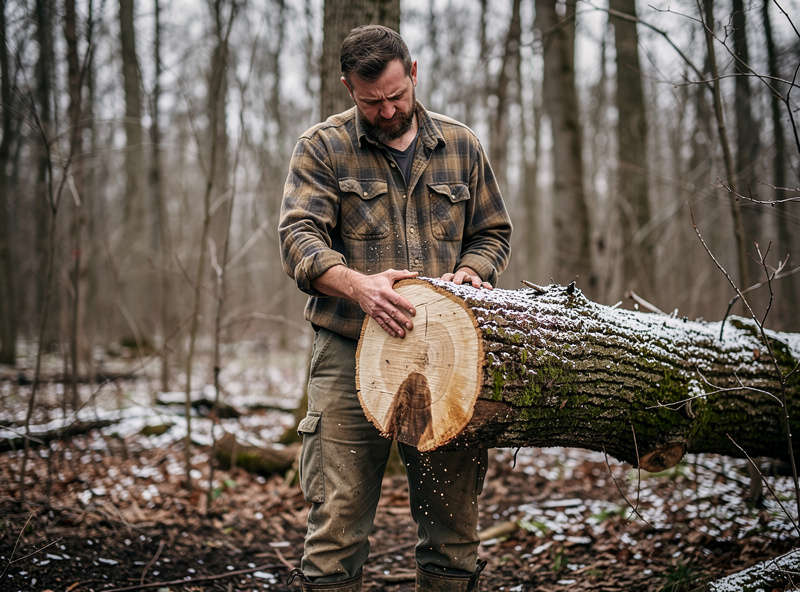
Why each window matters:
- Fell in winter or early spring: Cornell’s Arnot Forest trials found winter and spring felling/inoculation ideal, though their data also shows summer and fall inoculation still produces real harvests — it’s a preference, not a hard cutoff (Cornell Small Farms, Inoculating Logs).
- Fell before leaf-out: Standard forestry logic — a dormant tree hasn’t pulled stored sugars into leaf production yet, so the wood is carrying more of what it had going into winter.
- Inoculate within 3 weeks: This is the actual research number, not a rounded-up guess — Ohio State’s Ohioline series states directly that the longer logs sit before inoculation, the more contamination risk from competitor “weed fungi” builds.
- Don’t bank on a long buffer: I don’t have a real citable number for exactly how much your odds drop by week 4 vs week 6 vs week 8 — nobody’s published that curve that I’ve found. What’s well-supported is the direction: later is worse, and 3 weeks is the line the actual research draws.
The combination matters more than either alone. A log felled at the ideal moment but left sitting 6-8 weeks before inoculation is exactly the scenario the research warns against. A log felled slightly outside the “ideal” season but inoculated fast still has a real shot. If you can only get one variable right, make it the fast inoculation.
Inoculation Timing by Region and Season
I’m going to be straight about something: a lot of log-growing content (an earlier version of this page included) presents a tidy USDA-zone-by-zone table with exact months and exact temperature bands for each zone. I can’t back that up with a real source, and I don’t think it’s honest to present that kind of precision as settled fact — the same zone number can have a wildly different effective sap-rise date depending on elevation, local microclimate, and the specific winter. What the research I trust actually keys timing to is phenology, not a calendar: fell after sap starts moving but before the trees leaf out, then get spawn in the wood within about 3 weeks.
As a rough, hedged starting point by climate:
- Colder winters (roughly USDA zones 3-5): Sap rise and leaf-out both happen later, so your felling window slides into later winter/early spring — but the moment you cut, the 3-week clock still applies. Cold weather does slow down competitor fungi, which is the one real cushion a cold-zone grower has.
- Moderate winters (roughly zones 6-7): This is the zone most of the Northeast and Ohio-based research I’m citing was actually generated in, so it’s the best-supported range here. Felling runs late winter, inoculation follows within the 3-week window.
- Mild winters (roughly zones 8-10): Sap rise and leaf-out come earlier, sometimes overlapping with true winter elsewhere. Heat stress on logs later in the season is a real concern in these zones, and I’d lean toward shadier laying-yard placement more than toward a different inoculation calendar.
Whatever zone you’re in, use bud break on nearby trees as your actual signal, not a date on a calendar — that’s the phenology cue the research follows, and it self-adjusts for whatever kind of winter you just had. For substrate alternatives if log timing gets missed, see our guide on best wood for mushroom logs.
Species-Specific Timing Adjustments
Shiitake, oyster, lion’s mane, and reishi all use the same general felling/3-week window, but I adjust within it species by species based on my own bench experience — I don’t have hard published temperature thresholds for most of these beyond shiitake, so treat the specifics below as my practice, not lab data.
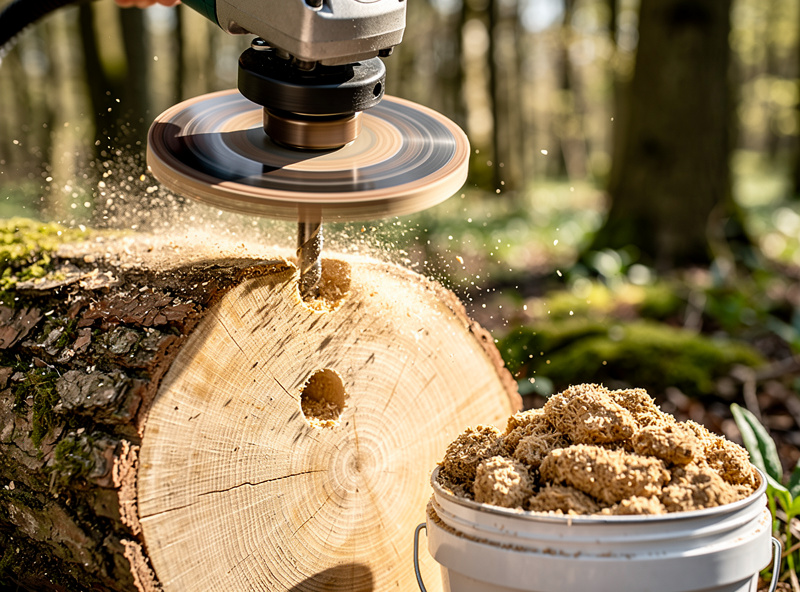
Per-species timing notes:
- Shiitake (Lentinula edodes): The best-documented species here — Cornell and Ohio State’s guidance is built around it. Mid-window, once nights have reliably stopped hard-freezing, is the safe target.
- Oyster (Pleurotus ostreatus): The most forgiving species in my own experience — I’ve had reasonable strikes inoculating a bit earlier or later than I’d risk with shiitake. Pink oyster wants noticeably warmer soil than the other oyster strains before I’ll bother inoculating.
- Lion’s Mane (Hericium erinaceus): I wait for consistently warmer overnight temperatures than I do for shiitake before inoculating — cold, sluggish establishment is where I’ve lost strikes with this species specifically.
- Reishi (Ganoderma lucidum): I run this one toward the later end of my window rather than the early end — in my experience it tolerates a shorter pre-summer establishment period better than shiitake does.
- Turkey Tail (Trametes versicolor): The most temperature-flexible of the group in my own logs — I’ve had success across most of the seasonal window without much fuss.
If you miss the species-optimal window by a few weeks, I’d rather switch to a more forgiving species than force the original choice. A successful oyster log started a bit late beats a shiitake log started at the “perfect” calendar moment but left sitting too long before the spawn actually went in.
What to Do If You Miss the Window
If logs sit longer than the roughly-3-week window before inoculation, the cut ends are already colonizing with native fungi that compete with your spawn. I don’t have a clean published percentage for exactly how bad each additional week is — anyone giving you a precise number here (mine included, in an earlier version of this page) is guessing. What I do have is a clear direction and some salvage options that at least give the spawn a fresh, less-contaminated surface to start from.
My honest salvage approach, roughly by how far past the window you are:
- Within about 3 weeks: Inoculate normally. This is the window the research actually supports.
- A few weeks past that, no visible discoloration on the cut ends: Re-cut a few inches off each end to expose fresh, uncolonized wood, soak overnight, and inoculate at a heavier-than-normal spawn rate to give your strain more starting points against whatever’s already established.
- Well past that, or colored fungus visible on the cut ends: Re-cut deeper, soak longer, use an even heavier spawn rate — and go in expecting a real chance of failure. I don’t publish a percentage here because I don’t have a trustworthy one.
- Bark cracking or heavily discolored/dried wood: I set these aside as firewood or mulch rather than gambling spawn on them.
The single most useful prep habit is staging cuts and inoculations together, not stockpiling. Cut, then inoculate the same day or within the same week if you possibly can — the research is consistent that “the less days that elapse from felling until inoculation, the greater the production per log.” Read about beginner timing mistakes in our guide on mushroom growing mistakes every beginner makes.
Laying Yard Conditions After Inoculation
Stack inoculated logs in a shady spot with good airflow on all sides, off the bare ground on a pallet, cinder blocks, or leaned between trees. Ohio State’s laying-yard guidance describes “warm, shady areas with good air circulation” as the target rather than a specific sun-hours number, and lists lean-to stacking as the most broadly workable pattern for most home setups. Time to first fruiting runs anywhere from about 6 months to 2 years depending on species and log diameter — that’s a genuinely wide range in the cited research, not a typo.
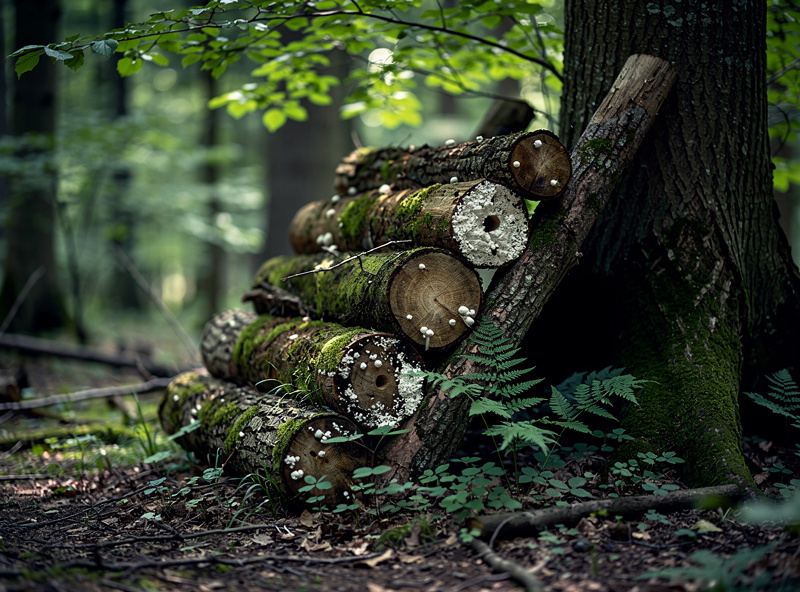
The laying-yard conditions that matter:
- Shade with airflow, not deep shade with none: Dense shade with no air movement invites problems of its own. I aim for a spot that’s shady most of the day with some breeze through the stack.
- Off the ground: Direct soil contact introduces native soil fungi. Pallets, cinder blocks, or stacked between trees keep logs clean.
- Stacking pattern: Lean-to is what I use — it’s the most flexible pattern and keeps logs off each other enough for airflow.
- Moisture during colonization: Ohio State’s numbers here are real and worth following closely — keep log moisture above roughly 30%, and treat anything approaching 25% as a mycelial-death risk. Water thoroughly rather than lightly and often if a log feels dry.
- Soaking before fruiting season: Once a log has clearly colonized (you’ll see it in the cut ends and hear it in the sound the log makes when tapped), a cold-water soak at the start of fruiting season is standard practice for kickstarting a flush.
The early colonization period is where I pay the closest attention — moisture and shade matter more in the first couple of months than they do a year in. Once you see mycelium visibly running at the inoculation sites, the logs have established and tolerate more variable conditions.
Frequently Asked Questions
Can I inoculate mushroom logs in summer or fall?
Yes, though it’s not the ideal season. Cornell’s Arnot Forest research found winter and spring inoculation ideal, but summer and fall inoculation still produced sizable harvests in their trials — it’s a preference for best results, not a hard rule that other seasons fail.
How fresh do logs need to be when inoculated?
As fresh as you can manage — within days is ideal. Both Cornell Small Farms and Ohio State’s Ohioline series cap the acceptable window at about 3 weeks after felling; beyond that, native competitor fungi have a real head start on your spawn. I’d treat anything past 3 weeks as a salvage situation, not a normal inoculation.
Does the moon phase or planting calendar affect log inoculation?
No peer-reviewed mushroom cultivation research I’ve found supports moon-phase effects on log inoculation. Sap rise timing after winter is the variable the actual research points to for wood quality, not moon phase.
Can I inoculate logs that have been cut more than 3 months ago?
You can try, with re-cutting to expose fresh wood, a soak, and a heavier spawn rate than normal — but I don’t have a trustworthy published success-rate number to give you at that point, and neither does most of the content that quotes one. Logs sitting that long are a real gamble. I wouldn’t count on them.
Should I let cut logs dry out before inoculating?
No. Ohio State’s guidance keeps log moisture above roughly 30% through colonization and flags real mycelial-death risk once it drops near 25%. Use logs as fresh as possible — same day to within a couple weeks of cutting is best. Dried logs need a real soak to rehydrate before inoculation, and results are still less reliable than starting fresh.
What temperature should it be when I inoculate?
I inoculate once daytime temperatures are reliably above roughly 50°F and overnight lows have stopped hard-freezing. Below that, spawn establishes slowly at best. I don’t have a reliable source for a specific wax-melting temperature threshold, so I won’t invent one here — use a wax rated for outdoor log sealing and you won’t have a problem in normal spring conditions.