
I dry my Lion’s Mane, Reishi, and Cordyceps at a controlled low-to-moderate heat — 95-110°F on my dehydrator — then store them airtight with a silica pack in a cool, dark cabinet. Lion’s Mane, Reishi, Cordyceps, Turkey Tail, and Chaga all dry well this way, and drying slowly is meant to protect the polysaccharides and terpenoids that researchers have studied in these species — though I want to be upfront that “protects the compounds” here is my own bench practice, not a lab-verified potency number.
The drying step is where a lot of home growers get sloppy without realizing it: air-drying in a humid room invites mold, running the oven too hot changes the texture and can degrade some heat-sensitive compounds faster per the drying-method research, and pulling mushrooms off the dehydrator before they’re actually dry leaves them vulnerable to mold in storage. The method below is the one I’ve settled on after killing a few batches to sogginess and a few more to over-drying.
Why Drying Temperature Matters for Medicinal Mushrooms
There’s less settled science here than most grow-blog charts imply. Cordycepin — the signature compound in Cordyceps militaris — is well-documented as heat- and light-sensitive; published drying-method studies on this species consistently find that higher drying temperatures reduce cordycepin content, which is the main reason I keep the dehydrator low for that species specifically. But it’s not a universal rule across every compound in every species: a postharvest drying study on Ganoderma lucidum (Reishi) actually found heat-drying at 60°C (140°F) produced higher levels of several ganoderic acids than freeze-drying did, because the heat itself triggers metabolic changes in the tissue during drying (Xu et al., Postharvest Drying Techniques Regulate Secondary Metabolites and Anti-Neuroinflammatory Activities of Ganoderma lucidum, PMC8347575).
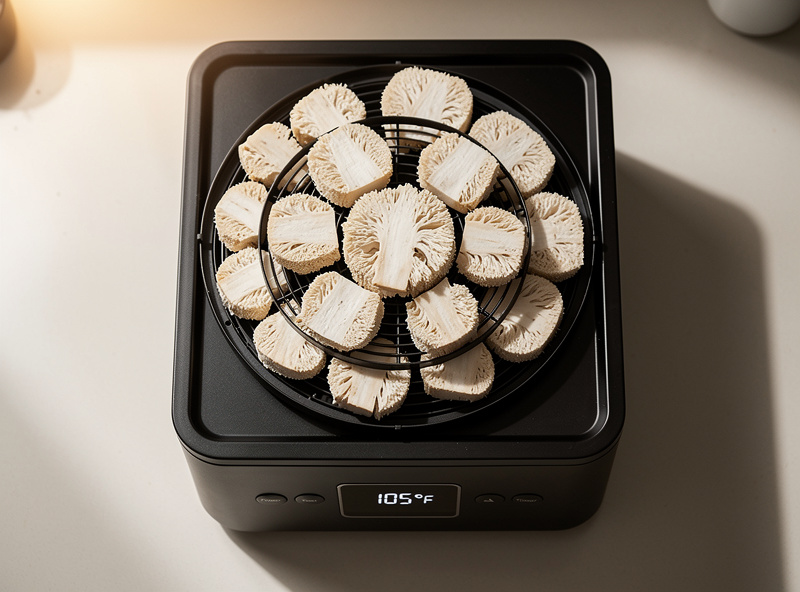
My own practice — low and slow across the board — is partly caution and partly convenience: one dehydrator setting I don’t have to think about for four different species. If you want a tested, extension-backed baseline instead, Colorado State University Extension’s PreserveSmart program recommends drying mushrooms at 140°F for 8-10 hours in a dehydrator, and that’s a legitimate way to run it too. I just personally run mine cooler and longer.
What I actually watch for, species by species:
- Cordyceps militaris: The one I’m most careful with. Cordycepin degrades faster at higher drying temperatures in the published research on this species, so I keep this one on the cool end of my dehydrator and accept the longer run time.
- Reishi and Chaga: Woody, dense, and slow to dry regardless of temperature. The triterpene research is genuinely mixed on what “ideal” temperature even means (see above), so I don’t lose sleep over a few degrees here — I run them alongside Cordyceps out of convenience, not because I have data proving it’s necessary.
- Lion’s Mane: Dries fast because it’s mostly water and thin flesh. I still don’t push it past my normal low setting, since there’s no upside to testing the edge on a species I use constantly.
- Turkey Tail: Thin, leathery caps that dry quickly. I don’t have a home test for its polysaccharide content, so I just dry it the same way as everything else.
The honest summary: I run everything at 95-110°F because it’s simple and it hasn’t cost me a batch, not because I have lab data proving it beats 140°F for every species. Read about Lion’s Mane species specifics in our Lion’s Mane growing parameters guide.
Step-by-Step Dehydrator Drying Method
Slice fresh mushrooms about 1/4-inch thick, arrange in a single layer on dehydrator trays without overlap, and run until pieces snap cleanly when bent. On my dehydrator that’s usually 8-12 hours for Lion’s Mane and Cordyceps, longer for the woody Reishi and Chaga. The whole process is hands-off after the initial slicing.
- Harvest at peak maturity. Just before spore release for Reishi, before veil break for Lion’s Mane and Cordyceps, brown-cap stage for Turkey Tail.
- Clean before slicing. A dry pastry brush handles most debris. If something’s genuinely dirty, Colorado State University Extension’s guidance is to wipe with a damp towel or give it a quick rinse under cold water and drain well before slicing — a quick rinse does not ruin the batch, despite what a lot of grow forums claim. Just don’t soak it.
- Slice about 1/4-inch thick. Thicker slices take longer and can trap moisture pockets; thinner slices dry faster but are more fragile to handle.
- Lay in single layers on trays. Pieces touching each other dry unevenly and can develop wet spots that mold.
- Set the dehydrator low. I run mine at 95-100°F; if yours bottoms out around 100-110°F that’s still fine. Avoid the “vegetable” preset if your unit has one — it’s usually 130°F or higher.
- Run until snap-dry. Lion’s Mane and Cordyceps usually finish in 8-10 hours on my setup; Reishi and Chaga take noticeably longer, sometimes overnight, because of the woody texture.
- Test with the snap method. Bend a slice — it should snap cleanly with a crisp sound. Bending without snapping means more drying needed.
If you don’t own a dehydrator, fan-drying on screens at room temperature can work in a genuinely dry climate — I wouldn’t try it in a humid Swedish summer. Place mushroom slices on stainless steel screens or fine mesh, run a fan continuously over them, and check daily. It’s slower and less predictable than a dehydrator, and it fails outright once ambient humidity climbs.
The Snap Test: Confirming Mushrooms Are Dry Enough
A properly dried medicinal mushroom snaps cleanly when bent, sounds like a dry leaf, and feels light for its size. Pieces that bend without snapping still hold moisture and are a mold risk in storage. Pieces that crumble to dust are over-dried — not dangerous, just further along than they needed to be.
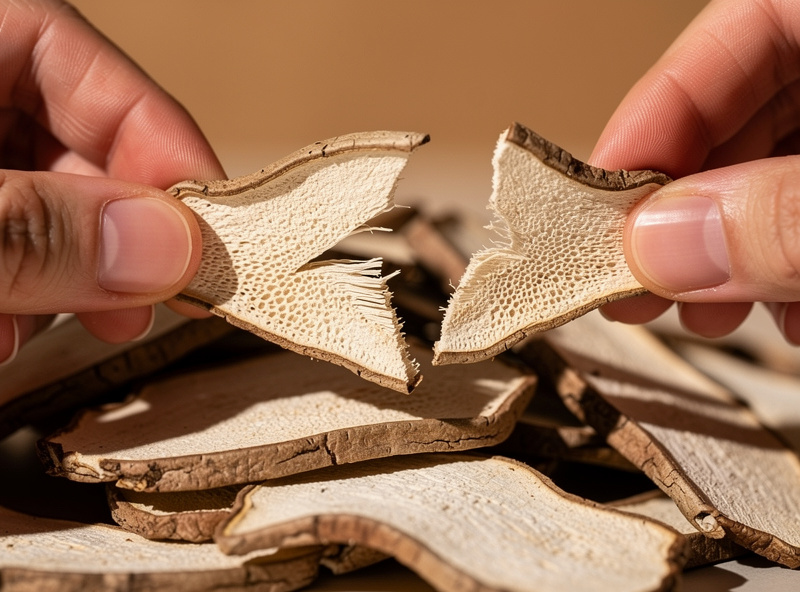
What I actually check before a piece goes in the jar:
- Snap test: A slice bent in half should snap with a crisp click. No bending without breaking.
- Weight check: Dried mushrooms are dramatically lighter than fresh — if a piece feels heavier than it looks, it’s probably still holding water.
- Color check: Dried mushrooms should look uniform across the slice. Dark spots or a sheen usually mean a moisture pocket that needs more time.
- Cool-down check: Let pieces sit at room temperature for 30 minutes after drying. If they go soft or feel cool and limp again, they’ve pulled humidity back out of the air — give them another round in the dehydrator.
Get this stage right and storage takes care of itself; get it wrong and even a good airtight jar won’t stop mold from showing up within a matter of weeks. The snap test is the one check I trust over any fixed drying-time chart.
Long-Term Storage to Preserve Active Compounds
Store dried mushrooms in airtight glass jars with a food-grade silica desiccant pack, in a cool, dark cabinet. Add an oxygen absorber if you’re storing for the long haul, and vacuum-sealing extends things further still. I don’t have lab data on exact potency retention over time — nobody selling a desiccant pack does either — so treat any precise month-by-month percentage you see online (including, previously, on this page) with real skepticism.
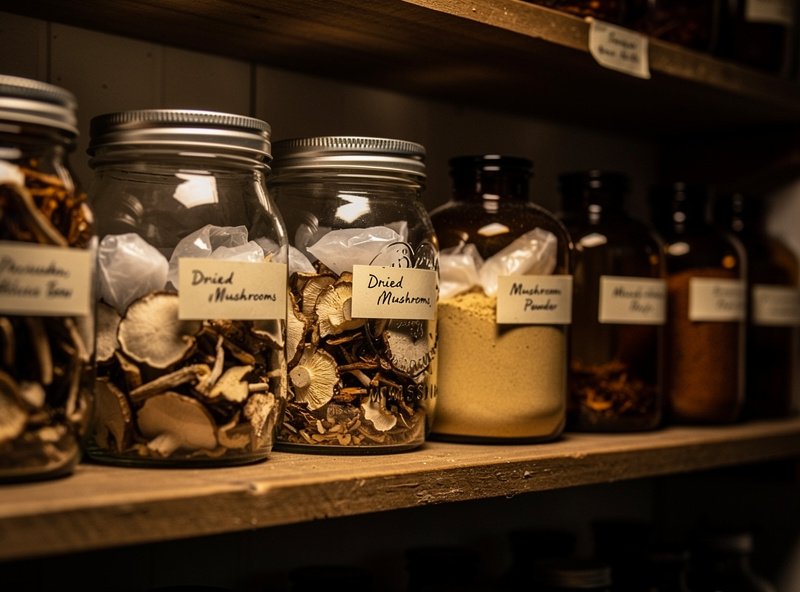
Storage protocol by intended shelf life — this is my own practice, not a lab-tested number:
- Use within a month: Glass jar with a screw lid in a cool, dark cabinet. No desiccant needed for that short a window.
- Longer kitchen-shelf storage: Add a small silica desiccant pack per jar and check it periodically — if it feels saturated or the jar shows any condensation, that’s your cue to re-dry and swap desiccant.
- Extended storage: Vacuum-seal in glass jars or food-grade Mylar with an oxygen absorber, and keep it somewhere genuinely cool. Heat and light are the two things that visibly degrade dried mushrooms fastest in my experience, more than the calendar date on the jar.
- Freezer storage: If I know I won’t use a batch soon, the freezer is where it goes. Cold slows everything down — oxidation, moisture migration, all of it — even if I can’t give you an exact number for how much potency that saves.
Avoid storing in plain plastic bags long-term — plastic is more oxygen-permeable than glass or true barrier film, and oxidation is the enemy of triterpenes and other lipophilic compounds over time. Glass with metal-lined lids, vacuum-sealed Mylar, and amber jars are what I actually use. For more on the general drying-and-storage workflow across culinary species too, see our how to dry mushrooms for storage guide.
Powdering vs Storing Whole: When to Process
I only powder what I’ll use within a few months — more surface area means more exposure to air, which means faster oxidation of the lipophilic compounds especially. Whole-piece storage holds up longer than powder in my experience. The exception is Lion’s Mane, since I use it often enough that having powder on hand outweighs the slightly faster staling.
How I actually split it up:
- Daily users (Lion’s Mane in coffee, etc.): I powder a few weeks’ supply at a time and re-grind from whole storage rather than powdering the whole harvest at once.
- Tincture batches: I powder right before extraction, not before. Whole storage until the day I actually process it.
- Long-term reserve (Reishi, Chaga): Always stored whole, sliced or chunk-cut, never pre-ground.
- Tea blends: A coarse chop is fine — you’re extracting into hot water anyway, and that’s less exposed surface than fine powder sitting in a jar for months.
A small coffee grinder or dedicated spice grinder handles powdering in under a minute. I avoid blade blenders for this — they generate heat that works against everything the low-heat drying was for. I keep one grinder dedicated to mushrooms and clean it with isopropyl alcohol between species, the same clean-process habit that runs my sourdough starter and my salami chamber.
Frequently Asked Questions
Can I dry medicinal mushrooms in the oven?
Most home ovens can’t hold a low temperature accurately, and many won’t go below 170°F even on their lowest setting. If you have to use one, prop the door open with a wooden spoon, use an oven thermometer, and check often. A basic dehydrator (roughly $40-80) gives you far more control and is worth it if you dry mushrooms regularly.
Should I rinse mushrooms before drying?
You can — a quick rinse under cold water followed by good draining is fine, and it’s what Colorado State University Extension’s PreserveSmart guide recommends for cleaning mushrooms before drying. I mostly brush mine off dry because I dislike the extra drying time a rinse adds, but a quick rinse won’t ruin the batch the way some grow forums claim.
How long do dried medicinal mushrooms last?
Properly dried and stored in an airtight container in a cool, dark place, dried mushrooms typically hold up well for many months to a year or more, longer in the freezer. I don’t trust any source — including older versions of this page — that hands you a precise month count paired with a precise potency percentage; nobody’s actually measured that for a home setup. Watch for stickiness, off smells, or softening as your real signal a batch is done.
Why do my dried mushrooms get sticky over time?
Stickiness means moisture reabsorption — either the container wasn’t airtight, the desiccant is saturated, or the mushrooms weren’t fully dry to begin with. Re-dry at a low dehydrator setting for a few hours and store in a fresh airtight container with new desiccant.
Does freeze-drying preserve more potency than dehydrating?
For some compounds, in some species, probably — freeze-drying is generally considered gentler on heat-sensitive compounds like cordycepin. But it’s not universal: at least one study on Reishi actually found heat-drying produced higher levels of certain triterpenoid compounds than freeze-drying did. A home freeze-dryer also runs roughly $2,000 or more, which is hard to justify unless you’re processing large batches regularly.
Can I powder mushrooms before drying them fully?
No. Wet powder packs into a paste that won’t finish drying evenly and is a real spoilage risk. Always hit the snap test first, then powder in small batches as you need them.
Related Articles
- Lion’s Mane Growing Parameters: Substrate, Temperature, Humidity
- Medicinal Mushrooms and Sauna Recovery: Lion’s Mane, Reishi, Cordyceps
- How to Dry Mushrooms for Storage: Dehydrator vs Oven vs Air Dry
- Best Wood for Mushroom Logs: Oak, Maple, Birch Compared
- Cobweb Mold vs Mycelium: How to Tell the Difference