
Vacuum sealing dried mushrooms with an oxygen absorber pushes shelf life from one or two years up to two or three, because you remove the oxygen that fades aroma and drives the slow rancidity of the fats inside a cap. Vacuum alone helps; vacuum plus an absorber is the real long-term combination. Bags stack flat, jars protect brittle caps — and you want both in your kit.
I came to vacuum sealing the way most home growers do: by watching a jar of dried oyster go flat and cardboardy over a winter and wondering why. The mushrooms were dry and safe, but the aroma had leaked out of them like air from a slow tire. The answer was oxygen. Once I started pulling the air and dropping in an absorber, jars I opened a year later still hit me with that deep, savory smell the moment the lid cracked. This is the back half of the storage chain, and it’s the single highest-value upgrade after the dehydrator itself.
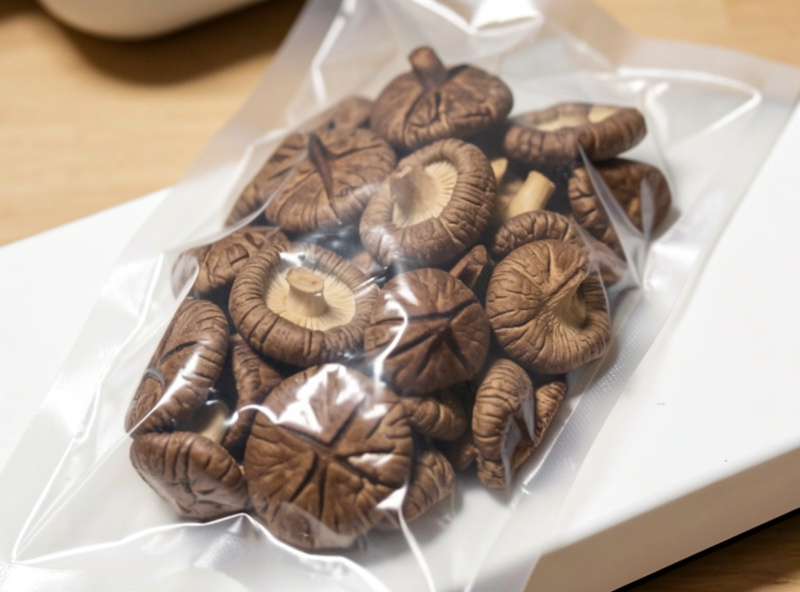
Do Vacuum-Sealed Dried Mushrooms Actually Last Longer?
Yes — noticeably. Properly dried mushrooms in a plain sealed jar keep one to two years; vacuum-sealed with an oxygen absorber they hold quality for two to three. The mushrooms don’t spoil either way once they’re cracker-dry; what changes is how fast they lose the aroma and flavor that made you grow gourmet species in the first place.
The mechanism is oxidation. Even bone-dry mushrooms hold fats and volatile aroma compounds that react with oxygen over months, going from deep and savory to flat and papery. Remove the oxygen and you slam the brakes on that reaction. The National Center for Home Food Preservation frames oxygen and moisture as the two main degraders of dried foods, and vacuum sealing plus an absorber attacks both at once — the vacuum pulls out the bulk air and the absorber scavenges what’s left, including oxygen that slowly permeates back through bag plastic. FoodSafety.gov backs the same oxygen-first framing for sealed dry goods generally. One thing to be clear about: sealing does not make an under-dried mushroom safe. If a cap wasn’t dried to a hard snap, vacuum-sealing it just traps the moisture with the mushroom. Drying first, sealing second — never the reverse.
Bags or Jars: Which Is Better for Dried Mushrooms?
Jars win for protecting brittle dried caps and for repeated access; bags win for flat, stackable, freezer-bound long-term storage. I use both, and which one I reach for depends on whether I’ll be opening it often. There’s no single right answer — there’s a right answer per batch.
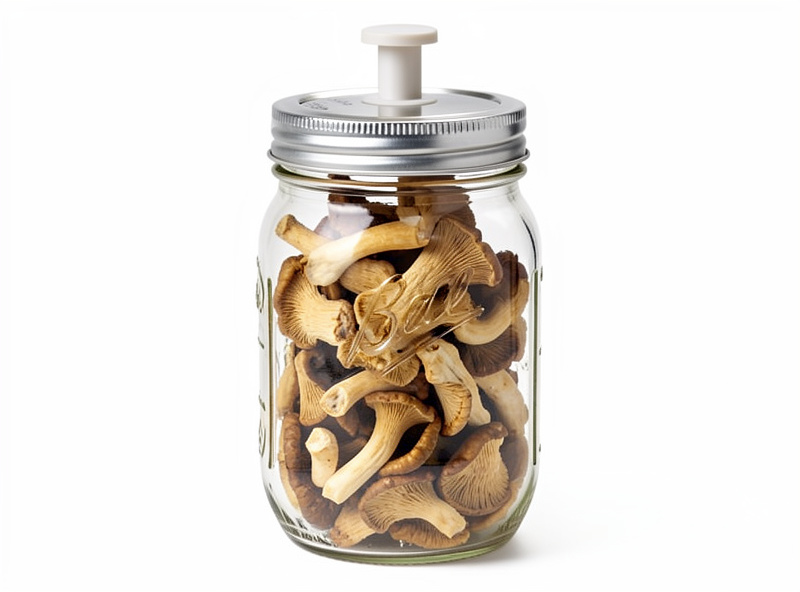
Glass jars with a vacuum jar-sealer attachment — mine are wide-mouth Ball jars, with a couple of Weck jars in rotation for the ones I like to see into — are my default for the mushrooms I cook from weekly. The rigid walls don’t crush fragile dried oyster the way a vacuum bag’s collapse does, they don’t hold odor, and pantry pests can’t chew through them. The downside is they’re bulky and don’t stack as densely. Vacuum bags are the opposite: they compress to almost nothing, stack flat in a drawer or freezer, and are perfect for a big batch I want to set aside for a year. But the vacuum crushes brittle caps into shards, and every time you open a bag to take a handful you have to re-seal the whole thing, losing a little bag length each time. My rule: jars for the working shelf, bags for the deep-storage stash. Here’s how the common options compare.
| Container | Protects brittle caps | Reusable | Stacks flat | Best for |
|---|---|---|---|---|
| Mason jar + vacuum attachment | Excellent | Yes, indefinitely | No | Weekly cooking shelf |
| Vacuum bag (sealer roll) | Poor (crushes) | Rinse and re-cut once | Yes | Deep-storage, freezer |
| Mason jar + O2 absorber (no vacuum) | Excellent | Yes | No | No sealer? Still great |
| Mylar bag + O2 absorber | Fair | No | Yes | Long-term, light-proof |
Notice the third row: if you don’t own a vacuum sealer at all, a mason jar with a good oxygen absorber gets you most of the way there. The absorber pulls the jar into a partial vacuum on its own as it consumes the oxygen. That’s the cheapest credible long-term setup, and it’s where I’d tell a new grower to start.
Why You Still Need an Oxygen Absorber
A vacuum seal removes most of the air, but not the oxygen dissolved in and clinging to the mushrooms, and bag plastic slowly lets a little oxygen back in over months. An oxygen absorber — a small iron-based packet that chemically binds oxygen — mops up what the vacuum misses and keeps mopping. Vacuum is the fast mechanical step; the absorber is the slow chemical insurance.
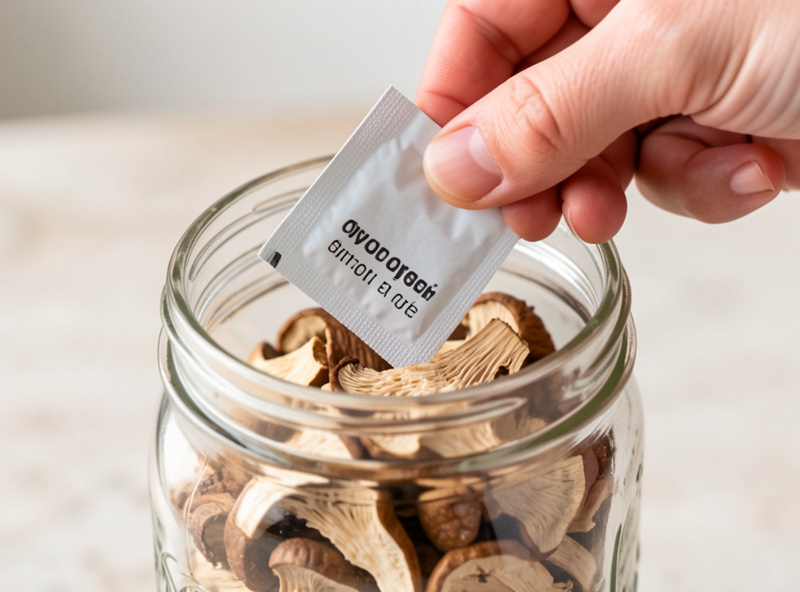
The two are not redundant — they cover different failure modes. I size absorbers to the container: a small 100 cc packet for a pint jar, larger for quart jars or bags, with the details on cc ratings and how long a packet actually lasts in my dedicated guide. One important distinction people muddle constantly: an oxygen absorber is not a desiccant. Absorbers remove oxygen; desiccants (silica gel) remove moisture. For already-dried, shelf-stable mushrooms you want the absorber, because moisture is already handled and oxygen is the remaining enemy. Throwing a silica packet in with dry mushrooms does little; throwing an oxygen absorber in does the real work. I break down exactly which to use, and the real shelf-life numbers, in the full storage-gear overview — start with the mushroom storage and preservation guide.
What Vacuum Sealer Should You Buy for Dried Mushrooms?
For a home grower, a standard external (clamp-style) vacuum sealer with a jar-sealer attachment does everything you need. Chamber sealers are better and gentler but cost several times more and are overkill unless you’re sealing at volume. The jar attachment is the feature that matters most for mushrooms, so buy a machine that supports one.
I run a FoodSaver-type external sealer with the wide-mouth and regular jar-sealer attachments, and honestly the jar function gets more use than the bag function for my mushrooms. The bag side handles the once-a-year deep-storage batches; the jar side handles the working shelf. When you shop, prioritize a machine with an adjustable seal or a “moist/dry” and “gentle” setting, because the pulse or gentle mode is what lets you seal fragile dried caps without the full-power vacuum pulverizing them. A basic vacuum sealer with a jar attachment and a box of 100 cc oxygen absorbers is the whole kit for most home growers.
As an Amazon Associate I earn from qualifying purchases.
How Do You Vacuum-Seal Brittle Dried Mushrooms Without Crushing Them?
Use jars instead of bags for the fragile species, or use your sealer’s gentle/pulse mode and stop the vacuum by hand the instant the bag snugs up. Fully dried oyster and lion’s mane are brittle as autumn leaves, and a full-power bag vacuum turns them to crumbs. Match the method to the mushroom.
My approach by species: brittle, delicate caps like oyster, lion’s mane, and enoki go into jars, where the rigid walls mean the vacuum can’t crush anything. Denser, tougher dried pieces — shiitake caps, king oyster coins, reishi slices — survive bag vacuuming fine. When I do bag a fragile batch, I use the manual pulse button and release the moment the bag hugs the mushrooms rather than letting it pull to full crush. Crumbs aren’t wasted, by the way — I sweep broken dried bits into a jar destined for the spice grinder and turn them into mushroom powder. The dense caps I dry from my shiitake blocks bag beautifully; the delicate oyster flushes get the jar treatment every time. And whichever you dry, get them fully snapped first using the right dehydrator setup — sealing is only as good as the drying it protects.
Can You Reuse Vacuum Bags and Jars?
Jars and lids are reusable indefinitely for dry storage; vacuum bags can be washed and re-cut once or twice for dry goods but not endlessly. Reusing dry-storage jars is a no-brainer since dried mushrooms leave no residue. Bags are more of a judgment call.
Mason jars are effectively permanent for this — wash, dry thoroughly, reuse. The lids for vacuum-attachment use last for years since the attachment seals against the jar rim, not by crimping. Vacuum bags that held only dry mushrooms can be turned inside out, washed, dried completely, and re-sealed once, losing a little length each cut; I don’t push past a second reuse because a weak seal ruins the whole point. The one rule I never break: dry the container bone-dry before refilling, because a droplet of wash water left in a jar reintroduces exactly the moisture the whole system exists to keep out. That’s the same paranoia that keeps my grain jars and my curing chamber clean — a little residual moisture is where every microbial problem starts.
Where and How Should You Store Sealed Mushroom Jars?
Store sealed dried mushrooms in a cool, dark, dry cupboard away from the stove and any window, and label every container with species and date. Even a perfect vacuum seal loses ground to heat and light, so location matters almost as much as the seal itself. Dark and cool is the whole rule.
Heat accelerates the oxidation you sealed against, which is why the cupboard above or beside the stove — where a lot of people keep dried goods — is the worst spot in the kitchen. I keep my mushroom jars in a lower cabinet on the cool side of the room, well away from the oven’s radiant heat. Light is the other silent degrader: UV and even bright kitchen light bleach color and break down aroma compounds over months, so clear jars belong in a closed cupboard, not on an open display shelf. If you want light protection without hiding the jars, that’s where mylar bags or amber glass earn their place.
Labeling sounds trivial until you’ve got six identical jars of brown dried caps and no idea which is the year-old shiitake and which is last week’s oyster. I write species and seal date on a strip of tape on every jar and rotate oldest-first, the same first-in-first-out habit I run on grain spawn and cured salami. A quick monthly glance catches any jar that’s fogged or lost its vacuum before it becomes a problem — if a jar-attachment lid has lost suction, the aroma is already fading and it’s time to use that batch soon. Good storage location plus honest labeling turns a shelf of sealed jars into a genuine pantry you actually cook from, instead of a graveyard of forgotten harvests. It’s the least glamorous step and the one that quietly protects everything upstream of it.
How long do vacuum-sealed dried mushrooms last?
Two to three years with an oxygen absorber, versus one to two years in a plain sealed jar. The mushrooms stay safe to eat longer than that once fully dried, but the aroma and flavor slowly fade as fats oxidize, which the vacuum and absorber together delay significantly.
Should I use bags or jars for dried mushrooms?
Jars for fragile caps and mushrooms you cook from often, because rigid walls will not crush brittle dried oyster and pantry pests cannot get in. Bags for deep-storage batches you want to stack flat, keeping in mind the vacuum crushes delicate caps and you lose a little bag length each time you reopen and reseal.
Do I need an oxygen absorber if I already vacuum seal?
Yes for best long-term results. Vacuum removes the bulk air but not all the oxygen, and bag plastic slowly lets oxygen back in over months. An oxygen absorber scavenges the remaining oxygen and keeps working, adding roughly a year of quality on top of the vacuum alone.
Is an oxygen absorber the same as a desiccant?
No. Oxygen absorbers remove oxygen; desiccants like silica gel remove moisture. For already-dried mushrooms you want the oxygen absorber, since moisture is already handled and oxygen is the remaining enemy. They are not interchangeable.
Can I vacuum seal dried mushrooms without crushing them?
Use jars for brittle species like oyster and lion’s mane so rigid walls prevent crushing, or use your sealer’s gentle or pulse mode for bags and stop the vacuum the moment the bag snugs up. Dense species like shiitake and king oyster survive normal bag vacuuming fine.