
A home mushroom grow room needs three environmental inputs held in a workable band: temperature roughly 55–75°F depending on species, relative humidity 80–95% during fruiting, and steady fresh-air exchange to flush the carbon dioxide that fruiting bodies pump out. Get those three right and clean water into the substrate, and almost everything else is detail.
I’ve run this grow room in Sweden through winters cold enough to stall a block on the shelf and summers warm enough to cook pins into leather. The mistake most people make is treating climate control as a single dial — buy a humidifier, done. It isn’t one dial. It’s four inputs that fight each other: raise humidity and you drop fresh air, warm the room and you dry it out, chase temperature and you forget the water going into the grain. This hub is the map of how those inputs interact, and every branch below drops into a full article on the one that’s biting you.
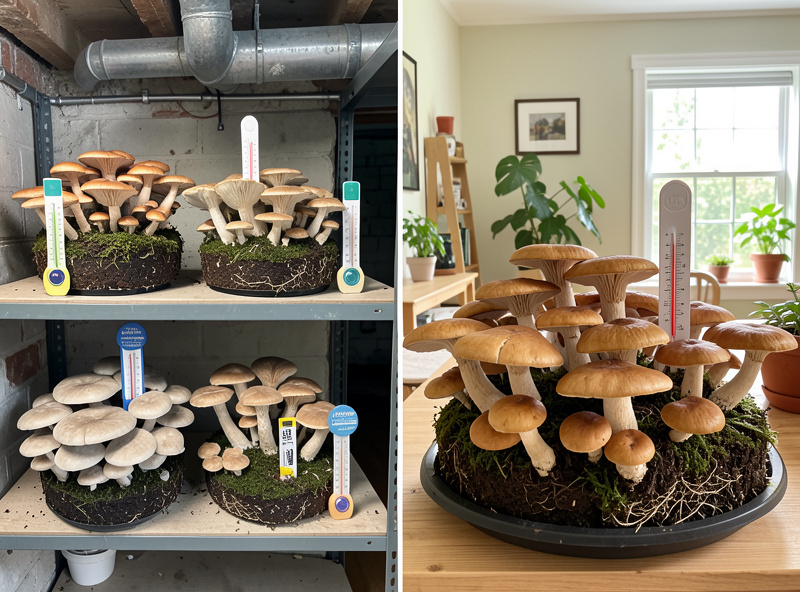
What Does Climate Control Actually Mean in a Grow Room?
Climate control means holding four inputs inside a species-appropriate band at the same time: ambient temperature, relative humidity, fresh-air exchange (FAE), and water quality. None of them lives alone. Warm air holds more moisture, so a hot room reads lower humidity at the same water load; opening for FAE dumps humid air and drops both. That coupling is the whole game.
I think of the grow room as two climates stacked on one shelf. The colonization climate is warm, dark, sealed, and forgiving — a colonizing block doesn’t care about humidity because it’s inside a sealed bag, and it makes its own gentle heat. The fruiting climate is the opposite: cooler, bright-ish, humid, and hungry for air. Most people build one box and expect it to do both jobs, then wonder why colonization is slow and pins abort. Separate the two in your head first, then in your space. My colonization happens on a heat-mat shelf held dead stable, and I detail that build in my write-up on a DIY incubation chamber with a heat mat and thermostat; fruiting happens in a Martha-style tent that’s a completely different environment.
The failure I see most in other people’s rooms isn’t a bad number — it’s a number that swings. Mycelium and pins tolerate a steady 62°F far better than a room that yo-yos between 58 and 70°F across a day. Stability beats perfection. A cheap thermometer-hygrometer that logs a min/max will teach you more about your room in three days than any grow guide, because it shows you the swing you can’t feel standing there.
What Temperature Does a Mushroom Grow Room Need?
Most gourmet species fruit somewhere between 55 and 75°F, but the useful number is the species-specific band: blue oyster pins hard at 55–65°F, lion’s mane wants 65–70°F, and reishi and pink oyster push into the high 70s and low 80s. Colonization for nearly all of them runs warmer than fruiting — typically 70–75°F — which is exactly why a cool room can colonize slowly and fruit beautifully.
The trap is reading a single “mushrooms like 65°F” line and building a room to it. That number is an average across species that don’t overlap. Blue oyster on my shelf in a 70°F room fruits reluctantly and long-stems reaching for cooler air; drop the same block to 60°F and it pins thick and stubby. Meanwhile a reishi block at 60°F barely moves. Matching the mushroom to the room you actually have is the highest-leverage decision you make, and I break down every species I fruit by its band in temperature ranges by mushroom species.
Two practical rules I run by. First, colonize warm, fruit cool: a heat mat under a colonizing tub gets me to full myceliation faster, then the block moves to a cooler fruiting spot to trigger pinning. My notes on sizing a heat mat and thermostat cover getting that warm side dead stable. Second, measure at block height, not at eye level — a shelf near the floor of a basement can read 6–8°F cooler than the thermometer you stuck at head height, and that gap decides whether your block pins or sulks.
How Do You Grow Mushrooms Through a Cold Winter?
A cold room is a fruiting advantage and a colonization problem. Winter basements sitting at 50–58°F are near-perfect for oyster and shiitake fruiting, but that same cold stalls grain spawn and blocks that need 70°F+ to colonize at any speed. The winter fix is almost always to add heat to the colonization side while letting the fruiting side ride the natural cool.
I’ve watched a rye jar sit for three weeks at a basement’s 54°F, barely creeping, when the same jar on a heat mat would have been fully colonized in ten days. Cold doesn’t usually kill a healthy culture — it just slows everything to a crawl and hands more time to any contaminant that likes the cold, which is a real category (cobweb mold shrugs off cool temps). So winter growing is a two-zone problem: a warm colonization pocket and a cool fruiting shelf, both in the same chilly room. The full playbook — heat-mat pockets, insulating a tent, humidity behaves differently in cold air — is in growing mushrooms in a cold basement through winter.
One winter-specific gotcha worth flagging here: cold air holds less moisture, so a humidifier that held 90% in September can overshoot to soaking condensation in January at the same setting, and standing water on a block is an invitation to bacterial blotch. Winter isn’t “turn the humidifier up.” Often it’s the opposite.
How Do You Keep a Grow Room Cool Through Summer Heat?
Summer is the harder season, because cooling a small space is far more expensive than heating one. When my grow room pushed past 78°F in a July heat spell, oyster pins that had set overnight turned to leather by the next evening — warm, dry, low-humidity air wicks moisture straight out of tender primordia. The summer job is to hold temperature down and humidity up while the ambient air fights you on both.
The cheap, effective moves are boring: move the operation to the coolest part of the house (a basement or north-facing room can run 10–15°F under an upstairs bedroom), fruit the heat-tolerant species in summer and save the cool-lovers for autumn, and lean on evaporative cooling from the humidifier itself. A frozen water bottle rotated into a fruiting chamber is a genuinely useful trick for holding a few small blocks through a heat spike. I lay out the whole summer strategy — species swaps, passive cooling, when an AC unit is finally worth it — in keeping a grow room cool through summer heat.
Summer also raises the contamination stakes. Warm and humid is the exact envelope Trichoderma loves, and green mold moves fast at 78°F. The clean-process discipline that protects the substrate is the same discipline that protects a salami curing chamber and a sourdough starter — in summer it just matters more, because everything, wanted and unwanted, grows faster.
Why Does Water Quality Matter for Mushroom Growing?
Water is an ingredient, not a utility. Chlorine and chloramine in municipal tap water are added specifically to kill microbes, and mycelium is a microbe; heavily chlorinated water used to hydrate grain or mist a young culture can slow colonization at the margins. For most home growers the bigger real-world issues are chloramine (which doesn’t gas off like chlorine) and very hard water leaving mineral scale in an ultrasonic humidifier.
Here’s where I temper the internet panic: pasteurized and sterilized substrates go through heat that neutralizes free chlorine anyway, so tap water in a pressure canner or a lime bath is rarely the thing killing your grow. Where water quality genuinely bites is the ultrasonic humidifier — hard water throws mineral dust across the tent and crusts the transducer, shortening its life — and cold-culture work where you’re misting live tissue directly. The U.S. EPA documents that public systems commonly use chloramine as a longer-lasting disinfectant, which is worth knowing because a simple carbon filter removes chlorine easily but struggles with chloramine. I sort out chlorine versus chloramine, when reverse osmosis is worth it, and when your tap is completely fine, in water quality for mushroom growing.
How Do You Read Humidity Problems in a Fruiting Chamber?
Humidity problems announce themselves on the fruiting body before they show on the hygrometer. Too dry — below roughly 80% during pinning — and you get cracked, curling caps, aborted pins, and long leggy stems reaching for moisture. Too wet — standing condensation and stagnant air — and you get bacterial blotch, a slimy yellowing, and fuzzy cobweb-style contamination taking hold on the block surface.
The reason “just buy a humidifier” fails is that humidity and fresh air are a tradeoff, not two separate knobs. Seal a tent to hold 95% and you also trap CO2, which tells oyster to grow stems and skip caps. Blast the fan for air exchange and you dry the pins. Reading the room means reading the mushrooms: caps cracking = too dry or too much air; long stems and tiny caps = too little air (high CO2); slimy or blotchy = too wet with too little air. My humidity controller build handles the automation side — I wired one up in my guide to wiring a humidity and FAE controller — but reading the symptoms is the skill, and I walk through every one in reading humidity problems: too wet, too dry, and the fixes.
Can You Grow Mushrooms With No Climate Control at All?
Yes — you grow with the seasons instead of against them. Before I owned a humidifier or a heat mat I fruited oyster in autumn and spring, when my room naturally sat at 60–68°F with high ambient humidity, and simply didn’t try to fruit anything through the dry heat of a summer or the deep cold of midwinter. Working with the calendar is the oldest, cheapest climate strategy there is.
No-climate-control growing is really the art of matching species and timing to the weather you get for free. An outdoor wine-cap bed in the garden fruits when the season decides; indoor oyster in a shotgun chamber rides the shoulder seasons. The cold lime-bath pasteurization method even lets you prep bulk substrate without a stove, which pairs naturally with a low-tech, seasonal approach. I cover the whole calendar-driven method — which species for which season, how to fruit in a humid bathroom, and the honest limits — in growing with the seasons when you have no climate control.
How Much Fresh Air Does a Fruiting Room Need?
Fresh-air exchange is the input beginners forget, and it’s the fourth leg of the stool. Fruiting bodies respire like any living thing: they consume oxygen and exhale carbon dioxide, and a sealed chamber packed with pinning oyster can push CO2 from the ~400 ppm of outdoor air to several thousand ppm within hours. High CO2 doesn’t kill the mushroom — it deforms it, driving long stems, small or absent caps, and that unmistakable “reaching for the exit” look.
Different species tolerate CO2 very differently, which is why FAE isn’t one setting either. Oyster and lion’s mane are thirsty for fresh air and show CO2 stress fast; king oyster actually wants a little more CO2 early to elongate its thick stem before you crack the chamber to cap it out. On my shelf the practical rule is simple: if the caps look wrong and the humidity is fine, the answer is almost always more air. I run a small circulation fan on an interval timer plus deliberate fanning or venting a few times a day, and for setups without any powered airflow at all, passive exchange through filter patches and a cracked lid does more than people expect.
The catch, again, is coupling: every burst of fresh air is also a burst of dry room air, and it drops humidity for a few minutes until the humidifier catches up. That’s the tension the whole fruiting environment lives in — humidity wants the box sealed, the mushroom wants it breathing. Reading which side is losing, in real time, off the look of the pins, is the single most useful fruiting skill there is.
Which Species Suits Your Room? A Temperature and Humidity Table
This is the table I wish I’d had when I started — it answers “what should I grow in the room I actually have?” rather than “what’s the ideal room?” Fruiting temperatures and humidity bands below reflect the ranges I run on my own shelves and that specialty-mushroom growers commonly cite; colonization for all of these runs warmer, around 70–75°F.
| Species | Fruiting temp | Fruiting humidity | Best season (unheated room) | Difficulty |
| Blue / pearl oyster | 55–65°F | 85–90% | Autumn & spring | Beginner |
| Pink oyster | 70–80°F | 85–90% | Summer | Beginner |
| Lion’s mane | 65–70°F | 85–95% | Autumn & spring | Intermediate |
| King oyster | 60–68°F | 85–90% | Autumn & spring | Intermediate |
| Shiitake (block) | 55–65°F | 80–90% | Autumn to spring | Intermediate |
| Reishi | 75–85°F | 90–95% | Summer | Intermediate |
| Wine cap (outdoor bed) | 60–80°F | Ambient/rain | Late spring to autumn | Beginner |
Read the table sideways: if your only free space is a 58°F basement, you’re an oyster-and-shiitake grower and you’ll be a happy one. If all you’ve got is a warm apartment that won’t drop below 74°F, pink oyster and reishi are your friends and blue oyster will fight you all year. The room picks the mushroom more than the mushroom picks the room.
The Gear I Use to Hold Climate
You don’t need much, but the few things you buy should be the right things. On the measurement side, the single most valuable tool is a digital thermometer-hygrometer with a min/max memory — it’s under the price of one contaminated grain bag and it exposes the temperature swing you can’t feel. I keep one probe at block height in the fruiting tent and glance at it more than my phone.
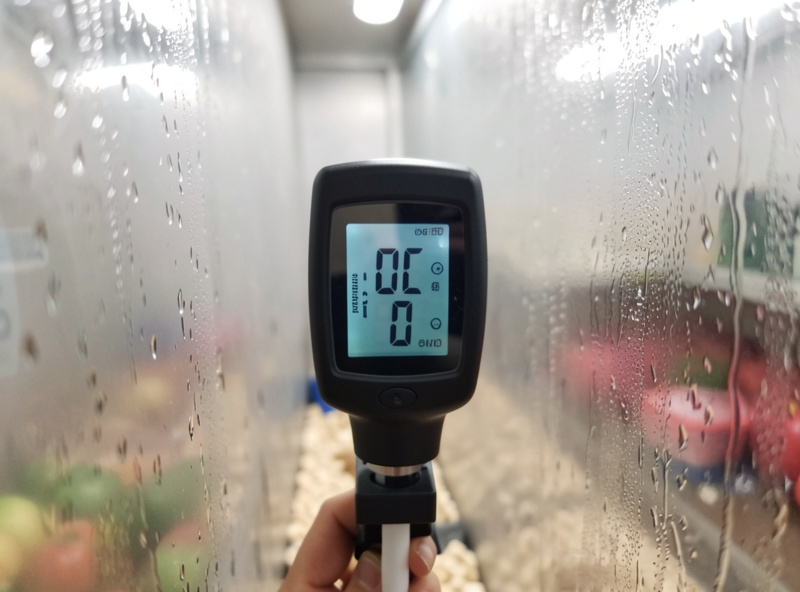
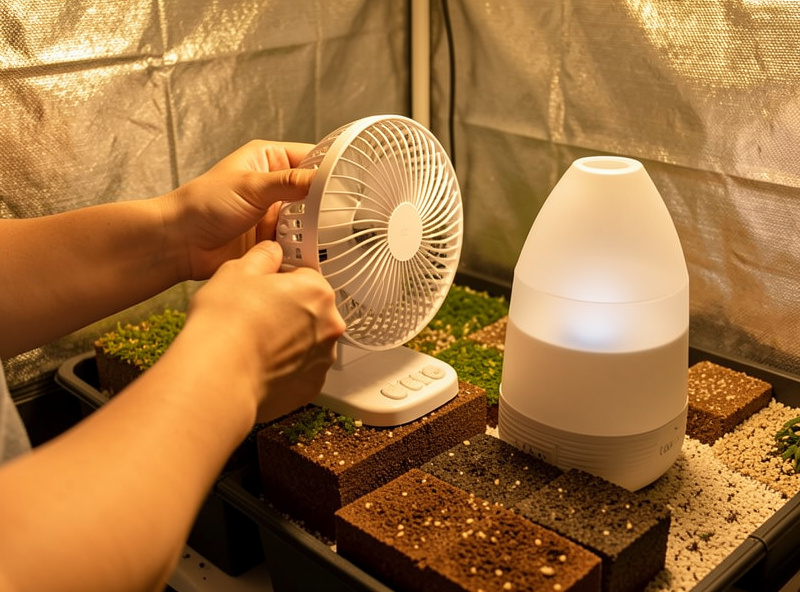
For control, my fruiting side runs an ultrasonic humidifier on a humidistat and a small clip-on circulation fan on an interval timer — that pair, plus a hygrometer, is 90% of a working fruiting climate. The colonization side runs a seedling heat mat under a thermostat probe so the tub sits at a dead-stable 75°F regardless of what the room does. For summer I keep a couple of frozen bottles in rotation; for winter, closed-cell foam board to insulate the tent. If you want one monitor to start with, a decent min/max digital hygrometer with min/max memory is the tool I’d buy first. A laminar flow hood and pressure canner matter for sterile work, but they’re a separate budget from climate.
As an Amazon Associate I earn from qualifying purchases.
The Mistake That Taught Me Climate Is Coupled
My worst climate lesson cost me a full flush of blue oyster. Early on I chased a humidity number — I saw 78% on the hygrometer, decided that was too low, and cranked the ultrasonic humidifier and sealed the tent tighter to hold moisture in. The humidity climbed to a proud 95%. The oyster grew stems like bean sprouts with caps the size of a fingernail, then aborted. I’d read one input and ignored its partner: sealing the tent to trap humidity also trapped CO2, and high CO2 tells oyster to stretch for air instead of forming caps. The fix wasn’t more humidity — it was more fresh air, which meant accepting slightly lower humidity and running the fan more. The block that had failed under a “perfect” 95% fruited normally the next flush at 88% with real air movement.
That’s the whole thesis of this hub in one failure: you cannot tune one input in isolation. Temperature changes what humidity reads; humidity fights fresh air; fresh air dries pins; water quality sits underneath all of it. Learn the couplings and the room stops being a mystery.
What is the ideal temperature for a mushroom grow room?
There isn’t one ideal number because species differ. Most gourmet mushrooms colonize best around 70 to 75 degrees Fahrenheit and fruit cooler, roughly 55 to 75 degrees depending on species. Blue oyster fruits at 55 to 65, lion’s mane around 65 to 70, and reishi up in the high 70s to low 80s. Match the species to the room you actually have.
Do I need a humidifier to grow mushrooms?
Not always. Fruiting needs 80 to 95 percent relative humidity, but you can reach that with a humid room, a shotgun chamber, or seasonal timing rather than a powered humidifier. A humidifier makes it consistent and lets you fruit off-season, but plenty of first grows succeed in autumn and spring with no active humidity control at all.
Can chlorine in tap water kill mushroom mycelium?
Heavily chlorinated water can slow mycelium at the margins because chlorine is added to kill microbes. In practice, pasteurizing or sterilizing substrate neutralizes free chlorine, so tap water is usually fine for substrate prep. Water quality matters most in ultrasonic humidifiers, where hard water leaves mineral dust, and when misting live culture directly.
Why are my mushroom stems long with tiny caps?
Long stems and small caps almost always mean too much carbon dioxide from not enough fresh-air exchange. The chamber is sealed too tightly to hold humidity, which traps the CO2 that fruiting bodies release. The fix is more air movement and fresh air, even if it means accepting slightly lower humidity.
Is it easier to grow mushrooms in winter or summer?
Winter is usually easier for cool-loving species like oyster and shiitake because cold rooms fruit them well; the challenge is keeping the colonization side warm enough. Summer is harder because cooling a small space is expensive and warm, humid air accelerates contamination. Many growers switch to heat-tolerant species like pink oyster in summer.
How do I keep a grow room humid without causing contamination?
Pair humidity with air movement. High humidity plus stagnant air and standing condensation is what breeds bacterial blotch and cobweb mold. Aim for 85 to 90 percent with a small circulation fan running on an interval, wipe away standing water, and avoid soaking the block surface. Humidity and fresh air must be balanced, not maximized.
Where to Go Next
Climate control is a system, so pick the branch that’s biting you right now and go deep. For sourced, real-world guidance on ambient conditions, university extension programs are the sanest reading — Penn State Extension publishes serious mushroom-production material, and the Cornell Small Farms Program covers specialty-mushroom growing for small operations. Then dive into whichever of these fits your season and space:
- Temperature ranges by mushroom species — match the mushroom to your room.
- Growing mushrooms in a cold basement through winter — the two-zone cold-season playbook.
- Keeping a grow room cool through summer heat — the hard season, solved cheaply.
- Reading humidity problems: too wet, too dry, and the fixes — diagnose from the mushroom.
- Water quality for mushroom growing — chlorine, hard water, and RO, without the panic.
- Growing with the seasons when you have no climate control — the free, calendar-driven method.
If I were starting today with a cold room and no gear, I’d grow oyster in the shoulder seasons, put one min/max hygrometer at block height, and add heat to the colonization side before I spent a krona on anything else. Build the measurement habit first; the control gear only earns its place once you can see what the room is actually doing.