
The lion’s mane (Hericium erinaceus) block versus jar method comes down to a simple trade: a 5-pound sawdust block gives you the big show-piece flush and better economics, while a quart jar of supplemented sawdust is tidier, fits a small space, and lets you run several genetics or stagger dates on one shelf. I fruit lion’s mane both ways, and for most home growers the block wins on yield while the jar wins on simplicity and footprint.
Both methods use the exact same substrate, sterilization, and sterile chain that the complete lion’s mane growing guide lays out — supplemented hardwood or Masters Mix, pressure-sterilized, grain-spawned. What changes is the container and, critically, the fruiting geometry: where and how the mushroom is allowed to bull out into the air.
What Each Method Actually Is
The block method is a filter-patch grow bag holding roughly 5 pounds of supplemented sawdust, inoculated with grain spawn, colonized solid, then fruited by cutting a single slit or X in the bag so the lion’s mane fruits from that one opening. It’s the standard commercial-style format scaled to a home canner, and it produces the dense pillow most people picture.
The jar method is a wide-mouth quart (or pint) jar packed with the same supplemented sawdust, sterilized, inoculated, colonized, and then fruited straight out of the open jar mouth — sometimes called an all-in-one or “fruit-in-the-jar” approach. It’s effectively a miniature block with a built-in rigid container, and the jar mouth becomes the single fruiting site.
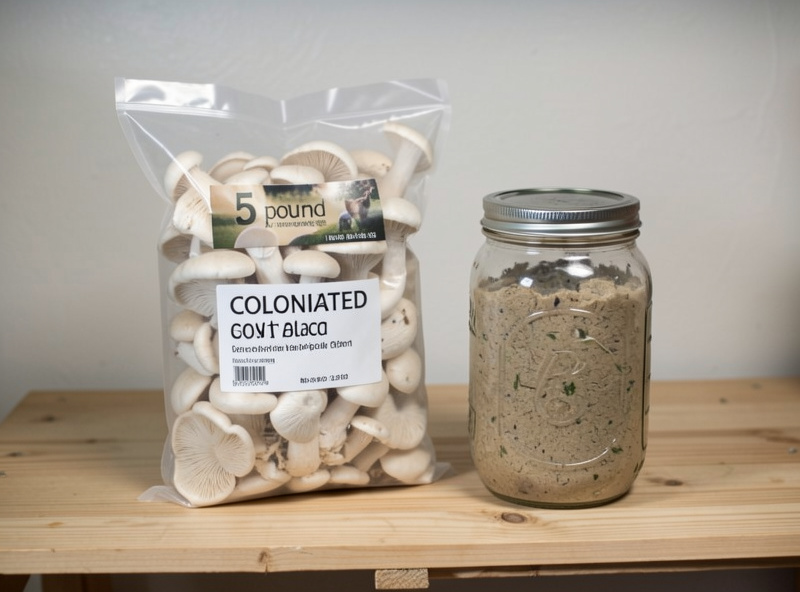
Block vs Jar: Side by Side
Here’s the honest comparison from running both. Neither is “better” in the abstract — they fit different setups. The jar’s higher surface-to-volume ratio is its main weakness on contamination and its main strength on convenience.
| Factor | 5 lb Block | Quart Jar |
|---|---|---|
| Typical first flush | 250–450 g | 60–120 g |
| Footprint | Large, needs a tent | Small, shelf-friendly |
| Fruiting site | One cut slit/X | Open jar mouth |
| Contamination risk | Lower per gram | Higher (surface area) |
| Second flush | Often a decent one | Frequently one-and-done |
| Cost per gram | Lower | Higher |
| Best for | Yield, kitchen volume | Small space, many strains |
| Reusability | Bag is disposable | Jar reused for years |
Yield and Economics
On raw yield the block wins clearly: a well-run 5-pound block gives me a 250–450 gram first flush and usually a worthwhile second, while a quart jar lands around 60–120 grams and often quits after one. Per gram of mushroom, the block is cheaper — you’re amortizing one sterilization cycle and one bag over a much bigger harvest. If your goal is putting lion’s mane on the table every week or building up a stash to dry, blocks are the efficient path, and the yield per block and cost comparison guides put real numbers on it.
Where the jar claws value back is in flexibility. Each jar is an independent unit, so I can run pearl-strain lion’s mane in one, a different isolate in another, and stagger inoculation dates so something is always fruiting. Jars also get reused for years, while grow bags are disposable. For testing a new culture before committing a full canner of blocks to it, jars are the cheaper experiment.
Contamination and the Surface-Area Problem
The jar’s biggest weakness is geometry. A quart jar has a high surface-to-volume ratio and an open mouth during fruiting, which means more exposed substrate per gram and a wider door for mold and bacteria. A block, by contrast, stays sealed in its bag until you cut one small opening, so most of its substrate never meets room air. Per gram, blocks simply contaminate less.
That said, both live or die on the same upstream sterile work — grain spawn and transfers, not the container. I sterilize everything at 15 PSI, work in the still-air box or on the flow hood, and treat the grain as the real risk point, exactly as covered in the grain spawn guide and pressure cooker sterilization. If a jar does come down with something at the mouth, the green mold ID guide and contamination triage will tell you whether to toss it.
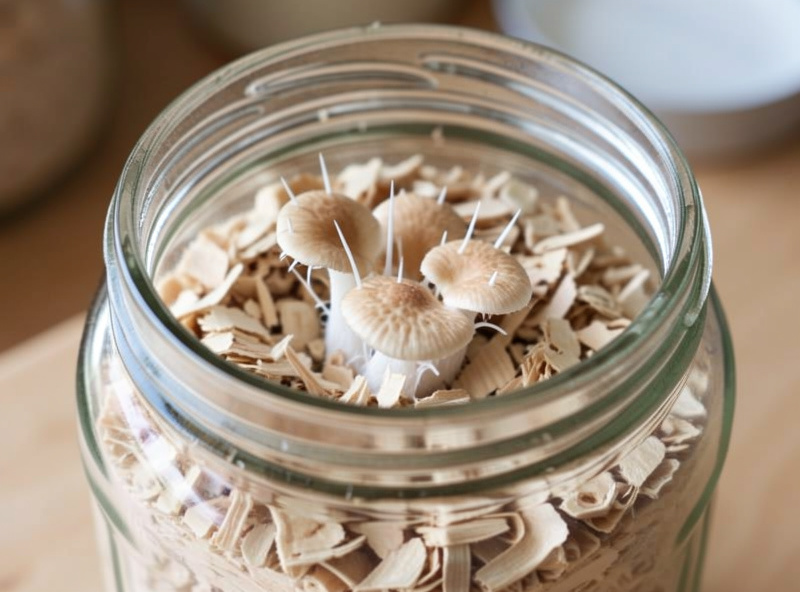
Fruiting Geometry: Why the Container Changes the Air
Both formats fruit from a single site, but the shape of that site changes how you manage fresh-air exchange. A block’s cut slit can be oriented and sized; I often cut a small X low on a face so the mushroom hangs out and down, which lets the spines develop their natural cascade. A jar fruits straight up out of its mouth, a narrower opening that can trap a little CO2 right at the fruiting surface if the jar is deep — so jars sometimes need a touch more air movement at the mouth to avoid the branching that lion’s mane fruiting conditions warns about.
Whichever you run, the rest of the environment is identical: 85–95% humidity, 18–21°C, indirect light, and strong FAE. The container choice doesn’t change the dials, only how carefully you place the fan. If you see antlering on a jar specifically, suspect the mouth is sitting in dead air before you suspect anything else.
Setting Up Each Format, Step by Step
The two formats diverge only at the container stage; everything before grain spawn is shared. Here’s how each one actually goes together on my bench.
Block. Hydrate supplemented sawdust or Masters Mix to field capacity, pack a filter-patch grow bag with about 5 pounds, and pressure-sterilize at 15 PSI for 2.5 hours. Once cool, inoculate inside the still-air box with roughly a quart of colonized grain spawn — a 1:2 to 1:3 spawn-to-substrate feel — seal the bag, mix the spawn through, and incubate dark at 20–24°C for 14–21 days. When the bag is solid white, cut one slit and move it to fruiting. The detailed substrate prep is in the supplemented sawdust recipe.
Jar. Pack the same hydrated, supplemented sawdust into a wide-mouth quart jar fitted with a filtered or self-healing lid, leaving headroom at the mouth. Sterilize the jars at 15 PSI for about 2.5 hours. Inoculate with grain spawn or liquid culture through the lid port, colonize 2–3 weeks, then remove the lid to fruit straight from the mouth. Because you’re fruiting from a fixed opening, jars reward a clean, level fill so the mushroom emerges evenly. If you’re weighing grain spawn against liquid culture for inoculating jars, the liquid culture comparison covers it.
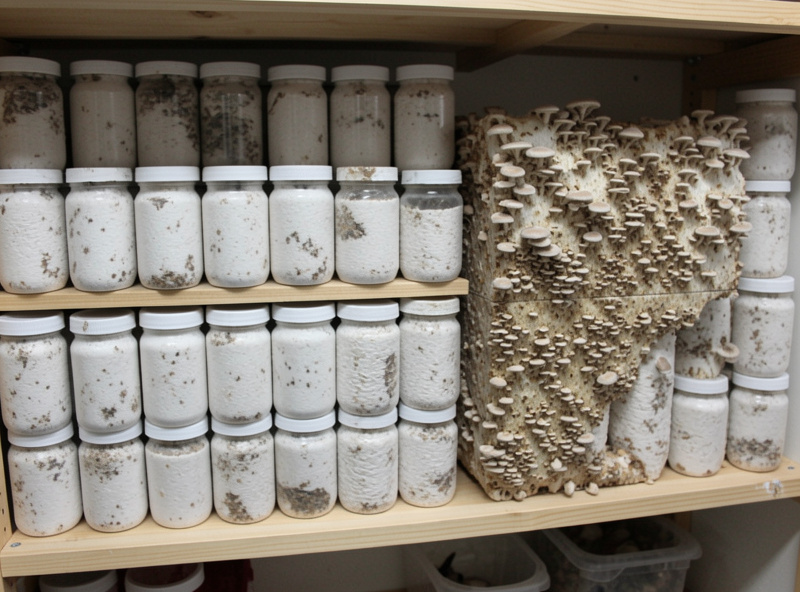
Which Should You Choose?
Choose blocks if you have a fruiting tent or chamber, want real kitchen volume, and care about cost per gram — this is what I run as my workhorse. Choose jars if you’re in an apartment or small space, want to trial multiple cultures, or just like the tidiness of a rigid, reusable container with no tent. Many growers, myself included, run a few jars alongside the blocks: jars for experiments and staggered small harvests, blocks for the bulk. If you’re still deciding how to start at all, the grow kit vs DIY comparison and the broader bulk growing guide are worth a read, and once you’ve got a flush going, line up harvesting next.
One last practical point: the same logic applies to other wood-loving gourmets I run, so the format you settle on for lion’s mane carries over. King oyster and the supplemented-block species behave similarly in bags versus jars, while a species like reishi has its own quirks. Pick the format that matches your space and your patience, not the one a kit seller pushes — both work, and the substrate discipline upstream matters far more than the container you fruit from.
Frequently Asked Questions
Is the block or jar method better for growing lion’s mane?
Blocks give bigger flushes and lower cost per gram, while jars are tidier, fit small spaces, and let you run several strains at once. For kitchen volume choose a 5-pound block; for a small footprint or experiments choose jars. Many growers run both.
How much lion’s mane does a quart jar yield?
A wide-mouth quart jar of supplemented sawdust typically yields about 60 to 120 grams on its first flush and often does not produce a strong second flush. A 5-pound block, by comparison, yields 250 to 450 grams plus a usual second flush.
Why are jars more prone to contamination than blocks?
A jar has a high surface-to-volume ratio and an open mouth during fruiting, exposing more substrate per gram to room air. A block stays sealed in its bag except for one small cut, so most of its substrate never meets the air. Per gram, blocks contaminate less.
Can I get a second flush from a lion’s mane jar?
Sometimes, but jars are frequently one-and-done because they hold less substrate and dry out faster. Blocks rehydrate and re-flush more reliably. If you want multiple flushes, the block format is the better choice.
Do blocks and jars need different fruiting conditions?
No, both want 85 to 95 percent humidity, 18 to 21 degrees Celsius, indirect light, and strong fresh-air exchange. The only practical difference is that a deep jar mouth can trap carbon dioxide, so jars sometimes need a little extra air movement right at the opening.