
Growing king oyster mushrooms is the one oyster that breaks the usual oyster rules: Pleurotus eryngii will not give you much on straw, it needs a supplemented, fully sterilized hardwood block, and it fruits as thick, meaty individual stems rather than the broad shelf clusters of other oysters. Get the substrate and the CO2 right and a single block yields dense, scallop-textured mushrooms that hold their shape in the pan better than any other oyster.
King is the oyster I grow when I want texture over volume — it is the bench project rather than the weekly straw bag. It asks for a step up in technique: sterilization instead of pasteurization, a richer substrate, and a bit of CO2 management at fruiting. This guide walks through exactly how I run king from block to harvest. If you are new to oysters, get a couple of straw grows under your belt with the main oyster guide first, then come back for king.
Why King Oyster Is Different
King oyster is the odd cousin of the Pleurotus genus. Where blue, pearl, and pink are aggressive primary decomposers happy on low-nutrient straw, king wants a nutrient-dense, supplemented hardwood substrate — and because that substrate is rich, it must be fully sterilized, not just pasteurized. It also fruits differently: fewer, thicker fruiting bodies with stubby caps and long meaty stems, rather than fans of thin shelves.
Here is how king compares to the shelf-forming oysters, so the different method makes sense.
| Factor | King (P. eryngii) | Shelf oysters (blue/pearl/pink) |
|---|---|---|
| Substrate | Supplemented sawdust / Masters Mix | Pasteurized straw or CVG |
| Prep | Sterilized (pressure) | Pasteurized (no pressure needed) |
| Fruiting temp | 15–18°C | 10–30°C by species |
| Form | Thick stems, small caps | Broad fan-shaped shelves |
| Difficulty | Moderate | Easiest |
That moderate difficulty is why I do not recommend king as a first grow. If you want the easiest path, blue and pearl are the place to start; king is the graduation project once you are comfortable sterilizing grain.
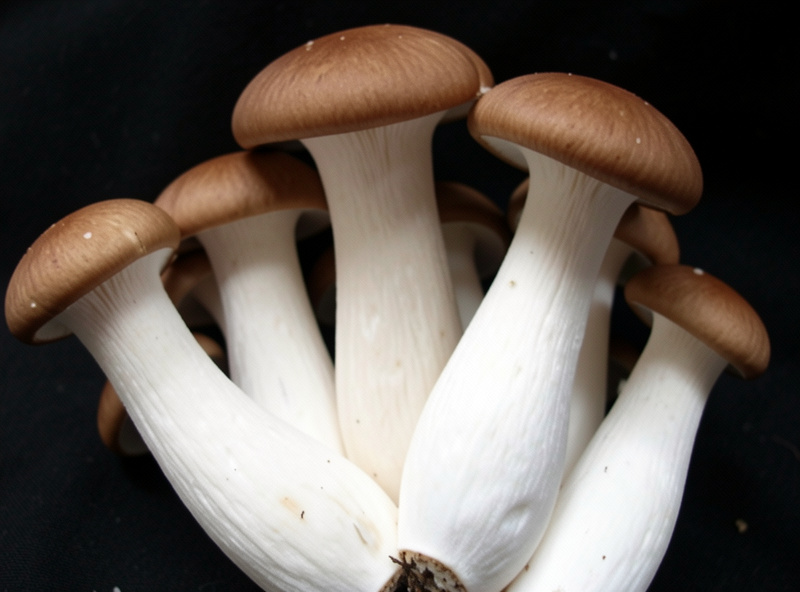
The Right Substrate: Masters Mix
King oyster fruits best on a supplemented hardwood substrate, and the standard that has earned its reputation is Masters Mix — a 50/50 blend by dry weight of hardwood sawdust and soy hull pellets, hydrated to field capacity. The soy hulls add the nitrogen and nutrition king needs to build those thick stems, which is exactly why the block has to be sterilized rather than pasteurized.
I run the same Masters Mix for king that I use for lion’s mane, and it is the most reliable substrate I have found for both. Hydrate to roughly 60% moisture — squeeze a handful and only a thread of water should release — load into filter-patch bags, and you are ready to sterilize. The full recipe and ratios are in the Masters Mix guide, and the alternative supplemented-sawdust formulas are in the supplemented sawdust recipe. Plain straw simply will not give king the nutrition it needs — this is the one oyster where substrate choice is non-negotiable.
Sterilize, Don’t Pasteurize
Because Masters Mix is nutrient-rich, it is a feast for contaminants, so it must be fully sterilized in a pressure canner — typically around 2.5 hours at 15 PSI for fruiting blocks, longer than the 90 minutes I run for grain. Pasteurization is not enough here; the supplements that feed king also feed mold and bacteria, and only sterilization clears the field.
This is the single biggest reason king is a step up from straw oysters: you cannot shortcut the sterilization. Let the blocks cool completely before inoculating — warm blocks cook your spawn — and inoculate in front of a still-air box or flow hood. The pressure-canner times and PSI logic are covered in the pressure cooker sterilization guide, and the grain side in the grain spawn guide. The same sterile discipline that protects a king block protects the salami curing chamber and the sourdough starter — one clean-process habit across every microbial project in the house.
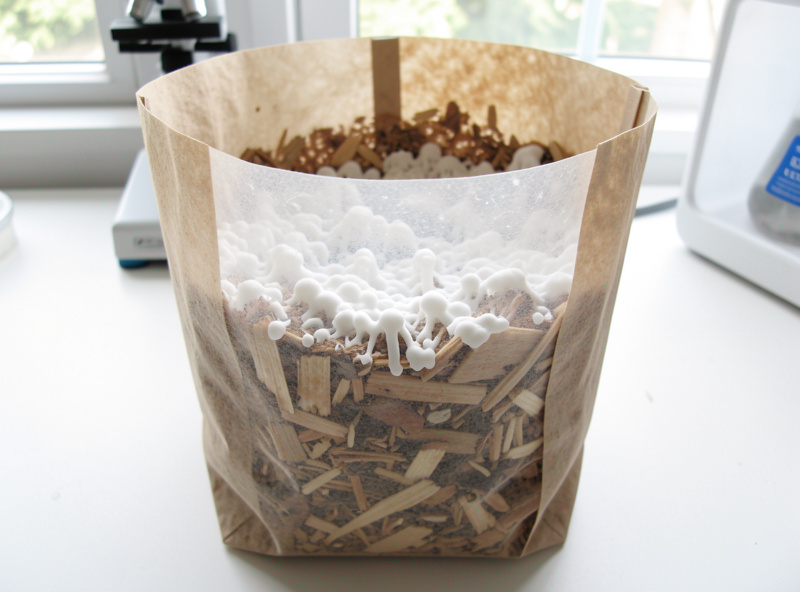
Colonization and Consolidation
King colonizes its block more slowly than shelf oysters — expect roughly 2 to 3 weeks for full colonization at around 20–24°C, plus a consolidation period of several more days where the mycelium thickens and toughens before fruiting. Do not rush it to fruiting the moment it looks white; a fully consolidated block fruits stronger and resists contamination better.
At a 1:2 to 1:4 spawn ratio into sterilized bulk, king benefits from a higher spawn rate than straw oysters because the rich substrate is riskier and faster colonization is safer. Once the block is solid white and has firmed up, it is ready. The spawn-to-bulk ratio guide covers the numbers, and if you are running cultures yourself, the liquid culture comparison covers the front end.
Fruiting King Oyster — the CO2 Trick
King oyster fruiting is where the technique pays off, and it runs counter to everything you learned with shelf oysters. King fruits best cool (15–18°C) and actually benefits from slightly elevated CO2 in the early pinning stage, which encourages the long, thick stems that are the whole point — then you increase fresh air later to firm up the small caps. This is the opposite of the maximum-airflow approach for shelf oysters.
In practice I fruit king from a single cut or hole in the top of the block to concentrate the energy into fewer, bigger mushrooms, keep humidity high at 85–95%, and hold back slightly on FAE during early pin development. Too much fresh air too early gives thin stems and oversized caps — the reverse of what you want. The general airflow principles are in the FAE and CO2 guide; king is the species that bends those rules deliberately.
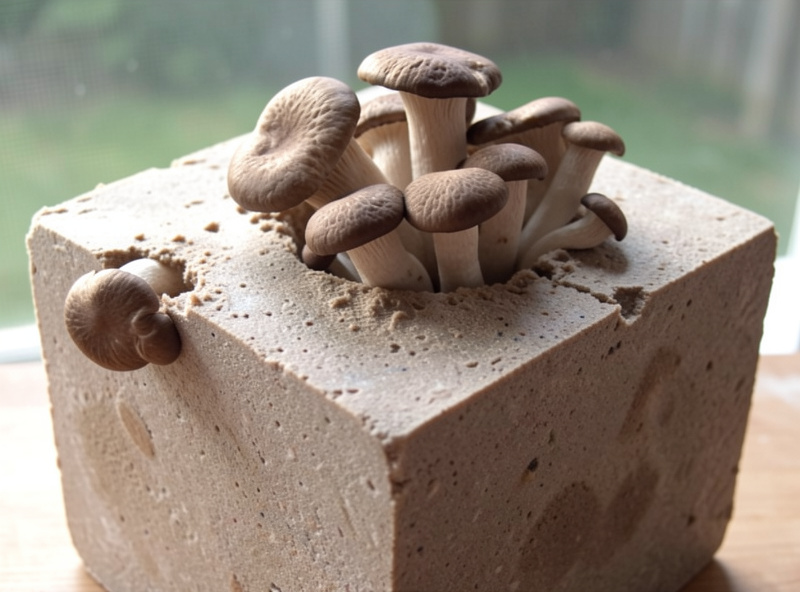
Pruning for Bigger Mushrooms
If a block throws a dozen pins, they will compete and you will get many small mushrooms instead of a few large ones. To grow the thick, steak-like kings most people want, prune the cluster down to the three or four strongest pins per fruiting site and let those dominate. The energy that would have spread across a crowd goes into a handful of substantial mushrooms.
This pruning step is unique to king among the oysters — you would never thin a blue oyster cluster — and it is the difference between a respectable yield of small kings and a few impressive ones. King’s biological efficiency is lower than shelf oysters at roughly 50–75%, so you are trading total volume for texture and size either way.
Harvest, Yield, and the Kitchen
Harvest king when the caps are still small and slightly convex, before they flatten and flare — that is peak meaty texture. Twist the whole mushroom free at the base. King keeps far better than other oysters, staying firm for a week or more refrigerated, which makes it the most practical oyster to actually store.
The kitchen is where king earns its keep: the dense stems slice into scallop-like rounds that sear beautifully and hold their shape, and king makes the best mushroom jerky of any species I grow. The searing technique carries over from the oyster cooking guide. Spent king blocks have the usual second-life uses in the spent substrate guide.
As an Amazon Associate I earn from qualifying purchases. King runs best on a supplemented block, so a bag of soy hull pellets for Masters Mix and some king oyster grain spawn are the two things to source first.
Frequently Asked Questions
Can you grow king oyster mushrooms on straw?
Not well. King oyster needs a nutrient-dense supplemented hardwood substrate such as Masters Mix to build its thick stems. Plain pasteurized straw lacks the nutrition, so king performs poorly on it compared with blue, pearl, or pink oyster.
Why does king oyster substrate need to be sterilized?
King oyster grows on supplemented sawdust enriched with soy hulls, and that nutrition feeds contaminants as readily as it feeds the mushroom. Pasteurization is not enough, so the block must be fully sterilized in a pressure canner, roughly 2.5 hours at 15 PSI.
What temperature do king oyster mushrooms fruit at?
King oyster fruits best in cool conditions, around 15 to 18 degrees Celsius, with high humidity. It colonizes warmer, around 20 to 24 degrees Celsius, before you drop the temperature to trigger fruiting.
How do I get thick king oyster stems instead of thin ones?
Keep slightly elevated CO2 during early pinning, fruit from a single hole in the block, and prune to three or four strong pins per site. Too much fresh air too early produces thin stems and oversized caps, the opposite of what you want.
How long does it take to grow king oyster mushrooms?
Expect about 2 to 3 weeks to colonize the block, several more days to consolidate, and 1 to 2 weeks to pin and fruit. Start to harvest is usually five to seven weeks, slower than shelf-forming oysters.
Is king oyster good for beginners?
It is a moderate-difficulty species, not a first grow. Because it requires sterilization and a supplemented substrate, start with blue or pearl oyster on straw, then move to king once you are comfortable running a pressure canner.