
A greenhouse is the wrong tool for growing mushrooms straight out of the box and the right tool once you fix two things: light and humidity. Mushrooms do not want the blazing, dry conditions a greenhouse is built to create, so the whole job is converting that solar oven into a shaded, humid fruiting room. Done right, a greenhouse or polytunnel extends your outdoor mushroom season by months on both ends and gives you a controllable space to fruit blocks and beds the weather would otherwise stall.
I treat the greenhouse as a fruiting environment, not a colonization space — colonization still happens in the dark and the controlled warmth of my incubation shelf indoors. What the greenhouse buys me is a sheltered, humidity-holding place to fruit oyster blocks, wine-cap beds, and shoulder-season logs when the open garden is too cold or too dry. Here is how I convert a greenhouse for mushrooms and run it through the seasons.
Why a Greenhouse Needs Converting First
A standard greenhouse gives you three things mushrooms hate: direct sun, low humidity, and wild temperature swings. Surface mycelium and pins dry out in minutes under unshaded glass, and midday temperatures can spike far past any gourmet species’ comfort. The conversion is about reversing all three — heavy shade to cut the light and heat, a humidity source to hold the air near saturation, and ventilation managed so you get fresh air without drying the space out.
The payoff for that work is real: a converted greenhouse holds humidity far better than open air, shelters fruiting bodies from wind and rain damage, and stretches the productive season into early spring and late autumn. It becomes the fruiting half of a system where colonization happens on my outdoor and indoor setups and the final fruiting moves under cover when the open garden cannot hold conditions.
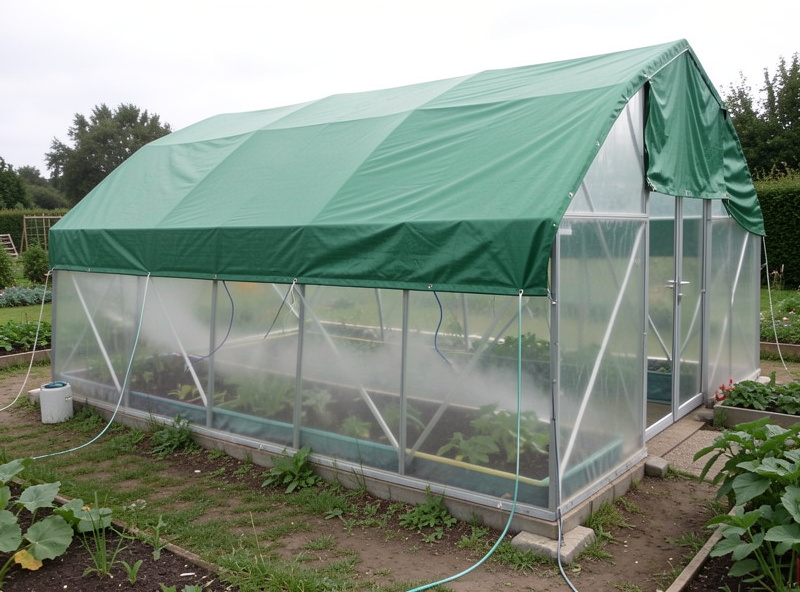
Shading: Cutting the Light and Heat
Shade comes first because without it nothing else matters. I run shade cloth rated around 70 to 90 percent over the greenhouse — mushrooms need only low, indirect light to fruit and orient, nothing close to what plants demand. External shade cloth is better than internal because it stops the heat before it enters the glass. Painting on greenhouse shade compound or draping the structure with cloth both work; the goal is a dim, even light with no hot direct beams reaching the fruiting surfaces.
Heat management rides along with shade. Even shaded, a closed greenhouse can overheat on a sunny day, so I pair shading with ventilation timed to vent the hottest hours. The target is a space that stays in a moderate fruiting range rather than swinging from cold dawns to baking afternoons. Species choice helps here too — cold-tolerant oyster strains and wine cap handle a converted greenhouse far better than heat-sensitive species.
Humidity and Fresh-Air Exchange
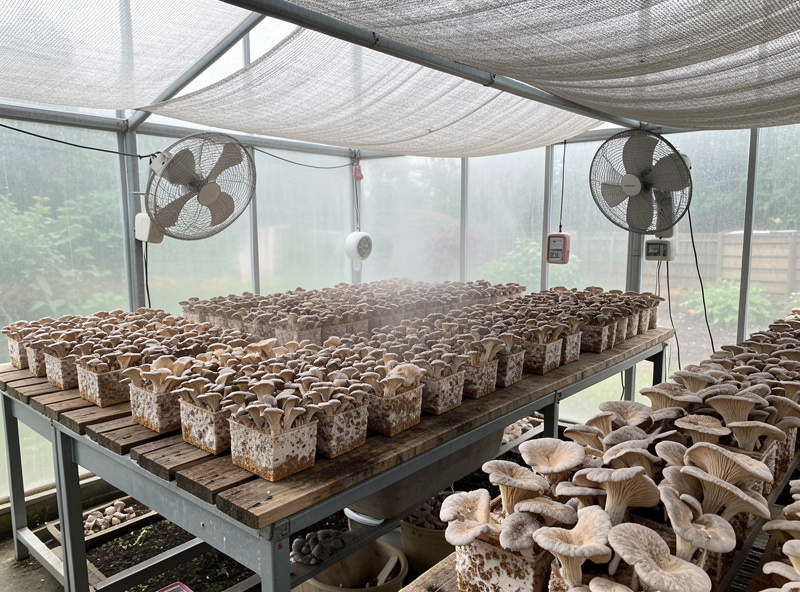
Mushroom fruiting lives and dies on the humidity-versus-fresh-air balance, and a greenhouse makes both easier to control than open air. I add humidity with an ultrasonic humidifier, a misting line, or simply by wetting the floor and substrate surfaces, aiming to keep the air high and steady through pinning and fruiting. But humidity alone is a trap — stale, high-CO2 air gives you long stems and small caps or aborts pins entirely.
The fix is deliberate fresh-air exchange. I crack vents or run a small fan on a timer to swap the air several times through the day, then let humidity recover between exchanges. That push-and-pull between FAE and humidity is the same balance I dial obsessively in my indoor fruiting tent, and the underlying logic is identical — I cover the full reasoning in my notes on FAE and CO2 in mushroom fruiting. A greenhouse just gives you a bigger, more forgiving volume to manage that balance in.
| Factor | Open Outdoor | Converted Greenhouse |
|---|---|---|
| Humidity control | Weather dependent | Active misting/humidifier |
| Season length | Spring to fall | Extended both ends |
| Wind/rain damage | Exposed | Sheltered |
| Light management | Natural shade only | Shade cloth, fully tunable |
| Main risk | Drying, frost | Overheating if unshaded |
| Best use | Beds, log stacks | Fruiting blocks, shoulder seasons |
What to Grow Under Cover
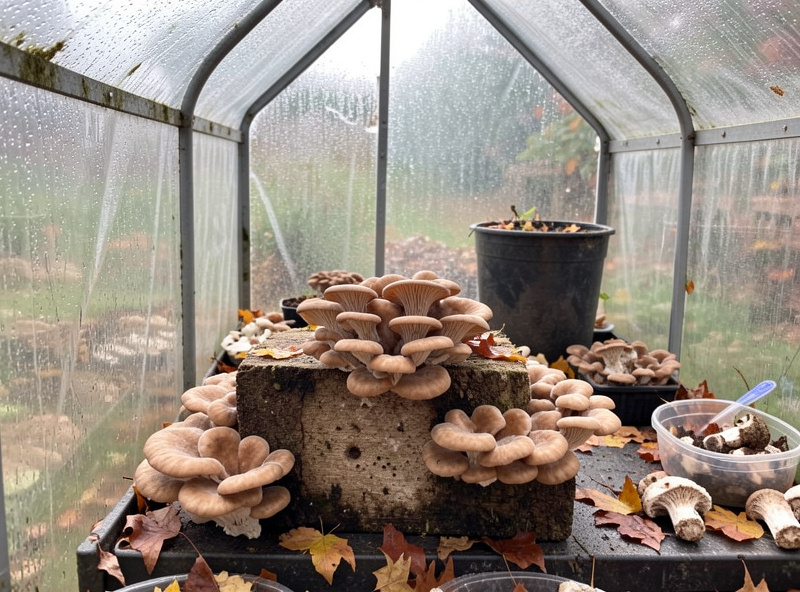
Oyster is the natural fit for a converted greenhouse — fast, forgiving, and happy to fruit on blocks or buckets you can arrange on benches at a comfortable working height. Wine-cap beds run on the greenhouse floor extend the bed season, and shoulder-season shiitake logs brought under cover fruit when the open laying yard is too cold. I keep the heat-sensitive species out; a greenhouse, even shaded, is no place for anything that resents warmth.
Arranging blocks on benches rather than the floor improves airflow around each one and keeps them out of any standing floor water. The same contamination discipline applies under cover as anywhere — a warm, humid greenhouse is paradise for mold too, so I space blocks for airflow, pull anything showing the wrong colors immediately, and keep the floor clean. Reading a healthy block from a failing one is the same skill I lean on at the bench, detailed in my guide to healthy versus contaminated mycelium.
Bench Layout and Working the Space
How you lay out a mushroom greenhouse decides how pleasant it is to run. I bench fruiting blocks at hip height so I can inspect, mist, and harvest without crouching, and I leave aisle space wide enough to move past wet blocks without brushing pins off them. Vertical space is worth using — hanging oyster columns or stacking buckets on tiered benching multiplies the fruiting surface in a small footprint, which matters because a greenhouse holds far more growing area than its floor suggests.
Airflow planning is part of the layout, not an afterthought. I orient benches so the fan moves air down the aisles and across every block rather than into a dead corner where stale, high-CO2 air pools and stems stretch. A hygrometer placed at block height, not up near the roof where readings lie, tells me what the mushrooms actually experience. The whole layout is built around the same obsessive monitoring I run indoors — the greenhouse is bigger, but the instinct to watch the numbers at the fruiting surface does not change.
Season Extension and Winter Use
The real prize of a mushroom greenhouse is the calendar. In spring I am fruiting under cover weeks before the open garden is workable; in autumn I keep going well past the first outdoor frosts. With a little supplemental heat a greenhouse can push oyster production deep into a mild winter, though in my Swedish climate the cost of heating usually means I let the deep-winter months rest and lean on indoor fruiting instead.
Winter heating is where the economics get real. A small thermostatically controlled heater can hold a polytunnel in oyster’s fruiting range through a cold snap, but in a deep Nordic winter the running cost climbs fast, and I would rather fruit a few blocks indoors cheaply than heat a whole tunnel to keep them going. My rule is to let the greenhouse coast through the coldest weeks — substrate and beds sit dormant without harm and pick straight back up as the light returns — and reserve supplemental heat for shoulder-season pushes where a few degrees buys weeks of extra harvest for very little energy.
Think of the greenhouse as the bridge between fully outdoor and fully indoor cultivation — it takes the controllability of the grow tent and the scale of the garden and meets in the middle. For where it fits in the overall outdoor system alongside logs, mounds, and beds, see my complete outdoor mushroom growing guide, and for the bed-building that often happens on the greenhouse floor, my outdoor mushroom bed design walkthrough.
Beyond the structure you already own, the two purchases that convert a greenhouse for mushrooms are shade cloth and a humidity source. As an Amazon Associate I earn from qualifying purchases. A roll of 70 to 90 percent greenhouse shade cloth is the single most important upgrade for fruiting mushrooms under glass.
Frequently Asked Questions
Can you grow mushrooms in a regular greenhouse?
Yes, but only after converting it. A standard greenhouse is too bright, dry, and hot for mushrooms. Add 70 to 90 percent shade cloth, a humidity source, and managed ventilation to turn it into a fruiting space.
How much shade do mushrooms need in a greenhouse?
Heavy shade, around 70 to 90 percent. Mushrooms fruit in low, indirect light and dry out fast under direct sun. External shade cloth is best because it blocks heat before it enters the glass.
What mushrooms grow best in a greenhouse?
Oyster is the top choice for its speed and tolerance, fruited on blocks or buckets on benches. Wine-cap beds on the floor and shoulder-season shiitake logs also do well. Avoid heat-sensitive species.
How do you keep humidity up in a greenhouse for mushrooms?
Use an ultrasonic humidifier, a misting line, or wet the floor and surfaces, keeping humidity high and steady. Balance it with regular fresh-air exchange so high CO2 does not cause long stems and small caps.
Does a greenhouse extend the mushroom season?
Yes, on both ends. A converted greenhouse lets you fruit weeks earlier in spring and well past the first autumn frosts, and with supplemental heat can push oyster production into a mild winter.