
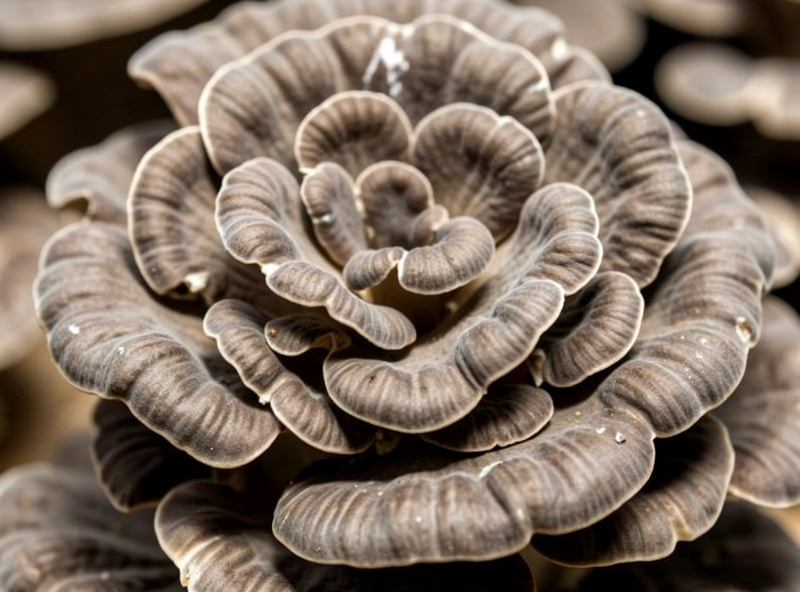
Maitake (Grifola frondosa), also called hen of the woods, is the hardest functional mushroom I grow at home — it needs a fully colonized hardwood block, a cold shock to initiate, and often a buried or cased block to fruit cleanly. From inoculation to harvest runs roughly 90-150 days, the longest of any species on my bench. But a single mature maitake cluster can weigh 1-3 pounds, so the payoff matches the patience.
Most home growers who fail with maitake do so because they treat it like oyster and skip the two things it actually demands: a long, undisturbed colonization on enriched hardwood, and a genuine temperature drop to trigger pinning. Get those right and the rosette of overlapping grey-brown fronds is one of the most rewarding harvests in the grow room. This guide walks through the block, the cold shock, the cased-fruiting method, and where people lose the batch.
What Substrate Does Maitake Need?
Maitake fruits on supplemented hardwood sawdust, but it wants a richer block than most wood-lovers — typically hardwood sawdust supplemented with 20-40% bran or a Masters Mix-style soy-hull blend, hydrated to field capacity and sterilized. Oak is the classic wood; maitake is naturally a root-and-stump parasite of oaks.
I build maitake blocks heavier on supplementation than my oyster or shiitake blocks because the species is slow and needs the extra nutrition to push a big fruiting body at the end of a long colonization. I sterilize at 15 PSI for the full 2.5 hours — a long colonize-and-fruit window means any survivor in the block will out-compete the maitake before it fruits, so sterilization, not pasteurization, is non-negotiable. After cooling I inoculate with grain spawn at about 15-20% and then leave the block completely alone. Maitake hates being disturbed during colonization more than almost any species I run.
There is a slower outdoor route worth knowing about, because it mirrors how maitake actually lives in the wild. You can grow it on buried oak — inoculated oak logs or stump sections set vertically into a shaded trench with the top few inches above grade, then backfilled so the wood stays in contact with soil moisture. Because maitake is a root-and-butt parasite of oaks rather than a true saprophyte of cut wood, it colonizes a buried log far more slowly than an indoor block, often taking one to two full years before the first fruiting flush in autumn. I treat the buried-log bed as a long-game project running in the background of the garden while the indoor cased blocks carry the same-season harvest — the outdoor bed, once established, then fruits on its own each fall with essentially no input from me beyond keeping the site shaded and the soil from drying out completely.
How Long Does Maitake Take to Colonize?
Maitake colonizes a supplemented hardwood block in 30-60 days at 70-75°F, then needs an additional consolidation and browning period before it will fruit. Total time from inoculation to harvest is 90-150 days — budget for a season, not a month.
During colonization the block develops a tough mycelial skin and often a brown, lumpy surface that looks alarming if you are used to clean white oyster mycelium — for maitake that browning is normal and a sign the block is maturing toward fruiting. I keep colonizing blocks dark and warm on the heat mat and resist every urge to open the bag and check. The single most common mistake I see is impatience: people try to fruit a maitake block at six weeks because it looks colonized, and it throws nothing because it has not consolidated. This is the same wait-and-trust-the-process discipline that runs my salami chamber — the clock is part of the recipe.
How Do You Trigger Maitake to Fruit?
Trigger maitake fruiting with a cold shock: drop the fully colonized block to 50-60°F for several days while introducing fresh-air exchange and high humidity. The temperature drop mimics autumn, which is when wild hen of the woods fruits at the base of oaks, and it is the signal the species needs.
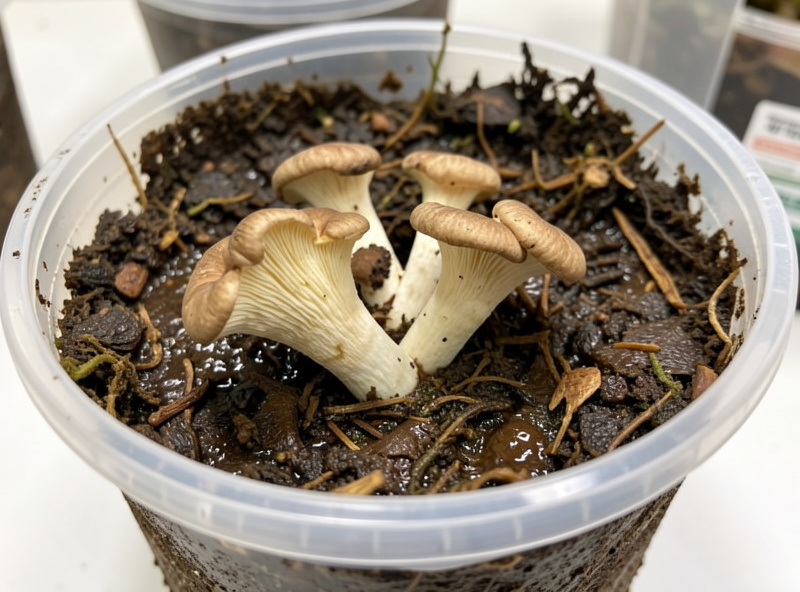
I move consolidated blocks to the cooler side of the grow space, often the garage as outdoor temperatures fall, and pair the cold drop with 90-95% humidity and strong FAE. Maitake fruits best when the block is cased or partially buried — I set the block in a tub, cover the top inch with a moist casing of peat and lime, and let the fronds push up through it. The casing holds humidity right at the fruiting surface and protects the developing rosette from drying. For the gas-exchange mechanics behind why FAE matters at this stage, my FAE and CO2 fruiting guide covers it; the casing logic mirrors the layer I describe for cased beds.
When and How Do You Harvest Maitake?
Harvest maitake when the rosette is full and the frond tips are still rounded and firm — usually 1-2 weeks after the cluster first appears. Cut the whole cluster at the base before the edges thin and curl, because an over-mature maitake turns tough and bitter fast.
I cut the entire rosette in one piece at the base with a clean knife, then trim away any casing material clinging to the underside. Unlike reishi or turkey tail, maitake is a genuinely excellent culinary mushroom — meaty and savory — so a lot of my harvest goes straight to the kitchen rather than the drying rack. The rest I slice and dry. The timing window is tighter than most species: a maitake left two days too long loses its tender texture, so I check the cluster daily once it sizes up. For preserving the surplus, my guide to drying and storing medicinal mushrooms applies, and maitake also freezes well after a quick saute.
On yield, this is the one functional species where a single block genuinely justifies the months of waiting: a well-run, fully consolidated maitake block commonly throws a 1-3 pound rosette in a single flush, and unlike turkey tail or reishi that harvest is mostly tender, edible mass rather than thin brackets dried for tea. I rarely get a meaningful second flush from a maitake block — it tends to spend most of its stored energy on that one big rosette — so I plan for one substantial harvest per block and stagger several blocks a few weeks apart if I want a steady autumn supply rather than one large glut.
Common Maitake Growing Problems
The failures I see most are blocks that never fruit because they were rushed before full consolidation, and aborted pins from a casing or chamber that dried out during the cold shock. Maitake’s long timeline also makes late contamination the costliest failure of any species I grow.
If a fully browned, well-consolidated block still will not pin, it almost always did not get a real cold shock — a drop of only a few degrees is not enough; the species wants a genuine 50-60°F window. If young fronds brown and shrivel at the edges, the humidity crashed; I keep the casing visibly moist and the hygrometer above 90%. And because you have months invested by fruiting time, treat any green Trichoderma the way my contamination control guide lays out — on a maitake block, a contamination call you miss early costs you an entire season. Start from a properly sterilized block, the way my supplemented sawdust recipe describes, and the long road is at least a clean one.
Frequently Asked Questions
Is maitake hard to grow at home?
Maitake is the hardest functional mushroom to grow at home. It needs a long undisturbed colonization on enriched hardwood, a genuine cold shock to 50-60F to initiate, and usually a cased or buried block to fruit cleanly. Patience is the main requirement.
How long does maitake take to grow?
Maitake takes roughly 90-150 days from inoculation to harvest, the longest of the common cultivated species. Colonization alone runs 30-60 days, followed by a consolidation and browning period before the cold shock triggers fruiting.
What temperature does maitake need to fruit?
Maitake needs a cold shock to 50-60F for several days to initiate fruiting. The drop mimics autumn, when wild hen of the woods fruits at the base of oaks. Without a genuine temperature drop the block usually will not pin.
What substrate is best for growing maitake?
Maitake wants a rich block: hardwood sawdust supplemented with 20-40% bran or a soy-hull Masters Mix, sterilized at 15 PSI. Oak is the classic wood, since maitake is naturally a parasite of oak roots and stumps.
Can you eat maitake mushroom?
Yes. Unlike reishi or turkey tail, maitake is an excellent culinary mushroom, meaty and savory. Harvest while the frond tips are still rounded and firm, because an over-mature maitake quickly turns tough and bitter.
Why is my maitake block not fruiting?
The two usual causes are rushing it before full consolidation and skipping a real cold shock. A block fruited too early throws nothing, and a drop of only a few degrees will not initiate. Give it a genuine 50-60F window after it browns.